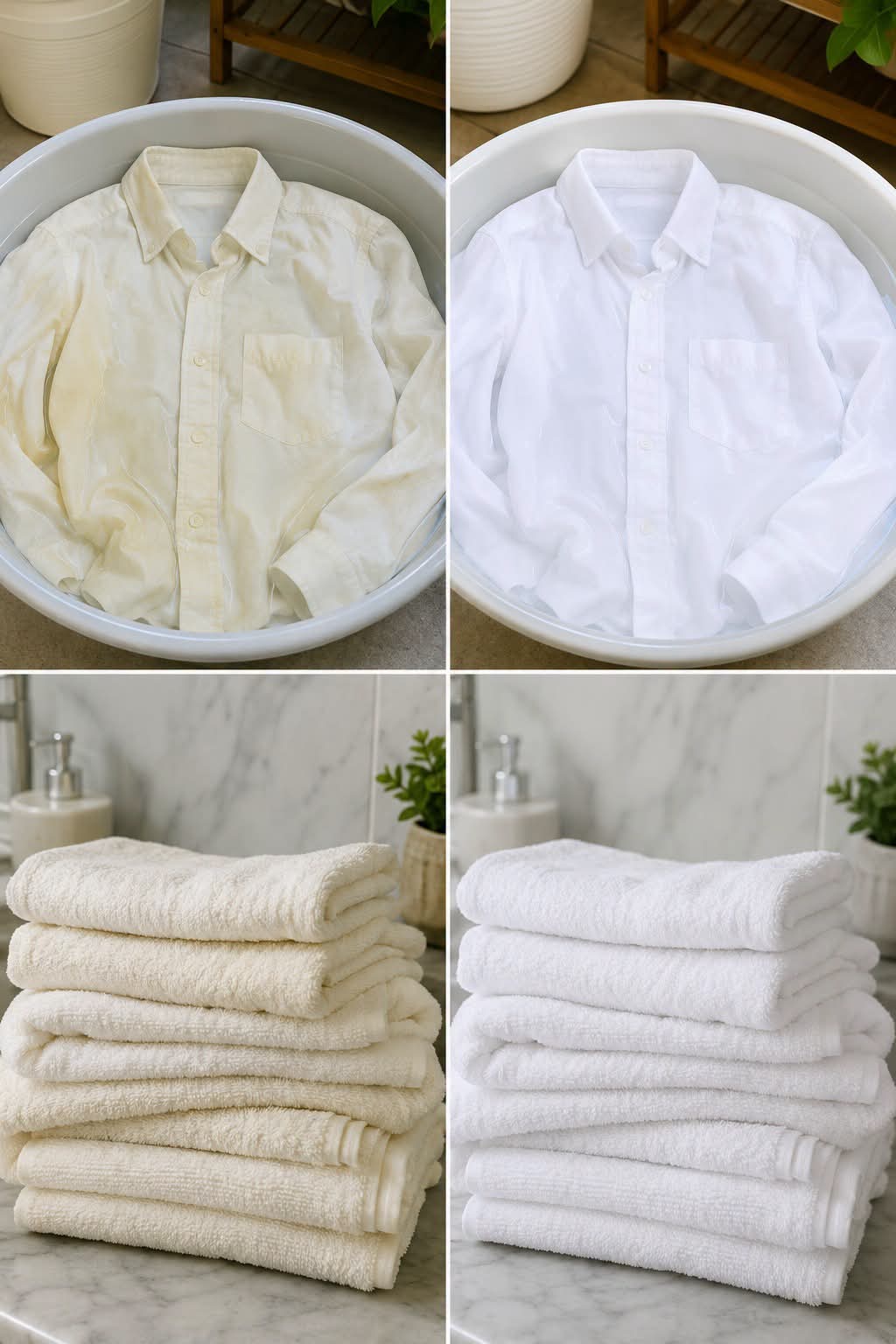
How to Whiten Yellowed Clothes and Dingy Towels Naturally: A Complete Step-by-Step Laundry Guide
White clothes and towels can make a home feel fresh, clean, and elegant. Unfortunately, keeping them truly white is not always easy. Over time, white shirts can develop yellow stains around the collar, underarms, and cuffs, while towels may lose their bright appearance and become gray, cream-colored, or dull.
The good news is that yellowed and dingy laundry does not always need to be thrown away. With the right washing method and a few simple household ingredients, you can often restore much of the original brightness of washable white fabrics.
This complete guide explains why white clothes turn yellow, how to whiten them, how to remove stubborn stains, how to brighten towels, what mistakes to avoid, and how to keep white laundry looking fresh for longer.
Important: Always check the garment or towel care label before using any whitening method. Delicate fabrics, wool, silk, colored trims, and specialty finishes may require different care.
Why Do White Clothes Turn Yellow?
Before trying to whiten a garment, it helps to understand why it became yellow in the first place.
White fabric can gradually change color because of a combination of body oils, sweat, deodorant, detergent residue, hard-water minerals, improper washing, and storage conditions.
1. Sweat and body oils
One of the most common causes of yellowing is the buildup of sweat and natural body oils.
Areas such as:
- Underarms
- Collar
- Neckline
- Cuffs
- Chest
- Back
can accumulate oils and perspiration. Even if a shirt looks clean immediately after washing, repeated use can cause these substances to build up inside the fibers.
Over time, the affected area can become yellow or gray.
2. Deodorant and antiperspirant buildup
Some deodorant and antiperspirant products can interact with sweat, oils, and detergent residue. This can contribute to stubborn underarm discoloration.
The longer the buildup remains in the fabric, the more difficult it may become to remove.
3. Too much detergent
It may seem logical that more detergent means cleaner laundry, but using excessive detergent can have the opposite effect.
Too much detergent can leave residue behind, particularly when:
- The washing machine is overloaded
- The water temperature is too low for the detergent being used
- The rinse cycle is inadequate
- The fabric absorbs a large amount of product
Residue can make white fabrics look dull rather than bright.
4. Hard water
Hard water contains minerals that can accumulate on fabrics. Over time, this buildup may make towels feel stiff and cause white laundry to appear less brilliant.
5. Incorrect washing habits
Washing whites with heavily colored clothing can contribute to dullness. Even small amounts of dye released during washing may affect white fabrics.
Separating laundry properly is one of the easiest ways to protect white clothing.
The Best Basic Method for Whitening White Laundry
For washable cotton shirts, sheets, towels, and similar fabrics, a simple soaking-and-washing routine can be very effective.
Ingredients
You can prepare a basic whitening soak using:
- Warm water
- Regular laundry detergent
- Baking soda
- Oxygen-based laundry bleach, if appropriate for the fabric
- A clean basin or large bucket
You do not need to use every ingredient at once.
For heavily yellowed laundry, an oxygen-based laundry whitener can be particularly useful when the care label allows it.
Method 1: Baking Soda Laundry Soak
Baking soda is a common household laundry booster that can help with odors and general soil.
What you need
- 4–5 liters of warm water
- ½ cup baking soda
- Your normal laundry detergent
- A basin or bucket
Instructions
- Fill a clean basin with warm water.
- Add the baking soda.
- Stir until it is reasonably dispersed.
- Place the white garment or towels into the water.
- Make sure the fabric is completely saturated.
- Allow the laundry to soak for approximately 30–60 minutes.
- Remove the items and place them into the washing machine.
- Add the appropriate amount of laundry detergent.
- Wash according to the care label.
- Rinse thoroughly.
- Dry completely.
This method is particularly useful when the problem is general dullness, odor, or everyday buildup rather than a severe stain.
Method 2: Oxygen Bleach for Yellowed Whites
For stubborn yellowing, an oxygen-based laundry whitener may provide a stronger cleaning action than baking soda alone.
Oxygen bleach is different from traditional chlorine bleach and is commonly marketed as a laundry whitener or stain remover.
Basic process
- Read the product instructions carefully.
- Fill a basin with warm water if the fabric allows warm soaking.
- Add the recommended amount of oxygen-based whitener.
- Mix according to the product directions.
- Add the white garment or towels.
- Make sure everything is submerged.
- Allow it to soak for the time recommended on the product label.
- Wash normally.
- Rinse thoroughly.
- Dry according to the fabric-care instructions.
For towels, this method can be especially useful when they have become gray or dull after repeated washing.
How to Whiten a Yellowed White Shirt
White button-down shirts are particularly vulnerable to yellowing around the collar and underarms.
Here is a practical routine.
Step 1: Inspect the shirt
Look carefully at:
- Collar
- Underarms
- Cuffs
- Front
- Back neckline
Determine whether the discoloration is general yellowing or concentrated staining.
Step 2: Pre-treat visible stains
Apply a suitable laundry stain remover to the affected areas.
Gently work the product into the fabric using your fingers or a soft laundry brush.
Avoid aggressive scrubbing because it can damage fibers.
Step 3: Allow the product to work
Follow the stain remover’s instructions regarding contact time.
Do not allow a cleaning product to dry on the fabric unless the product specifically instructs you to do so.
Step 4: Wash properly
Wash the shirt according to the care label.
Avoid automatically choosing the hottest possible water. Some fabrics can shrink, weaken, or become damaged by excessive heat.
Step 5: Inspect before drying
This is an important step.
After washing, look at the stained area before putting the shirt into a hot dryer.
If the yellow mark is still visible, repeat an appropriate treatment rather than immediately applying high heat.
Heat can make some stains more difficult to remove.
How to Make White Towels Bright Again
Towels have a special problem: they are thick, absorbent, and frequently exposed to moisture, body oils, soaps, and detergent.
As a result, they can become:
- Gray
- Yellow
- Stiff
- Musty
- Dull
- Less absorbent
A proper washing routine can help.
Step-by-step towel whitening method
Step 1: Separate white towels
Do not wash white towels with dark or strongly colored laundry.
Step 2: Avoid overloading the washing machine
Towels need enough room for water and detergent to circulate.
An overloaded washer may leave dirt and detergent trapped in the fibers.
Step 3: Use the correct detergent amount
Follow the detergent manufacturer’s dosage instructions.
More detergent is not necessarily better.
Step 4: Add an appropriate oxygen-based whitener
If the towel care label permits it, use an oxygen-based laundry whitener according to the product directions.
Step 5: Wash thoroughly
Choose a temperature appropriate for the towel’s care label.
Step 6: Dry completely
Towels should be thoroughly dried after washing.
Avoid leaving damp towels sitting inside the washing machine for long periods.
Can Lemon Juice Whiten Clothes?
Lemon juice is often mentioned as a natural laundry brightener.
Its acidity can help loosen certain types of residue, and sunlight has traditionally been used to brighten white fabrics.
However, lemon juice should not be treated as a guaranteed solution for every yellow stain.
If you want to experiment with lemon as a laundry aid, use it cautiously and test a small hidden area first.
A simple approach is:
- Dilute lemon juice with water.
- Apply a small amount to an appropriate washable white fabric.
- Rinse thoroughly.
- Wash normally.
- Allow the fabric to dry.
Avoid relying on acidic ingredients for delicate or specialty fabrics without checking their care requirements.
What About Vinegar?
White vinegar is widely used in laundry because it can help reduce certain residues and odors.
However, vinegar should not be mixed directly with chlorine bleach.
This is an important safety rule.
Never mix:
Chlorine bleach + vinegar
or
Chlorine bleach + acidic cleaners
Combining bleach with acids can produce dangerous fumes.
If you use vinegar in your laundry routine, use it separately and according to safe laundry practices.
Baking Soda vs. Oxygen Bleach
Both can have a place in laundry, but they are not identical.
| Laundry booster | Main purpose |
|---|---|
| Baking soda | Odor control and general cleaning support |
| Oxygen bleach | Stain removal and whitening |
| Laundry detergent | Removing everyday dirt, oils, and soils |
| Vinegar | Helps with certain odors and residues |
| Chlorine bleach | Strong whitening/disinfection product for suitable fabrics |
For serious yellowing, a properly used oxygen-based laundry whitener is generally a more targeted option than baking soda alone.
Why Towels Become Yellow or Gray
Towels often receive more abuse than ordinary clothing.
Think about everything a towel encounters:
- Water
- Soap
- Shampoo
- Body oils
- Sweat
- Skin products
- Hair products
- Laundry detergent
- Fabric softener
- Moisture
Over time, these substances can accumulate.
Another common problem is using too much fabric softener.
Fabric softener can coat fibers, which may affect the towel’s ability to absorb water.
For this reason, people who want fluffy but highly absorbent towels often use fabric softener sparingly or avoid it.
How to Prevent White Clothes From Turning Yellow
Whitening is helpful, but prevention is even better.
1. Wash whites separately
This is one of the simplest rules.
Create separate laundry groups for:
- Whites
- Light colors
- Dark colors
- Delicates
Keeping white laundry separate reduces the risk of dye transfer.
2. Don’t overload the washer
Give clothing enough room to move.
A packed washing machine may not clean effectively.
3. Use the correct amount of detergent
Follow the instructions on your detergent package.
Excess detergent can leave residue.
4. Treat stains quickly
A fresh stain is often easier to deal with than an old, oxidized stain.
When possible, treat visible marks before washing.
5. Don’t leave wet laundry in the machine
Remove clothes and towels soon after the wash cycle finishes.
This can help prevent unpleasant odors and mildew-like smells.
6. Dry laundry completely
Damp storage is a recipe for stale odors.
Make sure towels and clothing are completely dry before folding and storing.
The Importance of Water Temperature
Many people assume that hotter water always means cleaner laundry.
That is not necessarily true.
The ideal temperature depends on:
- Fabric type
- Care label
- Type of stain
- Detergent
- Washing machine
- Whether the item can tolerate heat
Cotton towels may tolerate warmer washing than delicate garments, but you should always follow the manufacturer’s instructions.
Using unnecessarily high temperatures can cause shrinking, fading, fiber damage, and increased energy consumption.
How to Deal With Yellow Underarm Stains
Underarm stains can be particularly stubborn because they often contain a mixture of sweat, oils, deodorant residue, and other substances.
Recommended approach
- Turn the shirt inside out.
- Rinse the stained area with cool or lukewarm water.
- Apply an appropriate laundry stain remover.
- Gently work it into the fabric.
- Allow it to sit according to product instructions.
- Wash normally.
- Check the stain before drying.
- Repeat if necessary.
For persistent stains, an oxygen-based stain treatment suitable for the fabric can be considered.
Why You Shouldn’t Scrub Too Hard
When you see a yellow stain, your first instinct may be to scrub aggressively.
Unfortunately, excessive scrubbing can damage fabric.
It can:
- Break fibers
- Create fuzzy areas
- Thin the fabric
- Damage seams
- Make worn areas look worse
Instead, use gentle agitation and allow the cleaning product to do most of the work.
Can Sunlight Help White Laundry?
Air-drying white cotton items in sunlight has traditionally been used as a simple way to freshen laundry.
Sunlight can also provide a mild brightening effect on some white fabrics.
However, prolonged exposure can damage fibers over time, and some fabrics are more vulnerable than others.
Use sunlight sensibly and follow the garment’s care recommendations.
Common Mistakes That Make White Laundry Worse
Mistake 1: Using too much bleach
More bleach does not automatically mean whiter clothes.
Excessive chlorine bleach can damage fibers and may sometimes contribute to yellowing.
Always follow the product label.
Mistake 2: Mixing cleaning chemicals
Never create homemade chemical combinations without knowing they are safe.
Especially avoid mixing chlorine bleach with:
- Vinegar
- Ammonia
- Acidic cleaners
- Other unknown cleaning products
Mistake 3: Washing everything together
A white shirt washed with dark jeans is unlikely to remain perfectly white forever.
Sort your laundry.
Mistake 4: Using too much detergent
Extra detergent can leave residue behind.
Mistake 5: Drying stains with high heat
If a stain remains after washing, check it before putting the garment in a hot dryer.
Mistake 6: Ignoring the care label
A whitening method that works for cotton may be unsuitable for silk, wool, rayon, or delicate blends.
A Simple Weekly White-Laundry Routine
You don’t need to perform an elaborate whitening treatment every time you wash.
A practical routine can look like this:
Every wash
- Separate whites
- Don’t overload the machine
- Use the correct detergent amount
- Choose the appropriate temperature
- Remove laundry promptly
When stains appear
- Treat them before washing
- Avoid aggressive scrubbing
- Inspect the item after washing
Every few weeks
For washable whites that are becoming dull:
- Use an appropriate oxygen-based laundry whitener
- Follow the soaking instructions
- Wash thoroughly
- Dry completely
This approach is usually more practical than trying to aggressively whiten every load.
How to Store White Clothes
Proper storage also matters.
Before storing white clothes for a long period:
- Wash them thoroughly.
- Make sure all stains are removed.
- Dry them completely.
- Fold them neatly.
- Store them in a clean, dry environment.
- Avoid damp closets or containers.
- Give stored fabrics occasional ventilation when practical.
Never store clothing while it is even slightly damp.
Natural-Looking Alternatives to Harsh Whitening
Some people prefer reducing their use of strong chemical products.
For everyday laundry, you can focus on:
- Proper sorting
- Correct detergent dosage
- Baking soda as a laundry booster
- Good washing-machine maintenance
- Thorough rinsing
- Proper drying
- Occasional oxygen-based whitening when needed
The key is consistency.
A white shirt that is cleaned correctly from the beginning is much easier to maintain than one that has accumulated years of body oils and detergent residue.
How to Keep Towels Soft Without Making Them Less Absorbent
Everyone loves a soft towel, but excessive product buildup can affect absorbency.
Try these habits:
Don’t overload the washing machine
Towels need space to move.
Use the right detergent quantity
More detergent can mean more residue.
Avoid excessive fabric softener
If absorbency is important to you, use fabric softener sparingly.
Dry thoroughly
A complete drying cycle helps keep towels fresh.
Don’t leave towels wet
Hang used towels so they can dry between uses rather than leaving them in a heap.
Can Old Yellowed Clothes Be Restored Completely?
Not always.
This is an important expectation.
Some discoloration is caused by removable buildup. Other yellowing may result from:
- Permanent chemical changes
- Fiber degradation
- Age
- Sun damage
- Previous bleach damage
- Dye transfer
- Long-term storage
If the fibers themselves have changed, no cleaning method can guarantee that the fabric will return to its original factory-white appearance.
However, many washable cotton items can still become noticeably brighter with proper care.
A Complete White-Laundry Recipe
Ingredients
For a basic whitening treatment:
- Warm water
- Regular laundry detergent
- ½ cup baking soda for a general cleaning boost
- Oxygen-based laundry whitener, if suitable for the fabric
- Clean basin or bucket
Instructions
- Sort white laundry from colored laundry.
- Check every care label.
- Inspect clothing for stains.
- Pre-treat stubborn areas.
- Prepare a warm-water soak if appropriate.
- Add baking soda if desired.
- Add oxygen-based whitener according to its package instructions when appropriate.
- Place the laundry into the solution.
- Allow it to soak for the recommended time.
- Transfer the items to the washing machine.
- Add the correct amount of detergent.
- Select an appropriate wash temperature.
- Run the cycle.
- Rinse thoroughly.
- Inspect the laundry before drying.
- Repeat treatment if necessary.
- Dry according to the care label.
- Fold and store only when completely dry.
Frequently Asked Questions
How often should I whiten white towels?
There is no universal schedule. Use whitening treatments when towels become noticeably dull or stained rather than automatically using strong products every wash.
Can I use baking soda with laundry detergent?
Baking soda is commonly used as a laundry booster. Use a moderate amount and avoid assuming that more is better.
Can I use chlorine bleach on every white shirt?
No. Some white fabrics can be damaged by chlorine bleach. Always check the care label and bleach instructions.
Why did my white shirt turn yellow after bleaching?
Excessive chlorine bleach, incorrect concentration, fabric damage, residue, or chemical reactions can contribute to discoloration. Follow the bleach manufacturer’s instructions carefully.
Is hot water better for whitening?
Not necessarily. Temperature should be selected according to the fabric and care label.
Can I whiten towels and clothes together?
You can wash compatible white cotton items together, but towels can produce lint. For best results, washing towels separately from shirts and delicate fabrics may be preferable.
Should I use fabric softener on towels?
If maximum absorbency is your priority, consider using fabric softener sparingly.
Can sunlight whiten white clothes?
Sunlight can help freshen and brighten some white fabrics, but prolonged exposure may damage fibers.
The Secret to Beautiful White Laundry
The most important lesson is that maintaining white laundry is not about finding one magical ingredient.
It is about developing good habits.
Sort correctly.
Use the right amount of detergent.
Treat stains early.
Avoid overloading the washer.
Choose the correct temperature.
Use whitening products carefully.
Never mix dangerous cleaning chemicals.
Dry laundry completely.
These simple steps can make a major difference.
Final Conclusion
Yellowed shirts and dull towels can be frustrating, especially when they were once bright white. But discoloration doesn’t automatically mean that the fabric has reached the end of its life.
In many cases, yellowing comes from accumulated body oils, sweat, deodorant residue, detergent buildup, hard-water minerals, and everyday wear. A combination of proper sorting, pre-treatment, careful washing, and an appropriate whitening booster can help restore brightness.
For everyday maintenance, simple habits such as using the correct amount of detergent, avoiding overloaded washing machines, separating whites from colors, and drying laundry properly can prevent many problems before they start.
For more stubborn yellowing, a properly used oxygen-based laundry whitener can be considered when the fabric’s care instructions allow it. Baking soda can also be used as a general laundry booster, particularly for odor and everyday freshness.
Most importantly, never mix chlorine bleach with vinegar, ammonia, or other incompatible cleaning products, and always check the care label before attempting a whitening treatment.
With patience and consistent laundry care, an old white shirt can look noticeably fresher, and tired-looking towels can regain much of their clean, bright appearance.
Your laundry routine doesn’t have to be complicated. Sometimes the biggest difference comes from doing the basics correctly—sort, pre-treat, wash, rinse, dry, and store properly.
And when white fabric begins to lose its sparkle, don’t immediately throw it away. Give it the right treatment first. A little extra care may be all it needs to look fresh and bright again.
🧺 Quick White-Laundry Checklist
Before washing:
☐ Separate whites from colors
☐ Check the care label
☐ Inspect collars and underarms
☐ Pre-treat visible stains
☐ Don’t overload the washer
During washing:
☐ Use the correct detergent amount
☐ Choose an appropriate temperature
☐ Use oxygen-based whitener only when suitable
☐ Avoid unnecessary fabric softener on towels
After washing:
☐ Check stains before using high heat
☐ Rinse thoroughly
☐ Dry completely
☐ Don’t store damp laundry
Pin This Laundry Tip for Later
Yellow shirts? Dingy towels? Don’t give up on your whites! 🤍
With the right washing routine, careful stain treatment, and a suitable whitening booster, many washable white fabrics can look cleaner, brighter, and fresher again.
Save this guide, share it with someone who loves fresh white laundry, and try the method on your next white-laundry day! 🧺✨