Cloth Diapers and Diaper Pins: The Forgotten Baby-Care Tradition That Parents Once Used Every Day
There was a time when disposable diapers were not a normal part of everyday family life. Before modern diapers became widely available and affordable, generations of parents relied on simple cloth, careful washing, folding techniques, and sturdy diaper pins to keep their babies clean and comfortable.
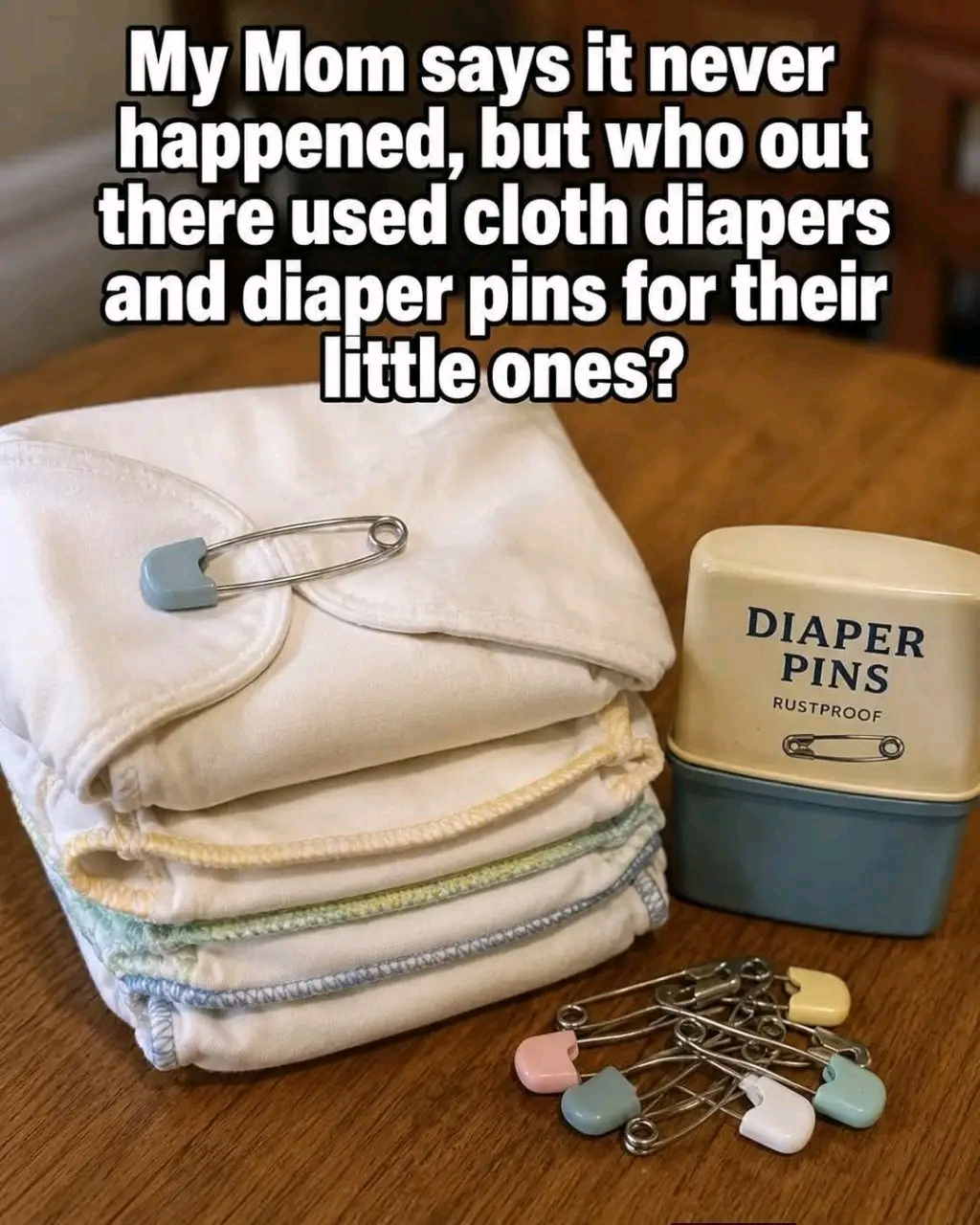
The image of neatly folded cloth diapers beside a small container of diaper pins brings back memories of a very different approach to raising children. For many older generations, cloth diapers were not a special “eco-friendly” parenting choice or a nostalgic trend. They were simply what families used.
Today, seeing traditional diaper pins can make younger parents wonder how anyone managed to diaper a baby with a piece of cloth and a sharp-looking metal pin. Yet for decades, mothers, fathers, grandparents, and caregivers became experts at folding cloth diapers, securing them safely, washing them repeatedly, and using them again.
The story of cloth diapers is also a story about changing technology, household routines, family economics, sustainability, and parenting culture. What once represented everyday necessity eventually became associated with tradition and nostalgia. Today, cloth diapering has returned in a modern form, combining the reusable concept of the past with improved fabrics, fasteners, waterproof covers, and convenient designs.
This article explores the history of cloth diapers and diaper pins, how traditional diapering worked, why families used them, the advantages and disadvantages of reusable diapers, how diaper care evolved, and why this old-fashioned practice continues to fascinate people today.
The Era Before Disposable Diapers
Long before disposable diapers became common, parents had to find practical ways to manage one of the unavoidable realities of caring for a baby: keeping clothing and bedding clean.
The basic idea was simple. A piece of absorbent material was placed between the baby’s body and clothing. When the material became wet or soiled, it was removed, washed, dried, and used again.
Materials varied according to location, culture, family resources, and historical period. Families used pieces of cotton fabric, linen, wool, flannel, or other absorbent textiles. In some communities, parents used whatever natural materials were available and suitable.
The modern square cloth diaper became particularly recognizable during the twentieth century. Families often purchased stacks of plain white cotton diapers that could be washed and reused many times.
These diapers were practical because cotton could absorb moisture, withstand repeated washing, and dry relatively quickly.
However, using cloth diapers required considerable household work.
There were no simple “use it and throw it away” solutions. Every diaper became part of the laundry cycle.
What Were Traditional Cloth Diapers?
Traditional cloth diapers were generally made from absorbent fabric. One of the most familiar versions was the flat diaper: a large square or rectangular piece of cloth that could be folded into different shapes.
Another type was the prefold diaper, which was thicker in the middle and designed to provide additional absorbency.
Families developed their own folding preferences. The fold depended on the baby’s age, body shape, the amount of absorbency required, and the caregiver’s experience.
The diaper was positioned around the baby and traditionally held in place using diaper pins.
The simplicity of the design was one of its greatest strengths.
A cloth diaper did not require complicated machinery, batteries, electronics, or special technology. It was essentially fabric, a fastening system, and plenty of washing.
Yet simplicity did not mean that diapering was effortless.
Parents had to learn how to fold the cloth properly, position it correctly, secure it without hurting the baby, and wash it thoroughly afterward.
The Famous Diaper Pin
The diaper pin is perhaps the object most strongly associated with traditional cloth diapering.
At first glance, a diaper pin looks like an ordinary safety pin, but traditional diaper pins were designed specifically for securing thicker layers of cloth. Many had large heads or protective closures.
The colorful plastic or coated heads seen in nostalgic images also made them easier to recognize and handle.
A properly secured diaper pin held the cloth in place while allowing the baby to move.
But diaper pins also required caution.
Because they contained a sharp point, adults had to make sure the pin was securely closed and positioned safely. A loose or improperly fastened pin could cause injury.
Modern parents who choose reusable diapers generally have safer fastening alternatives, including snaps, hook-and-loop closures, and specially designed diaper fasteners.
Still, the diaper pin remains a powerful symbol of earlier parenting.
Why Did Families Use Cloth Diapers?
There were several reasons cloth diapers were so common.
1. Disposable diapers were not always available
Modern disposable diapers developed gradually. Early versions were very different from the highly absorbent products available today.
For many families, disposable diapers were either unavailable, expensive, or used only occasionally.
Cloth was therefore the practical everyday solution.
2. Reusability saved money
A cloth diaper could be washed and used repeatedly.
Although cloth diapering required water, detergent, electricity or fuel, and considerable labor, one set of diapers could serve a family for a long period.
For families managing household expenses carefully, reusable materials made sense.
3. Cloth was widely available
Cotton fabric was relatively practical for baby clothing and household textiles.
A family could maintain a supply of diapers without needing to purchase a new package every few days.
4. Families were accustomed to laundry
Household routines were different in previous generations. Washing, drying, ironing, mending, and reusing clothing were ordinary parts of domestic life.
People often repaired things rather than replacing them.
The same philosophy applied to baby care.
The Daily Routine of Traditional Cloth Diapering
Traditional cloth diapering involved much more than simply putting fabric on a baby.
A typical routine could involve several stages.
Step 1: Preparing clean diapers
Freshly washed diapers were folded and kept ready for use.
Some caregivers prepared several diapers ahead of time to make changes faster.
Step 2: Folding the diaper
The fabric was folded according to the baby’s needs.
Some folds concentrated extra layers in the center, while others created a shape that fit around the baby’s body.
Step 3: Positioning the baby
The diaper was placed underneath the baby carefully.
The caregiver adjusted the fabric so that it covered the necessary areas without creating excessive bulk.
Step 4: Securing the diaper
The traditional diaper pin was used to secure the cloth.
This required concentration because the caregiver needed to keep the sharp point away from the baby’s skin.
Step 5: Adding protection
Many cloth-diaper systems also used a waterproof outer cover.
This helped prevent moisture from reaching clothing, bedding, and furniture.
Step 6: Changing the diaper
Once the diaper became wet or soiled, it was removed and replaced.
The used diaper then entered the household washing process.
Washing Cloth Diapers Was a Major Job
Perhaps the biggest difference between traditional cloth diapering and modern disposable diapering is what happened after the diaper was removed.
The job was not finished.
It was only beginning.
Used diapers had to be handled, rinsed or otherwise prepared for washing, laundered, dried, and stored again.
Parents needed enough diapers to allow for washing and drying between uses.
In earlier households, laundry could be physically demanding. Washing machines were not always available, and even when they were, laundry still required time and effort.
Cloth diapers therefore represented a significant household responsibility.
Grandparents who remember cloth diapering often remember not just the diapers themselves, but the piles of laundry that accompanied them.
Drying Cloth Diapers
Drying was another important part of the process.
Families without modern tumble dryers often relied on outdoor clotheslines.
Freshly washed diapers could be hung in the sunshine and fresh air.
For many people, a clothesline full of white diapers became a familiar household sight.
Sunlight was traditionally valued as part of the drying process, although proper washing and thorough drying remain the important factors for maintaining hygienic reusable diapers.
Today, cloth diapers can be dried using modern dryers or outdoor lines, depending on the fabric and manufacturer’s care instructions.
The Nostalgia Behind Cloth Diapers
Why does an old photograph of cloth diapers and diaper pins create such a strong reaction?
Part of the answer is nostalgia.
The objects represent a time when everyday life often moved at a slower pace.
People reused household objects, repaired clothing, cooked from basic ingredients, and completed many tasks manually.
The diapers themselves become symbols of family history.
A grandmother may remember folding them late at night. A mother may remember washing them every morning. A child may later see an old diaper pin and suddenly realize how different baby care once was.
The objects may look simple, but they carry memories.
Cloth Diapers and Family Traditions
Many families passed baby-care knowledge from one generation to another.
Grandmothers taught daughters how to fold diapers.
Parents taught younger relatives how to wash them.
Experienced caregivers knew exactly how many layers of fabric were needed, how to position the diaper, and how to avoid common problems.
This knowledge was practical rather than theoretical.
It was learned through experience.
A parent might discover that one fold worked better during the day while another provided more absorbency overnight.
These small household techniques became part of family tradition.
Advantages of Cloth Diapers
Cloth diapers have several potential advantages.
Reusable
The most obvious advantage is reusability.
A cloth diaper can be washed and used repeatedly when properly cared for.
Potentially economical
Although the initial cost of a complete cloth-diaper system can vary, reusable diapers may reduce the need to continually purchase disposable products.
The overall financial benefit depends on the number of diapers purchased, washing costs, detergent, electricity, water, drying methods, and how long the diapers are used.
Less dependence on disposable products
Families interested in reducing household waste may prefer reusable diaper systems.
Adjustable
Cloth diapers can be folded or selected according to the baby’s size and absorbency requirements.
Durable
Good-quality cloth diapers can survive many washing cycles when properly maintained.
Familiar materials
Cotton and other textiles are familiar materials that many parents already understand from ordinary laundry.
Disadvantages of Traditional Cloth Diapers
Cloth diapering is not perfect.
The biggest disadvantage is the workload.
Frequent washing
A baby may need many diaper changes each day, creating a significant amount of laundry.
Storage
Used diapers need an appropriate storage system before washing.
Drying time
Thick diapers may take longer to dry.
Staining
Cloth can develop stains, especially when cleaning routines are not effective.
Learning curve
Traditional folding techniques require practice.
Safety concerns with pins
Traditional diaper pins must be handled carefully because of their sharp points.
Nighttime absorbency
Some cloth systems require additional absorbent layers for longer periods.
Modern Cloth Diapers: The Old Idea Gets a New Design
Cloth diapering did not disappear completely.
Instead, it evolved.
Modern reusable diapers can look very different from the simple squares of fabric associated with previous generations.
Today’s options may include:
- Snap fasteners
- Hook-and-loop closures
- Waterproof outer layers
- Adjustable sizing
- Pocket designs
- Removable absorbent inserts
- Multiple fabric layers
- Elastic leg openings
- Washable liners
These improvements make reusable diapering more convenient than traditional systems.
Parents who enjoy the environmental or economical aspects of cloth diapering do not necessarily need to return to old-fashioned diaper pins.
Modern fasteners can make the process quicker and reduce the risks associated with sharp pins.
Why Some Parents Still Choose Cloth
Today’s parents may choose reusable diapers for many different reasons.
Some appreciate the reduced dependence on disposable products.
Others enjoy the designs, colors, and patterns available in modern cloth diapers.
Some families are attracted by the possibility of saving money over time.
Others simply prefer reusable household products.
There is also an emotional connection.
For some parents, using cloth diapers feels like continuing a family tradition.
A person may remember their grandmother talking about cloth diapers and decide to try a modern version with their own child.
Are Cloth Diapers Better for the Environment?
The environmental question is more complicated than simply saying that cloth diapers are “green” and disposable diapers are “bad.”
Cloth diapers require repeated washing.
That means water, electricity or fuel, and detergent are used throughout their lifespan.
Disposable diapers, meanwhile, involve manufacturing, packaging, transportation, and disposal.
The environmental impact depends on many factors, including:
- How long reusable diapers are used
- How many diapers are purchased
- Washing temperature
- Washing efficiency
- Drying method
- Energy source
- Water availability
- Detergent use
- Whether diapers are reused for another child
- How disposable products are manufactured and disposed of
Therefore, the most responsible choice depends on the household and its circumstances.
Reusable products can be a useful option, but they still require resources.
The Importance of Proper Diaper Hygiene
Whether a family uses cloth or disposable diapers, hygiene remains essential.
Babies have sensitive skin, and prolonged exposure to moisture or waste can contribute to irritation.
Reusable diapers should be washed according to appropriate care instructions.
They need to be thoroughly cleaned and dried before reuse.
Caregivers should also wash their hands after changing diapers and after handling soiled laundry.
A clean diapering area is equally important.
The goal is not to recreate every detail of historical diapering but to combine useful traditional ideas with modern hygiene knowledge.
Traditional Diaper Pins and Modern Safety
The diaper pin shown in the image is historically interesting, but parents should be cautious about using old or damaged pins.
A traditional pin may have:
- A loose closure
- Rust
- A damaged point
- Weak metal
- Cracked plastic
- A mechanism that no longer locks properly
Any fastening device used around a baby should be specifically designed for the purpose and kept in excellent condition.
Never leave an open safety pin or loose diaper pin within a baby’s reach.
Modern cloth diaper fasteners are generally designed to avoid the need for a sharp point passing through the fabric.
For families choosing reusable diapers today, modern closures may offer greater convenience and peace of mind.
Cloth Diapers and the Art of Reusing
One of the most interesting lessons from traditional cloth diapering is the culture of reuse.
Earlier generations often lived with a strong “use it again” mentality.
Baby clothes were passed to younger siblings.
Blankets were repaired.
Furniture was maintained.
Clothing was patched.
Fabric that was no longer suitable for one purpose might become something else.
Cloth diapers fit naturally into this philosophy.
They were not disposable objects.
They were part of the household’s textile inventory.
This way of thinking has become relevant again as modern families become more interested in reducing waste and buying fewer disposable products.
The Emotional Side of Baby-Care Memories
Babyhood passes quickly.
Parents often remember surprisingly ordinary things.
The smell of freshly washed baby clothes.
A stack of folded diapers.
A particular blanket.
A tiny pair of socks.
The sound of a washing machine running late at night.
An old container of diaper pins.
These objects can become emotional reminders of a period that cannot be repeated.
A diaper pin might seem insignificant to someone who has never used one.
To someone who grew up around cloth diapers, however, it may instantly bring back memories of childhood, siblings, parents, grandparents, and home.
That is why nostalgic photographs like the one shown can generate such strong reactions.
“My Mom Says It Never Happened”
The humorous text in the image reflects a familiar generational joke.
Older parents may say that certain things never happened, while younger generations point to the objects that prove otherwise.
Cloth diapers and diaper pins are perfect examples.
Many people remember seeing them in their homes, hearing stories about them, or watching relatives use them.
The humor comes from the contrast between modern convenience and old-fashioned practicality.
Today, changing a baby can involve disposable diapers with advanced absorbency, elastic edges, moisture barriers, and convenient adhesive tabs.
Previous generations had fabric and pins.
And somehow, families managed.
The Skill of Folding a Cloth Diaper
Folding a cloth diaper was once a basic parenting skill.
There was no single universal method.
Different families developed different techniques.
A flat diaper could be folded into a rectangle, triangle, or other configuration depending on the baby’s size and the desired absorbency.
The important principle was to create enough absorbent material where it was needed while keeping the diaper comfortable.
Modern parents interested in traditional folding should learn from reputable cloth-diaper instructions and use appropriate modern fastening methods rather than improvising with unsafe objects.
The historical techniques are interesting, but baby safety should always come first.
Cloth Diapers as a Symbol of Simpler Living
There is something visually appealing about a stack of neatly folded cloth diapers.
The clean fabric.
The simple shapes.
The old-fashioned diaper pins.
The absence of plastic packaging.
The image communicates simplicity.
This may explain why cloth diapers have become popular in nostalgic photography and social media discussions about traditional living.
They represent an era in which families often had fewer specialized products.
But nostalgia should not hide the reality.
Traditional cloth diapering was hard work.
Parents did not necessarily choose it because they wanted a minimalist lifestyle.
For many families, it was simply the available option.
From Necessity to Lifestyle Choice
This is perhaps the biggest transformation in the history of cloth diapers.
For previous generations, reusable diapers were often a necessity.
For many modern families, they are a choice.
That distinction matters.
A parent in the past might have had no realistic alternative.
A modern parent can compare dozens of diaper systems, fabrics, fasteners, inserts, washing methods, and designs.
Technology has transformed the same basic concept.
The fundamental idea remains unchanged:
Use absorbent fabric, protect the baby, wash the material, and use it again.
The execution, however, has changed dramatically.
Tips for Families Considering Modern Cloth Diapers
For parents who are interested in trying reusable diapers, starting gradually can make the experience easier.
Start with a small supply
There is no need to immediately replace every disposable diaper.
Try a few reusable diapers first.
Learn the washing routine
Washing is the most important part of successful cloth diapering.
Follow the manufacturer’s care instructions and establish a routine that works for your household.
Choose practical fasteners
Modern snaps or other purpose-designed closures can be easier for beginners than traditional pins.
Have enough absorbency
Different babies have different needs.
Experiment carefully with inserts and layers.
Keep expectations realistic
Cloth diapering requires work.
The goal is not perfection.
Make safety the priority
Any diapering system should fit securely without causing discomfort or restricting movement.
Cloth Diapers and the Future
The future of cloth diapering may look very different from the past.
Manufacturers continue to develop fabrics that are more absorbent, faster drying, and easier to wash.
Modern reusable diapers can combine natural fibers with advanced textile technology.
The basic concept of reuse may remain relevant as families continue to think about household waste and resource consumption.
At the same time, disposable diapers will continue to offer convenience that many families need.
There is no single diapering solution that is perfect for every household.
Some families may use cloth exclusively.
Others may use disposable diapers.
Some may combine both.
The important thing is choosing a system that is safe, practical, affordable, and manageable.
What the Old Diaper Pin Can Teach Us
The little diaper pin in the photograph represents more than an outdated household object.
It tells a story.
It reminds us that parenting has always required creativity.
Parents have always found ways to solve everyday problems.
Before modern convenience products, families relied on reusable materials and practical skills.
They washed.
They folded.
They repaired.
They reused.
They passed knowledge from one generation to another.
Modern parents have more options, but the fundamental responsibilities remain the same.
Babies still need to be kept clean, comfortable, dry, and safe.
The tools have changed.
The love and care have not.
A Look Back at Grandparents’ Baby-Care Routines
For many families, grandparents are living links to the era of traditional cloth diapering.
Ask an older relative about baby care several decades ago, and the conversation may quickly turn to laundry.
They may remember how many diapers they needed.
They may remember hanging diapers outside.
They may remember folding them while watching television.
They may remember keeping diaper pins in a small container.
They may remember washing diapers by hand or using an early washing machine.
These memories offer a fascinating glimpse into ordinary family life.
History is not only about famous people and major events.
Sometimes history is a stack of clean diapers sitting beside a basket of laundry.
Frequently Asked Questions
Did everyone use cloth diapers in the past?
No. Diapering practices varied across countries, cultures, families, and time periods. Cloth was widely used, but materials and techniques differed.
Were diaper pins dangerous?
They could be if handled improperly. Traditional diaper pins had sharp points and needed to be secured carefully. Modern cloth diaper systems often use snaps, hook-and-loop closures, or other purpose-designed fasteners.
Were cloth diapers cheaper?
They can be economical because they are reusable, but the total cost depends on the price of diapers, washing, detergent, water, electricity, drying, and how long they are used.
Are modern cloth diapers the same as old-fashioned cloth diapers?
Not necessarily. Modern systems can include waterproof layers, adjustable snaps, pockets, inserts, elastic edges, and specialized fabrics.
Do cloth diapers require more work?
Generally, yes. The additional washing and drying make reusable diapers more labor-intensive than disposable diapers.
Can cloth diapers be reused?
Yes. That is their main purpose. They must be properly washed and dried before being used again.
The Beauty of a Reusable Tradition
Looking at a stack of cloth diapers and a handful of diaper pins can make the past seem simple.
But behind that simplicity was a tremendous amount of work.
Someone had to wash those diapers.
Someone had to dry them.
Someone had to fold them.
Someone had to prepare them for the next change.
Someone had to keep the baby comfortable.
That person was usually a parent or caregiver doing the ordinary work of raising a child.
Perhaps that is what makes these objects so meaningful.
They are not just pieces of fabric and metal.
They represent care.
They represent patience.
They represent repetition.
They represent the countless small tasks that parents perform every day without expecting recognition.
Final Thoughts
Cloth diapers and diaper pins may look like relics from another era, but they tell an important story about how families adapted to the resources available to them.
For generations, parents relied on washable fabric because it was practical, reusable, and familiar. Diaper pins became a simple tool for holding the material securely. The process demanded time, patience, and a great deal of laundry, but families developed routines that worked.
Today, reusable diapering has experienced a modern revival. Parents can choose from improved fabrics, waterproof covers, adjustable designs, and safer fastening systems. The old concept remains, but the technology has changed.
The photograph of folded cloth diapers beside diaper pins is therefore more than a nostalgic image. It is a reminder of how quickly everyday life can change.
What was once ordinary can become vintage.
What was once necessary can become a lifestyle choice.
And what once seemed like an unremarkable household chore can become a cherished memory.
For grandparents and older generations, cloth diapers may bring back memories of babies, laundry lines, family homes, and long days of caring for little ones.
For younger generations, they offer a fascinating look at how much baby care has changed.
The diaper may have changed.
The fastener may have changed.
The washing machine may have changed.
But one thing has remained exactly the same: parents have always found ways to care for their little ones with whatever tools they had available.
That is perhaps the most valuable lesson hidden behind the humble cloth diaper and the old-fashioned diaper pin.
They remind us that parenting has never been about having perfect equipment. It has always been about patience, resourcefulness, responsibility, and love.
And sometimes, the simplest objects carry the biggest memories.
❤️ A Nostalgic Reminder
If you remember cloth diapers, diaper pins, clotheslines full of white diapers, or watching your parents and grandparents care for babies the old-fashioned way, you probably remember more than just a household chore.
You remember a piece of family history.
Did your family use cloth diapers when you were growing up? Do you remember diaper pins? Share your memories in the comments. ❤️
Suggested WordPress Tags
Cloth Diapers, Diaper Pins, Parenting History, Baby Care, Traditional Parenting, Vintage Memories, Reusable Diapers, Family Traditions, Old Fashioned Baby Care, Parenting Tips, Nostalgia, Household History
Suggested SEO Title
Cloth Diapers and Diaper Pins: The Forgotten Baby-Care Tradition That Parents Once Used Every Day
Suggested Meta Description
Discover the fascinating history of cloth diapers and diaper pins, how traditional baby care worked, why families reused cloth, and how this old-fashioned practice returned in modern form.