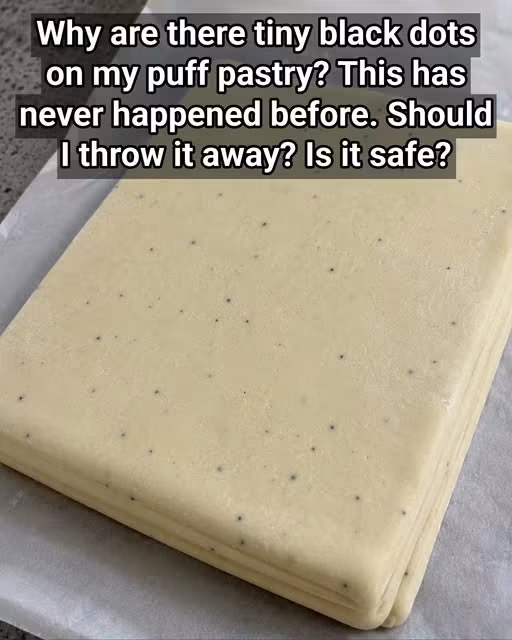
Subtitle: Oh, I know exactly the concern you’re talking about! Just last week, I was preparing my famous Cheesy Mashed Potato Puffs, and I noticed a few tiny dark spots on my pastry sheet.
Let me tell you about the first time I noticed black dots on puff pastry.
I was in my late forties, and I was preparing a recipe that called for puff pastry. I noticed some small black dots on the pastry. I wasn’t sure if it was still safe to use.
I did some research, and I learned what those dots are.
What Are Those Black Dots?
Burned flour. The dots are often burned flour.
A natural occurrence. It’s a natural occurrence in the baking process.
A harmless defect. It’s a harmless defect.
A sign of quality. It’s not a sign of poor quality.
A result of the baking process. The flour can burn slightly.
Why Do They Appear?
The baking process. The pastry is baked at a high temperature.
The flour. The flour can burn slightly.
The moisture. The moisture in the pastry can cause the flour to clump.
The butter. The butter can cause the flour to brown.
A natural reaction. It’s a natural chemical reaction.
When to Worry
If the dots are mold. Mold is a sign of spoilage.
If the dots are fuzzy. Mold is fuzzy.
If the dots are green or black. Mold can be green or black.
If the pastry smells bad. A bad smell is a sign of spoilage.
If the pastry is slimy. A slimy texture is a sign of spoilage.
If the pastry is past its expiration date.Check the expiration date.
If you’re not sure, throw it out. It’s better to be safe than sorry.
How to Tell the Difference
Burned flour: Small, dark dots. They are flat and dry.
Mold: Fuzzy, raised spots. They can be green, black, or white.
Burned flour: The pastry will have a slightly dark speckled appearance.
Mold: The mold will be clearly visible.
Burned flour: It’s harmless.
Mold: It’s a sign of spoilage.
How to Prevent Burned Flour
Use a lower temperature. A lower temperature can prevent burning.
Use a pastry cloth. A pastry cloth can prevent sticking.
Use a silpat. A silpat can prevent sticking.
Keep the pastry cold. Cold pastry is less likely to burn.
Don’t overwork the dough. Overworking can cause burning.
Use a good quality flour. Good quality flour is less likely to burn.
How to Handle Puff Pastry with Black Dots
If it’s burned flour: It’s safe to use.
If it’s mold: Throw it away.
If you’re not sure: Throw it away.
Cut off the affected area. If it’s a small area, you can cut it off.
Use it for a less visible application. You can use it for a recipe where the dots won’t be visible.
Frequently Asked Questions
What are the black dots on puff pastry?
They are usually burned flour.
Are they safe to eat?
Yes, if they are burned flour.
How can I tell the difference between burned flour and mold?
Burned flour is flat and dry. Mold is fuzzy and raised.
Should I throw away puff pastry with black dots?
Only if it’s mold.
Can I prevent black dots?
Yes, by using a lower temperature.
A Final Thought
When I learned about the black dots on puff pastry, I felt relieved. It’s a harmless defect, not a sign of spoilage.
Have you ever noticed black dots on puff pastry? Share your experience in the comments.