The Ultimate Homemade Guacamole Recipe
Introduction
Guacamole is one of the world’s most beloved avocado-based dishes. Creamy, fresh, vibrant, and packed with wholesome ingredients, this traditional Mexican dip has become a global favorite. Whether served as an appetizer, snack, side dish, or topping, guacamole brings together the rich buttery texture of ripe avocados with the bright flavors of lime, tomatoes, onions, cilantro, and spices.
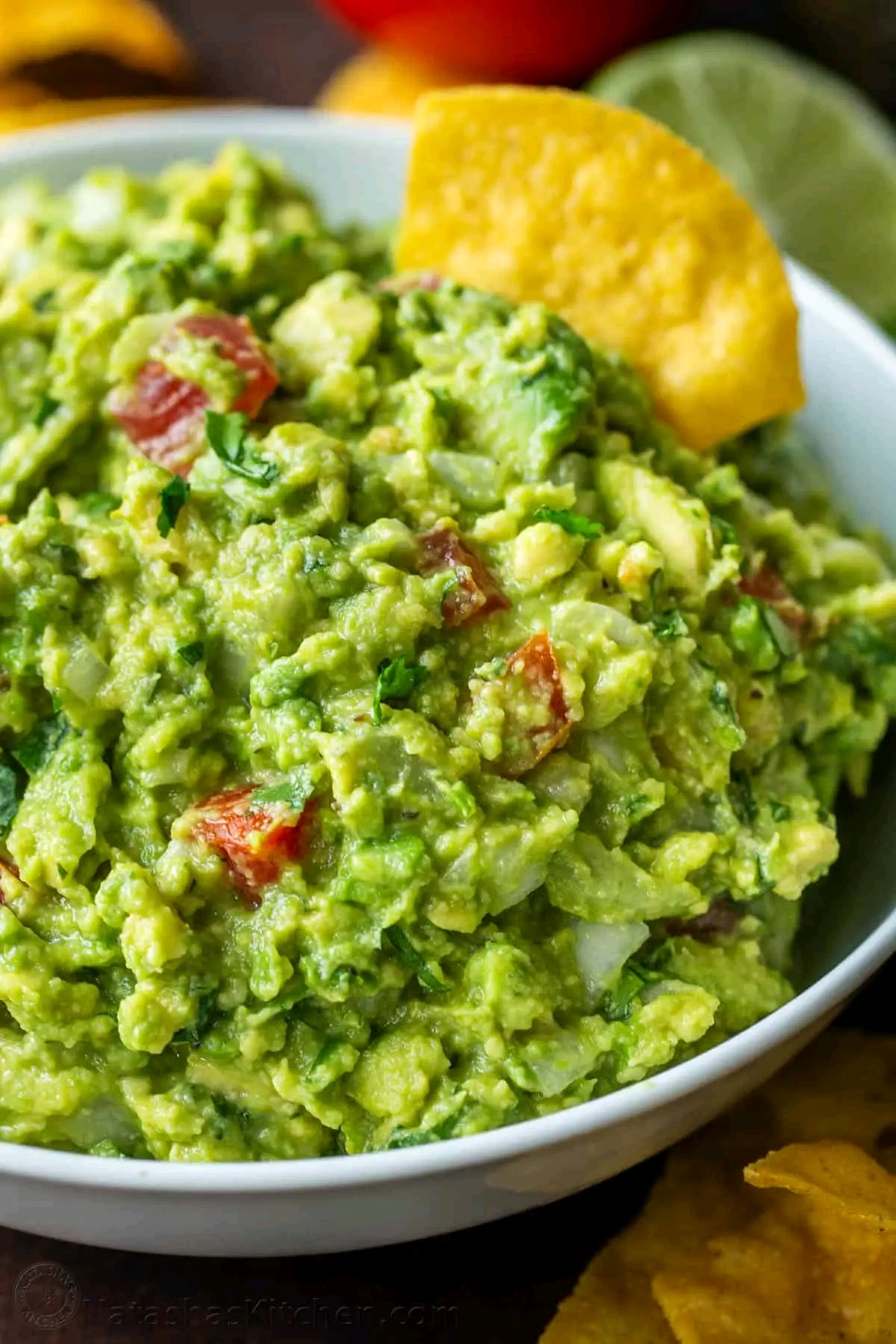
The bowl of guacamole shown in the image features a chunky, rustic texture with diced tomatoes, onions, fresh cilantro, and perfectly mashed avocados. This style highlights the freshness of each ingredient while maintaining the creamy consistency that makes guacamole irresistible.
One of the greatest qualities of guacamole is its versatility. It pairs beautifully with tortilla chips, tacos, burritos, grilled meats, seafood, roasted vegetables, burgers, sandwiches, wraps, salads, and even breakfast eggs. It can be made mild or spicy, smooth or chunky, simple or gourmet.
Besides its incredible taste, guacamole is also a nutritional powerhouse. Avocados are rich in heart-healthy monounsaturated fats, dietary fiber, potassium, folate, vitamins C, E, and K, making this dip both delicious and nourishing.
This comprehensive recipe explores every aspect of homemade guacamole, from its fascinating history to detailed preparation methods, nutritional benefits, serving ideas, storage tips, common mistakes, and much more.
—
Preparation Time
Preparation Time: 15 minutes
Cooking Time: None
Total Time: 15 minutes
Servings: 6
Difficulty: Easy
—
Ingredients
Main Ingredients
4 ripe Hass avocados
1 medium tomato, diced
½ cup white onion, finely diced
2 tablespoons fresh cilantro, chopped
2 cloves garlic, minced
1 jalapeño pepper, finely chopped (optional)
Juice of 2 fresh limes
1 teaspoon sea salt
½ teaspoon black pepper
½ teaspoon ground cumin (optional)
Optional Additions
Diced red onion
Corn kernels
Black beans
Mango
Pineapple
Pomegranate seeds
Roasted garlic
Cotija cheese
Green onions
Chopped bacon
—
Kitchen Equipment
Mixing bowl
Fork or potato masher
Chef’s knife
Cutting board
Citrus juicer
Measuring spoons
Spoon for mixing
Serving bowl
—
Step-by-Step Instructions
Step 1
Wash all vegetables thoroughly.
—
Step 2
Cut each avocado in half.
Remove the pits carefully.
Scoop the flesh into a large mixing bowl.
—
Step 3
Mash the avocados using a fork or potato masher.
Leave some chunks for a rustic texture.
—
Step 4
Add diced onion.
Mix gently.
—
Step 5
Add diced tomatoes.
Fold carefully to avoid crushing them.
—
Step 6
Mix in chopped cilantro.
—
Step 7
Add minced garlic.
—
Step 8
Add chopped jalapeño if desired.
—
Step 9
Pour in fresh lime juice.
—
Step 10
Season with:
Salt
Pepper
Ground cumin
Mix until everything is evenly combined.
—
Step 11
Taste.
Adjust seasoning if needed.
—
Step 12
Serve immediately with tortilla chips or your favorite Mexican dishes.
—
Different Preparation Methods
Traditional Mexican Method
The original guacamole is made using a molcajete, a traditional volcanic stone mortar and pestle. Garlic, salt, chili peppers, and cilantro are crushed first before ripe avocados are gently mashed. This method creates a rustic texture and enhances the flavors through slow grinding.
Rustic Chunky Guacamole
Mash the avocados lightly, leaving large chunks. Fold in the vegetables gently so every bite has distinct pieces of avocado, tomato, and onion.
Smooth Restaurant-Style Guacamole
Mash the avocados thoroughly until silky smooth before adding the diced vegetables. This produces a creamier dip that spreads easily.
Spicy Guacamole
Increase the heat by adding extra jalapeños, serrano peppers, or a pinch of cayenne pepper.
Tropical Guacamole
Add diced mango or pineapple for a sweet, fruity twist that pairs wonderfully with grilled fish or chicken.
—
Tips for Perfect Guacamole
Use ripe avocados that yield slightly to gentle pressure.
Always use fresh lime juice rather than bottled juice.
Add salt gradually and taste as you go.
Dice the onions finely for a balanced texture.
Serve immediately for the freshest flavor and brightest color.
If storing, press plastic wrap directly onto the surface to reduce browning.
—
History of Guacamole
Guacamole has ancient roots that date back to the Aztec civilization in central Mexico more than 500 years ago. The name comes from the Nahuatl language: “āhuacamolli,” meaning “avocado sauce.”
The Aztecs prized avocados for their creamy texture, rich flavor, and nutritional value. Early versions of guacamole were made simply by mashing ripe avocados with salt and local herbs.
Following the Spanish conquest of Mexico in the 16th century, new ingredients such as onions, cilantro, and citrus became incorporated into the recipe. Over time, tomatoes and chili peppers became common additions, creating the fresh and flavorful guacamole recognized today.
As Mexican cuisine spread around the world, guacamole gained immense popularity and is now enjoyed in homes and restaurants across the globe.
—
Health Benefits
Avocados
Rich in heart-healthy monounsaturated fats
Excellent source of fiber
High in potassium
Supports healthy cholesterol levels
Promotes satiety
Tomatoes
Rich in vitamin C
Good source of lycopene, a powerful antioxidant
Supports skin health
Onions
Provide antioxidants and fiber
Add natural sweetness and flavor
Garlic
Contains beneficial sulfur compounds
Supports immune health
Adds bold, savory flavor
Cilantro
Rich in vitamins A and K
Adds freshness and aromatic flavor
Lime Juice
Excellent source of vitamin C
Brightens the flavor
Helps slow avocado browning
—
Formation of Flavor and Texture
The delicious character of guacamole comes from the harmony of its ingredients. Creamy avocados form the rich base, while lime juice adds acidity that balances the natural fats. Onions provide crunch, tomatoes contribute juiciness, cilantro adds fresh herbal notes, garlic deepens the savory profile, and jalapeños bring gentle heat. Allowing the mixture to rest for a few minutes before serving helps the flavors meld together while preserving the fresh texture.
—
Serving Suggestions
Guacamole pairs wonderfully with:
Tortilla chips
Tacos
Burritos
Quesadillas
Nachos
Grilled chicken
Steak
Shrimp
Fish tacos
Fajitas
Burgers
Sandwiches
Toast
Eggs
Salads
Rice bowls
—
Storage
Refrigerate leftovers in an airtight container for up to 2 days. Press plastic wrap directly against the surface of the guacamole to minimize contact with air and slow oxidation. Stir before serving if a thin browned layer forms on top.
—
Common Mistakes
Using underripe avocados
Over-mashing until the texture becomes paste-like
Adding too much lime juice
Oversalting
Skipping fresh herbs
Letting guacamole sit uncovered, causing browning
—
Nutritional Information (Approximate Per Serving)
Calories: 210 kcal
Protein: 3 g
Fat: 19 g
Saturated Fat: 3 g
Carbohydrates: 12 g
Fiber: 8 g
Sugars: 2 g
Sodium: 290 mg
Potassium: 620 mg
Vitamin C: 18% Daily Value
Vitamin E: 14% Daily Value
Vitamin K: 22% Daily Value
Folate: 20% Daily Value
—
Why People Love Guacamole
Guacamole has earned a devoted following because it is simple to prepare, bursting with fresh flavor, and incredibly versatile. Its creamy texture, bright citrus notes, and colorful mix of vegetables make it a favorite at parties, family dinners, picnics, barbecues, and festive celebrations. Health-conscious eaters appreciate its wholesome ingredients, while food lovers enjoy how well it complements countless dishes. From casual gatherings to elegant meals, guacamole is a timeless classic that appeals to people of all ages.
—
Conclusion
Homemade guacamole is a celebration of fresh, natural ingredients transformed into a creamy, flavorful dish that has delighted people for centuries. With ripe avocados, crisp vegetables, fragrant herbs, and a splash of fresh lime juice, this recipe delivers authentic taste, excellent nutrition, and endless versatility. Whether enjoyed as a dip, spread, topping, or side dish, guacamole remains one of the easiest and most rewarding recipes to prepare, bringing vibrant color and delicious flavor to every table.