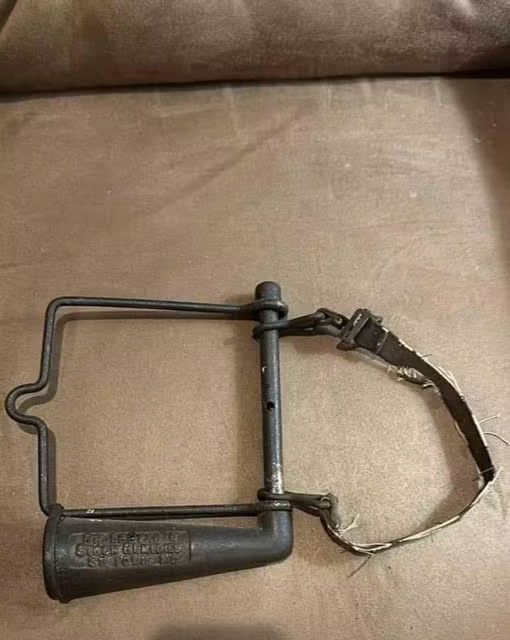
Subtitle: If you’ve inherited a strange brass object with a long, curved tube and a cylinder-like reservoir—and you’ve been wondering what it is—you’re about to discover one of the most ingenious veterinary tools ever created.
Let me tell you about the first time I saw one of these.
It was sitting on a shelf in my grandfather’s barn, covered in dust and cobwebs. I picked it up, turning it over in my hands, trying to figure out what it could possibly be. It looked like some kind of old-fashioned medical device—but for what? And for whom?
I asked my grandfather, and his eyes lit up. “That,” he said, “is a horse drencher. And it saved a lot of lives in its day.”
He told me stories about colicky horses, about the frustration of trying to get medicine down a 1,000-pound animal that didn’t want to take it, and about the ingenuity of the people who designed these tools. By the end of the conversation, I was completely fascinated.
Today, I’m sharing that fascination with you. Because this brass beauty isn’t just an antique—it’s a window into a time when veterinary medicine was as much about brute strength as it was about skill.
What Is a Horse Drencher?
A horse drencher (also called a drenching bit or drenching horn) is a veterinary tool used to administer liquid medication, such as mineral oil or laxatives, to horses. It was especially important for treating colic, a painful and potentially fatal intestinal condition in horses.
The device consists of a brass or iron cylinder (the reservoir) connected to a long, curved tube. The tube is inserted through the horse’s mouth into the esophagus, and the liquid medication is poured into the reservoir. A plunger or syringe-like mechanism then forces the liquid down the tube and into the horse’s stomach.
Why brass? Brass was commonly used because it’s durable, non-reactive to medications, and relatively easy to clean.
The Brilliant Mechanics: How the Drenching Bit Worked
To understand why this tool looks the way it does, you have to understand the sheer physical power of a horse and the biological challenge of treating colic.
The Problem: Colic in Horses
Colic is one of the most dangerous conditions a horse can face. It’s a general term for abdominal pain, often caused by intestinal blockages or impactions—think of it as a severe, life-threatening constipation.
To treat colic, veterinarians needed to administer large quantities of thick, heavy lubricants (like paraffin oil) or laxatives (like Epsom salts). But how do you get a quart of thick oil down the throat of a 1,000-pound animal that doesn’t want to swallow it?
The Solution: The Drenching Bit
The drenching bit was designed to solve this problem through a combination of anatomy and leverage.
The bit: It wasn’t a traditional bit with a single bar. It had a double-jointed mechanism that opened when the horse tried to clamp down, relaxing the jaw and creating a channel for the tube.
The curved tube: The long, curved tube was designed to follow the anatomy of the horse’s mouth and throat, ensuring the medication was delivered correctly to the esophagus.
The reservoir: The cylinder at the top could hold a significant amount of liquid medication.
The plunger: A plunger or syringe-like mechanism would then force the medication down the tube and into the horse.
Why It Worked
The design worked because it bypassed the horse’s natural resistance to swallowing. The horse’s jaw was relaxed by the bit, and the tube delivered the medication directly into the esophagus. The reservoir held enough medication to make the treatment efficient.
The History of Veterinary Medicine and the Drenching Bit
Horse drenchers have been used for centuries. The earliest versions were simple wooden tubes, but by the 19th century, brass and iron versions had become common.
The golden age of horse drenchers: The late 1800s and early 1900s were the peak of the drenching bit’s use. The increasing mechanization of agriculture and transportation meant that horses were more valuable than ever, making colic treatment a matter of economic survival.
The decline of the drencher: With the rise of modern veterinary medicine and the development of safer, more precise treatment methods, the drenching bit fell out of use. Today, veterinarians use nasogastric tubes to administer medication—a more precise and less invasive method.
The survival of the drencher: Despite its decline in professional use, many drenchers survived as family heirlooms or barn antiques.
Why It’s a Meaningful Family Heirloom
This brass beauty is more than just an antique—it’s a symbol of a bygone era when human ingenuity and a deep understanding of animal anatomy worked together to solve a life-or-death problem.
It represents resourcefulness. Before modern medicine, farmers and veterinarians had to rely on their wits and their tools to keep animals healthy.
It embodies craftsmanship. These tools were often handmade, with beautiful details that reflect the pride their makers took in their work.
It tells a story. Every scratch, dent, and worn spot on this drencher is a testament to the animals it helped and the people who used it.
It connects you to history. Holding this drencher, you’re holding a piece of veterinary history—a tangible link to the past.
How to Tell if Your Brass Beauty Is a Drencher
If you have a brass object with these features, you’re likely looking at a horse drencher:
A cylindrical reservoir with a wide opening at the top
A long, curved tube extending from the bottom of the reservoir
A plunger or syringe mechanism (if yours is missing, the drencher is still identifiable)
Brass or iron construction (some were made of bronze or copper)
A hook or ring for hanging
If you’re not sure, a local antique dealer or veterinarian may be able to help you identify it.
Frequently Asked Questions
Is it worth anything?
Horse drenchers vary in value. Common ones may sell for $30-$100, while rare or early examples can fetch several hundred dollars. Condition and provenance matter, too.
How old is it?
Most brass drenchers date from the late 1800s to the early 1900s. Some earlier versions are from the 1700s.
Can it still be used?
It’s not recommended—modern veterinary practices are safer and more precise.
How was it sterilized?
Veterinarians would typically boil the drencher in water or use an alcohol solution.
Why did they use brass?
Brass is durable, non-reactive, and relatively easy to clean.
Is it okay to clean it?
Yes, but gently. Avoid using harsh chemicals. Warm soapy water and a soft cloth should be enough. For deeper cleaning, consult an antique specialist.
What should I do with it?
Display it! It’s a beautiful, historical object. You could polish it and place it on a shelf, or keep it as a conversational piece.
A Final Thought
This brass beauty is a reminder of how far veterinary medicine has come—and how much we owe to the ingenuity of those who came before us. It’s a symbol of the relationship between humans and animals, and of the resourcefulness required to care for creatures so much larger and stronger than ourselves.
If you have one of these in your family, treasure it. It’s not just an antique—it’s a story waiting to be told.
Have you ever found a mysterious antique and wondered what it was? What did it turn out to be? Share your stories in the comments—I’d love to hear about your discoveries! 🐴🔧✨