The Ultimate Guide to Southern Banana Pudding: History, Science, and the Definitive Chessman Cookie Recipe
If sweet comfort food had an absolute monarch in the American South, it would undoubtedly be banana pudding. More than just a dessert, a true Southern banana pudding is a cultural touchstone, a staple at Sunday dinners, summer barbecues, funeral repasts, and church potlucks. It is a dish woven into the very fabric of hospitality.
While the traditional version utilizes vanilla wafers, a modern masterpiece emerged in the Southern culinary canon that forever changed the game: replacing those wafers with buttery, shortbread Pepperidge Farm Chessmen cookies. This singular swap elevates the humble, nostalgic dish into a velvety, rich, structurally sound dessert fit for the finest tables.
Whether you are looking to honor your Southern roots, recreate a viral favorite, or understand the meticulous culinary science that prevents a banana pudding from turning watery or gray, this comprehensive, 3,000-word deep dive is your masterclass.
Part I: The Surprising History of Banana Pudding
To understand why this dessert evokes such fierce passion, we must first look at how a tropical fruit became synonymous with Southern American identity.
The Transatlantic Voyage of the Banana
Bananas are not native to the American South. In the early to mid-19th century, they were an exotic luxury. Imported from the Caribbean and Central America into bustling port cities like New Orleans, Charleston, and New York, they were expensive, highly perishable, and initially eaten with a knife and fork by the wealthy elite.
By the late 1880s, the expansion of the steamship network and the invention of refrigerated railway cars changed everything. Suddenly, bananas could travel inland safely and cheaply. Railroad lines brought massive quantities of the fruit to rural communities across the United States, turning an exotic delicacy into one of the most affordable fruits on the market. Southern cooks, known for their resourcefulness and love for sweet, creamy custards, immediately found a home for them.
From English Trifle to American Classic
The structural blueprint of banana pudding belongs to the classic English trifle. For centuries, British cooks had layered stale sponge cake or biscuits with rich egg custard, fruit, and whipped cream or meringue. Early American colonists brought this technique with them.
The earliest recorded recipes for banana pudding appeared in late 19th-century publications, but they didn’t look exactly like the dish we know today. These early versions often used sponge cake or ladyfingers. It wasn’t until the National Biscuit Company (later known as Nabisco) introduced the “Vanilla Wafer” in the early 20th century that the modern recipe crystallized. In the 1940s, Nabisco began printing a recipe for banana pudding directly on the back of the yellow box, cementing the vanilla wafer’s dominance for decades.
The Chessman Revolution
As home cooking evolved, so did recipes. In the late 20th century, creative home bakers began experimenting with the biscuit layer. While vanilla wafers provide nostalgia, they can easily become unpleasantly mushy when exposed to custard for more than 24 hours.
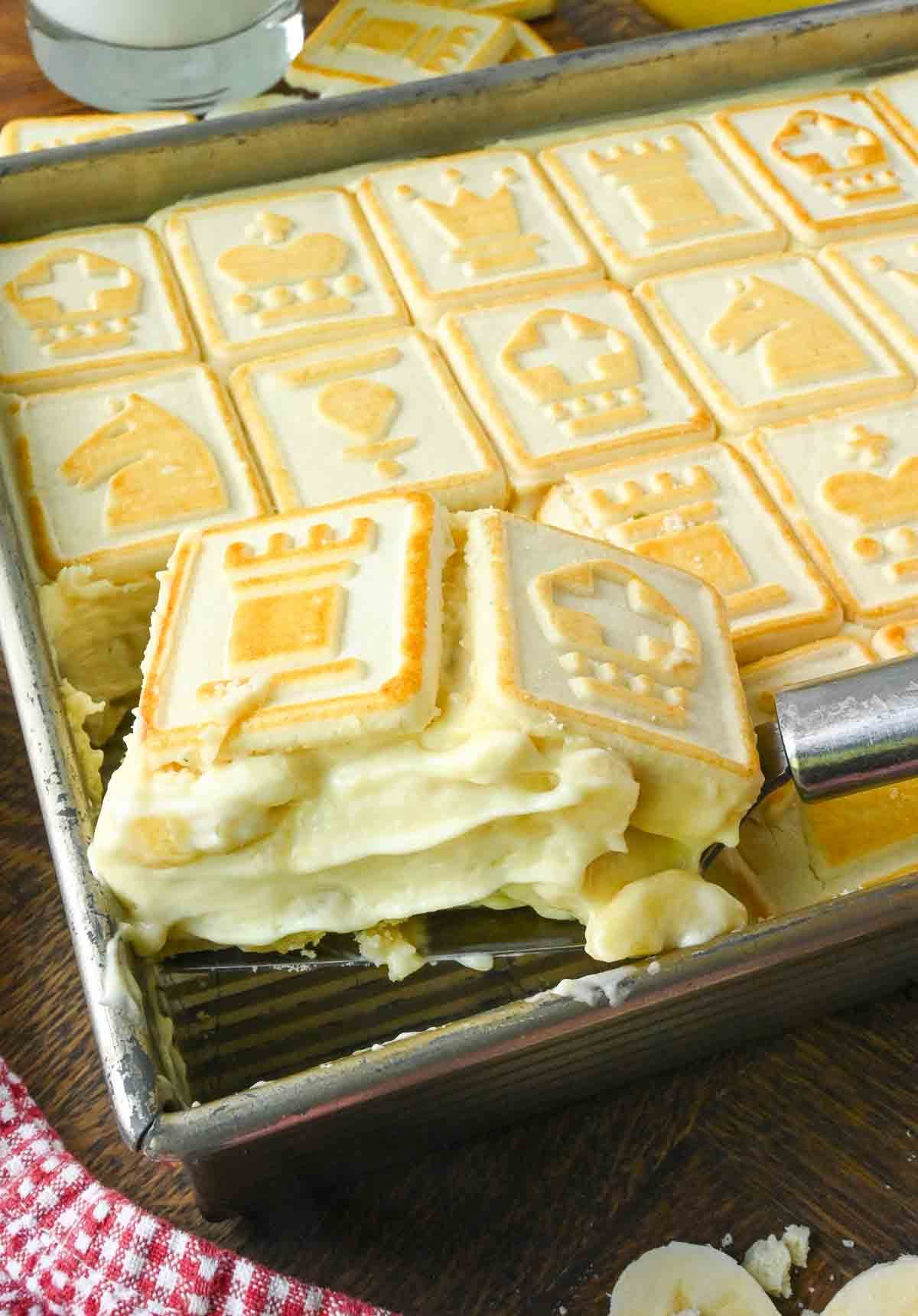
Enter the Pepperidge Farm Chessmen cookie. These square, buttery, embossed shortbread cookies offered a profound upgrade. They are thicker and richer than vanilla wafers, meaning they absorb moisture at a slower, more controlled rate. Instead of turning to mush, they soften into a texture reminiscent of delicate pound cake. Furthermore, the elegant imprints of chess pieces—rooks, kings, queens, and knights—gave the top of the pudding an instantly recognizable, picture-perfect mosaic aesthetic. This variation, heavily popularized by Southern lifestyle icons, transformed a casual picnic dessert into an elegant centerpiece.
Part II: The Three Pillars of Banana Pudding Excellence
An exceptional Chessman banana pudding relies on the perfect execution of three distinct components: the cookie matrix, the banana layer, and the custard base.
+-------------------------------------------------------+
|             Top Layer: Crisp Chessmen Cookies          |
+-------------------------------------------------------+
|             Mid Layer: Rich, Velvety Custard          |
+-------------------------------------------------------+
|             Mid Layer: Ripe, Sliced Bananas          |
+-------------------------------------------------------+
|             Base Layer: Softened Chessmen Cookies     |
+-------------------------------------------------------+
1. The Cookie Matrix
The cookies in a banana pudding serve two critical purposes: structural support and textural contrast. The bottom layer of cookies acts as a sponge, drinking in just enough moisture from the pudding to soften into a cake-like foundation. The top layer of cookies, conversely, should remain proudly crisp, providing a satisfying bite against the ocean of cream below.
2. The Bananas (The Goldilocks Dilemma)
The selection and preparation of the bananas will make or break your pudding.
- Under-ripe (Green tips): These are starchy, tart, and lack the signature aromatics. They will feel unpleasantly firm in a velvety pudding.
- Over-ripe (Heavy brown spotting/black): While perfect for banana bread, these are disastrous for banana pudding. They are too soft, structurally weak, and will rapidly bleed moisture into your custard, turning it watery. They also oxidize (turn gray) much faster.
- The Sweet Spot: Look for bright yellow bananas with just a few tiny, faint brown specks. They should feel firm to the touch but fragrant when sniffed near the stem.
3. The Custard: Scratch-Cooked vs. Enhanced Instant
Purists will argue until the cows come home about the “correct” pudding base. There are two distinct paths:
- The Traditional Starch-Thickened Custard: Made on the stovetop with egg yolks, sugar, milk, and cornstarch or flour. It is classic, clean, and tastes purely of vanilla and dairy. However, it requires precise temperature control and is prone to weeping (releasing liquid) if overcooked or under-cooled.
- The Enhanced Southern “No-Bake” Base: This method, which has dominated Southern family reunions for fifty years, blends instant vanilla pudding mix with sweetened condensed milk and heavy whipped cream (or cream cheese). It yields a spectacularly stable, ultra-creamy, foolproof pudding that sets like a dream and handles the weight of heavy cookies beautifully.
For our master recipe, we will focus on the ultimate hybrid method—an enhanced cream cheese and vanilla bean base that offers the stability of the modern method with the luxurious flavor of scratch cooking.
Part III: The Science of Banana Pudding: Avoiding Common Pitfalls
Dessert making is chemistry. Banana pudding might look like a casual, rustic refrigerator cake, but underlying chemical reactions dictate its success. Understanding these rules ensures your pudding stays beautiful for days.
Why Do Bananas Turn Brown, and How Do We Stop It?
The moment you slice a banana, you expose its cells to oxygen. This triggers an enzyme called polyphenol oxidase, which reacts with oxygen to create melanin—the same dark pigment found in human skin. This process is called enzymatic browning.
To prevent your pudding from looking unappetizingly gray the next day, employ these scientific shields:
- The Acid Barrier: Lightly tossing your banana slices in a splash of fresh pineapple juice, lemon juice, or apple juice lowers the pH on the surface of the fruit. This acidic environment denatures (deactivates) the browning enzyme. Pineapple juice is preferred over lemon juice because its sweetness blends seamlessly with the pudding without adding a sharp sour note.
- The Oxygen Blanket: Submerge your banana slices entirely within the custard layers. If air cannot touch the bananas, they cannot oxidize. Ensure no banana slices are sticking out of the top layer or touching the bare edges of the pan.
The Battle Against “Weeping” (Syneresis)
Have you ever cut into a day-old banana pudding only to find a puddle of watery liquid at the bottom of the pan? This is called syneresis, or “weeping.” It occurs when starch molecules or egg proteins bond too tightly together over time, squeezing out the water trapped between them.
- The Starch Rule: If you are making a stovetop custard, ensure your cornstarch boils for at least one full minute. Cornstarch contains an enzyme called alpha-amylase which breaks down starch. If the starch isn’t boiled long enough to destroy this enzyme, it will digest your pudding over the next 24 hours, turning it into a watery soup.
- The Cookie Shield: Chessmen cookies absorb excess moisture beautifully. By placing a generous layer at the bottom, any micro-weeping from the bananas or pudding is absorbed by the shortbread, turning it into a delicious, soft cake rather than a puddle.
Part IV: The Master Recipe: Creamy Chessman Banana Pudding
This recipe makes a grand, party-sized 9 \times 13-inch pan. It serves 12 to 16 people and is designed to sit in the refrigerator overnight, allowing the flavors to marry and the lower cookie layers to soften perfectly.
Ingredients
The Cookie and Fruit Layers
- 2 bags (7.1 oz each) Pepperidge Farm Chessmen cookies
- 6 to 7 large, perfectly ripe bananas
- 2 tablespoons 100% pure pineapple juice (or light lemon juice)
The Luxurious Custard Base
- 1 package (8 oz) cream cheese, softened to room temperature
- 1 can (14 oz) sweetened condensed milk
- 2 cups whole milk (cold)
- 1 package (5 oz) instant French vanilla or vanilla pudding mix
- 1 tablespoon pure vanilla extract (or vanilla bean paste for beautiful black specks)
The Fresh Whipped Cream
- 2 cups heavy whipping cream, chilled
- 1/4 cup powdered sugar
- 1 teaspoon pure vanilla extract
Detailed Step-by-Step Instructions
Step 1: Prep the Baking Dish and Lower Cookie Layer
- Select a high-sided 9 \times 13-inch baking pan (glass or ceramic works best so guests can see the beautiful layers from the side).
- Open your first bag of Chessmen cookies. Arrange them in a neat, single layer across the entire bottom of the pan, face down (stamping facing the bottom of the pan). Break a few cookies into smaller pieces if necessary to fill any large gaps along the edges.
Step 2: Slice and Protect the Bananas
- Peel your bananas and slice them into uniform rounds, roughly 1/4-inch thick. Slicing them too thin will cause them to dissolve into the pudding; slicing them too thick makes the dessert difficult to portion neatly.
- Place the banana rounds into a medium bowl. Drizzle the 2 tablespoons of pineapple juice over them.
- Gently toss the slices using your hands or a rubber spatula, ensuring every single piece has a micro-coating of acid. Set aside.
Step 3: Beat the Cream Cheese and Condensed Milk
- In a large mixing bowl (or the bowl of a stand mixer fitted with the paddle attachment), place the softened cream cheese.
- Beat on medium-high speed for 2 to 3 minutes until it is completely smooth, fluffy, and free of any lumps. Crucial tip: If your cream cheese is cold, it will form tiny white beads that are impossible to smooth out later.
- Gradually pour in the sweetened condensed milk while continuing to mix. Scrape down the sides and bottom of the bowl with a spatula to ensure a completely homogeneous, silky mixture.
Step 4: Whisk the Pudding Base
- In a separate bowl, pour in the 2 cups of cold whole milk and add the instant vanilla pudding mix along with the vanilla extract or paste.
- Whisk vigorously for 2 minutes until the powder is fully dissolved and the mixture begins to thicken slightly.
- Pour this pudding mixture into the cream cheese and condensed milk mixture. Fold and blend them together on low speed until combined into a uniform, pale yellow, ultra-rich cream base.
Step 5: Whip the Cream
- In a clean bowl (preferably chilled), pour your 2 cups of cold heavy whipping cream. Add the powdered sugar and 1 teaspoon of vanilla extract.
- Using a hand mixer or stand mixer fitted with the whisk attachment, beat on medium-low speed until foamy, then increase to medium-high.
- Whip until stiff peaks form. Stiff peaks mean that when you lift the beaters straight out of the cream, the peaks stand straight up without drooping at the tips. Be careful not to over-whip, or you will end up with sweet butter.
- Take exactly half of this fresh whipped cream and gently fold it into your vanilla pudding cream cheese base using a rubber spatula. This lightens the dense pudding into a luxurious mousse-like consistency. Reserve the remaining half of the plain whipped cream for the top layer.
Step 6: Assemble the Layers
Now comes the architecture of the dessert.
- First Banana Layer: Arrange half of your acid-tossed banana slices in an even layer directly over the Chessmen cookies at the bottom of the pan.
- First Pudding Layer: Pour half of your lightened pudding mixture over the bananas. Use an offset spatula or the back of a spoon to smooth it out, pushing it gently to the edges to seal the bananas away from the air.
- The Middle Cookie Layer: Open your second bag of Chessmen cookies. Reserve enough perfectly intact cookies to cover the very top of the pan later (you will need about 24 cookies for the top grid). Take any broken cookies or remaining extras from the bags and layer them over the pudding layer.
- Second Banana Layer: Layer the remaining half of the banana slices over the middle cookie layer.
- Second Pudding Layer: Pour the remaining half of the pudding mixture over the bananas, smoothing it out evenly.
Step 7: The Whipped Cream Top and Chessman Mosaic
- Spread the reserved plain whipped cream evenly over the final pudding layer, creating a clean white canvas.
- Carefully arrange your reserved, beautiful Chessmen cookies in a precise grid across the top of the whipped cream, face up (chess symbols pointing toward you). Pack them tightly together, side-by-side, so that when the pudding is sliced later, each square portion gets its own beautiful cookie crown.
Step 8: The Overnight Chill (The Non-Negotiable Step)
- Cover the pan tightly with plastic wrap. Ensure the plastic wrap isn’t pressing directly against the top cookies if your whipped cream layer is tall.
- Place the pan in the refrigerator for at least 6 hours, but ideally overnight (12 to 24 hours).
- What happens during this time? The bottom and middle cookie layers will absorb moisture, transforming into a tender, melt-in-your-mouth texture. The flavors of banana, vanilla bean, and shortbread butter will bleed into one another, creating a symphonic flavor profile.
Part V: Creative Flavor Transformations
Once you have mastered the classic Chessman banana pudding, you can use the structure as a canvas for gourmet variations. By adjusting the fillings, spices, and sauces, you can match the dessert to different seasons or flavor profiles.
1. The Salted Caramel Bourbon Twist
This variation introduces a rich, smoky, and sophisticated adult note to the dessert.
- The Modification: Whisk 2 tablespoons of good quality Kentucky bourbon into your pudding base along with the vanilla.
- The Assembly: When layering, drizzle a rich, homemade salted caramel sauce directly over the banana layers before covering them with pudding. Finish the top of the dessert with an extra drizzle of caramel over the Chessmen cookies and a tiny pinch of flaky Maldon sea salt.
2. Toasted Coconut Tropical Pudding
Turn the classic Southern dessert into a tropical escape reminiscent of a Caribbean vacation.
- The Modification: Replace 1 cup of the whole milk in the custard base with 1 cup of thick, unsweetened coconut cream.
- The Assembly: Fold 1 cup of sweetened, shredded coconut that has been toasted to a deep golden brown into the whipped cream. Sprinkle extra toasted coconut around the borders of the top Chessmen cookie grid for a beautiful, textured finish.
3. The Chocolate-Guanaja Layered Decadence
Bananas and chocolate are a legendary culinary match. This version plays on that pairing without losing the comforting identity of the original pudding.
- The Modification: Divide your finished pudding base into two bowls. In one bowl, gently fold in 4 ounces of high-quality dark chocolate (60% to 70% cacao) that has been melted and cooled slightly.
- The Assembly: Alternate layering the vanilla pudding base and the dark chocolate pudding base between your cookies and bananas. Shave dark chocolate curls over the top whipped cream layer before placing your Chessmen cookies.
4. Autumn Spiced Pecan Banana Pudding
Transform this summer picnic staple into a cozy, comforting autumn dessert perfect for Thanksgiving.
- The Modification: Add 1 teaspoon of ground cinnamon, 1/4 teaspoon of ground nutmeg, and a pinch of ground cloves to the dry pudding mix before whisking it with milk.
- The Assembly: Sauté 1 cup of chopped Southern pecans in butter and brown sugar until candied and fragrant. Layer these candied pecans alongside the bananas inside the pudding to add an incredible, buttery crunch.
Part VI: The Technical Comparison of Cookie Bases
Why choose Chessmen cookies over traditional options? To settle any kitchen debates, let us look at how different cookie bases behave structurally and texturally within a banana pudding matrix over a 72-hour window.
| Cookie Type | Fat Content & Base | Moisture Absorption Rate | Texture at 24 Hours | Best For |
|---|---|---|---|---|
| Traditional Vanilla Wafers | Low-Medium (Vegetable Oil) | Very High (Absorbs liquid quickly) | Soft, uniform, can border on mushy if pudding is wet. | Nostalgic, traditional, quick-turnaround potlucks. |
| Pepperidge Farm Chessmen | High (Pure Butter Shortbread) | Moderate (Absorbs liquid slowly) | Pillowy, cake-like, holds its shape perfectly. | Premium presentation, overnight prepping, catering. |
| Grahams / Honey Crackers | Low (Wheat-Based) | High | Slightly gritty or chewy rather than cake-like. | Budget substitutions or icebox-style variations. |
| Biscoff Cookie Butter Biscuits | Medium (Spiced/Caramelized) | Low to Moderate | Dense, chewy, holds spiced crunch well. | Spiced variations, winter desserts. |
Part VII: Storage, Leftovers, and Serving Etiquette
Because banana pudding contains fresh dairy and raw fruit, proper storage management is vital to keep it fresh and appetizing for multiple days.
Refrigerator Lifespan
Stored properly, banana pudding is delicious for up to 4 days in the refrigerator. After day two, the bananas will slowly begin to soften further and release microscopic amounts of water, and the top Chessmen cookies will lose their distinct crispness, turning soft like the interior layers. However, the flavor will remain phenomenal.
Can You Freeze Banana Pudding?
No. Banana pudding does not survive the freezing and thawing process. When heavy cream, pudding starch, and cream cheese freeze, the water molecules crystallize. Upon thawing, these crystals melt, causing the entire structural emulsion of the custard to collapse. The pudding will separate into a grainy, watery mess, and the thawed bananas will turn black and slimy. Enjoy this dessert fresh from the refrigerator.
Serving Etiquette: The Scoop vs. The Slice
- The Sunday Dinner Scoop: Historically, banana pudding was served out of a large, deep bowl using a large spoon. It is messy, chaotic, comforting, and absolutely acceptable for casual family gatherings.
- The Catered Square: Because this Chessman version is built beautifully in a 9 \times 13-inch grid, you can achieve clean, bakery-style square slices. To do this, ensure the pudding has chilled for a full 24 hours to firmly set. Use a sharp utility knife dipped in hot water and wiped clean between cuts to slice straight down between the cookies. Lift each square out cleanly using an offset metal spatula.
Part VIII: Troubleshooting Your Dessert
Even experienced bakers run into trouble occasionally. If your pudding isn’t turning out exactly like the master standard, use this quick diagnostic guide to correct your technique.
1. “My custard is lumpy and has white spots.”
- The Cause: Your cream cheese was too cold when you attempted to beat it, or you added cold milk directly to un-whipped cream cheese.
- The Fix: If it has already happened, pass the custard base through a fine-mesh metal strainer, using a rubber spatula to push the cream through while trapping the stubborn cream cheese lumps. For future batches, ensure your cream cheese can sit on the counter for at least 2 hours to reach true room temperature.
2. “The whole dessert is sliding around and won’t hold its shape when cut.”
- The Cause: Either your instant pudding wasn’t whisked long enough to activate its thickening starches, or your heavy cream was under-whipped to soft peaks instead of stiff peaks.
- The Fix: Place the entire baking pan back into the coldest part of your refrigerator for an additional 4 to 6 hours. The gelatinizing agents in the instant pudding and the fats in the cream cheese will tighten further as the temperature drops.
3. “The top cookies have gone soft before I even served the dessert.”
- The Cause: The pan was covered with plastic wrap while the pudding mixture was still slightly warm, or the air humidity inside your refrigerator is extremely high.
- The Fix: To keep the top grid of Chessmen cookies completely crunchy for a special event, assemble the entire pudding up through the plain whipped cream layer and chill it overnight. Just 30 minutes before serving, press your crisp Chessmen cookies into the top of the whipped cream. This gives you the ultimate contrast of an overnight-softened interior cake matrix and a freshly opened, perfectly crunchy shortbread top.
Conclusion: A Masterpiece of Southern Hospitality
The magic of a Chessman banana pudding lies in its beautiful deceptive simplicity. It requires no complex baking skills, no fussy water baths, and no delicate dough rolling. Instead, it relies on the thoughtful assembly of accessible ingredients, guided by a few core principles of food science.
By upgrading to the buttery architecture of shortbread cookies, protecting your fresh fruit with a whisper of fruit acid, and providing a stable, velvety canvas of cream cheese-infused vanilla custard, you transform a nostalgic comfort food into a show-stopping luxury dessert.
Bring this master recipe to your next gathering, step back, and watch as your family and friends discover the unparalleled joy of a truly perfect Southern banana pudding.