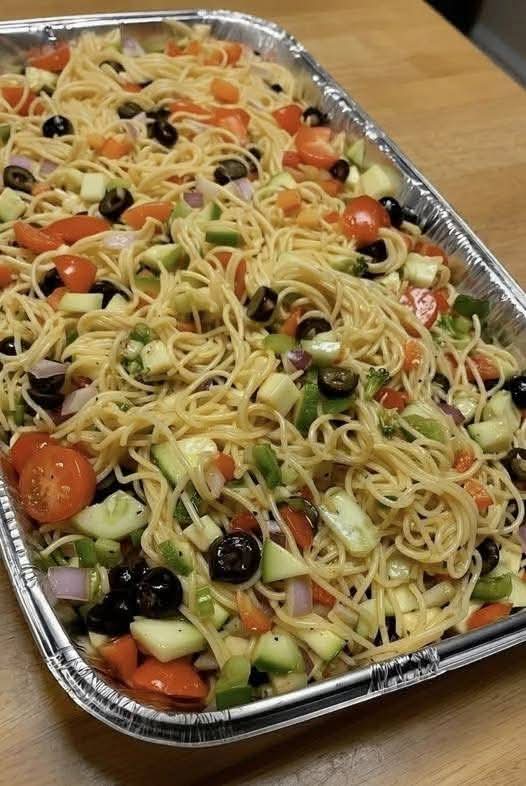
The Ultimate Guide to Spaghetti Salad: The Ultimate Crowd-Pleasing Potluck Dish
If you have ever attended a backyard barbecue, a family reunion, a block party, or a neighborhood potluck, you know that the food table is the undisputed center of gravity. Amidst the rows of grilled burgers, slow-cooked pulled pork, and trays of classic potato salad, there is always one dish that quietly steals the show. It is colorful, it is incredibly refreshing, and it has an uncanny ability to disappear faster than almost anything else on the table.
We are talking about Spaghetti Salad.
While traditional pasta salads often rely on bite-sized shapes like rotini, penne, or farfalle, spaghetti salad turns the classic formula on its head. Long, slender strands of perfectly cooked pasta are tossed with an array of crisp, vibrant vegetables, savory black olives, and rich cheese, all bound together by a zesty, tang-forward Italian dressing. It is a dish that effortlessly bridges the gap between hearty comfort food and a light, summery salad.
In this ultimate guide, we will explore everything you ever needed to know about this legendary dish. From its origins and why the spaghetti noodle works so beautifully, to a comprehensive breakdown of ingredients, a foolproof step-by-step recipe, creative variations, and expert tips for making it ahead of time, this article is your definitive resource.
Why Spaghetti Salad is the King of Potlucks
Before diving into the mechanics of the kitchen, it is worth looking at exactly why this dish has achieved such a cult status among home cooks and event caterers alike.
1. The Textural Contrast
Most pasta salads can feel a bit monotonous. A heavy scoop of macaroni salad or a dense bowl of tortellini salad often lacks a satisfying crunch. Spaghetti salad solves this problem beautifully. The contrast between the soft, yielding chew of the pasta strands and the sharp, clean snap of diced cucumbers and bell peppers creates a dynamic mouthfeel that keeps you coming back for a second (and third) helping.
2. Flavor Absorption
Spaghetti has a massive amount of surface area relative to its volume. When you toss spaghetti in a vibrant vinaigrette, the dressing coats every single millimeter of the noodle. Furthermore, as the salad sits in the refrigerator, the pasta acts like a sponge, drawing the garlic, herbs, and vinegar deep into its core.
3. Ultimate Customizability
Think of spaghetti salad as a blank canvas. If you have a crisper drawer full of vegetables that need to be used before your weekly grocery run, this salad is your answer. You can easily adapt it to accommodate dietary restrictions, upgrade it with premium proteins, or pivot the flavor profile entirely to suit your personal tastes.
4. Budget-Friendly Scale
Feeding a crowd can get expensive very quickly. Spaghetti salad relies on affordable pantry staples—pasta, bottled or homemade dressing, and everyday produce. With just a few dollars, you can assemble a massive aluminum tray of food that can easily feed twenty hungry guests, making it a true champion of budget-friendly hosting.
Deconstructing the Anatomy of a Perfect Spaghetti Salad
To understand how to make the best possible version of this dish, we need to break it down into its core components. Every element plays a specific structural or flavor role.
+-------------------------------------------------------------+
|               THE SPAGHETTI SALAD MATRIX                    |
+------------------------------+------------------------------+
| COMPONENT                    | PURPOSE / FUNCTION           |
+------------------------------+------------------------------+
| Spaghetti Pasta (Al Dente)   | The structural backbone      |
| Crisp Cucumbers & Peppers    | The essential "crunch" factor|
| Tomatoes & Red Onions        | Sweetness and sharp bite     |
| Black Olives & Feta/Parmesan | Savory, briny depth          |
| Italian Dressing & Seasoning | The acidic, flavorful binder |
+------------------------------+------------------------------+
The Pasta: Finding the Right Thickness
While standard spaghetti is the namesake of the dish, you actually have a few options within the long-pasta family:
- Standard Spaghetti: The classic choice. It has enough thickness to hold up against heavy chunks of vegetables without breaking apart during tossing.
- Thin Spaghetti: A fantastic alternative if you prefer a lighter pasta-to-vegetable ratio. It absorbs dressing incredibly fast.
- Angel Hair (Capellini): Generally avoided for this specific preparation. Angel hair is highly delicate and can become mushy or form an unappealing, tangled clump when chilled with heavy vegetables.
The Vegetable Mosaic
The goal with your vegetable selection is color, contrast, and structure. You want a literal rainbow in the bowl.
- Cucumbers: English or Persian cucumbers are preferred because they have thinner skins and fewer seeds, ensuring they stay crisp without weeping excess water into the salad.
- Bell Peppers: A mix of red, orange, and green bell peppers adds an undeniable visual pop and a mild, sweet crunch.
- Tomatoes: Sweet cherry or grape tomatoes, halved or quartered, provide bursts of juicy acidity.
- Red Onion: Finely diced red onion offers a sharp, peppery bite that cuts through the richness of the dressing.
The Savory Accents
To balance out the fresh sweetness of the vegetables, you need elements that bring salt, fat, and umami to the party.
- Black Olives: Sliced black olives add a smooth, mild saltiness that pairs perfectly with Italian flavors.
- Cheese: Cubed mild cheddar, crumbled feta, or a generous dusting of freshly grated Parmesan cheese injects a creamy, savory element that grounds the salad.
The Dressing and the Secret Weapon
The dressing needs to be robust. Because pasta naturally mutes flavors when cold, a weak dressing will result in a bland salad. A high-quality zesty Italian dressing is the standard base, but the true secret weapon used by seasoned home cooks is Salad Supreme seasoning. This commercial spice blend typically contains paprika, sesame seeds, poppy seeds, celery seed, and Romano cheese, giving the dish its signature speckled look and a complex, addictive flavor profile.
The Master Recipe: Step-by-Step Spaghetti Salad
This master recipe yields a generous party-sized portion. It is designed to be prepared in an aluminum catering tray or a very large mixing bowl.
Ingredients Checklist
For the Salad Base:
- 1 pound (16 oz) spaghetti or thin spaghetti
- 1 large English cucumber, unpeeled and diced into bite-sized pieces
- 1 pint cherry tomatoes, cut in half
- 1 medium red bell pepper, cored and diced
- 1 medium green bell pepper, cored and diced
- 1 small red onion, finely chopped
- 1 can (2.25 oz) sliced black olives, drained
- 1 cup cubed provolone, mozzarella, or mild cheddar cheese (optional)
For the Dressing & Seasoning:
- 1 bottle (16 oz) high-quality zesty Italian dressing
- 2 to 3 tablespoons of Salad Supreme seasoning (or equivalent homemade blend)
- Salt and freshly cracked black pepper to taste
Step-by-Step Instructions
Step 1: Cook the Pasta to Perfection
Bring a large pot of heavily salted water to a rolling boil. Add the spaghetti. It is crucial to cook the pasta al dente—usually about 1 to 2 minutes less than the package instructions indicate.
Chef’s Note: Pasta softens as it sits in liquid. If you overcook the spaghetti at this stage, it will become waterlogged and mushy after sitting in the dressing overnight.
Step 2: The Shock and Rinse
Once cooked, drain the spaghetti immediately into a colander. Rinse the pasta under cold running water, tossing it continuously until the noodles are completely cool to the touch. This stops the cooking process instantly and removes excess surface starches, preventing the noodles from sticking together into a giant clump. Let it drain thoroughly for a few minutes.
Step 3: Prep the Vegetables
While the pasta is draining, chop all your vegetables. Consistency is key here. Try to dice the cucumbers and bell peppers into pieces that are roughly uniform in size. This ensures that every forkful of salad contains a balanced mix of ingredients.
Step 4: The Initial Toss
In your large serving tray or mixing bowl, combine the cooled spaghetti, diced cucumbers, halved tomatoes, diced bell peppers, chopped red onion, and sliced black olives. Use a pair of large tongs to gently lift and mix the ingredients until the vegetables are evenly distributed throughout the strands of pasta.
Step 5: Dressing and Seasoning
Pour about three-quarters of the bottle of Italian dressing over the salad. Sprinkle the Salad Supreme seasoning evenly across the top. Using your tongs, toss everything thoroughly until every strand of spaghetti is glistening and coated with dressing and spices.
Step 6: The Overnight Rest (Crucial Step)
Cover the tray tightly with plastic wrap or aluminum foil and place it in the refrigerator for at least 4 hours, though overnight is highly recommended. This resting period allows the chemical magic to happen: the pasta absorbs the acidity of the dressing, and the vegetables subtly marinate.
Step 7: The Final Refresh Before Serving
When you pull the salad out of the fridge before your event, you will notice that the pasta has soaked up a significant amount of the liquid. Pour the remaining one-quarter bottle of Italian dressing over the salad and give it a quick, final toss to restore its vibrant, glossy sheen. Taste and add an extra pinch of Salad Supreme seasoning, salt, or pepper if desired. Serve chilled!
Flavor Variations to Elevate Your Salad
Once you have mastered the classic recipe, you can begin experimenting with different culinary traditions and ingredients to make the dish your own.
The Antipasto Deluxe
Turn your spaghetti salad into a hearty meal by leaning heavily into classic Italian deli flavors.
- Additions: Chopped salami, pepperoni slices, prosciutto ribbons, marinated artichoke hearts, and giardiniera (pickled Italian vegetables).
- Cheese swap: Use fresh mini mozzarella pearls (bocconcini) and shaved Parmesan.
The Mediterranean Sun
Give the dish a bright, briny, coastal spin inspired by Greek cuisine.
- Additions: Swap the black olives for pitted Kalamata olives. Add roasted red peppers, capers, and a generous amount of fresh chopped dill and parsley.
- Cheese swap: Use high-quality block feta crumbled into chunky pieces.
The Tex-Mex Fiesta
Take the concept of a cold noodle salad and head southwest with smoky, spicy flavors.
- Dressing swap: Replace the Italian dressing with a lime-cilantro vinaigrette or a chipotle ranch.
- Additions: Sweet corn kernels, black beans, diced jalapeños, chopped cilantro, and diced avocado (added just before serving to prevent browning).
The Protein-Packed Powerhouse
If you want to serve this as a main course for weekday lunches, adding a clean protein transforms it into a complete, balanced meal.
- Additions: Shredded rotisserie chicken, grilled shrimp skewers laid across the top, or cubed firm tofu for a vegetarian alternative.
Making Your Own “Salad Supreme” Seasoning
If you cannot find the commercial seasoning blend at your local grocery store, or if you simply prefer to make your own spice mixes from scratch to avoid preservatives, you can easily replicate the flavor at home.
Combine the following ingredients in a small jar and shake well:
- 1.5 tablespoons Romano cheese (grated finely)
- 1 tablespoon Sesame seeds
- 1 tablespoon Paprika (for that iconic red tint)
- 1 teaspoon Poppy seeds
- 1 teaspoon Garlic powder
- 1 teaspoon Celery salt
- 0.5 teaspoon Cayenne pepper (optional, for a tiny hint of heat)
This homemade blend keeps well in an airtight container for up to two months and can be used on roasted vegetables, avocado toast, or garlic bread.Common Mistakes to Avoid
Even though spaghetti salad is highly forgiving, a few simple missteps can turn a brilliant side dish into a disappointing meal. Keep these guardrails in mind:
1. Forgetting to Rinse the Pasta
In hot pasta dishes, the starchy film on the outside of the noodle helps sauce cling to it. In a cold pasta salad, that starch turns into a sticky, gluey paste as it cools, binding the noodles into an unmanageable block. Always rinse thoroughly with cold water.
2. Cutting Vegetables Too Large
Long spaghetti strands are eaten by twirling or lifting. If your cucumbers or tomatoes are cut into massive chunks, they will simply fall to the bottom of the tray, leaving your guests with a mouthful of plain noodles and a plate full of isolated vegetables. Keep your cuts small and bite-sized so they naturally catch within the tangled web of pasta.
3. Dressing It Too Early with the Full Bottle
Pasta is incredibly thirsty. If you put 100% of your dressing on the salad 24 hours before serving, you will open the fridge to find a dry salad. Always save a portion of the dressing to splash on right before presentation to give it that fresh, enticing gloss.
4. Under-seasoning
Cold foods naturally numb our taste buds slightly, meaning flavors taste more muted when chilled than they do at room temperature. Don’t be afraid to taste the salad right before serving and aggressively add an extra splash of red wine vinegar, lemon juice, or salt if it tastes flat.
Comprehensive Storage and Food Safety Tips
When you are serving food outdoors at a summer gathering, safety should always be top of mind.
The Golden Two-Hour Rule
Because spaghetti salad contains fresh produce and occasionally cheese or meats, it should never sit out at room temperature (or outdoors in the sun) for more than two hours. If the ambient temperature outside is above 90°F (32°C), that safety window drops to one hour.
Pro Tip: If you are hosting a long backyard party, place your aluminum tray of spaghetti salad inside a slightly larger tray filled with crushed ice. This creates a makeshift cold bar that keeps the salad at a safe temperature for hours.Refrigerator Shelf Life
Stored in an airtight container, leftover spaghetti salad will keep beautifully in the refrigerator for 3 to 5 days. In fact, many people argue that it tastes even better on day two and day three.
If you notice the salad has dried out slightly on day three, simply add a small drizzle of olive oil or an extra tablespoon of Italian dressing and give it a quick shake to revive it.Can You Freeze Spaghetti Salad?
No, freezing is highly discouraged. While you can technically freeze cooked pasta, the fresh vegetables (cucumbers, tomatoes, and peppers) have a high water content. When frozen, the water inside their cell walls expands; when thawed, those cell walls collapse, leaving you with soggy, mushy vegetables and a watery mess. Enjoy this dish fresh or refrigerated!
The Ultimate Hosting Prep Timeline
Planning an event can be stressful. Here is how to map out your spaghetti salad preparation to minimize your kitchen time on the day of the party:
2 Days Before the Event:
- Purchase all groceries.
- Mix your homemade seasoning blend if you are making it from scratch.
1 Day Before the Event (The Sweet Spot):
- Morning: Boil, rinse, and drain your spaghetti.
- Afternoon: Chop all of your vegetables and store them together in a large container.
- Evening: Combine the pasta, vegetables, olives, and 75% of the dressing in your serving tray. Toss well, cover tightly, and let it marinate in the refrigerator overnight.
Day of the Event:
- 30 Minutes Before Leaving: Remove the tray from the fridge. Pour the remaining 25% of the dressing over the top. Give it a vigorous toss with tongs.
- Arrival: Uncover and watch it disappear!
Frequently Asked Questions
Can I make this gluten-free?
Absolutely. There are fantastic gluten-free spaghetti options available today made from corn, rice, or chickpeas. If using gluten-free pasta, be extra careful not to overcook it, as gluten-free varieties can become fragile when cold. Rinse it thoroughly and gently toss to prevent breaking the strands. Also, ensure your bottled Italian dressing is certified gluten-free.
Is spaghetti salad eaten cold or at room temperature?
It is traditionally served cold straight from the refrigerator, which makes it incredibly refreshing on a hot summer day. However, taking it out of the fridge about 15-20 minutes before serving allows the flavors of the olive oil and cheese to open up slightly.
What goes well with spaghetti salad?
This dish pairs spectacularly with classic grilled fare. Serve it alongside:
- Barbecued ribs or grilled chicken quarters
- Smoked pulled pork sandwiches
- Grilled bratwurst, hot dogs, and hamburgers
- Garlic bread or grilled corn on the cob
Conclusion: Bring the Magic to Your Next Gathering
There is a reason certain recipes become generational staples passed down through family cookbooks and community flyers. They don’t require culinary school degrees, exotic ingredients, or hours of intense labor. They simply rely on the harmonious combination of texture, acidity, and freshness.
Spaghetti salad is the epitome of this philosophy. By trading traditional pasta shapes for long, satisfying strands of spaghetti, and packing the bowl with a vibrant mosaic of crisp vegetables, you create a visual and culinary centerpiece that commands attention on any buffet line.
The next time you are asked to bring a side dish to a gathering, skip the bag of potato chips or the standard green salad. Fire up a pot of water, chop up some fresh produce, grab a bottle of dressing, and assemble a tray of this classic crowd-pleaser. Your guests will thank you, your bowl will return home completely empty, and you will have a new legendary recipe added to your hosting repertoire.