Beyond the Bowl: The Science and Soul of the Ultimate Fresh Summer Salad
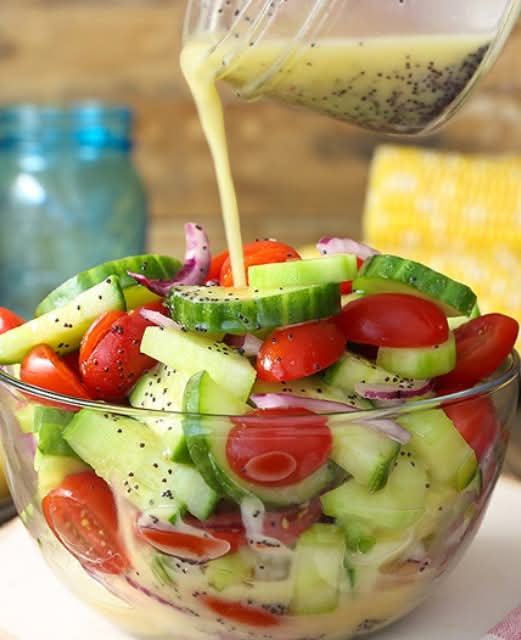
In the culinary world, there is a pervasive myth that a salad is merely a “side dish”—a collection of secondary ingredients designed to sit quietly beside a protein. However, when we look at a bowl of vibrant, crisp cucumbers, sun-ripened tomatoes, and sharp red onions glistening under a creamy poppy seed dressing, we aren’t just looking at a snack. We are witnessing a masterclass in culinary contrast.
The perfect salad is a symphony of textures and a delicate dance of chemistry. It is the crunch of a cold vegetable against the silkiness of an emulsion; the sweetness of a fruit against the sting of an acid. In this comprehensive guide, we will deconstruct the elements of a world-class summer salad, explore the science behind the perfect dressing, and learn how to elevate simple produce into a gourmet experience.
1. The Foundation: Selecting the Core Trinity
To create a salad that commands attention, you must start with ingredients that are at their peak. A salad is only as good as its weakest component.
The Cucumber: More Than Just Water
The cucumber provides the structural “crunch” that satisfies the palate.
- English vs. Persian: For a salad where texture is king, opt for English or Persian cucumbers. These varieties have thinner skins and fewer seeds, meaning they won’t release excessive water and turn your salad into a soup.
- Temperature Matters: A cucumber’s cellular structure is crispest when cold. Store them in the crisper drawer and slice them immediately before serving to maintain that satisfying “snap.”
The Tomato: The Umami Bomb
While often categorized as a vegetable in the kitchen, the tomato brings a fruit-forward sweetness and a high concentration of glutamate, providing a natural savory depth (umami).
- The Cherry Tomato Advantage: For tossed salads, cherry or grape tomatoes are superior because their skins act as a protective barrier, keeping their juices contained until you bite into them.
- The Room Temperature Rule: Never refrigerate your tomatoes before they are sliced. Cold temperatures destroy the volatile compounds responsible for their flavor and turn the flesh mealy.
The Red Onion: The Sharp Edge
Every great dish needs a “high note.” Red onions provide a sulfurous bite and a beautiful visual pop of purple.
- The Mellowing Hack: If you find raw onions too aggressive, soak the slices in ice water for ten minutes before adding them to the bowl. This washes away the propanethial S-oxide (the gas that makes you cry and burns your tongue) while keeping the crunch intact.
2. The Science of the Dressing: Emulsions and Esthetics
The dressing is the glue that binds the salad together. In the image provided, we see a creamy, pale-yellow dressing flecked with poppy seeds. This is likely a Creamy Poppy Seed Vinaigrette, a sophisticated blend of sweetness, fat, and acid.
Why Poppy Seeds?
Beyond their visual appeal, poppy seeds add a subtle, nutty earthiness and a “micro-crunch” that contrasts beautifully with the larger vegetable pieces. From a nutritional standpoint, they are tiny powerhouses of manganese and calcium.
The Magic of the Emulsion
A dressing is essentially an attempt to force two enemies—oil and water (vinegar)—to get along.
- The Emulsifier: Ingredients like Dijon mustard or egg yolks act as bridges. They have one end that loves water and one end that loves oil. When whisked together, they create a stable, creamy liquid that coats vegetables instead of sliding off them.
- Balance of Power: The classic ratio is 3 parts oil to 1 part acid. However, for a salad with watery vegetables like cucumbers, a slightly higher acid content (a 2:1 ratio) helps brighten the flavor and prevents the salad from feeling heavy.
3. Layering Flavors: The Secret of the “Seasoned” Salad
Most home cooks make the mistake of only seasoning the dressing. To reach restaurant-quality levels, you must season the vegetables themselves.
- Salting the Cucumbers: If you are making the salad in advance, salt the cucumber slices lightly and let them sit in a colander for 20 minutes. This draws out excess moisture, concentrating the flavor and ensuring they stay crunchy even after the dressing is applied.
- The Peppery Finish: Freshly cracked black pepper is essential. It provides a low-heat floral note that bridges the gap between the sweet tomatoes and the sharp onions.
4. Dietary Dynamics: Salad as a Nutritional Powerhouse
While we eat with our eyes and our palates, the body appreciates the bio-availability of the nutrients in a fresh salad.
| Ingredient | Primary Benefit | Why It Matters |
|---|---|---|
| Cucumber | Silica & Hydration | Supports skin elasticity and joint health. |
| Tomato | Lycopene | A powerful antioxidant that becomes more absorbable when paired with fats (like oil in the dressing). |
| Red Onion | Quercetin | An anti-inflammatory flavonoid that supports heart health. |
| Poppy Seeds | Oleic Acid | Healthy monounsaturated fats that aid in nutrient absorption. |
5. Global Variations: The Cucumber-Tomato Archetype
This specific combination of ingredients is a “global citizen.” Almost every culinary culture has a version of this salad:
- Shirazi Salad (Iran): Very finely diced cucumbers, tomatoes, and onions dressed with lime juice and dried mint.
- Greek Salad (Horiatiki): Larger chunks of the “trinity” plus kalamata olives, feta cheese, and a heavy hand of dried oregano.
- Israeli Salad: Characterized by its incredibly small, uniform dice, usually dressed simply with lemon juice and high-quality olive oil.
- Panzanella (Italy): The same fresh vegetables, but with the addition of toasted bread cubes that soak up the vinaigrette and tomato juices.
6. How to Avoid the “Soggy Salad” Syndrome
There is nothing more disappointing than a salad that has lost its vitality. Follow these professional rules for longevity:
- The Dressing Delay: Never dress a salad more than 15 minutes before serving. The acid in the vinegar will begin to break down the cell walls of the vegetables, causing them to wilt and release water.
- The “Bowl-in-Bowl” Method: If serving at an outdoor party, place your glass salad bowl inside a slightly larger bowl filled with ice. This keeps the vegetables at the optimal 4°C for maximum crispness.
- The Texture Add-On: If you want to add nuts, seeds, or croutons, add them at the very last second. Even a poppy seed dressing can soften a crouton if left to sit.
7. The Art of the Pour: Presentation and Psychology
Cooking is a sensory experience. The “action shot” of a dressing being poured over a bowl of vegetables (as seen in the provided image) triggers a psychological response known as gastronomic anticipation.
- The Glass Bowl Advantage: Using a clear glass bowl allows the diner to see the layers of color and texture. It emphasizes freshness and cleanliness.
- The Coating: A perfect pour should result in a “thin film.” The vegetables should glisten, not drown. If there is a pool of dressing at the bottom of the bowl, you have over-poured.
Conclusion: The Simple Sophistication of Summer
Mastering the salad is about mastering the basics of life: choosing good things, treating them with respect, and finding the right balance between them. A cucumber and tomato salad with poppy seed dressing is a reminder that we don’t need complex techniques or expensive gadgets to create a masterpiece. We only need the sun, the soil, and a little bit of science.
Next time you stand in the produce aisle, don’t just look for “salad stuff.” Look for the structural snap of the cucumber, the umami potential of the tomato, and the vibrant life of the red onion. Your bowl is waiting.
Keywords: Cucumber Tomato Salad Recipe, Poppy Seed Dressing, Healthy Summer Salads, Food Science, Emulsion Tips, Nutritional Benefits of Raw Vegetables, Gourmet Salad Presentation.
This article is designed for WordPress SEO, focusing on high-intent keywords and structured for readability with headers and tables.