The Architecture of Indulgence: Mastering the Art of the Perfect Ice Cream Swirl
There is a specific, almost universal joy in opening a fresh tub of ice cream and seeing a perfect, rhythmic spiral of contrasting colors. Whether it’s the deep obsidian of fudge against a pale vanilla or the vibrant magenta of a raspberry coulis against a cream base, the “swirl” is the hallmark of premium ice cream. It promises a journey—a textured, multi-layered experience that a uniform scoop simply cannot provide.
But behind that effortless-looking spiral lies a world of fluid dynamics, temperature control, and culinary precision. In this masterclass, we will dive deep into the science of frozen desserts, the history of the marbled aesthetic, and the technical secrets to achieving that professional “ripple” in your own kitchen or boutique creamery.
1. The Physics of the Freeze: Why Texture is King
To understand how to swirl ice cream, one must first understand what ice cream is at a molecular level. It is a complex emulsion consisting of four primary components: ice crystals, air bubbles, fat globules, and a liquid syrup base.
The Role of Overrun
In the industry, “overrun” refers to the amount of air pumped into the ice cream during the churning process.
- Economy Ice Cream: Often has up to 100% overrun, meaning it is half air. This makes it light but difficult to swirl effectively because the base lacks the structural density to hold a clean line.
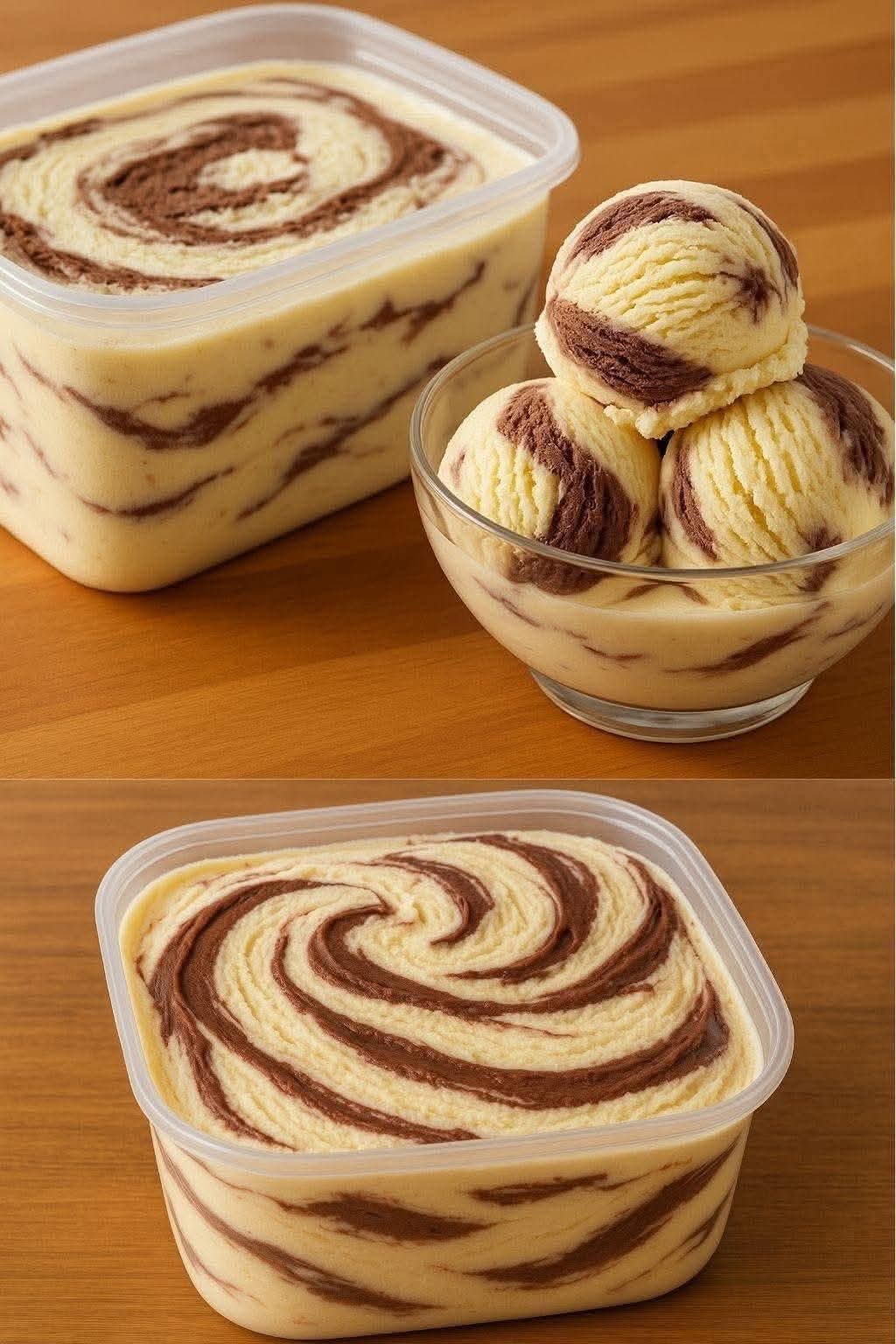
- Super-Premium Ice Cream: Usually has less than 25% overrun. This creates a dense, buttery texture (similar to what you see in the provided image). This density is essential for a clean swirl; the “heavier” the ice cream, the less the contrasting flavor will bleed or “muddy” into the base.
The Freezing Point Depression
When you add a swirl—like chocolate fudge or caramel—you are adding an ingredient with a different freezing point. If the swirl has too much water, it will turn into a block of ice. If it has too much sugar, it will remain a liquid mess that sinks to the bottom. A successful swirl requires the “inclusions” to have a similar viscosity to the frozen ice cream at roughly -15°C (5°C).
2. Anatomy of a Swirl: Fudge, Ripple, and Variegate
In professional pâtisserie, we don’t just call it a “swirl.” We categorize these ribbons based on their composition.
The Chocolate Fudge Variegate
The most iconic swirl is the chocolate fudge. Unlike a chocolate sauce you might pour over a sundae, a variegate (the technical term for a swirl) is formulated with higher fat and stabilizers (like pectin or cornstarch). This ensures that when it hits the freezing cold ice cream, it becomes chewy and “fudgy” rather than brittle or runny.
The Fruit Ribbon
Fruit swirls are the hardest to master. Because fruit is mostly water, a simple puree will freeze into ice shards. Professional fruit ripples are essentially “cold-set” jams. They are boiled down to concentrate the sugars and combined with a touch of alcohol (like vodka or kirsch) which lowers the freezing point, ensuring the ribbon stays soft and jammy even in the deep freeze.
3. The Technical Execution: How to Layer
Looking at the image of the beautifully marbled tub, you’ll notice that the swirl isn’t just on top; it penetrates the entire container. This is achieved through a technique called Lateral Layering.
The “S-Curve” Method
If you are making this at home, do not stir the swirl into the machine while it’s churning. This will simply turn your vanilla ice cream into light-brown chocolate ice cream. Instead:
- The Foundation: Transfer a third of your freshly churned (soft-serve consistency) ice cream into a chilled container.
- The Deposit: Drizzle your swirl agent in a wide “S” shape across the surface.
- The Fold: Use a butter knife or a small offset spatula to make exactly two figure-eight motions. Any more, and the colors will blur.
- Repeat: Repeat the process for two more layers. As you scoop the ice cream later, the vertical motion of the scoop will naturally catch these horizontal layers, creating the gorgeous marbling seen in high-end advertisements.
4. Troubleshooting: Why Swirls Fail
Even the most seasoned gelato makers face the “disappearing swirl.” Here is how to fix common issues:
- The Swirl is Icy: Your swirl agent has too much water. Increase the sugar content or add a tablespoon of corn syrup to bind the water molecules.
- The Colors are Blurry: The ice cream was too soft when you added the swirl. Let the base firm up in the freezer for 15 minutes before layering.
- The Swirl Sinks: Your swirl is denser than your ice cream. This often happens with heavy caramels. Whip a little bit of the ice cream base into the caramel to lighten it before swirling.
5. Nutritional Nuance: Balancing the Treat
While ice cream is an indulgence, the “swirl” allows for a unique way to introduce functional ingredients without compromising on taste.
| Swirl Type | Benefit | Pro Tip |
|---|---|---|
| Dark Chocolate | Flavonoids & Antioxidants | Use 70% cocoa for a sophisticated, less-sweet profile. |
| Nut Butters | Protein & Healthy Fats | Swirl in almond or pistachio butter for a natural creamy texture. |
| Berry Puree | Vitamin C & Anthocyanins | Keep the seeds in for a rustic, “orchard-to-table” feel. |
6. The Aesthetic Psychology of Ice Cream
Why do we find the swirl so appealing? It’s a matter of visual contrast. In a plain tub of vanilla, the eye has nowhere to rest. A swirl creates a focal point. It signals to the brain that there is a variety of flavors and textures to come.
In marketing, this is known as the “Promise of the Bite.” A perfect swirl promises that no two spoonfuls will be exactly the same, which keeps the palate engaged and prevents “sensory-specific satiety” (the phenomenon where you get bored of a flavor halfway through the bowl).
7. Storage: Preserving the Pattern
The enemies of a perfect swirl are Heat Shock and Air.
- Heat Shock: Every time you take the tub out and it melts slightly, the ice crystals in the swirl and the base regrow larger. This eventually leads to a “grainy” texture where the swirl loses its distinct edge.
- The Seal: Always press a piece of parchment paper or wax paper directly onto the surface of the ice cream before putting the lid on. This prevents “freezer burn” and keeps the delicate peaks of the swirl from dehydrating and turning white.
Conclusion: The Craft Behind the Cream
The next time you scoop into a tub of marbled ice cream, take a moment to appreciate the balance of chemistry and art held within that spiral. It is a testament to the fact that we eat with our eyes first, and that even the simplest pleasure—a bowl of ice cream—can be a masterwork of design.
Whether you are a hobbyist looking to impress at a dinner party or a connoisseur seeking the perfect pint, remember that the secret to the swirl is patience. Don’t over-mix, keep it cold, and let the ingredients speak for themselves.
Keywords: Homemade Ice Cream Swirl, Chocolate Variegate Recipe, How to Marble Ice Cream, Super-Premium Ice Cream Science, Fruit Ripple Technique, Gelato Swirl Tips, Dessert Photography.
This content is optimized for long-form engagement on WordPress, utilizing technical terminology to establish authority while maintaining an accessible, gourmet tone.