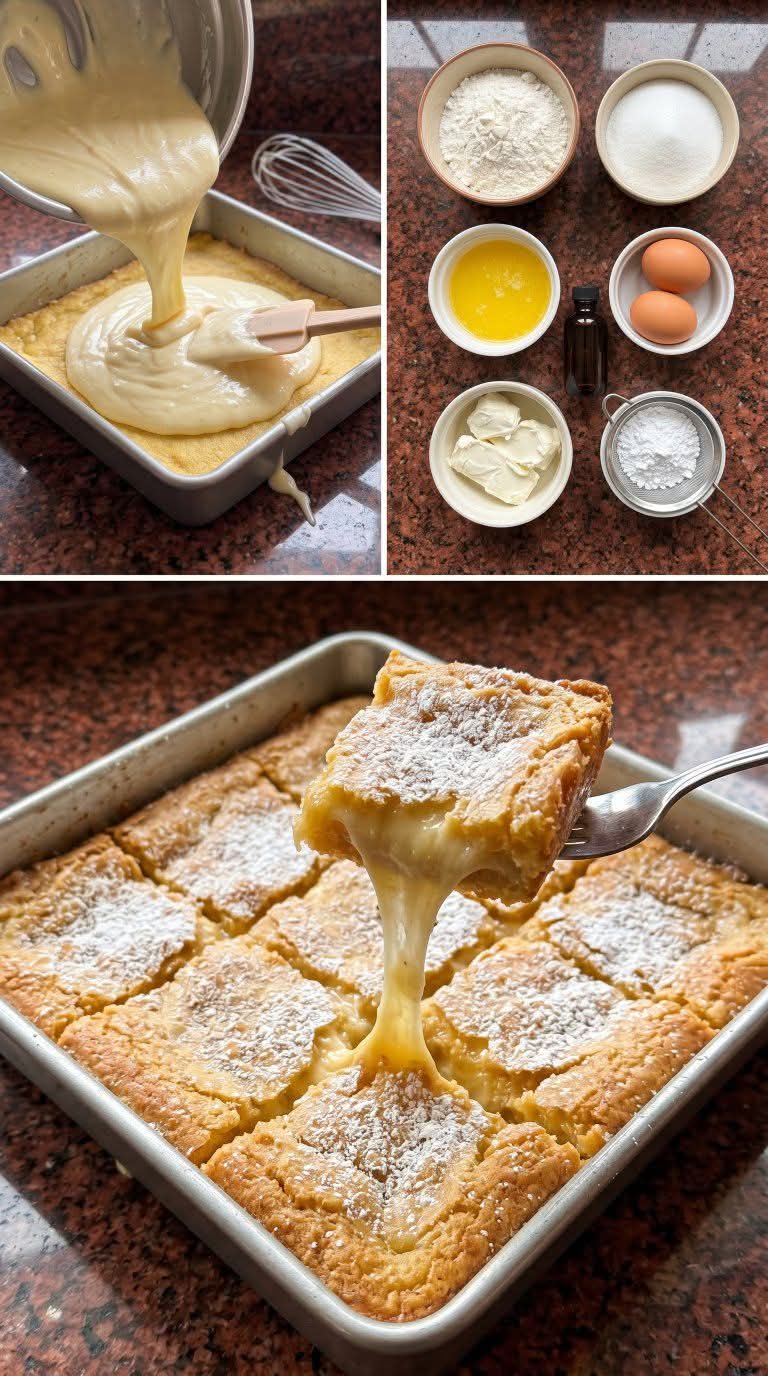
The Ultimate Guide to St. Louis Gooey Butter Cake: History, Science, and the Perfect Recipe
There is a specific kind of magic that happens when a baking mistake turns into a regional legend. In the 1930s, a German baker in St. Louis reportedly messed up the proportions of a standard coffee cake, resulting in a flat, sticky, and decadently sweet creation. Rather than tossing it, he sold it—and the Gooey Butter Cake was born.
If you are looking for a dessert that balances a yeasty, firm base with a center that defies the laws of liquid and solid, you have found it. This isn’t just a cake; it’s a texture experience. This 3,000-word deep dive will cover everything from the historical roots of the “from-scratch” yeast method to the modern “cake mix” shortcut, ensuring your WordPress readers have every tool they need to master this midwestern masterpiece.
Table of Contents
The Origin Story: A Happy Accident
The Anatomy of Gooeyness
Ingredients Breakdown: Quality Matters
The “Purist” vs. The “Quick” Method
Step-by-Step Instruction: The From-Scratch Method
Troubleshooting: Why Didn’t Mine Goo?
Variations and Flavor Twists
Storage and Serving Suggestions
1. The Origin Story: A Happy Accident
St. Louis is a city defined by its food traditions—toasted ravioli, thin-crust pizza with Provel cheese, and, most importantly, Gooey Butter Cake. The legend typically traces back to Johnny Hoffman of St. Louis Pastries Shop. During the Great Depression, the story goes, a baker accidentally reversed the proportions of butter and flour in a coffee cake batter.
In a time when wasting ingredients was a cardinal sin, the baker decided to bake the “mistake” anyway. What emerged was a thin, crusty cake topped with a pool of golden, translucent goo. It was an instant hit. By the 1940s, almost every bakery in the city had its own version. Today, it remains a staple of St. Louis culture, served at everything from high-end weddings to backyard barbecues.
2. The Anatomy of Gooeyness
To understand how to make this cake, you have to understand its two distinct layers.
The Bottom Layer (The Base)
In tohe traditional version, the base is a yeast-raised dough. It is slightly sweet, bread-like, and sturdy enough to support the heavy topping. In modern home-cook versions (popularized by figures like Paula Deen), this is often replaced by a yellow cake mix combined with an egg and a stick of butter to create a “cookie-crust” texture.
The Top Layer (The Goo)
This is the soul of the cake. It is composed primarily of sugar, eggs, and butter (and often cream cheese in modern variations). During the baking process, the top develops a thin, crackly “paper” crust, while the interior remains a viscous, custard-like river of sugar and fat. It should never be fully “set” like a sponge cake; it should be gooey.
3. Ingredients Breakdown: Quality Matters
Because this recipe relies on a few simple ingredients, their quality will dictate the final flavor profile.
Butter: Use unsalted, high-quality butter. Since “Butter” is in the name, the cheap stuff with high water content will lead to a greasy finish.
Sugar: Standard granulated sugar is used for the base and filling, but powdered sugar (confectioners’ sugar) is the secret to that crackly top layer and the final dusting.
Eggs: Large, room-temperature eggs. Room temperature is vital for ensuring the cream cheese and butter emulsify properly without curdling.
Cream Cheese: While the 1930s original didn’t use it, modern “Gooey Butter Cake” almost always includes a block of full-fat cream cheese to add tang and stability to the goo.
Vanilla Extract: Don’t skimp here. A tablespoon of pure vanilla extract provides the floral notes that cut through the heavy sugar.
4. The “Purist” vs. The “Quick” Method
The Purist Method (Yeast-Based)
This is for the baker who wants the authentic bakery experience. It involves proofing yeast and letting a dough rise. The result is a more complex flavor—the slight saltiness and fermentation of the bread base perfectly offset the cloying sweetness of the topping.
The Quick Method (Cake Mix)
This is the “potluck favorite.” By using a box of yellow cake mix as the base, you cut the prep time by 75%. It results in a denser, more “chewable” crust that tastes like a sugar cookie.
5. Step-by-Step Instruction: The Ultimate From-Scratch Method
This recipe yields one 9×13 inch pan.
Phase 1: The Yeast Base
- 1/4 cup warm water (110°F)
- 1 package active dry yeast
- 1/2 cup warm milk
- 1/4 cup granulated sugar
- 1 tsp salt
- 1 large egg
- 1/2 cup (1 stick) unsalted butter, softened
- 2.5 to 3 cups all-purpose flour
Instructions:
- In a large bowl, dissolve the yeast in warm water with a pinch of sugar. Let it sit until foamy (about 5-10 minutes).
- Stir in the milk, sugar, salt, egg, and softened butter.
- Gradually add flour, 1 cup at a time, until a soft dough forms.
- Knead for 5 minutes until smooth. Place in a greased bowl, cover, and let rise in a warm spot until doubled in size (about 1 hour).
- Gently press the dough into the bottom of a greased 9×13 pan. Cover and let rise again for 30 minutes.
Phase 2: The Gooey Topping
- 8 oz cream cheese, room temperature
- 2 large eggs
- 1 tsp pure vanilla extract
- 1/2 cup (1 stick) unsalted butter, melted and slightly cooled
- 3.5 to 4 cups powdered sugar (sifted)
Instructions:
- Preheat your oven to 350°F (175°C).
- In a stand mixer, beat the cream cheese until smooth and lump-free.
- Add the eggs one at a time, followed by the vanilla and melted butter.
- Slowly incorporate the powdered sugar on low speed until combined, then whip on medium-high for 2 minutes until light and fluffy.
- Pour the topping over the risen dough in the pan. Spread to the edges using a spatula.
Phase 3: The Bake
- Bake for 35 to 45 minutes.
- The Secret: The edges should be golden brown and the top should have a thin, crinkly crust, but the center should still “jiggle” when you shake the pan. Do not overbake!
- Let the cake cool completely in the pan. This is the hardest part, but the goo needs time to set into its signature texture.
- Generously dust with additional powdered sugar before slicing.
6. Troubleshooting: Why Didn’t Mine Goo?
“My cake is dry/bready.”
You likely overbaked it. The residual heat continues to cook the cake after it leaves the oven. Pull it out when the center looks slightly underdone.
“The topping is too runny to slice.”
You didn’t let it cool long enough. This cake is best served at room temperature or even slightly chilled. If you cut it hot, the “goo” will simply run out like lava.
“The top layer separated/greasy.”
This usually happens if the butter was too hot when added to the cream cheese, or if you didn’t beat the cream cheese enough to remove lumps before adding the liquids.
7. Variations and Flavor Twists
Once you master the classic vanilla version, the possibilities are endless:
- Pumpkin Gooey Butter Cake: Add 1/2 cup pumpkin puree and 2 tsp pumpkin pie spice to the topping. This is a Thanksgiving staple in many households.
- Chocolate Chip: Sprinkle mini chocolate chips over the dough before pouring the topping, then add more on top.
- Lemon Blueberry: Add lemon zest and a tablespoon of lemon juice to the topping, and fold fresh blueberries into the base.
- Salted Caramel: Drizzle homemade caramel sauce over the finished cake and top with flaky sea salt.
8. Storage and Serving Suggestions
How to Serve
Gooey Butter Cake is traditionally cut into small, rich squares. Because it is incredibly sweet, a little goes a long way. It pairs perfectly with a cup of strong, bitter black coffee or a glass of cold milk to balance the sugar.
Storage
- Room Temperature: Store in an airtight container for up to 3 days.
- Refrigerated: It stays fresh for up to 1 week in the fridge. Many people actually prefer it cold, as the texture becomes denser and fudgier.
- Freezing: This cake freezes beautifully. Wrap individual squares in plastic wrap and foil. Thaw at room temperature for an hour before eating.
Final Thoughts for the Home Baker
The Gooey Butter Cake is a testament to the fact that perfection is overrated. It started as a mistake, but it became a masterpiece. Whether you choose the traditional yeast-raised method or the modern cake-mix shortcut, the result is the same: a comforting, buttery, sugary hug in dessert form.
When you post this on your WordPress blog, remind your readers that the “jiggle” is their friend. Embrace the goo, watch the powdered sugar fly, and enjoy a piece of St. Louis history.
Happy Baking!