The Ultimate Guide to German Chocolate Cake: A Masterclass in Tradition and Texture
When it comes to the pantheon of great American desserts, few cakes evoke as much passion—or as much confusion—as the German Chocolate Cake. With its distinct layers of mild chocolate sponge and its signature gooey, caramel-like frosting packed with shredded coconut and crunchy pecans, it is a masterpiece of textural contrast.
Ironically, the most common misconception about this cake is its origin. Despite the name, it isn’t a traditional dessert from Munich or Berlin. It is named after Samuel German, an American who developed a dark baking chocolate for the Baker’s Chocolate Company in 1852. The recipe only became a national sensation in 1957 when a Texas homemaker submitted it to a local newspaper.
If you are looking to create a version that rivals the best bakeries, you’ve come to the right place. This guide is a deep dive into the science, the technique, and the soul of the perfect German Chocolate Cake.
The Anatomy of a Masterpiece
A truly exceptional German Chocolate Cake relies on the harmony between its two main components:
- The Sponge: Unlike a rich, dense Devil’s Food cake, a traditional German Chocolate sponge is light, airy, and mild. It uses melted chocolate rather than cocoa powder and relies on folded egg whites for its delicate crumb.
- The Frosting: This isn’t your standard buttercream. It is a cooked custard—a “pudding frosting”—made from evaporated milk, egg yolks, butter, and sugar, which then serves as a binder for massive amounts of coconut and pecans.
Ingredient Selection: Quality is King
1. The Chocolate
Traditionalists use Sweet Baking Chocolate (often labeled as “German’s Sweet Chocolate”). It has a higher sugar content and a lower cacao percentage than semi-sweet or bittersweet chocolate. This gives the cake its characteristic “milk chocolate” hue and mellow flavor.
2. The Coconut
Use sweetened shredded coconut. While unsweetened desiccated coconut works in some recipes, the moisture and sugar in the sweetened version are vital for the frosting’s iconic gooey texture.
3. The Pecans
Freshness is everything. Pecans contain high oil content and can go rancid quickly. Smell them before using; they should smell sweet and nutty. To elevate the cake, we will toast them to unlock a deeper savory note that cuts through the sugar.
4. The Dairy
Do not substitute the evaporated milk. It has a higher concentration of milk solids than regular whole milk, which allows the frosting to caramelize and thicken without becoming runny.
The Master Recipe: Step-by-Step
Part 1: The Toasted Coconut-Pecan Frosting
We make the frosting first because it needs time to cool and thicken to a spreadable consistency.
Ingredients:
- 1 cup (200g) Granulated sugar
- 1 cup (200g) Light brown sugar (packed)
- 1 cup (226g) Unsalted butter
- 5 Large egg yolks (beaten)
- 1 ½ cups (355ml) Evaporated milk
- 1 ½ teaspoons Pure vanilla extract
- 2 cups (200g) Shredded sweetened coconut
- 1 ½ cups (170g) Pecans, chopped and toasted
Instructions:
- Toast the Pecans: In a dry skillet over medium heat, toss the chopped pecans for 3–5 minutes until fragrant. Set aside.
- Combine the Base: In a large heavy-bottomed saucepan, combine the sugars, butter, egg yolks, and evaporated milk.
- The Cook: Cook over medium heat, stirring constantly. You are looking for a gentle simmer. Do not rush this on high heat, or the eggs will scramble. Cook for about 12–15 minutes until the mixture thickens and turns a golden caramel color.
- The Fold: Remove from heat. Stir in the vanilla, coconut, and toasted pecans.
- Cooling: Transfer to a bowl and let it sit at room temperature. It will thicken significantly as it cools.
Part 2: The Delicate Chocolate Sponge
This recipe yields three 8-inch layers or two thick 9-inch layers.
Ingredients:
- 4 oz (113g) German’s Sweet Baking Chocolate
- ½ cup (120ml) Water
- 2 cups (250g) All-purpose flour
- 1 teaspoon Baking soda
- ½ teaspoon Salt
- 1 cup (226g) Unsalted butter, softened
- 2 cups (400g) Granulated sugar
- 4 Large eggs, separated (yolks and whites kept apart)
- 1 teaspoon Vanilla extract
- 1 cup (240ml) Buttermilk
Instructions:
- Prep: Preheat your oven to 175°C. Grease and flour your cake pans, then line the bottoms with parchment paper. This cake is sticky; don’t skip the parchment!
- Melt: Combine the chocolate and water in a microwave-safe bowl. Heat in 30-second bursts, stirring until smooth. Let it cool slightly.
- Cream: In a large bowl, cream the butter and sugar until pale and fluffy (about 4 minutes). Add the egg yolks one at a time, beating well after each. Stir in the melted chocolate and vanilla.
- Dry & Wet: Sift the flour, baking soda, and salt. Add the dry ingredients to the butter mixture alternately with the buttermilk, beginning and ending with the flour.
- The Secret Weapon (Egg Whites): In a separate clean bowl, beat the egg whites until stiff peaks form. Gently fold 1/3 of the whites into the batter to lighten it, then fold in the rest. Be careful not to deflate the air.
- Bake: Divide batter into pans. Bake for 30–35 minutes or until a toothpick comes out clean.
- Cool: Let the cakes cool in the pans for 15 minutes before inverting them onto wire racks. They must be completely cold before frosting.
Pro-Level Assembly Techniques
Because German Chocolate frosting is heavy and chunky, traditional “side-coating” with buttercream can be tricky. Here are three ways to plate it:
- The Naked Look (Traditional): Place frosting only between the layers and on the very top. Leave the sides exposed so the beautiful sponge layers are visible.
- The Hybrid: Frost between the layers and the top with the coconut-pecan mixture. Use a chocolate ganache or chocolate buttercream to pipe borders or lightly coat the sides.
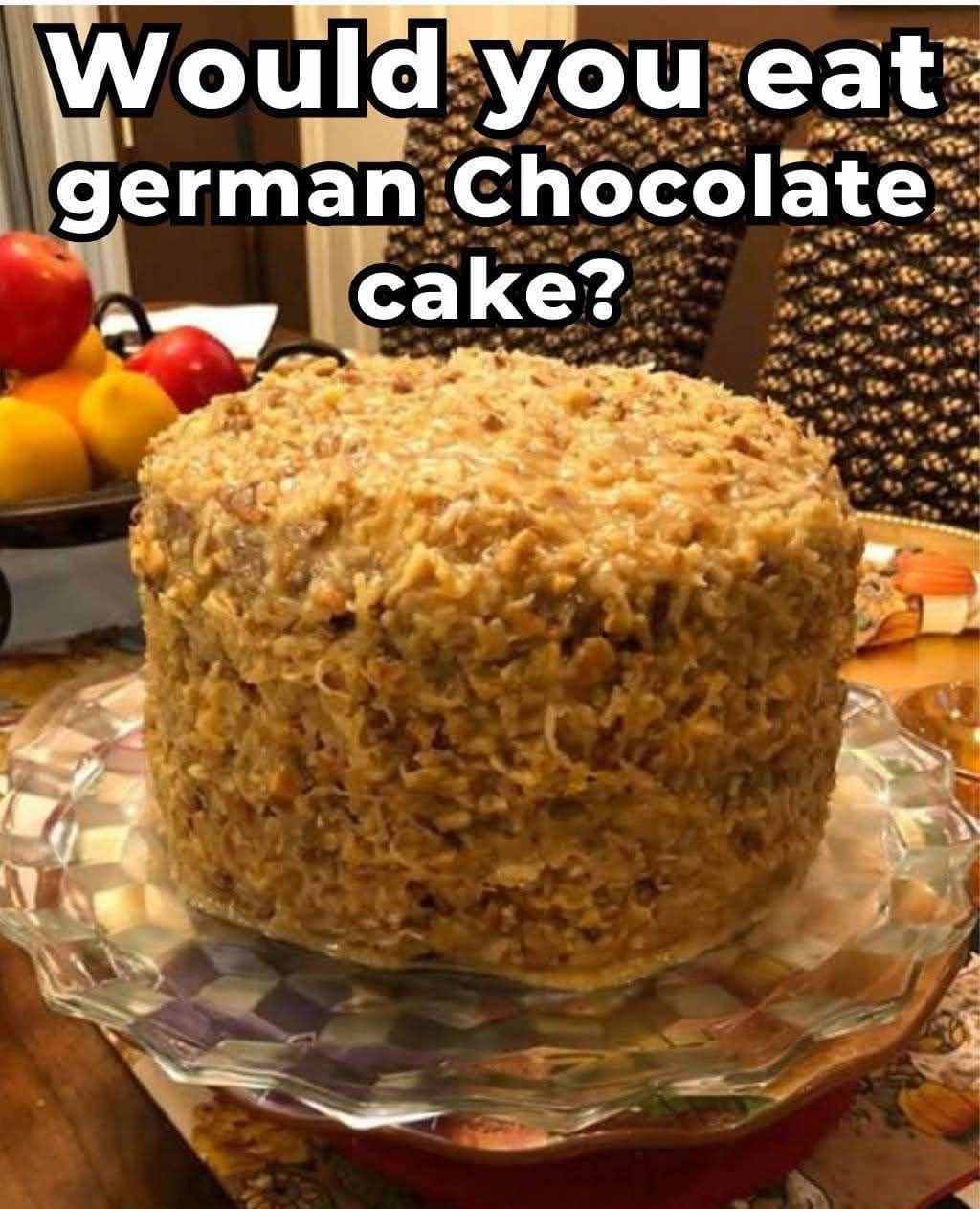
- The “Dome” (As seen in the image): Cover the entire cake—top and sides—in the coconut-pecan frosting. This is for the true coconut lovers.
Troubleshooting Common Issues
- My Frosting is Runny: You likely didn’t cook the custard long enough. You can return it to the heat and add a teaspoon of cornstarch dissolved in milk to help it bind, but usually, a longer cook time is the answer.
- My Cake is Dry: This sponge relies on the buttermilk for moisture. Ensure you aren’t over-baking. Check the cake 5 minutes before the timer goes off.
- The Layers are Slanting: Because the frosting is gooey, the layers can slide. If this happens, stick the cake in the fridge for 30 minutes after adding each layer to “set” the structure.
Storage and Serving
German Chocolate Cake is best served at room temperature. The butter in the sponge and the fats in the frosting are most flavorful when they aren’t cold. However, due to the egg yolks and milk in the frosting, it should be stored in the refrigerator if kept longer than 24 hours. Just remember to take it out an hour before serving!
Why This Recipe Works for Your Blog
This recipe hits the perfect SEO balance. It provides historical context, clear technical instructions, and multiple ways to customize the final product. It appeals to both the nostalgic baker looking for “Grandma’s recipe” and the modern foodie looking for a decadent, texturally complex dessert.
Whether you’re making this for a birthday, a holiday, or just a Sunday afternoon treat, the effort put into that homemade custard frosting will be evident in every bite.
Happy Baking!
Do you need help with a Chocolate Ganache recipe to go along with the sides, or perhaps tips on how to make this recipe gluten-free?