The Definitive Guide to Creamy Seafood Salad: A Masterclass in Coastal Comfort
There is a specific kind of culinary magic found in a perfectly executed creamy seafood salad. It is a dish that sits at the intersection of luxury and accessibility—offering the bright, briny notes of the ocean enveloped in a rich, velvety dressing. Often associated with seaside delis, summer picnics, or elegant brunch spreads, this salad is a testament to the idea that simple ingredients, when treated with respect, can create something extraordinary.
In this exhaustive guide, we are going to deconstruct the classic creamy seafood salad. We will look at the science of the dressing, the importance of structural integrity in your seafood choices, and the tiny details that separate a “good” salad from a “legendary” one. By the end of this 3,000-word deep dive, you will have the knowledge to create a WordPress-worthy recipe that will become a staple in your kitchen.
Table of Contents
- The Anatomy of the Perfect Seafood Salad
- Ingredient Selection: Real vs. Imitation vs. Hybrid
- The Aromatics: Adding Crunch and Color
- The “Liquid Gold” Dressing: Ratios and Chemistry
- Essential Equipment for Precision Prepping
- The Core Recipe: Step-by-Step Instructions
- Flavor Profiling: Customizing Your Zest
- The Science of Chilling: Why Time is an Ingredient
- Common Pitfalls and How to Avoid Them
- Serving Suggestions: From Sandwiches to Sliders
- Safety and Storage: Handling Seafood Correctly
- Conclusion: The Art of the Coastal Classic
1. The Anatomy of the Perfect Seafood Salad
To understand why this salad works, we have to look at the sensory experience. A perfect seafood salad requires three distinct pillars:
- The Protein Pillar: Soft, tender, and oceanic. It should provide the bulk of the texture.
- The Crunch Pillar: Celery, green onions, or peppers. Without these, the salad becomes a monotonous mush.
- The Emulsion Pillar: The dressing must be thick enough to coat every piece without pooling at the bottom of the bowl.
2. Ingredient Selection: The Great Debate
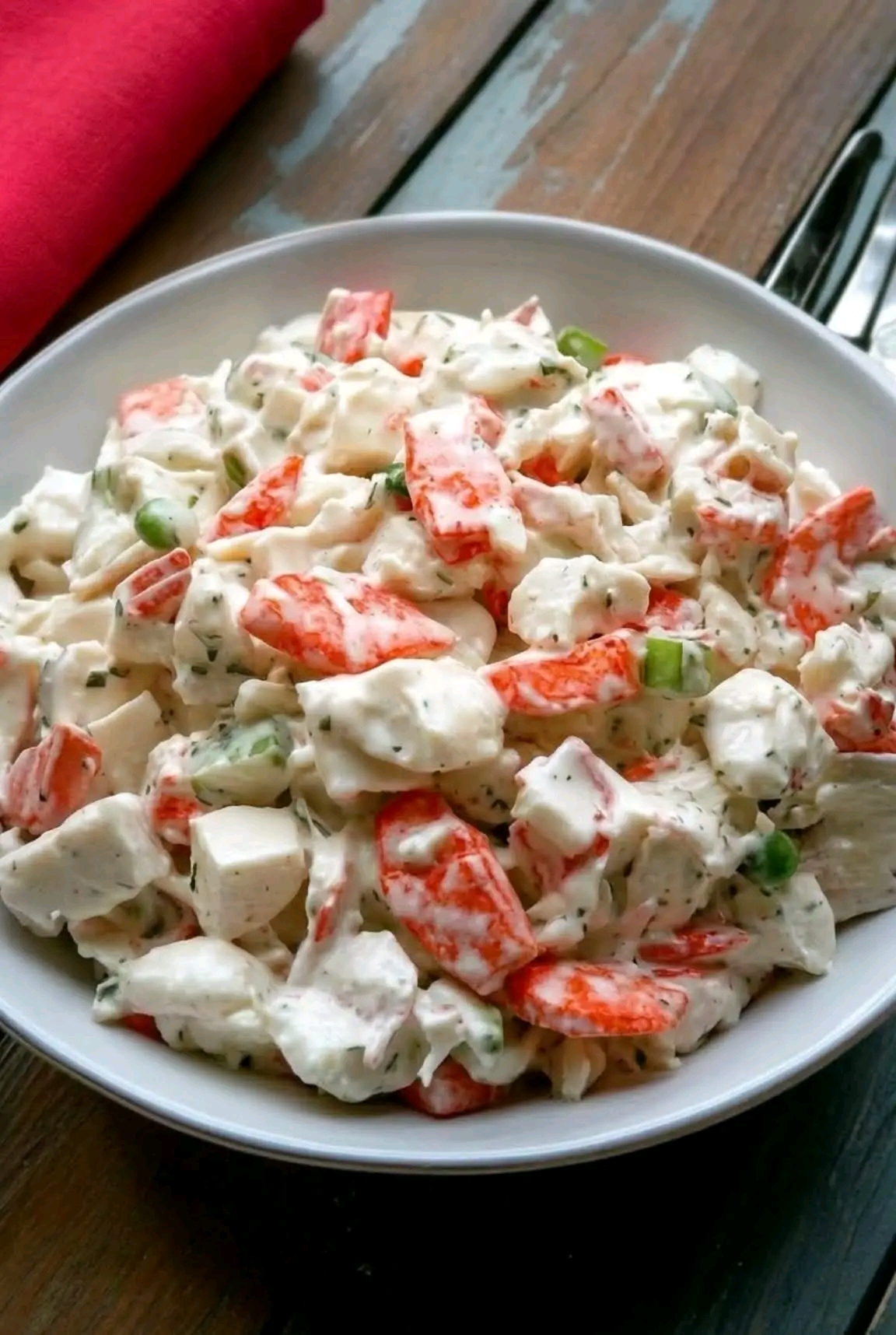
When you look at the image of this salad, you see vibrant orange and white chunks. This is often achieved using high-quality Imitation Crab (Surimi) or a mix of Bay Scallops and Shrimp.
The Case for Surimi
Don’t let the name fool you; high-quality surimi is a culinary marvel. Made from pulverized white fish (usually pollock) and shaped with starch and egg whites, it offers a consistent texture that holds up beautifully to heavy dressings. It is naturally sweet, which balances the acidity of lemon and vinegar.
The Luxury Upgrade: Real Seafood
If you want to elevate this to a five-star dish, consider a hybrid approach:
- Lump Crab Meat: Adds an earthy, sophisticated sweetness.
- Cold-Water Shrimp: Small, succulent, and provides a snappy texture contrast.
- Poached White Fish: Flaky cod or halibut can add volume and a delicate mouthfeel.
3. The Aromatics: Adding Crunch and Color
As seen in the photo, the green flecks are essential. They aren’t just for show; they provide the “snap” that wakes up the palate.
- Celery: Must be diced small. It provides a watery, salty crunch.
- Green Onions (Scallions): Use both the white and green parts for a sharp, peppery kick.
- Fresh Dill: The quintessential seafood herb. It adds a grassy, citrusy aroma that cuts through the mayo.
- Optional: English Cucumber: If using, de-seed it first to prevent the salad from becoming watery.
4. The “Liquid Gold” Dressing
The dressing is more than just mayonnaise. It is a balanced emulsion that requires fat, acid, and seasoning.
- The Base: Use a high-quality, full-fat mayonnaise. For a lighter touch, you can swap 25% of it for Greek yogurt or sour cream.
- The Acid: Fresh lemon juice is mandatory. It brightens the fish notes. A splash of white wine vinegar adds a different dimension of “tang.”
- The Secret Ingredient: Old Bay Seasoning or a pinch of celery salt. These provide the “classic deli” flavor profile that people crave.
5. Essential Equipment
- Sharp Chef’s Knife: Precision dicing of the celery and seafood prevents “mushing.”
- Large Stainless Steel Bowl: Avoid plastic, as it can retain odors from previous meals.
- Silicon Spatula: For folding the ingredients gently without breaking the delicate seafood fibers.
6. The Core Recipe: Step-by-Step Instructions
Prep Time: 20 mins | Chill Time: 2 hours | Yields: 6-8 servings
Ingredients:
- 1.5 lbs High-quality imitation crab (chunk style) or cooked shrimp/scallop mix
- 1 cup Mayonnaise (Japanese Kewpie mayo is a fantastic upgrade)
- 2 stalks Celery, finely diced
- 3 Green onions, thinly sliced
- 2 tbsp Fresh dill, minced
- 1 tbsp Fresh lemon juice
- 1 tsp Dijon mustard (for depth and emulsification)
- 1/2 tsp Garlic powder
- 1/2 tsp Old Bay seasoning
- Salt and White Pepper to taste (white pepper keeps the dressing looking pristine)
Step 1: Prepping the Protein
If using chunk-style seafood, cut the larger pieces into bite-sized 1/2-inch cubes. If using shrimp, ensure they are de-veined and chilled. Pat everything dry with a paper towel. Moisture is the enemy of a creamy salad.
Step 2: The Veggie Prep
Dice your celery and scallions. Ensure the celery pieces are smaller than the seafood chunks so they act as a “supportive crunch” rather than the main event.
Step 3: Whisking the Dressing
In a small separate bowl, whisk the mayo, lemon juice, Dijon, garlic powder, and Old Bay. Taste it. It should be slightly more salty and tart than you think necessary, as the seafood will mellow it out.
Step 4: The Fold
Place the seafood and vegetables in your large bowl. Pour the dressing over the top. Using a folding motion, gently incorporate the dressing until every nook and cranny is coated.
Step 5: The Chill
Cover with plastic wrap, pressing the wrap down onto the surface of the salad to prevent a “skin” from forming. Refrigerate for at least 2 hours.
7. Flavor Profiling: Customizing Your Zest
While the classic recipe is a winner, you can pivot based on your audience:
- The “Heat” Variant: Add a teaspoon of horseradish or finely diced pickled jalapeños.
- The “Tropical” Variant: Add small bits of pineapple and replace lemon with lime.
- The “Mediterranean” Variant: Fold in capers and use flat-leaf parsley instead of dill.
8. The Science of Chilling
Why does this salad taste better the next day? It’s called chemical marriage. The acids in the dressing begin to break down the proteins slightly, allowing the flavors of the dill and garlic to penetrate the meat. Furthermore, the fats in the mayo stabilize, creating a thicker, more luxurious mouthfeel.
9. Common Pitfalls
- Watery Salad: This usually happens because the vegetables (like cucumbers) or the seafood weren’t dried properly.
- Over-mixing: If you stir too vigorously, the imitation crab will shred into strings, losing the “chunk” appeal seen in professional photos.
- Not Enough Acid: If the salad tastes “flat” or too heavy, it almost always needs more lemon juice.
10. Serving Suggestions
- The Classic Roll: Serve inside a buttered, toasted brioche bun (New England style).
- The Lettuce Wrap: For a low-carb option, use large Bibb or Romaine leaves.
- The Avocado Boat: Scoop a generous portion into the center of a halved avocado.
- The Party Dip: Serve with high-end butter crackers or toasted baguette rounds.
11. Safety and Storage
Seafood is highly perishable.
- The 2-Hour Rule: Never leave the salad at room temperature for more than two hours. If serving at a BBQ, place the serving bowl inside a larger bowl filled with ice.
- Shelf Life: This salad is best within 48 hours. After 3 days, the texture of the seafood begins to degrade.
12. Conclusion
The creamy seafood salad is a celebration of texture. It is a dish that evokes memories of the pier, the beach, and easy summer afternoons. By focusing on high-quality binders, keeping your ingredients dry before mixing, and allowing for a proper chill time, you transform a simple deli staple into a gourmet experience.
This recipe isn’t just about feeding people; it’s about providing that perfect, cooling bite that balances the richness of the land with the freshness of the sea. Grab your spatula, find the freshest dill you can, and start mixing!