The Ultimate Guide to Homemade Corned Beef Hash: A Symphony of Salt, Fat, and Crunch
There is perhaps no breakfast dish more evocative of the classic American diner or the comforting warmth of a family kitchen than Corned Beef Hash. It is the quintessential “next-day” meal, a culinary alchemy that transforms humble leftovers—salty corned beef and starchy potatoes—into a crispy, savory masterpiece.
While many of us grew up with the canned variety (which has its own nostalgic, salty charm), the difference between shelf-stable hash and a scratch-made Corned Beef Hash is like the difference between a candle and the sun. This guide is designed to take you through every nuance of this legendary comfort food, from the science of the potato to the perfect “yolk-to-hash” ratio.
Part I: The Anatomy of a Perfect Hash
To make a hash that stands out, we must understand its three pillars: the meat, the potato, and the crust.
1. The Corned Beef
Ideally, you are using leftovers from a St. Patrick’s Day brisket. This meat has been slow-simmered, allowing the connective tissues to break down into gelatin, which helps bind the hash together.
- The Texture: You want small, hand-diced cubes (about 1/4 inch). Avoid shredded meat, which can become stringy and tough when fried. Cubing ensures that each piece of beef can develop its own crispy edge.
- The Fat: If your leftover brisket has a fat cap, do not discard it! Rendering that fat in the pan provides the foundational flavor of the dish.
2. The Potato Choice
The potato is the structural engineer of the hash.
- Russets: These are high-starch and “fluffy.” They create the best “mash” effect if you like a softer hash, but they can fall apart.
- Yukon Golds: Our top recommendation. They have a medium starch content and a buttery flavor. They hold their shape while still developing a magnificent golden crust.
- Red Bliss: These are waxy. While they hold their shape perfectly, they don’t develop that deep, craggy crunch as well as the others.
3. The Secret Ingredient: Sweet Corn
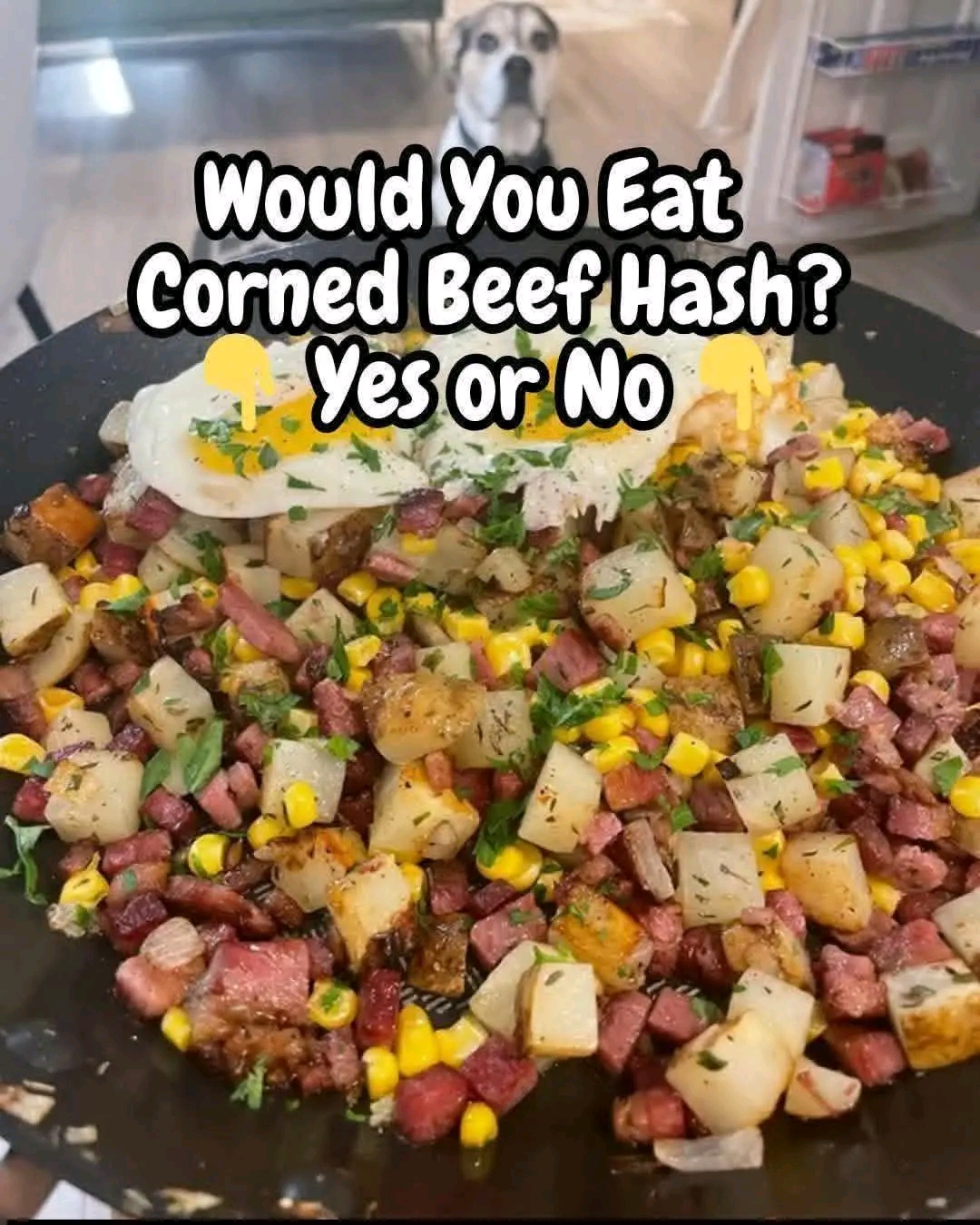
As seen in our inspiration image, the addition of corn is a brilliant modern twist. It adds a pop of sweetness that cuts through the saltiness of the beef and provides a satisfying “snap” in every bite.
Part II: Preparing the Foundation
The Par-Boil Method
Never put raw potatoes directly into a hash pan. They take too long to cook, and by the time the insides are soft, the meat will be burnt.
- Dice your potatoes into 1/2 inch cubes.
- Place them in cold salted water and bring to a boil.
- Cook for only 5–7 minutes. They should be “fork-tender” but not mushy.
- The Critical Step: Drain them and let them steam-dry for 10 minutes. Moisture is the enemy of the crunch.
The Aromatic Base
A great hash needs more than just meat and potatoes. You need a “Sofrito” of sorts:
- Onions: Yellow or sweet onions work best. They should be diced to the same size as the beef.
- Bell Peppers: While optional, a finely diced green or red pepper adds a subtle bitterness and color.
- Garlic: Added at the very end to prevent burning.
Part III: The Comprehensive Recipe
Ingredients
The Main Components:
- 2 lbs Yukon Gold potatoes, peeled and diced (1/2-inch cubes)
- 1.5 lbs Cooked corned beef, diced (1/4-inch cubes)
- 1 cup Sweet corn (fresh or frozen/thawed)
- 1 large Sweet onion, finely diced
- 1/2 cup Fresh parsley, chopped (plus more for garnish)
The Searing Agents: - 3 tbsp Unsalted butter
- 2 tbsp Neutral oil (Grapeseed or Vegetable)
- 1 tbsp Worcestershire sauce
- 1 tsp Smoked paprika
- Salt and freshly ground black pepper to taste
The Topping: - 4 to 6 Large eggs (for frying)
Step-by-Step Instructions
1. The Potato Pre-Game
Boil your diced potatoes in salted water until just tender. Drain them and spread them out on a baking sheet. Pat them dry with paper towels. If you have time, put the tray in the fridge for 20 minutes. Cold, dry potatoes fry much better than hot, wet ones.
2. Sauté the Aromatics
In a large, heavy-bottomed skillet (Cast iron is king here!), heat 1 tablespoon of oil and 1 tablespoon of butter over medium heat. Add the onions and cook until translucent and just beginning to brown around the edges. Add the corn and sauté for another 3 minutes until the corn begins to caramelize. Remove this mixture from the pan and set it aside.
3. The Great Sear
Wipe out the pan. Increase the heat to medium-high and add the remaining oil and butter. Once the butter stops foaming, add the potatoes in a single layer.
- Pro-Tip: Do not stir for at least 4 minutes. You want to build a crust.
Once the potatoes are golden, add the diced corned beef. Spread it out and press down with a spatula.
4. The Integration
Add the onion and corn mixture back into the pan. Drizzle the Worcestershire sauce over the top and sprinkle with smoked paprika and black pepper. (Be careful with salt; the corned beef is already very salty!) Toss everything together, then press it down firmly into a giant pancake. Let it cook for 5 more minutes, occasionally flipping sections to ensure even browning.
5. The Eggs
While the hash is finishing, fry your eggs in a separate non-stick skillet. For Corned Beef Hash, a Sunny-Side Up or Over-Easy egg is mandatory. The goal is a completely liquid yolk that acts as a natural sauce for the crispy hash.
6. The Final Assembly
Turn off the heat. Stir in the fresh parsley. Slide the hash onto a large platter or serve directly from the skillet. Carefully place the eggs on top.
Part IV: Cultural Significance and Variations
Corned Beef Hash is a dish that tells a story of immigration and adaptation. In the United States, Irish immigrants found that corned beef (an adaptation of Jewish deli traditions) was more affordable than the salt pork or bacon they used back home. By mixing it with the American staple of potatoes, they created a filling, high-calorie breakfast that fueled the industrial revolution.
Global Variations:
- The British “Lobby”: A thicker, more stew-like version often found in the North of England.
- The Scandinavian “Pyttipanna”: Usually made with various meats (sausage, ham, or beef) and topped with a pickled beet.
- The Southwestern Hash: Swap the parsley for cilantro and add diced jalapeños and a side of salsa verde.
Part V: Why This Dish Works (The Science of Flavor)
The reason Corned Beef Hash is so addictive lies in the Contrast of Textures.
- The Crunch: The Maillard reaction on the surface of the potatoes and beef creates complex, nutty flavors.
- The Creaminess: The interior of the potato remains soft and fluffy.
- The Umami: Corned beef is cured with salt and often spices like mustard seed and bay leaf, providing a deep savory base.
- The Fat: The egg yolk contains lecithin, which emulsifies with the salty juices of the beef, creating a rich mouthfeel.
Final Verdict: Would You Eat It?
If the question is “Would you eat corned beef hash?” the answer—especially looking at a skillet filled with golden potatoes, sweet corn, and perfectly set eggs—is a resounding YES.
It is more than just a meal; it is a celebration of “waste not, want not.” It is the ultimate recovery food, the perfect weekend brunch, and a testament to the fact that sometimes, the simplest ingredients make the most sophisticated flavors.
Ready to try it? Dust off that cast iron skillet, grab some leftover brisket, and prepare for the best breakfast of your life. Just don’t forget the hot sauce!