The Golden Standard of Comfort: The Ultimate Baked Rice Pudding
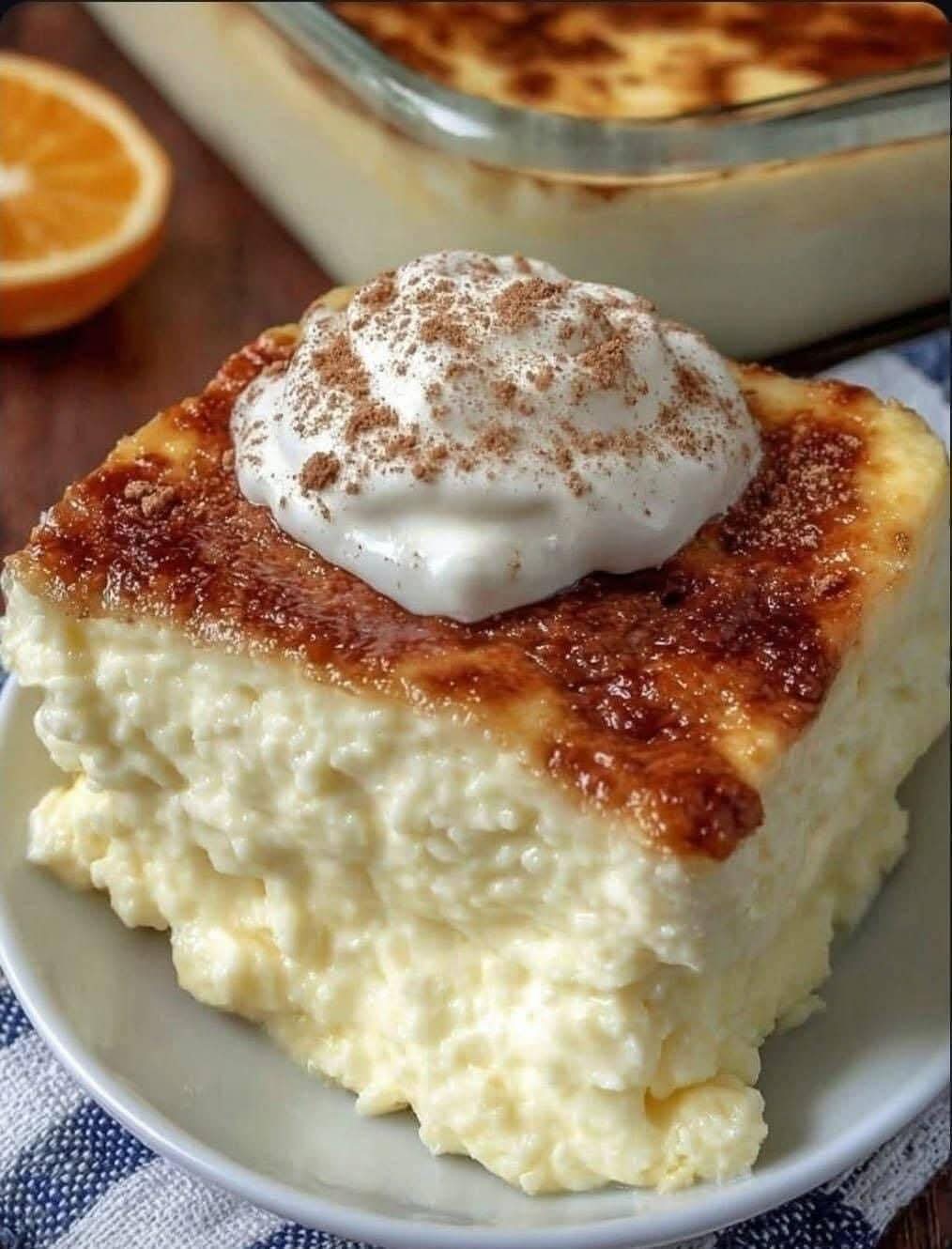
There is a sublime simplicity in a dessert that relies on the most basic pantry staples—rice, milk, sugar, and eggs—to create something so deeply evocative. Old-Fashioned Baked Rice Pudding is the culinary equivalent of a warm wool blanket on a rainy afternoon. Unlike its stovetop cousin, which is creamy and fluid, the baked version (especially the Mediterranean or “Arroz Doce” style depicted) offers a structured, custard-like consistency with a signature caramelized “skin” that is highly prized by connoisseurs.
This dish represents a bridge between the humble sustenance of the past and the sophisticated comfort of the present. Whether served warm with a dollop of whipped cream or cold from the fridge at midnight, it remains a timeless masterpiece of texture and flavor.
A Global History: From Royalty to the Common Table
Rice pudding is one of the few dishes that can be found in nearly every culture on Earth, and its history is as rich as its flavor.
The Ancient Foundations
Rice pudding didn’t start as a dessert. In ancient India, a dish called Kheer was mentioned in Ayurvedic texts as a health-giving food. In the Middle East, rice-based pottages were enriched with almond milk and honey. Because rice was an imported luxury in Medieval Europe, rice pudding was originally a dish reserved for the tables of kings and queens, often thickened with bone marrow and colored with expensive saffron.
The 19th Century Evolution
As rice production became more globalized, the dish transitioned into “nursery food”—mild, nutritious, and easy to digest for children and the elderly. In the American South and New England, the “Baked Pudding” style became dominant, influenced by British bread pudding techniques but utilizing the abundance of rice coming through ports like Charleston.
The Modern Custard Style
The version we see today, with its thick, cake-like structure and brûléed top, often draws inspiration from the Greek Rizogalo or the Portuguese Arroz Doce. By adding eggs to the mixture, the pudding transforms from a simple grain dish into a sophisticated custard.
Ingredients: The Elements of Elegance
To achieve the towering, creamy slice shown in the image, the quality and ratio of ingredients are paramount.
The Base
- 1 cup Arborio or Short-Grain White Rice: Do not use Basmati or Jasmine; they are too floral and don’t release enough starch. Short-grain rice provides the “chew” and creaminess essential for a structural pudding.
- 4 cups Whole Milk: Low-fat milk will result in a watery, sad pudding. The fat in whole milk is necessary for the velvety mouthfeel.
- 1 cup Heavy Cream: To elevate the richness to “gourmet” status.
The Custard & Sweetener
- 4 Large Eggs: These act as the setting agent, giving the pudding its sliceable formation.
- 3/4 cup Granulated Sugar: Just enough to sweeten without being cloying.
- 1 tbsp Pure Vanilla Extract: Use the good stuff; the flavor is prominent here.
The Aromatics
- 1/2 tsp Ground Cinnamon: For the interior and a generous dusting for the top.
- 1/4 tsp Ground Nutmeg: Adds a “secret” depth.
- Zest of 1 Lemon or Orange: (Optional) This provides a bright, citrusy counterpoint to the heavy dairy.
- A pinch of Salt: To brighten the sugars.
Detailed Methods: Formation and Baking
Phase 1: The Par-Boil (The Secret Step)
Most people fail at baked rice pudding because the rice remains crunchy while the milk burns. To prevent this, rinse your rice under cold water until it runs clear. Place it in a pot with 2 cups of water and a pinch of salt. Bring to a boil, then simmer for 8–10 minutes until the water is absorbed and the rice is tender but firm (al dente). Drain any excess liquid.
Phase 2: The Tempering
In a large bowl, whisk together the eggs, sugar, vanilla, and spices. In a separate saucepan, heat the milk and heavy cream until it just begins to steam (do not boil).
The Formation Method: Slowly drizzle one cup of the hot milk into the egg mixture while whisking constantly. This “tempers” the eggs, raising their temperature slowly so they don’t scramble. Once tempered, whisk in the remaining milk.
Phase 3: The Assembly
Stir the par-boiled rice into the custard mixture. Grease a 9×9 inch glass baking dish with butter. Pour the mixture in. It will look very liquid at this stage—this is normal!
Phase 4: The Slow Bake
- Temperature: Preheat your oven to 325°F (165°C). A lower temperature ensures the custard sets smoothly without “weeping” or curdling.
- The Water Bath (Optional but Recommended): Place the baking dish inside a larger roasting pan filled with an inch of hot water. This protects the edges from overcooking.
- Duration: Bake for 60–75 minutes. At the 45-minute mark, gently stir the pudding to redistribute the rice.
- The Finish: The pudding is done when the edges are set but the center still has a slight “jiggle.”
Nutrition and Health Benefits
While it is a dessert, rice pudding offers surprising nutritional value compared to flour-based cakes:
| Nutrient | Benefit |
|---|---|
| Calcium & Vitamin D | Essential for bone health, provided by the high milk content. |
| Protein | The eggs and dairy provide high-quality protein for muscle maintenance. |
| Energy | The complex carbohydrates in rice provide a steady release of glucose. |
| Digestive Ease | Rice is naturally gluten-free and gentle on the stomach, making this an ideal “recovery” food. |
The “Lovers” of the Pudding
Who is this dish for?
- The Texture Obsessives: Those who live for the contrast between the silky custard and the slight bite of the rice grain.
- The Skin-Snatchers: The people who fight over the caramelized, slightly chewy top layer.
- The Meal-Preppers: This pudding firms up beautifully in the fridge, making it a perfect make-ahead breakfast or snack.
Conclusion: A Slice of Nostalgia
Old-Fashioned Baked Rice Pudding is proof that you don’t need exotic ingredients to create a world-class dessert. It is a dish that rewards patience—the slow bake, the careful tempering, and the agonizing wait for it to cool just enough to slice.
When you top it with a cloud of fresh whipped cream and a final dusting of cinnamon, you aren’t just eating rice; you’re participating in a global tradition of comfort. It is creamy, aromatic, and deeply satisfying.
WordPress Posting Tip: Remind your readers that if they prefer a “raisin” version, they should soak 1/2 cup of raisins in warm rum or apple juice for 20 minutes before stirring them into the mixture during Phase 3. This keeps the fruit plump and juicy!