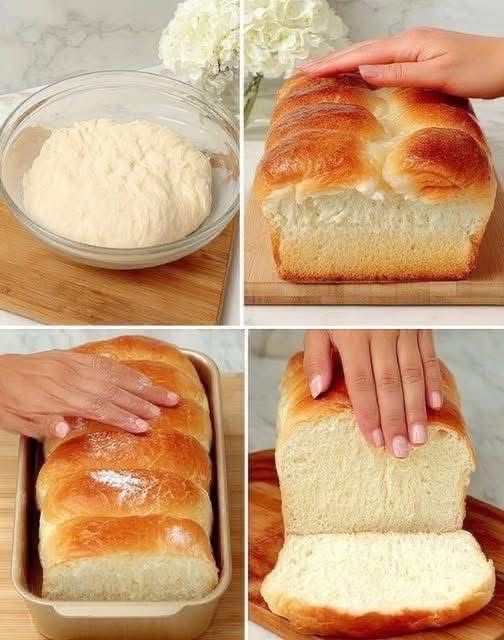
Easy Japanese Milk Bread (Shokupan)
Ingredients
2 ½ cups bread flour (or all-purpose flour)
2 tablespoons sugar
1 teaspoon salt
2 teaspoons instant yeast
½ cup warm milk
1 large egg
¼ cup heavy cream
3 tablespoons soft butter
Tangzhong (starter)
3 tablespoons water
3 tablespoons milk
2 tablespoons flour
Instructions
In a small saucepan, mix water, milk, and flour for the tangzhong. Cook on low heat, stirring constantly until it thickens into a paste. Let it cool.
In a large bowl, combine flour, sugar, salt, and yeast. Add warm milk, egg, cream, and the cooled tangzhong. Mix until a dough forms.
Knead the dough for about 10 minutes until smooth and elastic. Add butter and continue kneading until fully incorporated.
Cover the dough and let it rise in a warm place for about 1 hour or until doubled in size.
Punch down the dough and divide into 3 equal pieces. Shape each into a ball, then roll them into logs. Place them side by side in a greased loaf pan.
Cover and let rise again for about 40 minutes until puffy.
Bake in a preheated oven at 180°C for 25 to 30 minutes until golden brown.
Let cool slightly before removing from the pan. Slice and enjoy the soft, fluffy bread.
History
Japanese milk bread, also known as Shokupan, became popular in Japan in the early 20th century. It was inspired by European-style breads but adapted to suit Japanese tastes, which favor softer, lighter textures. The unique “tangzhong” method, originally from China, was later adopted in Japan to create an extra fluffy and moist bread that stays fresh longer.
Method
The key technique in this recipe is the tangzhong starter. A small portion of flour is cooked with liquid to form a paste, which helps retain moisture in the dough. After preparing the tangzhong, it is mixed with the rest of the ingredients to form a soft dough. The dough is kneaded until smooth and elastic, then left to rise twice. Shaping the dough into rolls before baking gives the bread its signature soft, pull-apart texture.
Benefits
This bread is incredibly soft and fluffy, making it perfect for sandwiches, toast, or even enjoying on its own.
It stays fresh longer than regular bread due to the tangzhong method.
It has a slightly sweet, rich flavor thanks to the milk and cream.
It’s versatile and can be used for both sweet and savory recipes.
Nutrition
Japanese milk bread provides carbohydrates for energy and contains some protein from the flour and egg. The milk and cream add calcium and fats, making it richer than standard bread. However, it is also higher in calories and fat, so it is best enjoyed in moderation as part of a balanced diet.
Conclusion
Japanese milk bread is a perfect combination of softness, flavor, and versatility. Its unique preparation method makes it stand out from regular bread, offering a bakery-quality result at home. Whether used for breakfast, snacks, or sandwiches, it’s a recipe worth trying for anyone who loves light and fluffy bread.