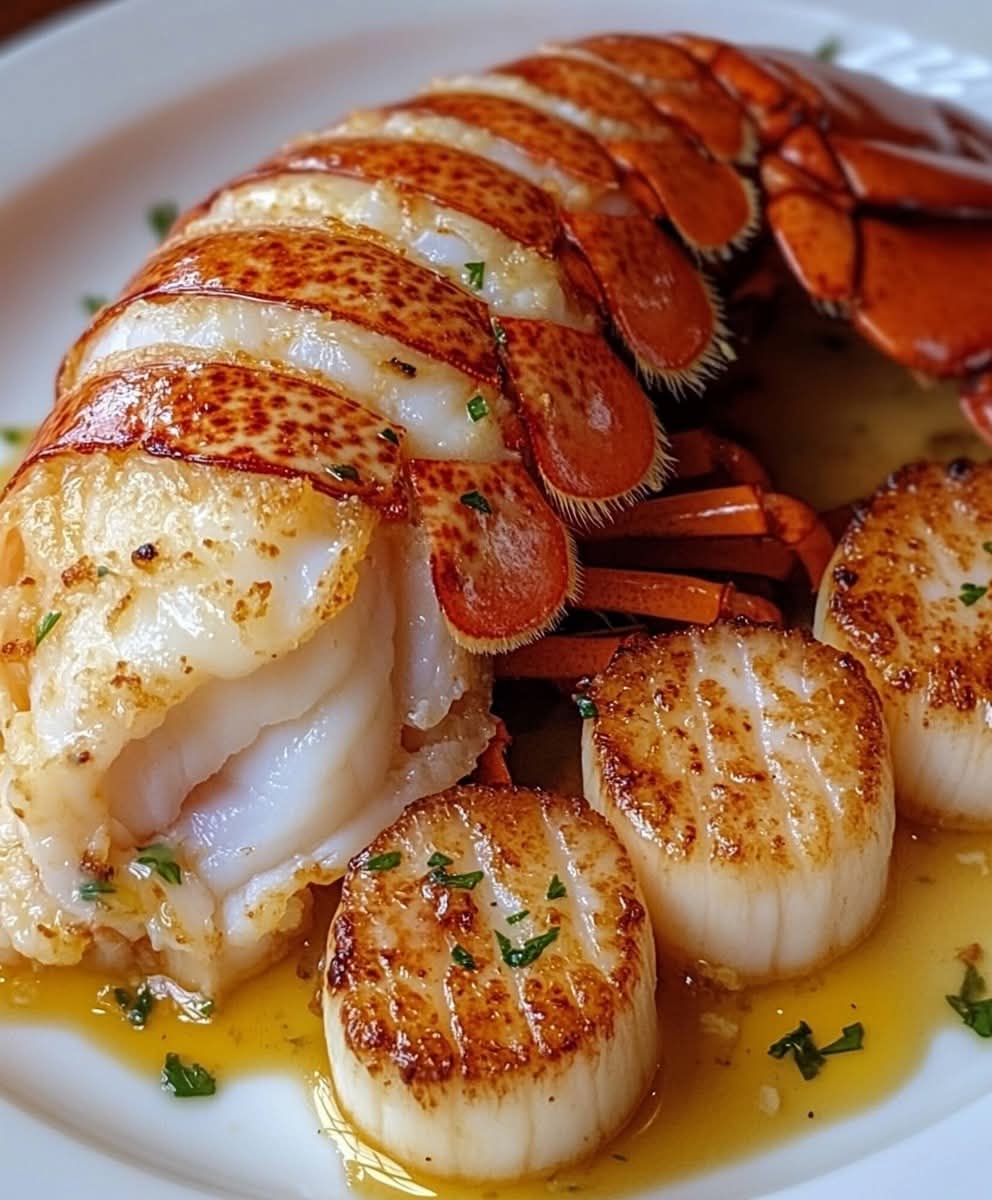
The Art of the Ocean: Ultimate Butter-Poached Lobster and Pan-Seared Scallops
There are few culinary experiences as iconic or as indulgent as the union of lobster tail and sea scallops. This dish is not merely a meal; it is a celebration of texture and flavor—the delicate, succulent sweetness of the lobster contrasted against the caramelized, buttery crust of the scallop. This guide will walk you through creating this restaurant-quality masterpiece in your own kitchen.
A Brief History of the Duo
The Lobster: From Poverty to Prestige
In the early colonial days of North America, lobster was considered the “cockroach of the sea.” It was so abundant that it was fed to prisoners, apprentices, and servants, and it was commonly used as garden fertilizer. It wasn’t until the mid-19th century that lobster gained status as a delicacy, largely thanks to the development of the canning industry and the expansion of the railroad, which made shipping fresh lobster to inland cities possible. Today, it remains the quintessential symbol of coastal luxury.
The Scallop: A Culinary Legend
Scallops have been revered for millennia, famously associated with the Roman goddess Venus, who is often depicted arriving on shore in a scallop shell. While lobster became a delicacy through distribution, the sea scallop has always held a place of honor at the table. Prized for their sweet, tender adductor muscle, they require precise heat management to achieve the perfect balance of a golden-brown crust and a creamy, translucent center.
Benefits: Why You Should Make This
- Protein Powerhouse: Both lobster and scallops are dense, lean sources of high-quality protein.
- Heart-Healthy Nutrients: These shellfish are rich in Omega-3 fatty acids, which support cardiovascular health.
- Essential Minerals: You receive a significant intake of selenium, zinc, and Vitamin B12, which are crucial for immune function and brain health.
- Culinary Mastery: Mastering the sear of a scallop and the poaching of a lobster tail elevates your home cooking repertoire significantly.
The Ingredients
To serve 4 people, ensure you source the highest quality seafood available.
The Seafood
- Lobster Tails: 4 medium-sized cold-water lobster tails (about 6–8 oz each).
- Sea Scallops: 12–16 large “dry” sea scallops. Note: Always ask for “dry” scallops—these have not been treated with sodium tripolyphosphate, which makes them retain water and prevents a proper sear.
The Poaching & Searing Components
- Unsalted Butter: 1.5 cups (high-quality European-style butter is preferred).
- Garlic: 4 cloves, smashed.
- Fresh Herbs: 2 sprigs of rosemary, 4 sprigs of thyme, and a handful of fresh Italian parsley, chopped.
- Lemon: 1 fresh lemon, sliced into rounds and extra for wedges.
- Oil: 1 tablespoon of high-smoke-point oil (avocado oil or grapeseed oil).
- Seasoning: Kosher salt and freshly cracked white pepper.
The Methods: Execution
I. The Formation: Preparing the Lobster
To achieve the restaurant-style look seen in your image, you must “butterfly” the tail.
- Cut: Using kitchen shears, cut down the center of the hard shell towards the tail, stopping just before the end. Do not cut through the bottom shell.
- Separate: Gently pry the shell halves apart slightly with your thumbs.
- Lift: Reach inside and gently loosen the meat from the shell, lifting it up and resting it on top of the shell halves.
- Clean: Remove the intestinal vein if visible along the back.
II. The Technique: Butter-Poaching the Lobster
Poaching is superior to boiling because it keeps the lobster incredibly tender.
- In a deep skillet, melt the butter over low heat. Add the garlic, lemon slices, and herb sprigs. Let it simmer gently (do not let it brown).
- Nestle the lobster tails into the butter. The butter should come about halfway up the meat.
- Baste the meat constantly with the hot butter.
- Cook for 5–7 minutes, or until the meat turns opaque and firm. The internal temperature should hit 140°F (60°C). Remove and keep warm.
III. The Art of the Sear: The Scallops
This is where the Maillard reaction—the chemical reaction between amino acids and reducing sugars—creates that golden crust.
- Dry, Dry, Dry: Remove the tough side muscle from the scallops. Place them on paper towels and pat them until they are bone-dry. Moisture is the enemy of the sear.
- Season: Season generously with kosher salt and pepper just seconds before hitting the pan.
- The Heat: Heat a stainless steel or cast-iron skillet over medium-high heat with the avocado oil until it shimmers (almost smoking).
- The Drop: Place scallops in the pan, ensuring they are not touching. Do not move them!
- The Flip: Sear for 2–3 minutes until a deep golden crust forms. Flip carefully and cook for another 1–2 minutes on the other side. They should be just slightly translucent in the center.
Lovers (Pairings & Accompaniments)
This dish is a “lover” of rich, textured sides that don’t overpower the delicate seafood.
- The Wine: A high-end, buttery Chardonnay from Burgundy or California creates a harmonious bridge with the butter-poached lobster. For those who prefer crispness, a Sancerre (Sauvignon Blanc) provides a sharp acidity that cuts through the richness of the butter.
- The Sides:
- Risotto: A classic lemon-parmesan risotto provides a creamy base that mimics the richness of the seafood.
- Asparagus: Blanched, then lightly sautéed in the leftover garlic butter used for the lobster.
- Pommes Puree: Silky smooth, buttery mashed potatoes are the gold standard for surf and turf.
Nutritional Breakdown (Per Serving)
Estimates are based on standard portion sizes.
| Nutrient | Amount |
|---|---|
| Calories | ~450 kcal |
| Protein | 35g |
| Total Fat | 28g |
| Carbohydrates | 2g |
| Cholesterol | 180mg |
| Note: The primary source of fat here is the butter used in poaching. If watching caloric intake, you can reduce the butter and use a white wine and clam juice reduction for poaching instead. |
Conclusion
Creating this dish at home is an exercise in patience and respect for the ingredients. The secret lies not in complexity, but in the precision of your preparation. By choosing dry scallops, mastering the butterfly technique for the lobster, and controlling your heat, you can transform these raw ingredients into a masterpiece worthy of a white-tablecloth restaurant.
This dish is meant to be savored slowly. It is an experience for the senses—the aroma of browned butter, the sight of the golden crust on the scallop, and the tender, sweet texture of the lobster tail. Enjoy your meal, and appreciate the culinary journey that brought these two treasures of the sea to your table.