The Art of Gentle Relief: Understanding Traditional Approaches to Joint and Muscle Comfort
Important Medical Disclaimer
The information provided in this article is for educational and informational purposes only. It is not intended as a substitute for professional medical advice, diagnosis, or treatment. Chronic pain can be a symptom of serious underlying medical conditions, including autoimmune disorders, infections, or structural injuries. Always seek the advice of your physician or other qualified health provider before attempting new home remedies, especially if you are taking prescription medications or have existing health conditions. Never disregard professional medical advice or delay in seeking it because of something you have read here.
Introduction: The Universal Language of Pain
If you are reading this, there is a good chance you are familiar with the frustration of chronic discomfort. Whether it is the nagging ache in your neck after a long day at the desk, the stiff soreness in your lower back, or the sharp, persistent pain in your knees that makes walking feel like a chore, pain is an unwelcome companion.
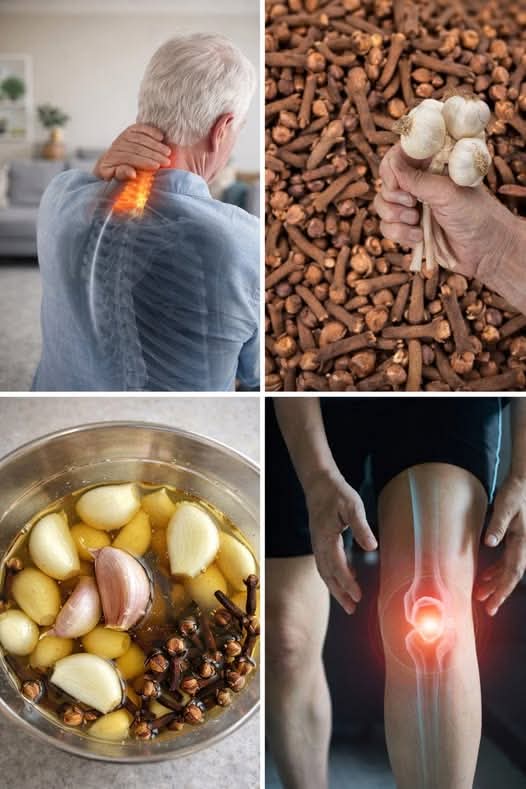
In our search for relief, many of us turn to the wisdom of traditional medicine—the kitchen cabinet remedies passed down through generations. You have likely seen viral images circulating online featuring ingredients like garlic and cloves, often depicted as a “miracle soak” for pain.
While it is empowering to look to nature for help, it is vital to approach these remedies with a blend of curiosity and scientific scrutiny. In this guide, we will explore the roles of cloves and garlic, the science behind why they have been used historically for pain, and—more importantly—we will provide a holistic framework for managing chronic inflammation and joint health that goes far beyond a single home remedy.
The Chemistry of Nature: Why Cloves and Garlic?
When traditional medicine utilizes specific ingredients, it is often because those plants contain bioactive compounds that have measurable effects on the human body. Both garlic and cloves have a long history of use in various cultures, specifically for their anti-inflammatory and analgesic (pain-relieving) properties.
The Power of Garlic (Allium sativum)
Garlic is far more than a culinary staple. It contains a compound called allicin, which is released when garlic is crushed or chopped. Allicin is widely studied for its potent anti-inflammatory and antioxidant effects.
- Mechanism: In laboratory settings, allicin has been shown to inhibit inflammatory pathways that contribute to joint swelling and pain.
- Historical Use: In traditional herbalism, garlic has been infused into oils and applied topically to “warm” areas of the body, potentially helping to stimulate local blood flow and soothe discomfort.
The Strength of Cloves (Syzygium aromaticum)
Cloves are perhaps best known for their use in dental care, and for good reason. The primary active component in cloves is eugenol.
- Analgesic Properties: Eugenol acts as a natural anesthetic and anti-inflammatory agent. This is why, historically, cloves were placed directly on aching teeth to numb the area.
- Topical Application: When applied to the skin (usually diluted in a carrier oil), eugenol provides a warming sensation that can help distract from deep, aching joint pain and potentially reduce local inflammation.
The “Infusion” Concept
The mixture often depicted in health trends—cloves and garlic soaked in oil—is essentially a DIY herbal infusion. The theory is that the oils from these potent ingredients leach into the carrier oil, creating a concentrated “rub” that can be massaged into sore joints. While this is a common practice in many cultures, it is important to remember that these are supportive measures, not cures for structural damage like arthritis or torn ligaments.
Moving Beyond the Kitchen: A Holistic Approach to Pain
While topical remedies can offer temporary relief, they are only a small piece of the puzzle. Chronic pain is rarely “solved” by one ingredient. It is a signal from your body that needs to be addressed through a multi-faceted lifestyle approach.
1. Understanding Inflammation
Inflammation is the body’s natural response to injury or stress. However, chronic inflammation is the enemy. It creates an environment where joints become stiff, tissues become tender, and pain becomes systemic. Managing pain is largely about managing your body’s inflammatory load.
2. The Foundation: Nutrition
What you put into your body dictates how your body repairs itself.
- The Anti-Inflammatory Diet: Focus on whole, unprocessed foods. Leafy greens, fatty fish (rich in Omega-3 fatty acids), berries, nuts, and seeds contain antioxidants that naturally fight inflammation.
- Hydration: Your joints rely on synovial fluid for lubrication. If you are chronically dehydrated, this fluid can become viscous, leading to friction and stiffness. Aim for consistent water intake throughout the day.
- Sugar and Processed Foods: Refined sugars and highly processed seed oils can spike systemic inflammation. Reducing your intake of these is one of the most effective ways to lower baseline pain levels.
3. “Motion is Lotion”
One of the most dangerous myths about joint pain is the idea that you should stop moving to “protect” the area. In reality, the opposite is true.
- Gentle Movement: Unless you have an acute injury (like a fresh sprain or fracture), complete rest often leads to muscle atrophy and increased stiffness. Gentle, low-impact movement—like walking, swimming, or tai chi—circulates blood to the joints, delivering oxygen and nutrients that aid repair.
- Consistency over Intensity: You do not need to run a marathon. A daily 20-minute walk can do more for long-term knee and back health than a once-a-week high-intensity workout.
4. Ergonomics and Posture
If your neck or back hurts, take a hard look at your environment.
- Workstation Setup: Are you hunching over a screen? Ensure your monitor is at eye level.
- Sleeping Position: Are you waking up in pain? You may need a pillow that supports your neck’s natural curve or, if you are a side sleeper, a pillow between your knees to align your hips.
Safety Guidelines for Topical Remedies
If you choose to experiment with natural topical remedies like garlic and clove oil infusions, safety must be your priority. The skin is an organ, not a wall—it absorbs what you put on it.
- The Patch Test: Before applying any herbal mixture to a large area, apply a tiny amount to your inner forearm. Wait 24 hours. If you see redness, itching, or swelling, do not use it.
- Carrier Oils Matter: Essential oils and strong herbal infusions should never be applied “neat” (undiluted) to the skin. They can cause chemical burns or severe contact dermatitis. Always mix them with a high-quality carrier oil like coconut, olive, or jojoba oil.
- Do Not Apply to Broken Skin: Never apply herbal rubs to open cuts, rashes, or irritated skin. This can lead to infection or extreme sensitivity.
- Consult with your Doctor: Some natural compounds can interact with medications, especially blood thinners or those affecting blood pressure. Always clear it with your healthcare provider first.
When to Seek Professional Help
There is a fine line between “nagging ache” and “warning sign.” You should not attempt to treat the following symptoms at home. Please see a medical professional if you experience:
- Red Flags: Unexplained weight loss, night sweats, or fever accompanying your joint pain.
- Acute Injury: If the pain followed a fall, impact, or sudden movement, you must rule out fractures or ligament tears.
- Severe Swelling or Heat: If a joint is hot to the touch, red, and swollen, this could indicate an infection or an acute flare-up of inflammatory arthritis (like gout or rheumatoid arthritis), which requires medical treatment.
- Neurological Symptoms: Numbness, tingling, or “pins and needles” radiating down your arms or legs could indicate nerve impingement (like a herniated disc) that needs specialized care.
- Loss of Function: If your knee is “locking” or giving way, or if you cannot move your neck comfortably, see a physical therapist or orthopedist.
Conclusion: Empowering Your Own Health Journey
The desire to find simple, natural ways to manage pain is deeply human. It reflects a desire to take control of our health and avoid the potential side effects of long-term medication use.
The ingredients shown in the images—garlic and cloves—have a rightful place in the rich history of traditional medicine. When used safely and with the right expectations, they can be part of a broader, supportive regimen for comfort.
However, true relief rarely comes from a single “secret recipe.” It is found in the accumulation of small, daily habits: choosing an anti-inflammatory diet, prioritizing movement, optimizing your sleep environment, and listening when your body tells you that something is wrong.
Be kind to your body. It is the only place you have to live. If you are struggling with chronic pain, don’t just reach for a bottle or a home remedy—reach out to a professional who can help you identify the root cause. Pain is a signal, not a failure. When you listen to it, you can begin the real work of healing.
Frequently Asked Questions (FAQ)
Can I use these ingredients if I am on blood thinners?
If you are on blood-thinning medication, you should consult your doctor before using any supplements or concentrated herbal preparations, as ingredients like garlic and clove can have anti-coagulant effects.
How long does it take for these natural remedies to work?
Natural remedies are not “instant” in the way some pharmaceuticals are. They often require consistent use to manage inflammation levels over time. If you do not see improvement within a week or two, stop using the remedy and consult your physician.
Is “cracking” my back or neck good for pain?
Self-adjusting or having someone who isn’t a trained professional adjust your spine can be dangerous. It is better to focus on gentle stretching or visit a licensed chiropractor or physical therapist.