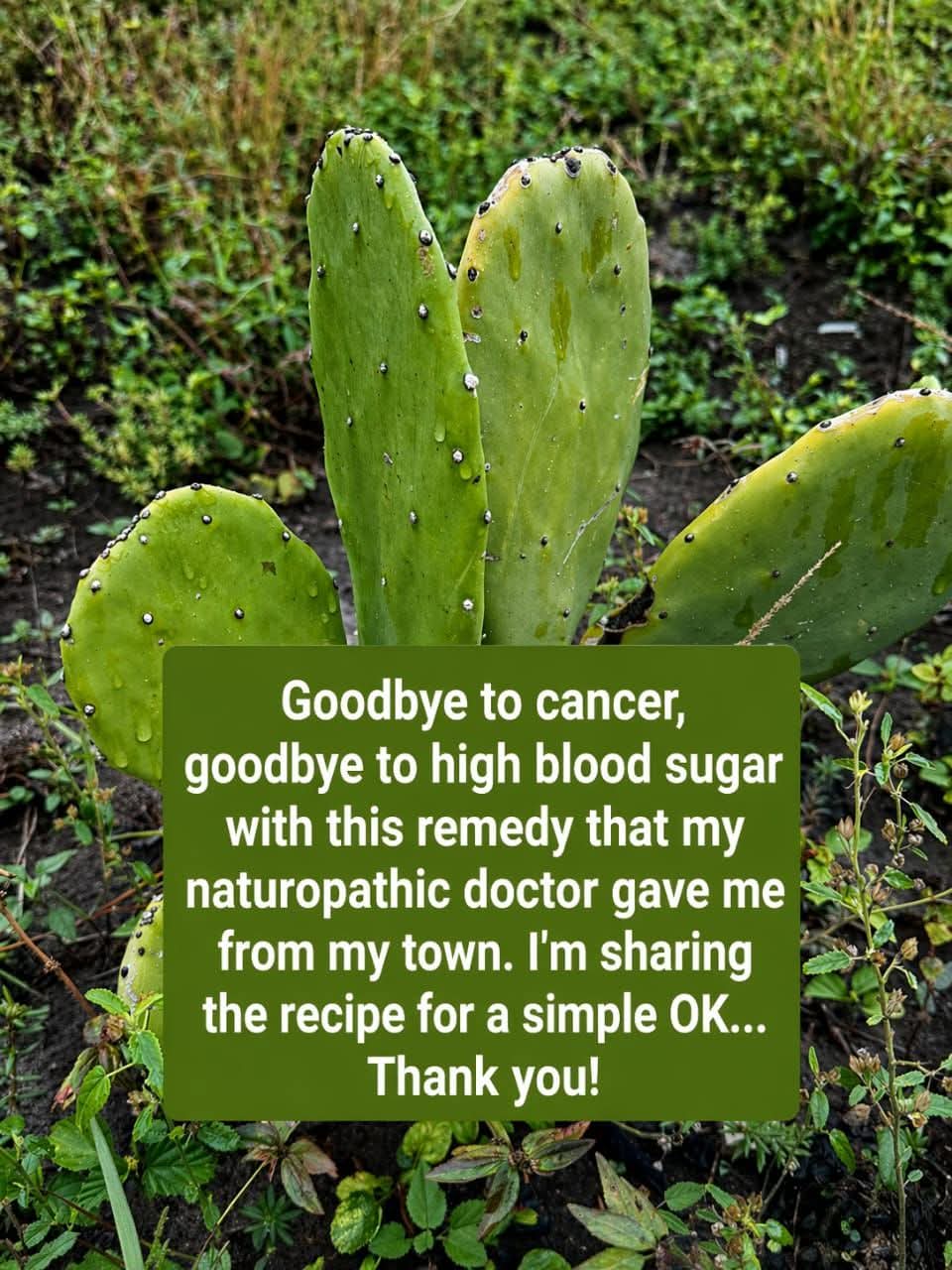
The Truth Behind “Miracle Cures”: Separating Viral Health Myths from Scientific Reality
Important Medical Disclaimer
The information provided in this article is for educational and informational purposes only. It is not intended as a substitute for professional medical advice, diagnosis, or treatment. Cancer and diabetes are complex medical conditions that require the management of licensed oncologists, endocrinologists, and primary care physicians. Never delay seeking professional medical treatment or disregard medical advice because of information you have read online. If you are struggling with a chronic health condition, please speak with your healthcare provider before adding any herbal remedies to your regimen, as they may interact with life-saving medications.
Introduction: The Allure of the “Simple Cure”
In the digital age, we are constantly bombarded with images of simple, natural ingredients—a cactus, a leaf, a root—paired with bold, life-altering claims. You may have seen posts circulating social media promising that a specific plant can “cure” cancer, eliminate high blood sugar, or reverse chronic disease. These posts are often framed as a “secret” that your doctor won’t tell you, handed down by a mysterious naturopath or a local healer.
It is deeply human to want these solutions to be true. When we face illness, we seek hope, control, and simplicity. We want the solution to be as accessible as the plants growing in our backyard.
However, it is a dangerous reality that when something sounds like a “miracle” that cures everything from cancer to diabetes, it almost certainly is not. In this guide, we are going to look behind the curtain of these viral health myths. We will explore the plant featured in the image—the Opuntia (prickly pear cactus)—to understand what it actually does for your health, and more importantly, how to protect yourself from the misinformation that can delay or derail necessary medical treatment.
Anatomy of a Viral Health Myth
Why do these types of posts go viral? It isn’t usually because they are backed by rigorous science. It is because they utilize a specific psychological formula designed to bypass our critical thinking.
1. The Promise of a “Secret”
By framing the remedy as something “they” don’t want you to know (implying a conspiracy between doctors and pharmaceutical companies), these posts create a sense of exclusivity. It appeals to our natural desire to be “in the know.”
2. The Over-Generalization
Real medicine is specific. A medication for blood pressure works on the cardiovascular system; a chemotherapy drug works on specific cellular markers. Viral health myths, however, promise to fix everything—cancer, blood sugar, fatigue, weight, and inflammation. When a remedy claims to fix unrelated, complex, and distinct diseases, it is a hallmark of misinformation.
3. The Appeal to “Nature”
There is a pervasive belief that “natural” equals “safe” and “effective.” While many of our most effective medicines were originally derived from plants, the raw plant itself is rarely a “cure-all.” The digital-age trap lies in ignoring the nuance of dosage, purity, bioavailability, and, crucially, the underlying pathology of the diseases being treated.
Deconstructing the Claims: Is Opuntia a Cure?
The plant in the image is a member of the Opuntia genus, commonly known as Nopal, prickly pear, or cactus pear. It is a legitimate and nutritious food source consumed for centuries in Mexico and other parts of the world. But is it a cure for cancer or diabetes?
The Reality About Cancer
Cancer is not one disease; it is a collection of over 200 distinct diseases characterized by the uncontrolled growth of abnormal cells. These cells arise due to genetic mutations, environmental triggers, and systemic issues.
There is no scientific evidence that consuming prickly pear cactus can cure cancer. Suggesting that a simple cactus extract can reverse the complex, cellular-level changes of malignancy is not only scientifically unsupported—it is dangerous. Patients who believe such claims may delay seeking proven, life-saving oncology treatments, potentially allowing cancers to progress to incurable stages. While researchers study plant-based compounds for their potential anti-cancer properties (in a lab setting), consuming a plant is not equivalent to a medical treatment.
The Reality About Blood Sugar (Diabetes)
This is where the myth gets its “grain of truth.” The Opuntia cactus has been studied for its potential to support metabolic health.
- The Science: Some studies suggest that nopal cactus may help improve insulin sensitivity and lower post-prandial (after-meal) blood glucose levels. This is likely due to its high fiber content (soluble fiber helps slow glucose absorption) and its antioxidant profile.
- The Caveat: “Supporting” blood sugar is vastly different from “curing” diabetes. Diabetes is a chronic condition involving the body’s inability to produce or use insulin. While dietary additions like nopal can be part of a healthy diet for diabetics, they are not a replacement for medication, insulin therapy, or strict medical monitoring. Relying on cactus juice to “cure” diabetes while ignoring blood sugar spikes can lead to kidney failure, neuropathy, and vision loss.
The Danger of “Naturopathic” Misinformation
The image claims the remedy was given by a “naturopathic doctor.” It is essential to understand the difference between licensed, evidence-based healthcare and online anecdotal advice.
- Scope of Practice: While many naturopathic doctors are highly trained in holistic health and preventative care, they work alongside conventional medicine. They generally do not advocate for abandoning chemotherapy or insulin in favor of “cured” herbal teas.
- The “Local Healer” Trap: Many viral posts use the authority of an unnamed “naturopath from my town” to create a false sense of credibility. Because you cannot verify this person’s credentials, their “advice” should be treated with extreme skepticism.
- Potential Interactions: Even if a plant has health benefits, it can interfere with medications. For example, if you are taking medication for diabetes, adding a supplement that lowers blood sugar can cause hypoglycemia (dangerously low blood sugar). Never add herbal supplements without checking with your primary care physician.
A Holistic, Evidence-Based Approach to Health
If you are concerned about your blood sugar or your risk of cancer, the path forward is not found in a single, secret recipe. It is found in the “boring” but powerful work of lifestyle management.
1. Prioritize Whole Foods
Nopal (prickly pear) can be a great addition to your diet. Incorporate it as a vegetable—add it to salads or grilled dishes. But treat it like food, not medicine. A diet rich in non-starchy vegetables, lean proteins, and healthy fats is the gold standard for metabolic health.
2. Consistent Physical Activity
Exercise is the most potent “medicine” we have for managing blood sugar. It increases insulin sensitivity and helps your body process glucose more effectively. Walking for 30 minutes after a meal can have a more measurable impact on your blood sugar than almost any herbal tea.
3. Medical Monitoring
You cannot “feel” your blood sugar levels, and you cannot “feel” if your cancer is in remission. You need data.
- For Diabetes: Regular A1C tests and blood glucose monitoring.
- For Cancer/General Health: Annual physicals, screenings, and blood panels.
- Your Doctor is Your Partner: If you find a “remedy” online, bring it to your doctor. A good physician will be happy to look at the ingredients and tell you if it’s safe to add to your routine. If a practitioner tells you to stop seeing your medical doctor, that is a massive red flag.
4. Sleep and Stress Management
Chronic stress raises cortisol levels, which in turn spikes blood sugar and suppresses the immune system. Prioritizing 7-9 hours of sleep and managing emotional well-being are not “luxuries”—they are essential physiological requirements for health.
How to Spot Misinformation: A Digital Literacy Guide
As you navigate the internet, you will continue to encounter posts like the one in the image. Protect yourself by using these criteria to vet health claims:
- Is the claim “too good to be true”? If it promises to cure a terminal illness or a chronic disease with a single ingredient, it is false.
- Is there a citation? Does the post link to a peer-reviewed study, or does it rely on emotional anecdotes? An article that says “Studies show…” but doesn’t link to the study is a warning sign.
- Is there a “Call to Action” for money? Sometimes these myths are designed to sell you an expensive supplement or a “program” that claims to be the only path to health.
- Is it “us vs. them”? Any content that creates a narrative of “The Medical Industry vs. The People” is usually designed to manipulate your emotions rather than inform your health choices.
Conclusion: Take Control the Right Way
It is natural to want to take your health into your own hands. You should be proactive. You should be curious about nutrition. You should be advocating for your own wellness.
But don’t let that desire for control lead you into the trap of misinformation. The prickly pear cactus is a wonderful plant—it is nutrient-dense, high in fiber, and a staple of many healthy, traditional diets. But it is not a magical talisman against disease.
Real health is built on the foundation of consistent, science-backed habits: eating well, moving often, managing stress, and partnering with qualified medical professionals. Don’t look for a miracle cure that ignores the complexity of your body. Instead, commit to the long-term work of building a body that is resilient, strong, and truly cared for.
If you have questions about your health, talk to a professional. If you have questions about your diet, talk to a registered dietitian. Let your health journey be guided by evidence, safety, and common sense, not by viral images that offer promises they cannot keep.
Frequently Asked Questions (FAQ)
1. Is it safe to eat prickly pear (nopal) cactus?
Yes, prickly pear cactus is widely consumed as a vegetable in many cultures. It is safe and nutritious when prepared properly (spines removed). However, like any food, it should be part of a balanced diet.
2. Can I replace my diabetes medication with natural herbs?
Never. Discontinuing prescribed diabetes medication without medical supervision can result in dangerously high blood sugar, leading to diabetic ketoacidosis or other life-threatening complications. Always work with your doctor to adjust your medication regimen.
3. What should I do if I see a viral medical claim online?
The best approach is to ignore it. Do not share it, as this spreads misinformation. If you are curious, search reputable medical websites like the Mayo Clinic, the Cleveland Clinic, or PubMed (for studies) to see if the claims hold any weight.
4. How can I lower my blood sugar naturally?
While lifestyle changes can significantly improve blood sugar, they should be done in conjunction with medical care. Focus on fiber-rich vegetables, consistent exercise, adequate hydration, and limiting refined sugar intake.
Note: This article is intended for informational purposes. If you or a loved one are experiencing health issues, please consult with a qualified medical professional immediately.