Revitalize Your Flow: A Comprehensive Guide to Managing Heavy Legs, Fatigue, and Poor Circulation
Important Medical Disclaimer
The information provided in this article is for educational and informational purposes only. It is not intended as a substitute for professional medical advice, diagnosis, or treatment. Always seek the advice of your physician or other qualified health provider with any questions you may have regarding a medical condition. Do not disregard professional medical advice or delay in seeking it because of something you have read here.
Introduction: Listening to Your Body’s Signals
There are days when your body seems to be communicating in a language of discomfort. You reach the end of a long afternoon, and your legs feel heavy, almost as if they are weighted down by lead. You feel a pervasive sense of fatigue that sleep alone doesn’t seem to cure, and perhaps you’ve noticed slight swelling in your ankles or feet by the time you head to bed.
These sensations—heaviness, chronic tiredness, and persistent poor circulation—are common experiences in our modern, sedentary world. While online health trends might use alarmist language, suggesting your body is “collapsing,” it is more accurate and helpful to view these symptoms as your body’s way of signaling a need for intervention. Your circulatory system, the intricate highway of blood vessels that sustains every cell in your body, is working under stress, and it is asking for your support.
In this guide, we will move beyond fear-mongering and look at the science of circulation. We will explore why these sensations happen, how lifestyle choices impact blood flow, and how you can take actionable steps to restore energy and vitality to your legs and your entire system.
Understanding the Circulatory System
To solve the problem, we must first understand the mechanism. Your circulatory system is a closed-loop network. The heart pumps oxygenated blood through arteries to the farthest reaches of your body—your toes and fingers. Once the oxygen is delivered, the deoxygenated blood must return to the heart through the veins.
This return trip is the tricky part. For your legs, this requires fighting gravity. Unlike arteries, which have thick, muscular walls to help push blood along, veins are thinner and rely on two primary mechanisms to move blood upward:
- The Skeletal Muscle Pump: As you walk or move, the muscles in your calves and thighs squeeze the veins, acting like a pump to push blood toward the heart.
- Venous Valves: These are tiny, one-way gates inside your veins that prevent blood from flowing backward. When they are healthy, they keep the “upward” momentum steady.
When these systems become inefficient—due to inactivity, aging, or underlying health issues—blood pools in the veins of the lower legs. This pooling is what leads to that feeling of “heaviness,” and it can contribute to swelling (edema) and systemic fatigue as your heart works harder to maintain efficiency.
Why Do You Feel Tired and Heavy? The Common Culprits
The feeling of “heavy legs” is clinically known as venous insufficiency or venous congestion. It is rarely a sign of sudden systemic collapse, but it is a red flag that your lifestyle or underlying physiology needs attention.
1. The Sedentary Trap
The biggest enemy of circulation is lack of movement. If you spend eight to ten hours a day sitting at a desk, your “skeletal muscle pump” is effectively turned off. Blood pools in the lower extremities, and the veins struggle to return it to the heart. This leads to fluid accumulation in the tissues of the legs and ankles.
2. Dietary Choices and Inflammation
What you eat directly affects the viscosity of your blood and the health of your vessel walls. Diets high in processed foods, sodium, and refined sugars lead to chronic low-grade inflammation. Sodium, specifically, encourages the body to hold onto excess water, which increases blood volume and puts extra pressure on the vascular system.
3. Dehydration
Blood volume is heavily dependent on water intake. When you are dehydrated, your blood becomes more concentrated and viscous (thicker), making it harder for your heart to pump and harder for it to flow smoothly through smaller capillaries.
4. Underlying Health Conditions
While lifestyle is often the cause, persistent issues can point to medical conditions that require a doctor’s assessment:
- Chronic Venous Insufficiency (CVI): A condition where veins struggle to send blood back to the heart.
- Anemia: A lack of healthy red blood cells to carry oxygen, leading to persistent fatigue.
- Thyroid Dysfunction: Can slow down metabolism and circulation.
- Diabetes: Can damage blood vessels over time (peripheral artery disease).
Nutritional Support for Circulation: The “Better-Flow” Approach
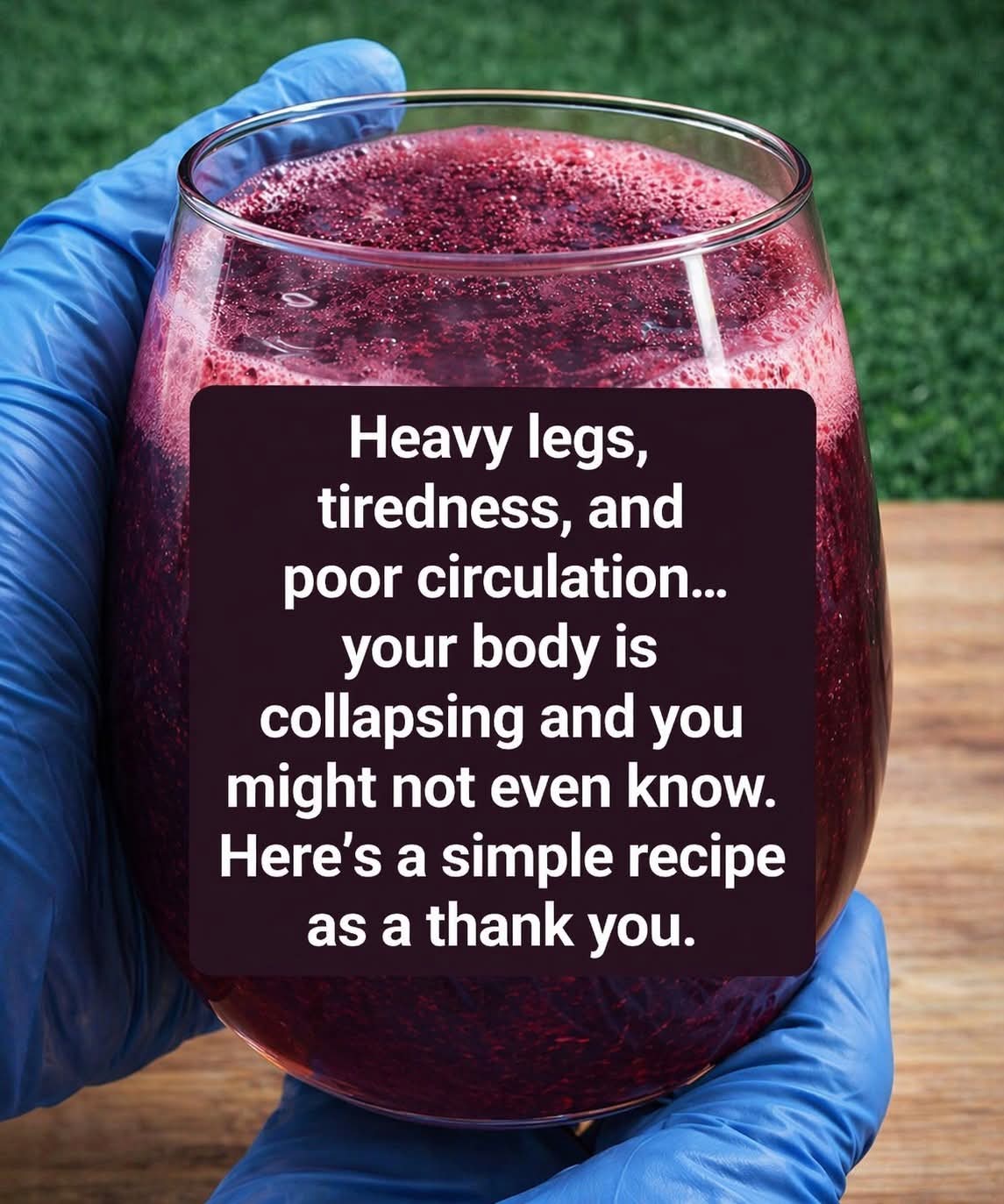
The image that prompted this discussion suggests a “recipe.” While no single juice can “fix” a circulatory problem, specific nutrients can support vessel health, reduce inflammation, and help manage blood pressure.
If you are looking to support your circulatory system through diet, focus on foods that boost Nitric Oxide. Nitric oxide is a molecule the body produces to relax and dilate blood vessels, allowing for better blood flow.
The Circulation-Support Smoothie Recipe
This nutrient-dense blend is designed to be anti-inflammatory, hydrating, and rich in natural nitrates.
Ingredients:
- 1 small raw beet (peeled and chopped): Beets are one of the best sources of dietary nitrates, which convert to nitric oxide in the body.
- 1 cup of leafy greens (kale or spinach): Rich in nitrates and Vitamin K.
- 1/2 cup of blueberries: Packed with anthocyanins, which have been shown to protect vessel integrity.
- 1/2 inch of fresh ginger: A powerful anti-inflammatory that helps warm the body and improve blood flow.
- 1 tablespoon of chia seeds: Provides omega-3 fatty acids for cardiovascular health.
- 1 cup of water or coconut water (for electrolytes).
Instructions:
Blend all ingredients until smooth. Drink immediately. The combination of nitrates from the beets and greens, combined with the anti-inflammatory properties of ginger and berries, provides a supportive boost to your vascular health.
Lifestyle Strategies to Combat “Heavy Legs”
Nutrition is just one pillar. To truly address the sensations of heaviness and fatigue, you must integrate physical habits that assist your body’s natural processes.
1. Implement “Micro-Movements”
If you have a sedentary job, do not rely on a gym workout at 6:00 PM to offset eight hours of sitting. You need “movement snacks” throughout the day.
- Set a timer: Every 50 minutes, stand up.
- Calf raises: Do 20 calf raises while standing at your desk. This activates the muscle pump and helps move venous blood upward.
- Walk and talk: Take calls while pacing.
2. Compression Therapy
If you notice consistent swelling, speak with a doctor about medical-grade compression stockings. These garments apply gentle pressure to the legs, which helps prevent blood from pooling and keeps the vein valves functioning efficiently.
3. Leg Elevation
Gravity is the enemy of venous return. At the end of the day, spend 10 to 15 minutes lying on your back with your legs elevated above the level of your heart. You can prop them up on a stack of pillows or rest them against a wall. This allows gravity to help drain the pooled fluid from your lower legs back toward your core.
4. Hydration Strategy
Drinking enough water is the easiest way to improve blood viscosity. Aim to sip water consistently throughout the day rather than chugging large amounts all at once. If you exercise, ensure you are replacing lost electrolytes, not just drinking plain water.
The Role of Stress and Rest
We often ignore how the nervous system impacts circulation. When you are chronically stressed, your body enters “fight or flight” mode. This releases cortisol and adrenaline, which can cause blood vessels to constrict (tighten), further impeding blood flow and increasing the feeling of physical heaviness and fatigue.
Managing fatigue is not just about physical movement; it is about nervous system regulation.
- Deep Breathing: Diaphragmatic breathing (deep belly breathing) creates a pressure gradient in the chest that actually helps “pull” blood from the lower body toward the heart.
- Prioritize Sleep: Repair happens during sleep. If you aren’t getting 7-9 hours, your body lacks the time to manage inflammation and repair vascular tissue.
When to See a Doctor: Knowing the Red Flags
While many circulation issues are lifestyle-related, some symptoms require immediate medical attention. Do not ignore your body if you experience the following:
- Sudden, severe swelling in only one leg: This can be a sign of Deep Vein Thrombosis (DVT), a blood clot that requires immediate emergency care.
- Chest pain, shortness of breath, or palpitations: These can indicate that circulation issues are impacting heart or lung function.
- Skin changes: If you notice skin discoloration (redness, brown spots), hardening of the skin, or non-healing sores on the legs, see a doctor. These are signs of advanced venous disease.
- Numbness or tingling: This could indicate nerve involvement alongside vascular issues.
Conclusion: A Proactive Path Forward
The sensation of heavy legs and persistent tiredness is not a sign that your body is “collapsing.” It is, however, a reliable and important signal that your current habits—diet, activity level, stress management, and posture—are not adequately supporting your physiological needs.
By shifting your perspective from fear to action, you can regain control. Start with small changes:
Add one nutrient-dense meal or drink that supports blood flow (like the beet-based smoothie suggested above).
Break up sedentary periods with movement.
Practice leg elevation in the evenings.
Monitor your symptoms and seek medical advice if they persist or worsen.
Your body is resilient. It is designed to heal, adapt, and flow. By giving it the support it needs, you can move from a state of heaviness and fatigue to one of vitality and ease.