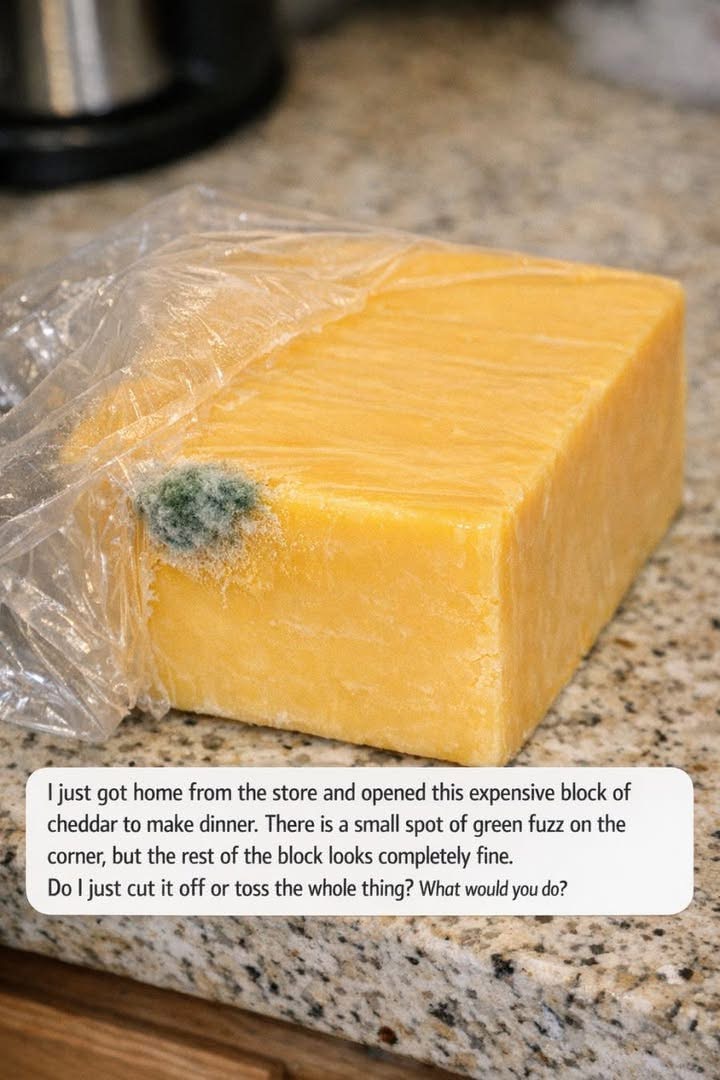
Cheese is a beloved staple in many households, and cheddar, with its rich and robust flavor, often takes center stage in various dishes. However, nothing can disrupt dinner plans quite like discovering a spot of mold on your expensive block of cheddar. The immediate question that comes to mind is whether to cut it off or discard the whole block. This dilemma is not only about food waste but also concerns health and safety.
Understanding how to safely handle moldy cheese can save you money and prevent unnecessary waste, while also ensuring that you and your family remain safe from any potential health risks. This article aims to guide you through the considerations and steps you should take when faced with mold on your cheddar cheese.
- First, Don’t Panic: How Dangerous Is That Green Fuzz?
Spotting mold on your cheese can be alarming, but not all molds are harmful. Many molds are used in cheese production intentionally, such as the blue veins in blue cheese. However, the mold on your cheddar is likely uninvited. The green fuzz you see is usually Penicillium, a common mold that grows on food. While some strains of Penicillium can produce mycotoxins, the likelihood of significant harm from a small spot on cheese is low if handled properly.
The primary concern with mold on cheese is not acute toxicity but allergic reactions or respiratory issues, particularly in sensitive individuals. It’s essential to act cautiously but without unnecessary alarm. - The Science Of Moldy Cheese: When It’s Safe And When It’s Not
Cheese is a fermented product, which means that it naturally hosts a variety of microorganisms. Hard cheeses like cheddar are more resistant to mold penetration due to their dense texture. Mold typically grows on the surface and does not penetrate deeply into hard cheeses, making it generally safe to cut away the affected area, provided you remove a sufficient margin around the mold.
In contrast, soft cheeses have a higher moisture content, which allows mold to spread more easily throughout the cheese. In such cases, the entire block should be discarded, as cutting off the moldy part might not remove all contamination. - Hard Cheddar Vs. Soft Cheese: Why The Type Matters So Much
The type of cheese significantly influences how you should handle mold. Hard cheeses like cheddar, Parmesan, and Swiss are dense, which helps to contain mold growth to the surface. This means you can safely remove the mold and a generous portion of the surrounding cheese (at least 1 inch or 2.5 cm) without risking the integrity of the rest of the block.
Soft cheeses such as brie, camembert, and ricotta are more susceptible to mold infiltration due to their softer texture and higher moisture content. Mold can easily spread beyond what is visible to the eye, meaning you should discard these cheeses entirely if mold appears. - How To Inspect The Block: What To Look, Smell, And Feel For
Before deciding on a course of action, inspect the entire block of cheese thoroughly. Look for any additional signs of mold beyond the initial spot you noticed. Check for unusual colors, such as black or pink, which may indicate more harmful types of mold. Smell the cheese; if it has an off-putting, ammonia-like odor, it may be best to discard it.
Feel the cheese to ensure it remains firm, as soft or slimy textures could suggest deeper contamination. If all other areas of the cheese appear normal, you might be able to safely remove the mold and salvage the rest. - The Safe Way To Cut Mold Off Cheddar, According To Experts
Experts recommend using a clean, sharp knife to cut away the mold on cheddar cheese. Ensure you remove at least 1 inch (about 2.5 cm) around and below the moldy spot to account for any possible penetration into the cheese. Be sure to angle the knife downward to avoid dragging mold spores across the surface.
After cutting away the mold, re-inspect the exposed area to ensure no traces remain. It’s also advisable to clean the knife with hot, soapy water before using it again to prevent cross-contamination. - When You Should Toss The Whole Block Instead Of Trimming
While trimming is often sufficient for hard cheeses, there are circumstances where discarding the entire block is advisable. If the mold has penetrated deeply or if there are multiple spots of mold across the cheese, it might be safer to discard it.
If the cheese has an unusual smell or texture, these could be signs of spoilage beyond mold, such as bacterial growth, which is not safe to consume. In cases where the cheese may have been improperly stored or left at room temperature for extended periods, err on the side of caution and dispose of the cheese. - Food Safety Rules: What The USDA And Experts Actually Recommend
The USDA provides guidelines for food safety that include recommendations for handling moldy cheese. For hard cheeses like cheddar, the USDA advises cutting away the moldy part with a margin of at least 1 inch around it. For soft cheeses, the recommendation is to discard the entire product if mold is present.
These guidelines are based on the potential for mold to penetrate soft cheeses and the relatively low risk when trimming hard cheeses. Following these recommendations helps ensure that you minimize health risks while reducing food waste. - Can You Still Use It For Cooking If You Cut The Mold Off?
If you’ve successfully removed the mold from a block of cheddar, it can still be used for cooking. Cooking at high temperatures can kill most molds, reducing the risk of consuming any residual mold spores. Grate or cube the cheese and use it in cooked dishes like casseroles, sauces, or grilled cheese sandwiches.
However, be mindful of the flavor and texture. If the cheese has changed significantly due to mold, it might affect the quality of the dish. Always taste a small amount before using it extensively, ensuring it meets your expectations for flavor and texture. - How To Store Cheddar So Mold Is Less Likely To Show Up
Proper storage is key to preventing mold growth on cheddar cheese. Wrap the cheese tightly in wax or parchment paper, which allows it to breathe while protecting it from moisture that encourages mold growth. Place the wrapped cheese in a plastic bag or airtight container to further shield it from contaminants.
Store cheddar in the coldest part of the refrigerator, typically the cheese drawer or a temperature-controlled compartment. Avoid storing cheese in the refrigerator door, where temperatures fluctuate more often. Regularly inspect and rewrap cheese if necessary to ensure it remains fresh and mold-free. - What I’d Personally Do In This Exact Situation
In this situation, I would first carefully inspect the entire block of cheddar for any additional signs of mold or spoilage. Assuming the mold is confined to one small spot and the cheese otherwise appears normal, I would proceed to cut away the moldy area, ensuring I remove a generous portion around it.
After trimming, I would use the cheese promptly, particularly in cooked dishes where any residual spores would be eliminated. I would also take this opportunity to reassess my cheese storage practices to prevent future occurrences. - When In Doubt: Trust Your Senses (And Your Comfort Level)
Ultimately, your senses are a reliable guide in determining whether a food product is safe to consume. If something about the cheese seems off, whether it’s the smell, appearance, or texture, it’s best to err on the side of caution and discard it. Your health and peace of mind are worth more than the cost of a block of cheese.
Trust your instincts and remember that guidelines are just that—guidelines. They provide a framework for decision-making, but you know your comfort level and tolerance for risk better than anyone else. When in doubt, it’s always safer to choose the option that you feel most comfortable with.