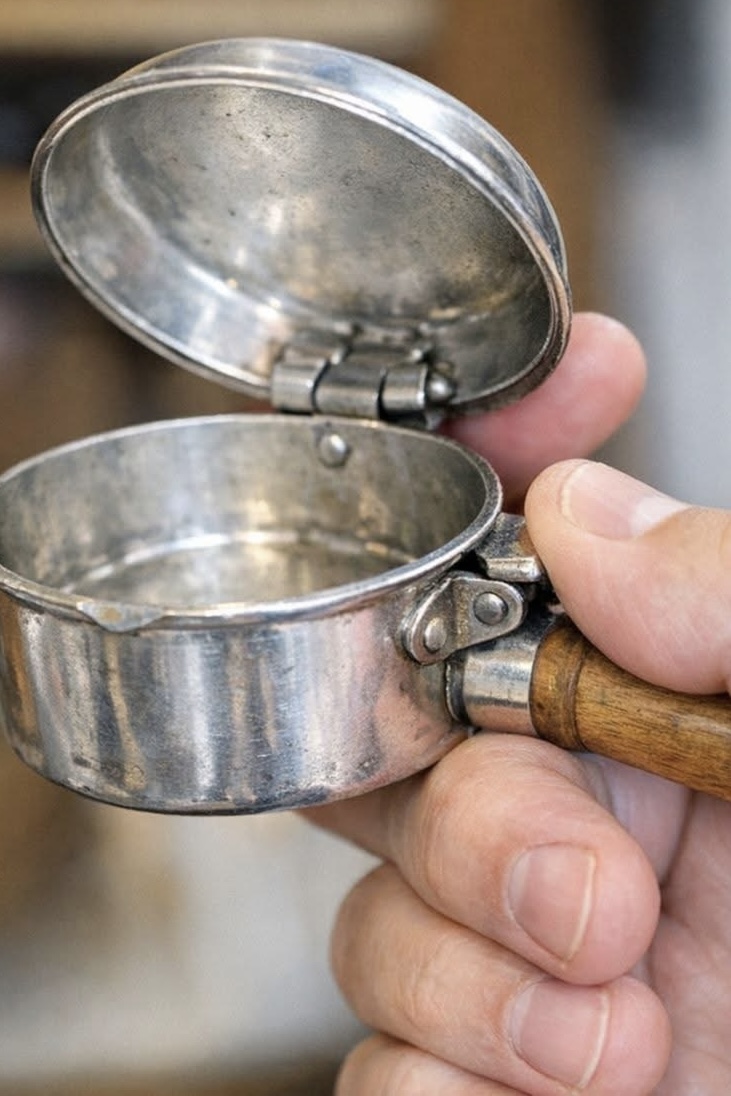
Yard sales are treasure troves for those with a keen eye and a love for history. Among the eclectic mix of household items and forgotten antiques, you can often find unique pieces that spark curiosity and imagination. One such find was a small silver pan with a hinged lid and a wooden handle, seemingly too small for any practical culinary use.
At first glance, this intriguing object might appear to be a piece of cookware designed for a dollhouse or a novelty item meant purely for display. However, upon closer inspection, the pan reveals a more intentional design, complete with a thumb trigger, hinting at a specific purpose that history enthusiasts and collectors might find fascinating.
Where To Look For More Pieces And How To Start Collecting
For those interested in starting a collection of silent butlers or similar vintage items, estate sales, antique shops, and online marketplaces are excellent places to begin. Networking with fellow collectors and joining antique enthusiast groups can also provide valuable insights and opportunities for acquiring new pieces. When collecting, it’s important to research each item’s history and authenticity, ensuring a well-curated collection that holds both personal and historical significance
The Mystery Of The Tiny Silver Pan With A Thumb Trigger
The small silver pan measures approximately 6 inches in diameter, with the hinged lid adding an additional inch in height. The wooden handle extends outward about 5 inches, providing a comfortable grip for the user. The thumb trigger, positioned near the handle’s base, is a curious feature that adds to the object’s mystique. At first, one might wonder if this was a toy or a part of a larger contraption. However, its weight and craftsmanship suggest a functionality beyond mere decoration.
Why It’s Definitely Not For Cooking
Upon examining the pan’s dimensions and features, it’s clear this item was not intended for culinary purposes. The pan’s small size limits its capacity to hold any substantial amount of food. Furthermore, the presence of a wooden handle, which could easily scorch or burn, makes it impractical for use over an open flame or a stovetop. The thumb trigger mechanism also seems ill-suited for any cooking tasks, suggesting a purpose outside the kitchen domain.
A Brief History Of The Silent Butler Crumb Catcher
The object in question is most likely a silent butler or crumb catcher, a device popular in the late 19th and early 20th centuries. These tools were used primarily to collect crumbs and ashes from dining and living areas, maintaining cleanliness and order in elegant households. The silent butler allowed the user to discreetly and efficiently tidy up without causing a scene, hence the name ‘silent.’ The hinged lid allowed for easy disposal of collected debris, while the thumb trigger facilitated the opening and closing of the lid.
How The Hinged Lid And Thumb Trigger Actually Work
The hinged lid of the silent butler is designed to open smoothly with the aid of the thumb trigger located on the handle. When the trigger is pressed, a small mechanism releases the latch holding the lid in place, allowing it to swing open effortlessly. This design is both functional and aesthetically pleasing, as it allows the user to operate the device with one hand, leaving the other free to manage the task at hand. The lid closes with a satisfying click, ensuring that the contents are securely contained until they can be properly disposed of.
Materials, Design Details, And What They Reveal About Its Age
The materials used in the construction of this silent butler can provide clues about its age and origin. The silver plating suggests a desire for an elegant appearance, common in household items from the early 20th century. The wooden handle indicates a time when natural materials were favored for their durability and aesthetic appeal. Detailed engravings or hallmarks on the silver surface could further pinpoint the manufacturer or the era in which it was made. Collectors often look for such details to authenticate and date their finds.
From Dining Rooms To Drawing Rooms: How People Used Silent Butlers
Silent butlers were commonplace in many households during the late Victorian and Edwardian eras. They were typically used in dining rooms to collect fallen crumbs after meals, ensuring the table remained tidy between courses or events. In drawing rooms, these devices were employed to manage ash and debris from fireplaces or cigars, maintaining a clean and hospitable environment. The silent butler was a staple in homes that valued discretion and efficiency in household management.
Yard Sale Find Or Hidden Antique? Clues To Its Value
Determining the value of a silent butler can be challenging without proper context. Condition and craftsmanship are key indicators, with well-preserved pieces potentially fetching higher prices. The presence of maker’s marks or unique engravings can also enhance its value, offering insights into its provenance. While some silent butlers may only hold sentimental value, others could be rare finds worth a significant amount to collectors of vintage household items.
How To Clean And Restore A Vintage Silent Butler Safely
When cleaning and restoring a vintage silent butler, it’s important to preserve its patina while removing dirt and tarnish. Start by gently washing the surface with a mild soap and water solution, using a soft cloth to avoid scratching. For silver-plated surfaces, a specialized silver polish can be used to remove tarnish and restore shine. It’s essential to dry the piece thoroughly to prevent water spots or corrosion. Regular maintenance will keep the silent butler looking its best while preserving its historical integrity.
Creative Modern Uses For An Old Silent Butler
While silent butlers are no longer a household necessity, they can be repurposed for modern use. Their compact size makes them ideal for storing small items such as keys, jewelry, or office supplies. They can also serve as unique decorative pieces, adding a touch of vintage charm to any room. Some creative individuals have even used silent butlers as planters for small succulents or herbs, blending functionality with aesthetic appeal.
What Your Silent Butler Says About Past Domestic Life
The presence of a silent butler in a household speaks volumes about the domestic customs and social norms of its time. It reflects a period when formal dining and entertaining were integral parts of daily life, and maintaining a pristine environment was of utmost importance. The silent butler embodies the values of discretion, efficiency, and elegance, offering a glimpse into the meticulous nature of historical household management. Such artifacts remind us of the evolution of domestic practices and the role of household staff in maintaining homes.