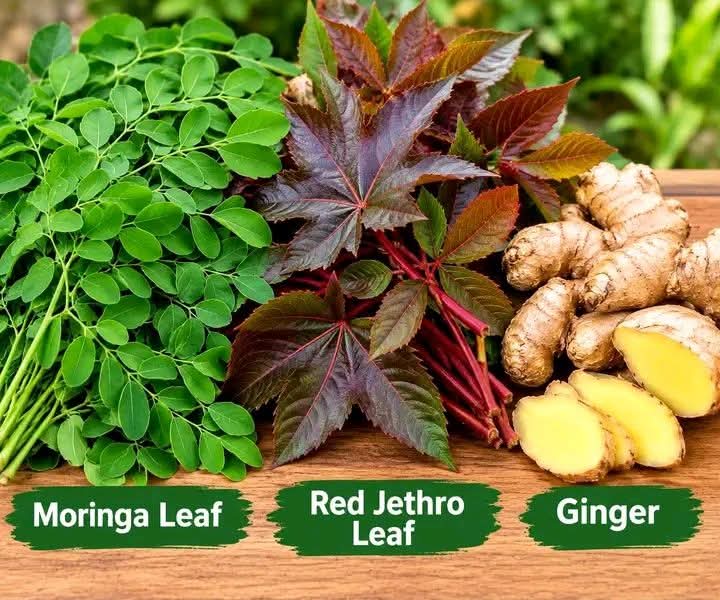
Moringa Leaf, Red Jethro Leaf and Ginger: A Traditional Herbal Wellness Blend
Moringa Leaf, Red Jethro Leaf, and Ginger are three plant ingredients that have attracted attention for their distinctive flavors, traditional uses, and nutritional properties. When combined into a homemade herbal drink, they create an earthy, slightly spicy infusion that can be enjoyed warm or chilled.
This article is designed as WordPress-ready content and explores the ingredients, preparation methods, history, potential nutritional benefits, variations, serving ideas, safety considerations, and the people who may enjoy this traditional-style herbal beverage.
Important note about the name “Red Jethro Leaf”: Common names for plants can vary significantly from country to country. The plant shown in the image is labeled “Red Jethro Leaf,” but that common name is not sufficient to establish its botanical identity. Before consuming an unfamiliar leaf, confirm the exact plant species and that it is traditionally used as food or tea. The information below focuses on the recognizable moringa and ginger ingredients and treats the red leaf as an ingredient that must be positively identified before use.
Introduction
Natural herbal drinks have been prepared in homes and traditional communities for generations. Long before modern wellness trends placed herbs and botanical ingredients on supermarket shelves, people were using leaves, roots, flowers, spices, and seeds to prepare flavorful beverages.
Among the many ingredients used in traditional herbal preparations, moringa and ginger stand out for their versatility. Moringa leaves have a mild green flavor and provide a variety of nutrients, while ginger contributes a characteristic warmth and spicy aroma. A third leafy ingredient, identified in the accompanying image as Red Jethro Leaf, can add color, flavor, and botanical variety—but its exact identity should always be confirmed before consumption.
A homemade infusion made from these ingredients can be a simple alternative to heavily sweetened commercial beverages. It can be served after meals, enjoyed in the morning, or prepared as a refreshing iced drink.
The appeal of this combination is not simply about potential health benefits. It is also about the experience: washing fresh leaves, slicing aromatic ginger, steeping the ingredients in hot water, and watching the natural colors and aromas develop.
This article explains how to make a simple moringa-and-ginger herbal infusion, how the ingredients have traditionally been used, what nutrition they may provide, and how to approach herbal beverages responsibly.
What Is Moringa?
Moringa generally refers to Moringa oleifera, a tree native to parts of South Asia that is now cultivated in many tropical and subtropical regions.
The leaves are especially popular as a food ingredient. They can be eaten fresh or cooked, dried and powdered, or used in teas and other preparations.
Moringa leaves have a naturally green flavor that can be described as mild, grassy, earthy, or somewhat similar to other leafy vegetables. Young leaves tend to be particularly tender.
Moringa has become popular internationally because its leaves contain nutrients including:
- Vitamin A precursors such as carotenoids
- Vitamin C, especially in fresh leaves
- Vitamin K
- Folate
- Calcium
- Iron
- Potassium
- Magnesium
- Protein
- Various plant compounds
The exact nutritional content depends on whether the leaves are fresh or dried and how they are prepared.
One important point is that drinking moringa tea is not nutritionally equivalent to eating the whole leaf. Some nutrients and plant compounds may remain in the leaves rather than moving into the water.
What Is Ginger?
Ginger is the underground rhizome of Zingiber officinale, a plant widely used in cooking and traditional food cultures.
Fresh ginger has a distinctive aroma and a warm, spicy flavor. It can be sliced, grated, crushed, or minced before being added to food or beverages.
Ginger contains naturally occurring compounds such as gingerols, which contribute to its characteristic pungency.
Historically, ginger has been used throughout Asian, Middle Eastern, African, and European culinary traditions. It has been incorporated into teas, soups, sauces, sweets, marinades, and other preparations.
For an herbal infusion, fresh ginger is particularly useful because simmering or steeping releases its aroma and flavor into the water.
Understanding the Red Jethro Leaf
The phrase “Red Jethro Leaf” deserves special attention.
Unlike botanical names such as Moringa oleifera or Zingiber officinale, “Red Jethro” is not a sufficiently precise scientific identification. Regional names can refer to completely different plants.
The leaf in the supplied image has reddish-purple foliage and prominent veins, but appearance alone is not enough to establish its species with confidence.
This matters because not every attractive or traditionally used leaf is safe to consume, and plants with similar appearances can have very different properties.
Therefore, if you plan to reproduce this recipe, use the red leaf only after confirming:
- Its botanical name.
- That the particular species is edible.
- That the leaves are intended for culinary or tea use.
- The appropriate preparation method.
- Whether there are any known food-safety restrictions.
If you cannot positively identify the plant, simply leave it out and prepare the drink with moringa and ginger.
Moringa, Red Leaf and Ginger Herbal Drink
Ingredients
For approximately 2–3 cups:
- 2 cups fresh water
- 1–2 teaspoons fresh moringa leaves, thoroughly washed
- A small amount of the positively identified edible red leaf, if appropriate for consumption
- 1–2 inches fresh ginger
- 1 teaspoon honey, optional
- A small squeeze of fresh lemon, optional
- Ice, optional, for serving cold
Ingredient Notes
Fresh ingredients generally provide the most vibrant aroma.
If using dried moringa leaves, a smaller quantity may be appropriate because dried leaves are concentrated in volume. Follow the preparation instructions supplied with the food-grade product.
For ginger, choose a firm piece with smooth skin and a fresh aroma. Older ginger can still be useful, but it may have a stronger, more fibrous texture.
How to Prepare the Herbal Drink
Step 1: Wash the Leaves
Begin by washing the moringa leaves carefully under clean running water.
If you are using another edible leafy ingredient, wash it thoroughly as well.
Remove damaged, wilted, or discolored portions.
Food hygiene is particularly important when working with fresh leaves because soil and microorganisms can remain on their surfaces.
Step 2: Prepare the Ginger
Peel the ginger if desired.
You can then:
- Slice it thinly.
- Crush it lightly.
- Grate it.
- Cut it into small pieces.
Thin slices are convenient and allow the ginger flavor to spread through the water.
Step 3: Heat the Water
Place approximately two cups of water into a saucepan.
Bring the water close to a boil.
Add the sliced ginger and reduce the heat.
Allow the ginger to gently simmer for approximately 5–10 minutes.
A longer simmer will usually produce a stronger and more pronounced ginger flavor.
Step 4: Add the Moringa
Turn the heat down or remove the saucepan from direct heat.
Add the washed moringa leaves.
Allow them to steep for approximately 5 minutes.
Moringa does not need prolonged boiling for a simple tea preparation.
Step 5: Add the Identified Red Leaf
If the red leaf has been positively identified as an edible plant appropriate for infusion, add the recommended amount according to reliable culinary guidance for that specific plant.
If its identity or food safety is uncertain, do not add it.
This is the most important distinction between experimenting with familiar culinary herbs and experimenting with unknown wild plants.
Step 6: Strain
Pour the infusion through a fine strainer into cups.
Press the leaves gently if you want to extract additional liquid.
Be careful because the beverage may be hot.
Step 7: Add Flavor
Allow the drink to cool slightly.
You can add:
- A little honey
- Fresh lemon juice
- Lime juice
- A small piece of cinnamon
- Fresh mint
Avoid adding large quantities of sugar if your goal is a lightly flavored herbal beverage.
The Flavor Profile
The combination of moringa and ginger creates a distinctive flavor.
Moringa contributes an earthy, leafy character.
Ginger adds warmth, spice, and aromatic sharpness.
A suitable edible red leaf may contribute additional herbal or tart notes depending on its species.
Honey can soften the earthy qualities, while lemon or lime can add acidity and freshness.
For people who find moringa too strong, ginger and citrus are particularly useful for making the drink more approachable.
Traditional History of Moringa
Moringa has a long history as a food and traditional botanical ingredient.
Moringa oleifera originated in the Indian subcontinent and spread to many tropical regions. Its leaves, pods, and other parts have been incorporated into traditional cuisines.
The tree is particularly valued because it can grow in warm climates and its leaves are edible.
Over time, moringa became established in parts of Africa, Southeast Asia, and other tropical regions.
Today, it can be found in many forms, including:
- Fresh leaves
- Dried leaves
- Powder
- Capsules
- Tea products
- Culinary preparations
Its popularity in modern wellness culture is largely connected to its nutritional profile and the broader interest in nutrient-dense plant foods.
Traditional History of Ginger
Ginger has an even longer recorded history of culinary use.
It has been an important spice in Asian food traditions for centuries and eventually became widely known throughout the Middle East and Europe.
Historically, ginger was valued for its intense aroma and ability to add warmth to food and beverages.
It has been used in:
- Herbal infusions
- Spiced beverages
- Soups
- Rice dishes
- Meat preparations
- Desserts
- Baked goods
- Sauces
- Preserves
Its distinctive flavor makes it one of the easiest ingredients to recognize in a herbal tea.
Potential Benefits of Moringa
Moringa leaves are nutrient-rich, particularly when consumed as food.
1. Provides Plant-Based Nutrients
Moringa leaves contain vitamins and minerals that can contribute to an overall nutritious diet.
However, the amount obtained from tea depends heavily on how much plant material is used and how soluble the nutrients are in water.
2. Contains Antioxidant Compounds
Moringa leaves contain various plant compounds with antioxidant activity.
Antioxidants are substances that help protect cells from oxidative damage as part of the body’s normal biological processes.
It is important not to turn this into a claim that moringa tea prevents or cures diseases.
3. Adds Variety to the Diet
One of the simplest advantages of herbs and leafy plants is dietary variety.
Moringa can be incorporated into soups, sauces, vegetable dishes, smoothies, and teas.
4. Convenient Preparation
Dried moringa can be stored for longer periods and used to prepare quick beverages.
Potential Benefits of Ginger
Ginger has been studied extensively and is traditionally associated with digestive comfort.
Digestive Support
Ginger is commonly consumed in teas and meals after eating.
Research has investigated ginger for several gastrointestinal concerns, including nausea, although effects can vary depending on the condition, dose, and individual.
Warming Flavor
The warming sensation associated with ginger makes it especially enjoyable during cooler weather.
Antioxidant Compounds
Ginger contains naturally occurring compounds with antioxidant properties.
Culinary Versatility
Unlike many specialized supplements, ginger is a familiar food ingredient that can easily be incorporated into a normal diet.
What About Detox Benefits?
Herbal drinks are often promoted online as “detox” beverages.
It is better to use more accurate language.
Your body already has sophisticated systems for processing and eliminating waste, primarily involving organs such as the liver and kidneys.
A moringa-and-ginger drink should therefore be viewed as a flavored herbal beverage, not as a magic detoxification treatment.
Drinking an unsweetened herbal infusion can be part of a healthy lifestyle, especially when it replaces sugary beverages, but it should not be presented as a cure or substitute for medical treatment.
Best Time to Drink It
There is no universally established “perfect” time to drink this beverage.
You might enjoy it:
In the Morning
A warm cup can be a pleasant alternative to heavily sweetened breakfast beverages.
After a Meal
The ginger flavor makes it a popular choice after meals.
In the Afternoon
Serve it chilled with lemon for a refreshing drink.
In the Evening
A caffeine-free herbal infusion may be preferable to caffeinated beverages for people who want to reduce caffeine later in the day.
Hot or Cold?
This drink works both ways.
Hot Version
Serve immediately after straining.
Add a little lemon or honey if desired.
The hot version emphasizes ginger’s warmth and aroma.
Cold Version
Prepare the infusion normally, allow it to cool, then refrigerate.
Pour over ice and add lemon or lime.
You can also add fresh mint for a refreshing summer-style drink.
Recipe Variations
Lemon Ginger Moringa Tea
Add fresh lemon juice after the tea has cooled slightly.
The citrus gives the earthy moringa flavor a brighter finish.
Honey Ginger Moringa Tea
Add approximately one teaspoon of honey to a warm cup.
Do not add honey to boiling liquid if you want to preserve its delicate flavor.
Mint Moringa Tea
Add several fresh mint leaves during the final steeping stage.
Mint provides a cool contrast to ginger.
Iced Herbal Infusion
Prepare a stronger tea, cool it, and pour over plenty of ice.
Add lemon slices and fresh herbs.
How to Make the Drink More Flavorful
If your first cup tastes too earthy, try adjusting the balance.
Use:
- Less moringa
- More ginger
- A squeeze of lemon
- A small amount of honey
- Fresh mint
- More water
If the ginger is too strong, reduce the simmering time or use fewer slices.
If the drink is too weak, slightly increase the amount of ginger or steep the moringa longer.
The goal is to create a beverage you actually enjoy drinking.
Nutrition
The nutritional profile of this drink varies considerably depending on the ingredients and preparation method.
Fresh moringa leaves can provide vitamins, minerals, fiber, and plant compounds when eaten. However, when making tea, you are consuming primarily the water-soluble components extracted into the liquid.
Ginger contributes flavor and naturally occurring phytochemicals but is normally used in relatively small quantities.
Honey contributes carbohydrates and calories.
Lemon contributes a small amount of vitamin C and acidity.
Approximate nutrition for one unsweetened cup
Because homemade herbal infusions vary, exact nutritional values cannot be guaranteed. A typical cup made primarily from water, a small quantity of moringa, and ginger may contain:
- Calories: Very low
- Protein: Minimal
- Fat: Minimal
- Carbohydrates: Low
- Fiber: Very low in strained tea
- Sugar: Very low without sweetener
Adding honey increases calories and sugar.
For accurate nutritional information, the ingredients would need to be weighed and analyzed based on the exact recipe.
Who May Enjoy This Herbal Drink?
This beverage may appeal to people who enjoy:
- Traditional herbal teas
- Ginger-based beverages
- Leafy green ingredients
- Naturally flavored drinks
- Caffeine-free beverages
- Homemade wellness-style recipes
- Lightly sweetened or unsweetened drinks
- Exploring traditional culinary ingredients
It can also be an interesting alternative to commercial soft drinks and heavily sweetened juices.
Important Safety Considerations
Natural does not automatically mean safe for everyone.
The biggest safety issue with the pictured recipe is the uncertain identity of “Red Jethro Leaf.”
Never consume a wild or unfamiliar plant simply because it resembles a plant shown online.
Confirm the species through a trustworthy botanical, agricultural, culinary, or local extension source before using it as food.
Moringa and ginger are commonly consumed as foods, but concentrated supplements and medicinal preparations are different from ordinary culinary quantities.
Ginger can cause heartburn, stomach discomfort, or mouth irritation in some people, particularly in larger quantities.
People who take medications, have a medical condition, are pregnant or breastfeeding, or plan to consume concentrated herbal preparations should discuss appropriate use with a qualified healthcare professional.
This beverage should be considered a food or herbal drink, not a treatment for a disease.
How to Store Fresh Moringa
Fresh moringa leaves are delicate.
After purchasing or harvesting edible moringa:
- Remove damaged leaves.
- Wash them carefully before use.
- Dry them thoroughly if you are storing them.
- Keep them refrigerated.
- Use them as soon as reasonably possible.
For longer storage, properly dried moringa leaves can be stored in an airtight container in a cool, dry, dark location.
Always discard leaves that develop mold, unusual odors, or signs of spoilage.
How to Store Ginger
Fresh ginger can be kept refrigerated.
Place it in a clean container or suitable food-storage bag and keep it dry.
Avoid using ginger that has extensive mold, unusual discoloration, or a spoiled smell.
Ginger can also be sliced or grated and frozen for convenient future use.
Formation of the Herbal Blend
The beauty of this drink lies in the way the ingredients are prepared rather than simply mixed together.
The process has several stages.
Stage One: Preparation
The leaves are cleaned and the ginger is sliced.
Stage Two: Extraction
Ginger is exposed to hot water first because its strong aroma benefits from simmering.
Stage Three: Leaf Steeping
Moringa is added later and allowed to steep.
Stage Four: Straining
The plant material is removed, leaving an aromatic infusion.
Stage Five: Flavor Balancing
Lemon, honey, mint, or another food-safe flavoring can be added.
This method creates a drink with multiple layers of flavor without requiring complicated equipment.
Common Mistakes
Using Too Much Ginger
A large amount can overpower everything else.
Boiling Moringa for Too Long
Prolonged cooking can produce an unnecessarily strong or bitter flavor.
Adding Too Much Sweetener
Large amounts of sugar can turn a naturally light beverage into a sugary drink.
Using an Unidentified Leaf
This is the most serious mistake.
Never assume a leaf is edible based only on an image, common name, or social-media recipe.
Expecting Medicinal Results
Herbal beverages can be enjoyable and nutritious additions to a diet, but they should not replace appropriate medical care.
Frequently Asked Questions
Can I drink moringa and ginger tea every day?
Moringa leaves and ginger are commonly used as foods, but individual tolerance varies. Regular consumption should remain within reasonable culinary amounts, and people taking medications or using concentrated herbal products should seek professional advice.
Can I drink it without honey?
Absolutely. In fact, the unsweetened version is a simple way to keep added sugar low.
Can I use dried moringa?
Yes. Food-grade dried moringa leaves can be used according to the product’s preparation instructions.
Can I drink it cold?
Yes. Prepare the infusion, cool it, refrigerate it, and serve it over ice.
Is this a detox drink?
It is better described as an herbal beverage. Claims that it “detoxes” the body or removes toxins should not be treated as established medical facts.
Can children drink it?
Because herbal ingredients and amounts can vary, children should not automatically be given unfamiliar herbal mixtures. Confirm that every ingredient is edible and appropriate for the child’s age with a pediatric healthcare professional.
What if I cannot identify the red leaf?
Leave it out. Moringa and ginger alone can make a flavorful herbal drink.
Conclusion
Moringa leaf, ginger, and an appropriately identified edible red leaf create an intriguing traditional-style herbal beverage with an earthy, spicy, and potentially refreshing character.
Moringa brings a leafy botanical quality and a range of nutrients when consumed as food. Ginger contributes warmth, aroma, and naturally occurring plant compounds. A properly identified red leafy ingredient can provide additional flavor and visual appeal.
The most important lesson, however, is that plant identification matters. The name “Red Jethro Leaf” is not precise enough by itself to establish what species is pictured or whether it is appropriate for consumption. Anyone preparing this recipe should verify the botanical identity before using that ingredient.
Once the ingredients are confirmed as food-safe, the preparation is simple: gently simmer fresh ginger, steep the leafy ingredients, strain the infusion, and finish it with lemon, honey, or mint according to taste.
This drink is best appreciated not as a miracle cure, but as part of a balanced lifestyle—an aromatic homemade beverage made from familiar culinary ingredients and enjoyed for its flavor, tradition, and variety.
Final Recipe at a Glance
Recipe: Moringa & Ginger Herbal Infusion
Preparation: 5 minutes
Cooking/Steeping: 10–15 minutes
Servings: 2–3 cups
Difficulty: Easy
Ingredients
- 2 cups water
- 1–2 teaspoons fresh moringa leaves
- 1–2 inches fresh ginger
- Small amount of a positively identified edible red leaf, optional
- 1 teaspoon honey, optional
- Lemon or lime, optional
- Mint, optional
Method
- Wash the edible leaves thoroughly.
- Slice the ginger.
- Simmer ginger in water for 5–10 minutes.
- Remove from strong heat.
- Add moringa and the verified edible red leaf.
- Steep for approximately 5 minutes.
- Strain into cups.
- Add lemon, honey, or mint if desired.
- Enjoy warm or refrigerate and serve over ice.