Cloves & Garlic: The Ancient Gut-Cleansing Duo
Introduction
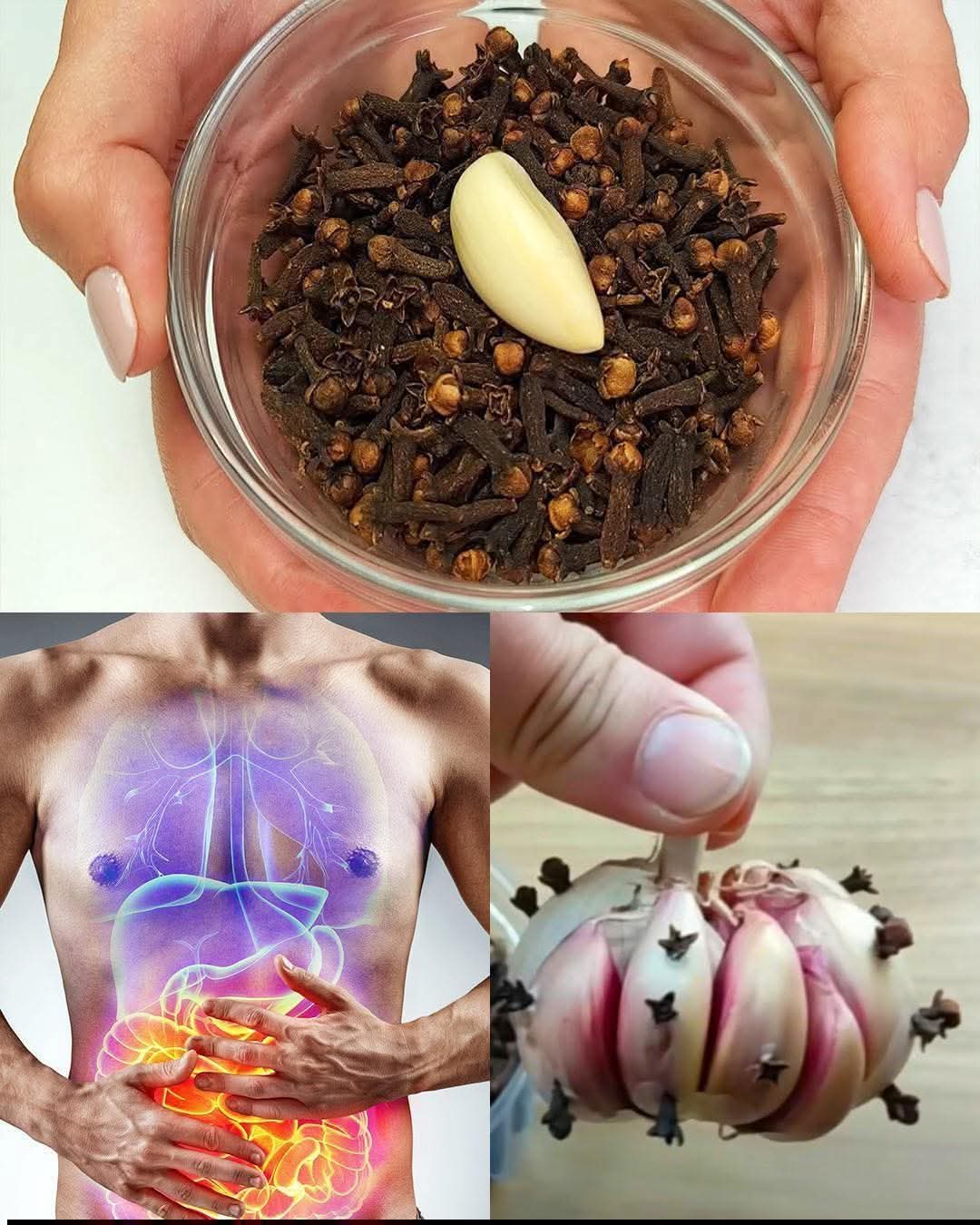
Long before modern medicine, kitchens doubled as pharmacies. One of the most enduring natural pairings in folk wellness traditions around the world is garlic and cloves — two pungent, warming powerhouses often combined into teas, tinctures, and remedies. The image you’ve shared shows this classic combination: whole cloves (the dried flower buds of the clove tree) alongside a clove of garlic, symbolizing the meeting of two potent natural ingredients aimed at supporting the gut, immunity, and overall vitality.
This is not a dish in the conventional sense — it’s a wellness infusion/tonic passed down through generations in Ayurveda, traditional Chinese medicine, Mediterranean folk healing, and Caribbean herbal practices. Below is a full guide: the recipe, the story, the science, and the nutrition.
Ingredients
For the Basic Infusion (1 serving)
- 1 cup (250 ml) fresh water
- 3–4 whole cloves (Syzygium aromaticum)
- 2–3 cloves of garlic, lightly crushed or thinly sliced
- ½–1 tsp raw honey (optional, for taste and soothing effect)
- Squeeze of fresh lemon (optional)
- A pinch of grated ginger (optional, for warmth)
For the Full-Strength Tonic (traditional style)
- 1 garlic bulb, separated and peeled
- 1 tbsp whole cloves
- 1 cup raw honey OR 1 cup apple cider vinegar (as a base)
- Sterilized glass jar
Instructions (The Daily Infusion)
- Boil the water in a small pot.
- Add the cloves and simmer gently for 3–5 minutes to release the essential oils.
- Add the crushed garlic, turn off the heat, and cover the pot. Let it steep for 10–15 minutes — this preserves allicin, garlic’s key active compound, which degrades with prolonged heat.
- Strain into a cup.
- Add honey and lemon once the liquid has cooled slightly (below 60°C / 140°F) to protect the enzymes and antioxidants.
- Drink warm, ideally on an empty stomach in the morning or 30 minutes before a meal.
Methods (Traditional Preparation Styles)
| Method | How It Works | Best For |
|---|---|---|
| Hot Infusion | Cloves simmered, garlic steeped | Quick daily digestive support |
| Honey Ferment | Whole garlic + cloves submerged in raw honey, aged 2–4 weeks | Immunity, sore throats |
| Vinegar Tincture | Garlic + cloves in apple cider vinegar, macerated 1–2 weeks | Gut flora balance |
| Dry Mix | Powdered garlic + ground cloves added to warm (not hot) water | Travel-friendly option |
| Culinary Method | Both ingredients cooked into soups, stews, and broths | Gentle daily maintenance |
A Short History
- Garlic (Allium sativum) — cultivated for over 5,000 years, garlic appears in ancient Egyptian medical texts (the Ebers Papyrus, 1550 BCE), was given to pyramid builders for strength, and was used by Greek athletes, Roman soldiers, and Chinese physicians alike. Hippocrates prescribed it for digestive complaints and fatigue.
- Cloves — native to the Maluku Islands (“Spice Islands”) of Indonesia, cloves were so valuable in the Middle Ages that they were traded ounce-for-ounce with silver. Chinese courtiers chewed them before addressing the emperor to sweeten breath; Ayurvedic texts used them for centuries against bloating and intestinal discomfort.
- The Pairing — Mediterranean and South Asian folk traditions combined them as a warming “cleansing” duo, believing garlic works on the lower gut while cloves calm and disinfect the upper digestive tract. The remedy spread through colonial-era spice routes and survives today in natural-health communities worldwide.
Benefits (Traditional Uses + What Research Suggests)
Garlic
- Allicin — the compound released when garlic is crushed; studied for antibacterial, antifungal, and antiviral properties.
- Supports cardiovascular health — some studies link regular garlic intake with modest blood-pressure and cholesterol support.
- Traditionally used as a natural anti-parasitic (the imagery of the garlic bulb in your photo echoes this old belief).
- Prebiotic fiber supports gut bacteria.
Cloves
- Eugenol — the dominant essential oil; studied for antiseptic, anti-inflammatory, and mild anesthetic effects (why clove oil is a classic toothache remedy).
- Traditionally used for bloating, gas, nausea, and indigestion.
- Rich in manganese and antioxidants.
Together — the combination is traditionally taken for digestive cleansing, immune support during cold season, and general “warming” vitality. Note: the dramatic parasite-cleansing claims seen in social media are folk beliefs, not established medicine.
Formation (How the Remedy “Forms” Its Effect)
The synergy works in stages:
- Crushing garlic triggers an enzymatic reaction converting alliin → allicin — this is why timing matters.
- Simmering cloves releases eugenol into the water — the longer the steep, the stronger the infusion.
- Honey adds antimicrobial compounds and soothes the throat and stomach lining.
- Lemon’s acidity aids mineral absorption and brightens the flavor.
- Taken warm on an empty stomach, the liquid passes quickly to the intestines, where tradition holds the actives exert their cleansing action.
Nutrition (Approximate, Per Serving of Infusion)
| Nutrient | Amount | Note |
|---|---|---|
| Calories | ~15–25 kcal | Mostly from honey |
| Manganese | ~15–20% DV | From cloves |
| Vitamin C | ~4 mg | From lemon |
| Allicin | Trace | Heat-sensitive; steep, don’t boil |
| Eugenol | Trace | Active essential oil |
| Fiber | Minimal | Strained out |
Adding honey raises sugar content by ~6 g per teaspoon.
Who Are the Lovers of This Remedy?
- Ayurveda and traditional Chinese medicine practitioners — who pair warming spices for digestive harmony.
- Mediterranean grandmothers — who simmer garlic broths at the first sign of a cold.
- Natural-health enthusiasts — who prepare “parasite cleanse” tonics in autumn.
- Herbalists and home cooks — who keep fermented garlic-honey jars in their pantries year-round.
- Holistic wellness communities — where the combination has become a social-media staple for gut health rituals.
Important Safety Notes
- Not a medical treatment. Do not use this to replace care for parasites, infections, or chronic illness — see a doctor for real diagnosis and treatment.
- Clove oil is highly concentrated — internal use of undiluted oil is dangerous.
- Garlic can interact with blood thinners; cloves may affect blood sugar — consult a physician if on medication.
- Limit to 1–2 cups daily; excessive amounts can irritate the stomach.
Conclusion
The pairing of cloves and garlic is a beautiful example of how food and medicine have always been intertwined. From the spice ships of the 1500s to the wellness feeds of 2026, this humble duo has survived because it’s simple, affordable, and steeped in tradition — and because science continues to find genuinely interesting compounds within it. Enjoy it as a warming ritual and a flavorful supplement to a healthy lifestyle, but keep expectations grounded: it’s a comforting cup of history, not a miracle cure.
Cheers to your health — one warm, fragrant sip at a time. 🧄🌿