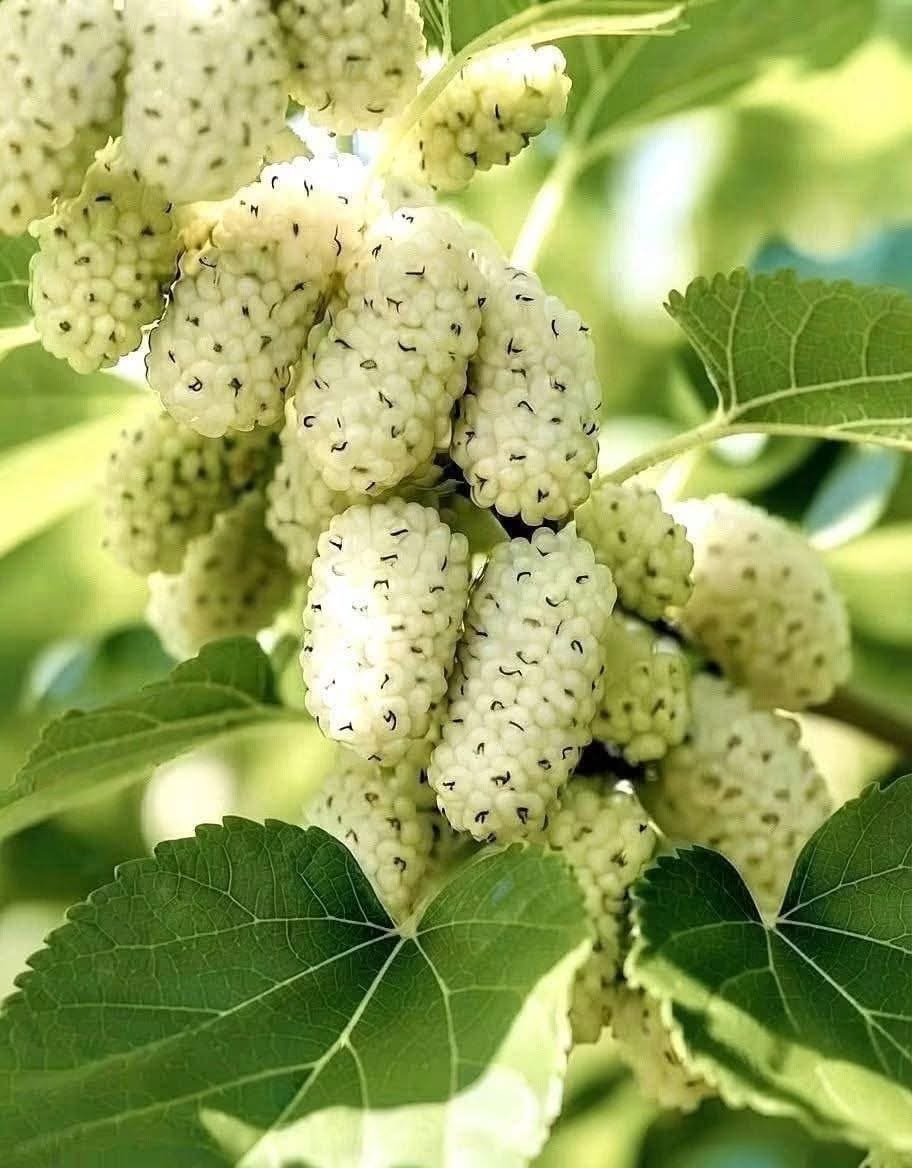
Full Information
Common Name: White Mulberry
Scientific Name: Morus alba
Family: Moraceae
Origin: China
Plant Type: Deciduous fruit tree
Height: 10–20 m (33–66 ft)
Lifespan: 50–100+ years
Climate: Temperate to subtropical
Sunlight: Full sun to partial shade
Soil: Well-drained, fertile soil with a pH of 5.5–7.5
Water Needs: Moderate; drought tolerant once established
Fruit Characteristics
Color: Creamy white when ripe (some cultivars may be pink, red, or purple)
Shape: Elongated, cylindrical multiple fruit
Size: 2–5 cm long
Flavor: Sweet, mild, and juicy with a honey-like taste
Harvest Season: Late spring to early summer
Nutritional Value (per 100 g)
Calories: 43 kcal
Carbohydrates: 9.8 g
Protein: 1.4 g
Fat: 0.4 g
Fiber: 1.7 g
Vitamin C: Rich source
Vitamin K: Moderate amount
Iron: Good source
Potassium: Moderate amount
Calcium: Small amount
Health Benefits
Boosts the immune system
Supports heart health
Rich in antioxidants
Promotes healthy digestion
Helps maintain healthy blood sugar levels
Supports healthy skin
May reduce inflammation
Cultivation
Plant in a sunny location.
Water regularly during the first year.
Prune in late winter to maintain shape.
Apply compost or balanced fertilizer in spring.
Harvest fruits when they become soft and easily detach from the stem.
Uses
Fresh eating
Jams and jellies
Juices
Smoothies
Desserts
Dried snacks
Herbal teas (using the leaves)
Silkworm feed
Interesting Facts
White mulberry leaves are the primary food source for silkworms used in silk production.
The tree grows rapidly and adapts well to many climates.
Birds are highly attracted to the sweet fruits.
The fruits are delicate and are best consumed soon after harvesting.
Conclusion
White mulberry is a fast-growing, productive fruit tree valued for its sweet berries, nutritious leaves, and adaptability. It provides delicious fresh fruit, numerous health benefits, and plays an essential role in traditional silk production, making it both an ornamental and economically important tree.