Classic Homemade Cornbread: A Golden, Moist, Tender Recipe Everyone Will Love
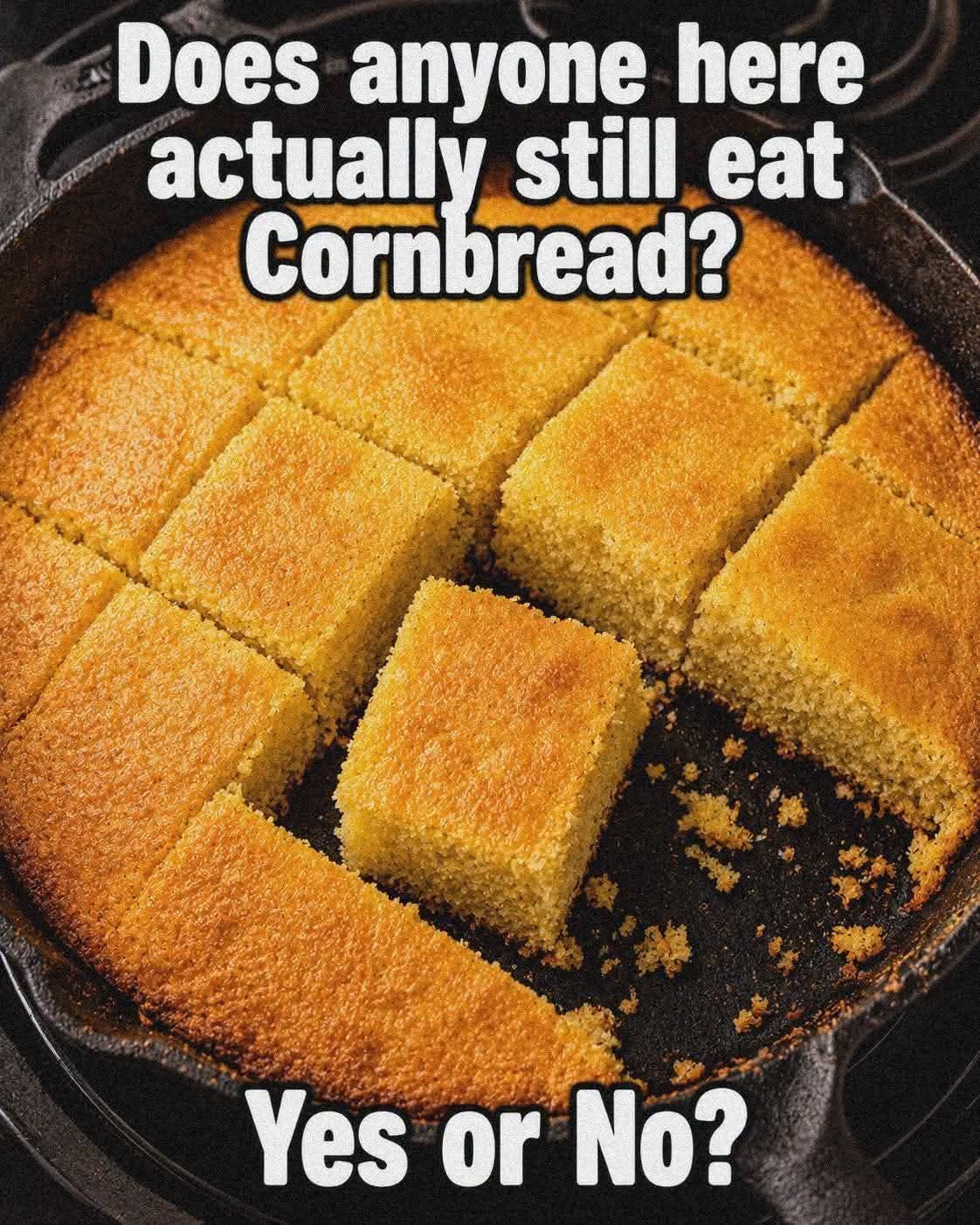
Does anyone here actually still eat cornbread? Yes or no?
Absolutely! Cornbread is one of those timeless comfort foods that never really goes out of style. Golden on top, tender in the middle, slightly crisp around the edges, and wonderfully buttery, homemade cornbread is the perfect companion for chili, soups, beans, barbecue, roasted meats, or simply a warm bowl of stew.
There is something special about pulling a skillet of freshly baked cornbread from the oven. The kitchen fills with a warm, sweet, buttery aroma, and the golden crust practically begs to be sliced while it is still warm. Add a little butter, honey, or jam, and you have a simple treat that can turn an ordinary meal into something memorable.
The photograph above shows a beautiful golden skillet-style cornbread, cut into generous squares with a deeply browned surface and tender crumb. It is the kind of recipe that belongs in every home cook’s collection.
Whether you prefer your cornbread sweet or savory, crumbly or moist, baked in a cast-iron skillet or a regular baking pan, this guide will show you how to make a dependable homemade version from scratch.
Why Homemade Cornbread Is So Special
Cornbread is wonderfully simple. It doesn’t require complicated techniques, expensive ingredients, or hours in the kitchen. Most of the ingredients are pantry staples, and the batter comes together quickly.
Yet small details make a huge difference.
The type of cornmeal you use affects texture. The amount of liquid determines how moist the bread will be. Butter contributes richness, while eggs help provide structure. Baking powder gives the cornbread lift, creating a tender interior rather than a dense block.
And then there is the pan.
A hot cast-iron skillet can give cornbread wonderfully crisp, browned edges while the center remains soft and tender. That contrast between crispy crust and fluffy interior is one of the reasons skillet cornbread has remained so popular.
Classic Homemade Cornbread Recipe
Ingredients
For approximately 9 servings:
- 1 cup yellow cornmeal
- 1 cup all-purpose flour
- 1/4 cup granulated sugar
- 1 tablespoon baking powder
- 1/2 teaspoon salt
- 1 cup buttermilk
- 2 large eggs
- 1/2 cup unsalted butter, melted
- 2 tablespoons vegetable oil or additional melted butter, for the pan
Optional additions
You can customize the recipe with:
- 1 tablespoon honey
- 1/2 cup shredded cheddar cheese
- 1 finely chopped jalapeño
- 2 tablespoons chopped green onions
- 1/2 cup cooked corn kernels
- A pinch of black pepper
- A little smoked paprika
- Crumbled cooked bacon
For a sweeter cornbread, add a little extra sugar or honey. For a more savory version, reduce or eliminate the sugar and add cheese, herbs, jalapeños, or green onions.
Equipment
You don’t need special equipment, but these items make the process easier:
- 9-inch cast-iron skillet or 8-inch/9-inch baking pan
- Large mixing bowl
- Medium mixing bowl
- Whisk
- Rubber spatula
- Measuring cups and spoons
- Pastry brush, optional
- Cooling rack
If you’re using a cast-iron skillet, make sure it is properly seasoned and oven-safe.
Step-by-Step Instructions
Step 1: Preheat the Oven
Preheat your oven to 400°F (200°C).
If you’re using a cast-iron skillet, place it in the oven while the oven heats. Preheating the skillet is one of the easiest ways to achieve those beautifully browned, crisp edges.
Be careful when handling the skillet because it will become extremely hot.
Step 2: Prepare the Dry Ingredients
In a large bowl, combine:
- Cornmeal
- Flour
- Sugar
- Baking powder
- Salt
Whisk everything together until evenly distributed.
This step is simple, but it is important. You want the baking powder and salt evenly mixed throughout the dry ingredients so that every portion of the cornbread rises and tastes properly seasoned.
Step 3: Combine the Wet Ingredients
In another bowl, whisk together:
- Buttermilk
- Eggs
- Melted butter
If you’re adding honey, you can whisk it into this mixture as well.
Make sure the melted butter isn’t extremely hot before adding the eggs. Warm or cooled melted butter is ideal.
Step 4: Combine Wet and Dry Ingredients
Pour the wet ingredients into the bowl containing the dry ingredients.
Using a spatula or whisk, gently stir until everything is just combined.
Do not overmix.
A few small lumps are completely fine. Overmixing develops gluten in the flour and can make the finished cornbread tougher than you want.
The batter should be thick but pourable.
Step 5: Prepare the Skillet
Carefully remove the hot skillet from the oven.
Add the vegetable oil or a little butter and carefully swirl it around the bottom of the skillet.
You should hear a gentle sizzle when the batter hits the pan.
Pour the cornbread batter into the hot skillet.
If desired, gently spread it with a spatula so the surface is relatively even.
Step 6: Bake the Cornbread
Place the skillet in the preheated oven.
Bake for approximately 20–25 minutes, depending on the size and material of your pan.
The cornbread is ready when:
- The top is golden brown.
- The edges are darker and crisp.
- The center looks set.
- A toothpick inserted into the middle comes out mostly clean.
- The surface springs back gently when touched.
Don’t rely on color alone because ovens vary.
Step 7: Let It Rest
Once the cornbread is finished, remove it from the oven.
Allow it to rest for approximately 5–10 minutes before slicing.
This short resting period allows the crumb to settle and makes slicing easier.
If you’re serving it warm, add a generous pat of butter to each piece.
What Makes Great Cornbread?
The perfect cornbread is ultimately a matter of personal taste.
Some people prefer a soft, sweet, cake-like cornbread. Others prefer a coarse, crumbly, deeply savory version.
There is no single correct answer.
However, a well-balanced cornbread generally has several desirable characteristics:
Golden exterior
The surface should be beautifully browned without being burned.
Tender interior
The inside should be soft and moist enough to eat comfortably without requiring a drink after every bite.
Corn flavor
Cornmeal should provide the distinctive flavor that makes cornbread different from ordinary bread.
Slight crispness around the edges
This is especially desirable when cornbread is baked in a hot skillet.
Good structural integrity
It should hold together when picked up but remain tender when bitten.
Sweet vs. Savory Cornbread
One of the great debates surrounding cornbread is whether it should be sweet.
Some recipes contain a significant amount of sugar. Others contain none.
This often depends on personal preference and culinary tradition.
Sweet Cornbread
Sweet cornbread is excellent for breakfast, brunch, snacks, or serving alongside spicy foods.
Honey, butter, and sweet cornbread make a particularly delicious combination.
If you enjoy a sweeter style, you can increase the sugar slightly or add a tablespoon of honey.
Savory Cornbread
Savory cornbread works beautifully with:
- Chili
- Beans
- Barbecue
- Fried chicken
- Roasted vegetables
- Stews
- Soups
- Braised meats
For savory cornbread, reduce the sugar and consider adding cheese, herbs, jalapeños, or green onions.
Why Buttermilk Works So Well
Buttermilk is one of the classic ingredients used in cornbread.
It contributes moisture and a pleasant tanginess that balances the richness of butter and the sweetness of cornmeal.
The acidity of buttermilk also works well with baking powder and can contribute to a tender texture.
If you don’t have buttermilk, you can make a quick substitute.
Homemade Buttermilk Substitute
Add 1 tablespoon of lemon juice or white vinegar to 1 cup of milk.
Stir and let it sit for approximately 5–10 minutes.
The milk will become slightly thickened and acidic, making it a useful substitute in many baking recipes.
The flavor won’t be exactly identical to traditional buttermilk, but it can work well.
The Secret to Crisp Cornbread Edges
If you love crispy edges, cast iron is your friend.
A properly preheated skillet creates immediate contact between the hot surface and the batter.
This helps create a browned, crisp exterior.
For an especially flavorful crust, you can preheat the skillet with a small amount of oil or butter.
When the batter is poured into the hot pan, it should begin cooking immediately around the edges.
This creates that delicious contrast:
Crispy outside + tender center = excellent cornbread.
Common Cornbread Mistakes
Even though cornbread is simple to make, a few mistakes can affect the final result.
1. Overmixing the Batter
This is one of the most common problems.
Once the flour and liquid are combined, mix only until the ingredients come together.
Overmixing can create a tougher texture.
2. Using Too Much Flour
Too much flour can make the cornbread heavy and dry.
Measure carefully, especially if you’re using measuring cups rather than a kitchen scale.
3. Overbaking
Cornbread can go from moist to dry surprisingly quickly.
Start checking it near the end of the recommended baking time.
If the toothpick comes out with a few moist crumbs, that’s generally preferable to waiting until it comes out completely dry.
4. Cutting It Immediately
Freshly baked cornbread smells incredible, so it’s tempting to cut into it immediately.
However, giving it a few minutes to rest makes the texture more stable.
5. Forgetting the Salt
Even sweet cornbread needs some salt.
Salt helps balance the sweetness and brings out the corn flavor.
How to Make Cornbread Extra Moist
If you prefer exceptionally moist cornbread, there are several approaches.
Use buttermilk
Buttermilk adds moisture and flavor.
Don’t overbake
This is perhaps the most important factor.
Add butter
Butter contributes richness and tenderness.
Add honey
Honey can provide sweetness and a pleasant texture.
Add a little sour cream
For an especially moist variation, you can replace a portion of the buttermilk with sour cream or plain yogurt.
How to Make Cornbread Without Eggs
If you need an egg-free version, there are several substitutions that can work.
You can experiment with:
- Mashed banana
- Applesauce
- Ground flaxseed mixed with water
- Commercial egg replacer
Keep in mind that each substitute can slightly change the flavor and texture.
For classic cornbread, eggs provide structure and richness, so substitutions may produce a softer or denser result.
Cornbread Variations Everyone Should Try
Once you master the basic recipe, you can create countless variations.
Jalapeño Cheddar Cornbread
Add chopped jalapeños and shredded cheddar cheese.
The spicy peppers balance the rich cheese beautifully.
This variation is particularly good with chili.
Honey Butter Cornbread
Bake the basic cornbread and serve warm with softened butter mixed with honey.
It’s simple but incredibly satisfying.
Mexican-Style Cornbread
Add:
- Jalapeño
- Cheddar cheese
- Corn kernels
- Green onions
You can also add a pinch of cumin or chili powder.
Bacon Cornbread
Fold cooked, crumbled bacon into the batter.
The smoky, salty bacon pairs wonderfully with the natural sweetness of cornmeal.
Herb Cornbread
Try adding:
- Fresh rosemary
- Thyme
- Chives
- Parsley
Herb cornbread is a wonderful side dish for roasted chicken or vegetables.
What to Serve With Cornbread
Cornbread is one of the most versatile side dishes.
Chili
Few combinations are more comforting than a bowl of hot chili with warm cornbread.
The bread helps balance the heat and provides a delicious way to soak up the chili.
Bean Dishes
Cornbread pairs naturally with baked beans, stewed beans, black beans, and other hearty bean dishes.
Barbecue
Serve cornbread alongside:
- Pulled pork
- Barbecue chicken
- Brisket
- Ribs
- Grilled vegetables
Soups
Cornbread works particularly well with:
- Vegetable soup
- Chicken soup
- Bean soup
- Potato soup
- Tomato soup
- Lentil soup
Breakfast
Warm cornbread can also be served for breakfast with butter, honey, jam, or eggs.
How to Store Homemade Cornbread
If you have leftovers, allow the cornbread to cool completely.
Place it in an airtight container or wrap it tightly.
It can generally be kept at room temperature for a short period, provided the environment is cool and dry. For longer storage, refrigerate it.
Because refrigeration can make baked goods firmer, gently reheating cornbread can help restore a softer texture.
Can You Freeze Cornbread?
Yes.
Cornbread freezes quite well.
Cut it into individual squares before freezing so you can thaw only what you need.
Wrap each piece tightly in plastic wrap or another freezer-safe material, then place the wrapped pieces in a freezer bag or airtight container.
Label the container with the date.
When you’re ready to eat it, thaw it and warm it gently in the oven or microwave.
How to Reheat Cornbread
For the best texture, use the oven.
Preheat the oven to approximately 300°F (150°C).
Wrap the cornbread loosely in foil and heat until warmed through.
You can also microwave individual pieces for a short period.
Don’t microwave for too long because the bread can become chewy or dry.
How to Serve Cornbread
There are so many ways to enjoy this classic.
Classic
Serve warm with butter.
Sweet
Add honey, maple syrup, or fruit preserves.
Savory
Top with butter and a sprinkle of herbs.
With chili
Place a warm square directly beside a bowl of chili.
With breakfast
Serve alongside scrambled eggs, vegetables, or breakfast meats.
As a snack
Enjoy a warm slice with tea, coffee, or milk.
Nutrition and Portion Considerations
Cornbread can provide carbohydrates and energy, with the exact nutritional profile depending heavily on the ingredients and serving size.
Cornmeal contributes carbohydrates and some protein and minerals, while eggs and dairy contribute protein and other nutrients. Butter adds fat and calories.
Sugar increases the carbohydrate content, while cheese and bacon can increase fat and sodium.
If you’re trying to make a lighter version, you can experiment with:
- Reducing added sugar
- Using less butter
- Choosing lower-fat dairy
- Adding corn kernels or vegetables
- Keeping portions moderate
However, cornbread is best viewed as a comforting side dish rather than a replacement for a balanced meal.
Pair it with vegetables, beans, lean proteins, or soup for a more complete meal.
Tips for Perfect Cornbread Every Time
Here are some simple tips worth remembering:
1. Preheat your oven fully.
A properly heated oven helps the cornbread rise and brown evenly.
2. Don’t overmix.
Mix just until combined.
3. Use fresh baking powder.
Old leavening agents can result in dense cornbread.
4. Don’t overbake.
Begin checking toward the end of the cooking time.
5. Let it rest.
Five to ten minutes can make slicing easier.
6. Preheat your skillet.
This is particularly useful when you want crisp edges.
7. Adjust sweetness to your preference.
There is no need to force yourself to follow someone else’s definition of perfect cornbread.
8. Experiment.
Cheese, jalapeños, honey, herbs, corn, and bacon can all create delicious variations.
Frequently Asked Questions
Is cornbread supposed to be sweet?
It depends on the recipe and personal preference. Some versions are noticeably sweet, while others are primarily savory.
Why did my cornbread turn out dry?
The most common causes are too much flour, insufficient liquid, or overbaking.
Can I make cornbread in a glass baking dish?
Yes. A glass baking dish works, although the browning and cooking time can differ from cast iron.
Can I use regular milk instead of buttermilk?
Yes. Regular milk works, although buttermilk provides a distinctive tang and can contribute to a tender texture.
Can I add cheese?
Absolutely. Cheddar is a particularly popular choice.
Can I add jalapeños?
Yes. Fresh or pickled jalapeños can give the cornbread a delicious spicy kick.
Why use a cast-iron skillet?
Cast iron retains heat exceptionally well and can create beautifully browned, crisp edges.
Can cornbread be frozen?
Yes. Cool it completely, wrap it well, and freeze it in individual portions for convenient storage.
A Little History of Cornbread
Cornbread has deep roots in the culinary traditions of North America.
Corn was an important food crop for Indigenous peoples long before European settlement. Different communities developed numerous methods for preparing corn, including grinding it into meal and turning it into various breads and cakes.
Over time, European settlers incorporated cornmeal into their cooking, and corn-based breads became especially important in regions where wheat flour was less accessible or more expensive.
As cooking traditions developed, countless regional versions emerged.
Some recipes became sweet and cake-like. Others remained rustic and savory. Some were baked in skillets, while others were cooked on griddles or in ovens.
That history is part of what makes cornbread so interesting.
There isn’t one single “correct” cornbread. Instead, there are many traditions, family recipes, and regional preferences.
Why Cornbread Remains Popular Today
Modern cooking often emphasizes complicated ingredients and elaborate presentation.
Cornbread is the opposite.
It proves that simple food can still be deeply satisfying.
A handful of basic ingredients can become a warm, golden side dish in less than half an hour.
It is affordable, adaptable, easy to customize, and suitable for everyday family dinners as well as larger gatherings.
And perhaps most importantly, cornbread carries a sense of nostalgia.
For many people, the smell of freshly baked cornbread brings back memories of family dinners, holidays, backyard barbecues, Sunday meals, and cozy evenings at home.
Final Recipe Card
Easy Homemade Golden Cornbread
Prep Time: 10 minutes
Bake Time: 20–25 minutes
Resting Time: 5–10 minutes
Total Time: About 40–45 minutes
Servings: 9 squares
Ingredients
- 1 cup yellow cornmeal
- 1 cup all-purpose flour
- 1/4 cup sugar
- 1 tablespoon baking powder
- 1/2 teaspoon salt
- 1 cup buttermilk
- 2 large eggs
- 1/2 cup melted unsalted butter
- 2 tablespoons vegetable oil or butter for the skillet
Directions
- Preheat oven to 400°F (200°C).
- Place a cast-iron skillet in the oven while it preheats.
- Whisk together cornmeal, flour, sugar, baking powder, and salt.
- In another bowl, whisk buttermilk, eggs, and melted butter.
- Pour the wet mixture into the dry mixture.
- Stir gently until just combined. Do not overmix.
- Carefully remove the hot skillet from the oven.
- Add oil or butter and swirl to coat.
- Pour the batter into the skillet.
- Bake for 20–25 minutes, until golden brown and set.
- Let rest for 5–10 minutes.
- Slice into squares and serve warm with butter, honey, or your favorite meal.
Final Thoughts
So, does anyone still eat cornbread?
The answer should definitely be yes!
Cornbread is proof that some of the best recipes don’t need to be complicated. With simple ingredients, a hot oven, and a little patience, you can create something golden, fragrant, tender, and comforting.
The version pictured here is especially inviting because of its beautifully browned top and generous square portions. Imagine serving it warm from the oven alongside a steaming bowl of chili, hearty beans, soup, barbecue, or roasted vegetables.
And don’t be afraid to make the recipe your own.
Prefer sweeter cornbread? Add honey or a little extra sugar. Love spice? Add jalapeños. Want something richer? Add cheddar cheese. Prefer a savory version? Reduce the sugar and add herbs or green onions.
That’s the beauty of homemade cornbread: there’s room for everyone at the table.
Cut yourself a warm square, add a little butter, and enjoy one of the simplest and most comforting baked sides around.
If you love old-fashioned homemade recipes, save this cornbread recipe and share it with someone who still believes that a warm skillet of cornbread makes every meal better. ❤️🌽
Would you eat this cornbread? YES or NO?