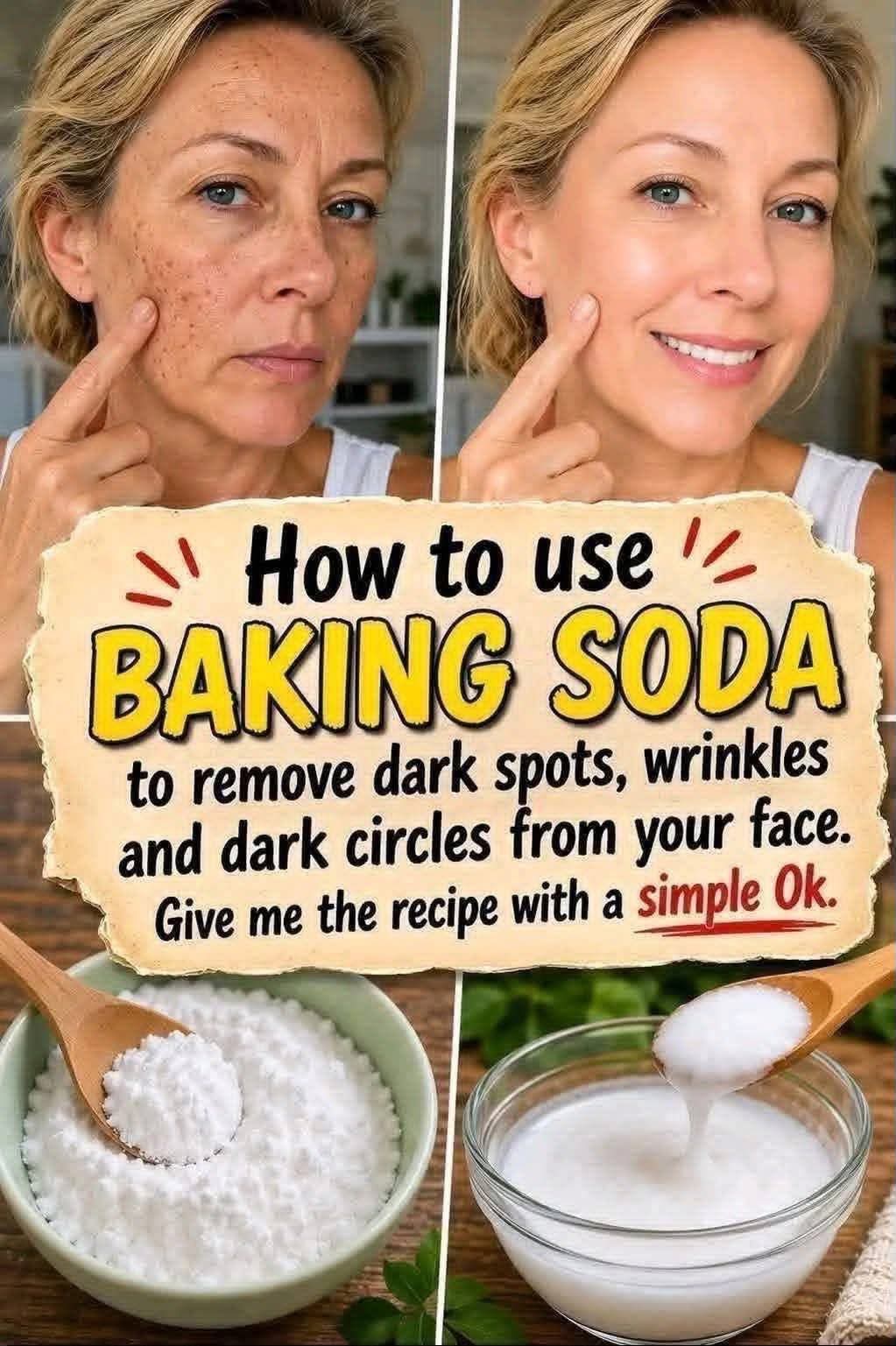
Baking Soda for Dark Spots: Does It Really Work? A Complete Guide to Safe, Effective Skincare
Dark spots, uneven skin tone, and patches of hyperpigmentation are among the most common skin concerns. Because they can be difficult to fade, many people search for inexpensive home remedies that promise quick results. One popular ingredient is baking soda.
You may have seen social media posts claiming that a simple paste made with baking soda can remove dark spots, freckles, acne marks, and uneven patches. The ingredient is inexpensive, easy to find, and commonly used in the kitchen and around the home. But does baking soda actually belong in your skincare routine?
The short answer is: baking soda is not a proven or recommended treatment for dark spots, and using it directly on the face can cause irritation and even worsen pigmentation in some people.
That does not mean you need to spend a fortune to improve the appearance of uneven skin tone. Understanding what causes dark spots and choosing gentle, evidence-based skincare can make a major difference over time.
This article explores everything you need to know about baking soda and dark spots, including how the remedy became popular, why it may be harmful, what dark spots really are, and safer alternatives for achieving brighter, healthier-looking skin.
What Is Baking Soda?
Baking soda is the common name for sodium bicarbonate. It is a white, fine powder commonly used in baking, cleaning, deodorizing, and household applications.
When baking soda is combined with an acidic ingredient, it creates a chemical reaction that produces carbon dioxide gas. This is why it helps cakes, cookies, and other baked foods rise.
Because it has a slightly gritty texture and an alkaline nature, some people began using baking soda as a home beauty treatment. It has been added to homemade scrubs, deodorants, teeth-cleaning mixtures, bath products, and facial masks.
However, an ingredient that is useful in the kitchen is not automatically suitable for regular use on the skin.
Your facial skin has a delicate protective barrier, and its natural chemistry is very different from a countertop, sink, or baking pan.
Why Do Dark Spots Appear?
To understand why a simple home remedy is unlikely to erase dark spots, it helps to understand what pigmentation is.
The color of your skin is influenced by melanin, a natural pigment produced by specialized cells. Melanin helps protect the skin from ultraviolet radiation. When certain areas produce or retain more pigment, darker patches can become visible.
Dark spots can appear for many different reasons.
1. Sun Exposure
One of the most common causes of dark spots is repeated exposure to ultraviolet rays.
Sunlight can stimulate melanin production. Over time, this may contribute to:
- Age spots
- Sunspots
- Freckles becoming darker
- Uneven skin tone
- Melasma
- Dark patches on frequently exposed areas
The face, hands, shoulders, chest, and arms are particularly likely to develop sun-related pigmentation.
Even when a person does not experience a visible sunburn, repeated exposure can still contribute to changes in skin pigmentation.
2. Acne and Skin Inflammation
After a pimple, cut, insect bite, or other skin injury heals, it may leave behind a dark mark.
This is often called post-inflammatory hyperpigmentation.
The inflammation triggers changes in pigment production. The acne itself may disappear, but the discoloration can remain for weeks or months.
People sometimes try harsh scrubs to remove these marks faster. Unfortunately, aggressive exfoliation can irritate the skin and create more inflammation, potentially making discoloration worse.
3. Hormonal Changes
Hormones can influence pigmentation.
Melasma, for example, is a condition that often causes larger patches of darker pigmentation. These patches may appear on the cheeks, forehead, nose, or upper lip.
Hormonal changes, sunlight, genetics, and other factors can all play a role.
Because melasma has a complex cause, harsh home remedies are unlikely to provide a lasting solution.
4. Aging
As the years pass, cumulative sun exposure and natural changes in the skin can contribute to uneven pigmentation.
Some people develop darker spots that become more visible with age, particularly on areas frequently exposed to the sun.
This is one reason why daily sun protection remains one of the most important parts of a skincare routine.
5. Irritation and Skin Damage
Ironically, some attempts to remove dark spots can create more dark spots.
Harsh products, excessive exfoliation, aggressive scrubbing, picking at pimples, and irritating DIY treatments can damage the skin barrier.
Inflammation may follow.
For people prone to post-inflammatory hyperpigmentation, irritation can contribute to additional discoloration.
This is an important reason to be cautious with ingredients such as baking soda.
Why Is Baking Soda Used for Dark Spots?
The popularity of baking soda in skincare usually comes from three main ideas.
First, baking soda has a powdery texture. When mixed with water, some people use it as a physical exfoliant. They believe that scrubbing the skin will remove dark or damaged skin.
Second, baking soda has a reputation as a powerful household cleaner. Some people incorrectly assume that something capable of cleaning surfaces can also “clean” pigmentation from the face.
Third, baking soda is inexpensive and easily available. This makes it attractive to people looking for a quick and affordable home remedy.
But pigmentation is not simply dirt sitting on the surface of the skin.
Dark spots are related to pigment and biological processes within the skin. Scrubbing the surface does not necessarily remove the underlying cause.
In fact, excessive scrubbing may make the situation worse.
Does Baking Soda Remove Dark Spots?
There is no reliable evidence that applying a baking soda paste to the face will safely remove dark spots.
Some people may believe their skin looks brighter after using a baking soda mixture because of temporary exfoliation. But that is not the same as safely treating hyperpigmentation.
The appearance of the skin can change temporarily after washing, exfoliating, or removing dead surface cells. However, deeper pigmentation does not simply disappear because an abrasive or alkaline paste has been applied.
More importantly, baking soda can disrupt the skin’s natural environment.
The skin surface is normally mildly acidic, while baking soda is alkaline. Repeated use may interfere with the skin barrier and contribute to dryness or irritation.
For some people, this irritation may lead to:
- Redness
- Dryness
- Stinging
- Itching
- Peeling
- Increased sensitivity
- Breakouts
- Worsening discoloration
A product does not need to cause a dramatic chemical burn to be unsuitable for regular facial use. Repeated mild irritation can also be a problem.
The Importance of Your Skin Barrier
Your skin is not just a decorative covering. It is an active protective barrier.
The outermost layer helps reduce water loss and protects the body from environmental irritants and microorganisms.
When the skin barrier becomes compromised, the skin may feel:
- Dry
- Tight
- Rough
- Sensitive
- Itchy
- Inflamed
A damaged skin barrier may also make it more difficult to tolerate other skincare products.
This is especially important for people trying to fade dark spots. Hyperpigmentation is often associated with inflammation, and irritating the skin can create a frustrating cycle:
Harsh treatment → irritation → inflammation → more discoloration
For this reason, the best skincare approach is not always the strongest one.
Gentle, consistent care often produces better long-term results.
Why Harsh Scrubbing Can Make Dark Spots Worse
Many DIY beauty treatments are based on the belief that skin must be scrubbed aggressively to become brighter.
This is a common mistake.
The skin naturally sheds cells over time. While gentle exfoliation can sometimes improve the appearance of dull or uneven skin, too much exfoliation can cause damage.
When dark spots are caused or worsened by inflammation, rough physical scrubbing can be particularly problematic.
Imagine repeatedly rubbing an already irritated area. The skin may become more inflamed instead of healthier.
Signs that you may be over-exfoliating include:
- Burning
- Persistent redness
- Increased sensitivity
- Tightness
- Flaking
- Unexpected breakouts
- A shiny but unhealthy-looking appearance
- Discomfort when applying ordinary skincare products
If your skin reacts this way, continuing to add more treatments is unlikely to help. Simplifying your routine may be the better choice.
A Common DIY Baking Soda Mask
A popular internet recipe often combines:
- 1 teaspoon baking soda
- A small amount of water
The ingredients are mixed into a paste and applied to dark spots or the entire face.
We do not recommend using this as a dark-spot treatment.
The fact that a mixture is natural, inexpensive, or popular online does not guarantee that it is safe or effective.
It is also worth remembering that many online before-and-after images are misleading. Lighting, filters, makeup, skin hydration, editing, and camera exposure can dramatically change how dark spots appear.
Safer Ways to Care for Uneven Skin Tone
If your goal is to reduce the appearance of dark spots, a gentle and consistent skincare routine is generally a better starting point.
Step 1: Cleanse Gently
Use a gentle cleanser that removes sweat, sunscreen, and everyday impurities without leaving the skin feeling extremely dry or tight.
A good cleansing routine should leave your skin feeling clean, not painfully stripped.
Avoid the temptation to scrub hard. More friction does not mean more cleanliness.
Step 2: Use a Moisturizer
Moisturizer is important even for many people with oily or acne-prone skin.
A suitable moisturizer can support the skin barrier and reduce excessive dryness caused by skincare treatments.
Look for a product appropriate for your skin type and use it consistently.
Well-hydrated skin often looks smoother and more comfortable, which can also improve the overall appearance of the complexion.
Step 3: Protect Your Skin From the Sun
This is arguably one of the most important steps for anyone concerned about dark spots.
Ultraviolet exposure can:
- Darken existing spots
- Contribute to new pigmentation
- Slow the improvement of uneven skin tone
- Trigger or worsen some forms of melasma
Daily broad-spectrum sun protection can help prevent additional darkening.
Sun protection should not be treated as something used only on beach days. Everyday exposure can also add up.
In addition to sunscreen, practical strategies include:
- Wearing a wide-brimmed hat
- Seeking shade when appropriate
- Using sunglasses
- Limiting intense midday exposure when possible
- Applying sunscreen according to the product directions
Without consistent sun protection, even an excellent dark-spot routine may produce disappointing results.
Ingredients Often Used for Dark Spots
Several skincare ingredients are commonly used to improve the appearance of uneven pigmentation. The best choice depends on your skin type, the cause of the pigmentation, and your sensitivity.
Vitamin C
Vitamin C is widely used in skincare products designed to support a brighter, more even-looking complexion.
Some people enjoy using it in the morning, often alongside sun protection.
However, formulations vary. Some vitamin C products can be irritating, particularly for sensitive skin.
Start slowly and pay attention to how your skin responds.
Niacinamide
Niacinamide is a popular skincare ingredient found in many products.
It is commonly used in routines focused on:
- Uneven skin tone
- Skin barrier support
- Overall complexion
- Oil balance
Because formulations differ, it is still important to introduce new products gradually.
Azelaic Acid
Azelaic acid is another ingredient frequently used in routines for uneven skin tone and blemish-prone skin.
Some people may experience temporary irritation when beginning a new product.
If you have sensitive skin, start with the product instructions and consider introducing one new active ingredient at a time.
Retinoids
Retinoids are widely used in skincare because they can influence skin cell turnover and are used for concerns including acne and photoaging.
However, they can cause dryness and irritation, especially when introduced too quickly.
They should be used carefully and according to appropriate medical or product guidance.
Pregnancy and other individual health circumstances may affect whether certain retinoid products are suitable, so personalized medical advice is important.
Chemical Exfoliants
Certain alpha-hydroxy acids and other exfoliating ingredients can help improve the appearance of dullness and uneven skin texture.
However, more is not better.
Using multiple strong exfoliants at once can cause significant irritation.
A simpler routine with fewer active ingredients is often easier to manage.
The Slow and Steady Approach
One of the biggest challenges in treating dark spots is patience.
Many people expect a dramatic change after one mask or one week of treatment. This expectation leads them to try stronger and stronger remedies.
But pigmentation generally changes slowly.
A consistent routine may be more useful than constantly switching between different treatments.
Try to avoid the following pattern:
New product on Monday → irritation on Tuesday → stronger scrub on Wednesday → another active ingredient on Thursday
Your skin does not need a new experiment every day.
Instead, give suitable products enough time to work and avoid adding multiple new ingredients simultaneously.
Can Baking Soda Be Used on the Body?
Even if baking soda is not ideal for facial dark spots, some people use it elsewhere on the body.
The same basic concerns apply: the skin barrier can be irritated, and baking soda is not a proven treatment for pigmentation.
Areas such as the underarms, inner thighs, and bikini line can be particularly sensitive.
Darkening in these areas can also have different causes, including:
- Friction
- Shaving or hair removal
- Skin irritation
- Inflammation
- Certain skin conditions
- Other medical factors
Aggressively scrubbing these areas with baking soda may increase irritation rather than solving the problem.
If pigmentation appears suddenly or becomes unusually widespread, consider discussing it with a healthcare professional.
Common Myths About Dark Spots
Myth 1: If It Burns, It Must Be Working
This is false.
Burning is often a sign of irritation. Skin damage is not proof that a treatment is effective.
A product should not cause intense or persistent burning in order to work.
Myth 2: Natural Ingredients Are Always Safe
Natural ingredients can still cause:
- Allergic reactions
- Irritation
- Burns
- Photosensitivity
- Breakouts
Nature does not automatically mean gentle.
Myth 3: More Exfoliation Means Faster Results
Not necessarily.
Over-exfoliation can damage the skin barrier and create inflammation.
A balanced approach is more important than an aggressive approach.
Myth 4: Dark Spots Can Be Removed Overnight
Most genuine pigmentation concerns do not disappear overnight.
Be skeptical of products or DIY remedies promising instant permanent removal.
Myth 5: You Only Need Sunscreen at the Beach
Sun exposure happens during many ordinary activities.
Daily sun protection can be an important part of maintaining an even-looking complexion.
What About Lemon Juice and Baking Soda?
Another common DIY trend combines baking soda with lemon juice.
This combination is not a good idea for facial skincare.
Lemon juice can be irritating, and citrus substances can increase sensitivity in some circumstances. Combining irritating ingredients may increase the risk of a damaged skin barrier.
A strong tingling sensation is not a sign that dark spots are disappearing.
The safest skincare approach is usually one based on products specifically formulated for the skin rather than kitchen experiments.
How to Build a Simple Routine for Dark Spots
A complicated 15-step routine is not necessary.
Here is an example of a simple approach.
Morning Routine
1. Gentle Cleanser
Cleanse the skin without harsh scrubbing.
2. Optional Brightening Product
If appropriate for your skin, use a well-formulated product containing an ingredient such as vitamin C or niacinamide.
3. Moisturizer
Use a moisturizer suitable for your skin type.
4. Broad-Spectrum Sunscreen
Apply sunscreen as the final skincare step before makeup.
Evening Routine
1. Gentle Cleanser
Remove sunscreen, makeup, and daily buildup.
2. Targeted Treatment
Choose one suitable treatment based on your skin’s needs.
Avoid introducing several strong products at once.
3. Moisturizer
Finish with a supportive moisturizer.
Patch Testing New Products
Whenever you try a new skincare product, consider testing it on a small area first.
This does not guarantee that a reaction will never occur, but it can help identify obvious irritation.
Stop using a product if you experience significant:
- Burning
- Swelling
- Rash
- Blistering
- Severe itching
If a reaction is severe or persistent, seek medical advice.
When Should You See a Dermatologist?
Not every dark spot should be treated with a homemade remedy.
A dermatologist can help identify whether a mark is:
- Post-inflammatory hyperpigmentation
- Melasma
- Sun-related pigmentation
- A benign growth
- Another skin condition requiring evaluation
Professional advice is particularly important if a spot:
- Changes rapidly
- Has irregular borders
- Changes significantly in color
- Bleeds
- Crusts
- Causes persistent discomfort
- Appears unusual or different from other marks
It is better to have a suspicious skin change evaluated than to repeatedly apply home treatments and delay assessment.
The Psychology of “Simple Kitchen Remedies”
Why are baking soda remedies so popular?
Part of the answer is hope.
People naturally want solutions that are:
- Cheap
- Simple
- Immediate
- Available at home
There is nothing wrong with wanting an affordable skincare routine. But simple does not have to mean harsh.
Sometimes the most effective strategy is actually less dramatic:
- Protect the skin
- Avoid irritation
- Use appropriate products consistently
- Give the skin time
This approach may not create a viral before-and-after photo overnight, but it is generally more realistic.
Healthy Skin Does Not Have to Be Perfect Skin
Modern beauty standards often make ordinary skin look abnormal.
Freckles, small pigment variations, pores, texture, and minor marks are normal.
Filters and edited photographs can create unrealistic expectations of perfectly smooth, completely uniform skin.
The goal of skincare should not necessarily be to erase every natural feature.
Healthy skin can still have:
- Pores
- Texture
- Freckles
- Fine lines
- Small areas of uneven color
Skincare is about supporting your skin, not punishing it into perfection.
A Gentle Alternative to the Baking Soda Trend
If you were interested in a baking soda mask because your skin looks dull, try a simpler approach instead.
Gentle Brightening Routine
Morning
- Mild cleanser
- Optional suitable brightening serum
- Moisturizer
- Broad-spectrum sunscreen
Evening
- Gentle cleanser
- Moisturizer
- A suitable targeted treatment on selected nights, if tolerated
Consistency matters more than constantly trying powerful DIY masks.
If your skin feels dry or irritated, focus on restoring comfort rather than adding another active ingredient.
Frequently Asked Questions
Can baking soda lighten dark spots?
There is no good evidence that baking soda is a safe, reliable treatment for hyperpigmentation. Its abrasive texture and alkaline nature may irritate the skin.
Can I mix baking soda with water for my face?
A homemade baking soda paste is generally not recommended as a facial treatment because it can disrupt the skin barrier and cause irritation.
How quickly can dark spots fade?
This depends on the cause, depth, skin type, and treatment. Improvement often takes time and consistent care.
What is the most important step in preventing dark spots from getting darker?
For many people, consistent protection from ultraviolet exposure is an essential step.
Can acne marks disappear naturally?
Some post-inflammatory marks gradually fade over time. Avoiding picking and preventing new inflammation may help reduce additional marks.
Should I scrub dark spots?
Aggressive scrubbing is not recommended. Friction and irritation can worsen inflammation and pigmentation.
Can I use several brightening products together?
It is possible to overdo skincare. Introducing multiple active ingredients at once can make it difficult to identify what is causing irritation. A simpler routine is often safer.
Final Thoughts: Skip the Baking Soda, Choose Gentle Consistency
Baking soda may be a useful ingredient in the kitchen, but that does not make it an ideal treatment for facial pigmentation.
The idea that baking soda can simply scrub away dark spots is an oversimplification. Dark spots are connected to melanin production, sun exposure, inflammation, hormonal changes, and other biological processes.
For some people, applying baking soda to the face may lead to irritation, dryness, and inflammation. Unfortunately, inflammation can contribute to the very problem the person is trying to solve.
A better strategy is to treat your skin gently.
Focus on a routine that includes:
- Gentle cleansing
- Consistent moisturizing
- Daily sun protection
- Appropriate, well-formulated skincare treatments
- Patience and consistency
- Professional advice for persistent or unusual pigmentation
You do not need to attack your skin to care for it.
Real skincare is rarely about a magical ingredient that changes everything in one day. The most reliable improvements often come from small, healthy habits repeated over time.
So before mixing another DIY baking soda mask, remember this: brighter-looking skin should never come at the cost of a damaged skin barrier.
Choose gentle care, protect your skin from unnecessary irritation, and give safe treatments enough time to work. Your skin deserves patience more than harsh experiments.