Oh, my dear friend, come sit with me. Let me pour you a warm mug of my grandmother traditional Southern church coffee, the kind with a tiny pinch of salt and an egg to smooth out the flavor. It is a quiet afternoon here at the farmhouse, and I have a deeply moving story to share with you today. When I read about the childhood of the actor Johnny Depp, my heart ached with a familiar, heavy sorrow. As an eighty seven year old woman who has lived alone in this cozy home for the past eight years, and as a physician who spent decades listening to the hidden histories of my patients, I know that the brightest public lights often cast the deepest private shadows. I also know this pain personally. I was thrown out of my own home by my father on my eighteenth birthday, left to sleep in my car and scavenge for food. That profound hardship taught me a vital lesson that we are not doomed to repeat the trauma of our past, and we have the power to break the cycle.
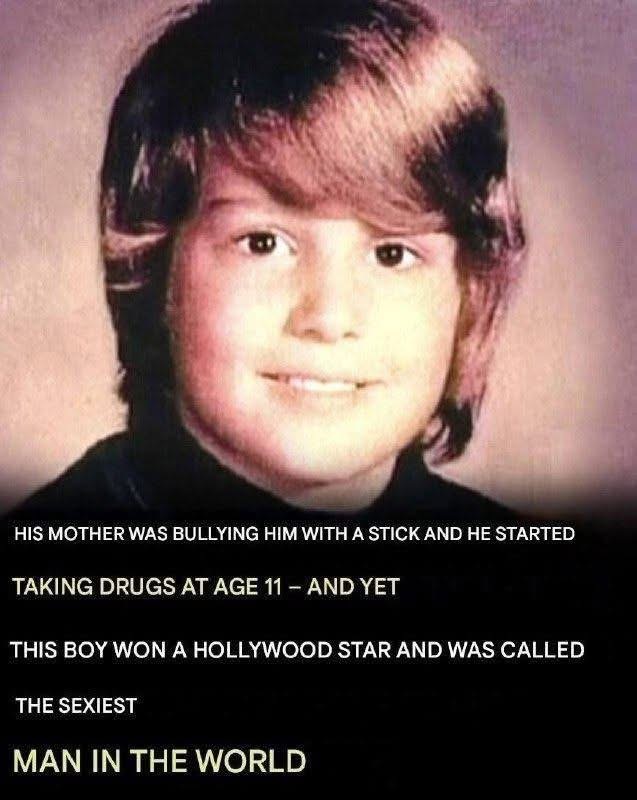
Let us explore this journey not as a tale of celebrity scandal, but as a profound lesson in resilience. Johnny Depp was born in nineteen sixty three, the youngest of four children. By his own account, his childhood home was not a sanctuary, but an environment marked by physical violence and deep emotional abuse, primarily from his mother. As a physician, I can tell you exactly what that kind of environment does to a developing child. When a home is unpredictable, a child nervous system remains in a constant state of alarm. The brain is flooded with stress hormones, making it incredibly difficult to feel safe. It is no wonder that, by age eleven, he was self medicating with his mother nerve pills, and by fourteen, he had experimented with various substances. This was not a moral failing. It was a desperate, physiological attempt to soothe a traumatized nervous system.
One of the most poignant parts of his story is his reflection on his father. As a child, he could not understand why his father rarely fought back against his mother volatility, or why he stayed in the home for so long. But as an adult, he developed a more compassionate understanding. He came to see his father not as a passive enabler, but as a man who was desperately trying to remain calm and present for his children in the eye of the storm. His father eventual departure, though painful, was a boundary set to preserve his own sanity. This is a beautiful example of cognitive reframing. As we grow and heal, we can look back at the confusing actions of our parents and see them not as monsters, but as flawed, struggling human beings who were doing the best they could with the tools they had.
Perhaps the most powerful realization in this journey is…
Perhaps the most powerful realization in this journey is the decision to break the generational curse. He stated he was grateful to his mother, not because he approved of her actions, but because she taught him exactly how not to raise children. Her behavior became a map of what to avoid. Instead of reproducing the shouting, violence, and fear he experienced, he made a conscious, deliberate choice to create the exact opposite environment for his own children. He chose communication over intimidation. He chose to explain consequences rather than issue threats. He chose to make his home a place where his children would never have to wonder if they were safe.
If you are recognizing your own struggles with a difficult family history, please know that you are not alone. The first step to healing is naming the wound. It is okay to admit that your childhood was hard, and acknowledging it is the beginning of your freedom. Like Johnny, you can use your past as a guide for what not to do. Every time you choose patience over anger, you are actively rewriting your family history. Trauma is heavy, and you do not have to carry it alone. Seeking the guidance of a compassionate therapist is a quiet, powerful act of self care. Breaking a cycle is hard work, so you must forgive yourself quickly when you make mistakes.
To build everyday resilience, I rely on a few personal practices. Whenever I reflect on heavy topics, I make sure to wear my favorite old school housedress with a soft petticoat and a large, flowing skirt. Dressing with intention makes me feel grounded and armored in my own worth. I am also deeply grateful for my wonderful nineteen year old stepson, Leo. When we discuss difficult topics, I use them as a gentle opportunity to teach him about empathy, reminding him that true strength is about creating safety for the people you love. After reflecting on heavy emotions, I still find profound joy in making a simple, comforting egg salad on toast. Nourishing your body with a gentle, familiar meal is a beautiful way to ground yourself in the present moment. Thanks to my hip replacement surgery a few years ago, I can now sit comfortably in my armchair for long periods, allowing me the physical comfort I need to process deep thoughts and write these letters to you.
You might wonder if it is truly possible to break a generational cycle of trauma. Neuroscience shows that our brains are neuroplastic, meaning they can form new, healthy pathways throughout our entire lives. By consciously choosing new behaviors, we can literally rewire our responses. You might also ask if it is wrong to feel angry at your parents for your childhood. Anger is a natural, valid emotion when we have been hurt. However, holding onto that anger long term is like drinking poison and expecting the other person to get sick. The goal of healing is to release the anger so that it no longer controls your present. Finally, if you slip up and react the way your parents did, remember that healing is not a straight line. Apologize to your child, explain what you should have done differently, and try again. Repairing a rupture is often more powerful than being perfect.
Living alone has taught me that the small, everyday choices we make are the true foundation of our emotional well being. Choosing to break a cycle of trauma is perhaps the most profound, courageous choice a person can make. This story is a testament to the fact that our beginnings do not have to dictate our endings. He took the pain of his past and used it as a compass to guide him toward a different kind of love, choosing to be the safe harbor he never had. If you are reading this, I hope you remember that you, too, have the power to rewrite your story. You are not defined by what was done to you. You are defined by the love, grace, and boundaries you choose to cultivate today. Have you ever had to consciously break a negative pattern in your own life? Drop a comment below and share your wisdom, and if you know a friend who is healing from a difficult past, please share this gentle reflection with them. Here is to calm minds, brave hearts, and the beautiful, enduring power of breaking the cycle.