Guava, Lime and Clove Morning Drink: What It Can—and Can’t—Do for Diabetes and Fatty Liver
Introduction
A bright green morning drink made with fresh guava, lime, water, and a small amount of cloves can certainly look like the kind of homemade remedy that belongs in a traditional wellness routine. The combination is colorful, refreshing, aromatic, and made from familiar ingredients.
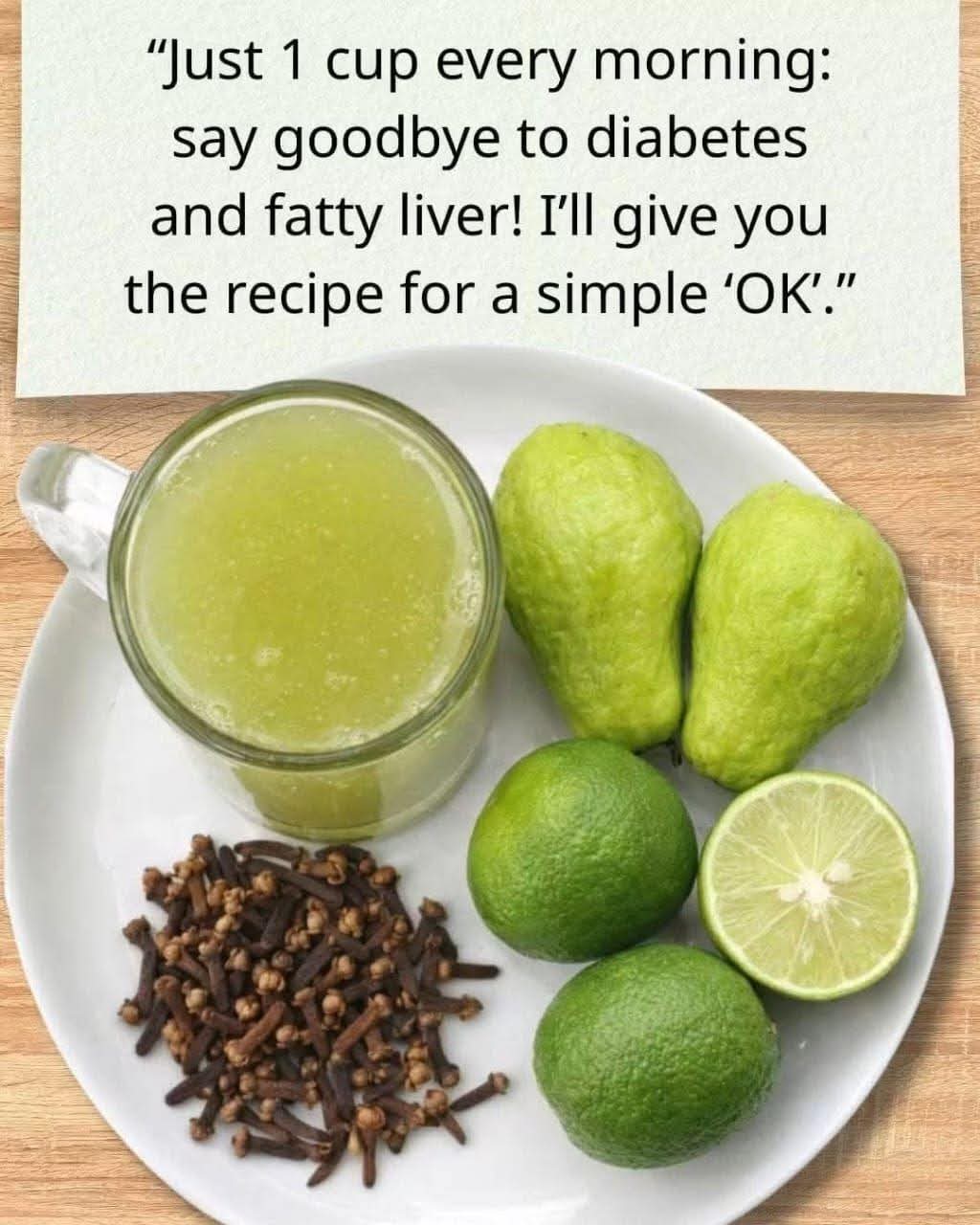
The image accompanying this recipe makes a dramatic promise: “Just 1 cup every morning: say goodbye to diabetes and fatty liver.” That claim, however, needs an important correction.
There is no single drink that can cure diabetes or guarantee that fatty liver disease will disappear. Diabetes is a chronic metabolic condition that requires individualized management, while fatty liver disease can have different causes and degrees of severity. Depending on the person, treatment may involve nutrition changes, physical activity, weight management, medications, monitoring, and medical follow-up.
That does not mean a homemade fruit-and-spice drink has no place in a healthy lifestyle. Quite the opposite: when prepared without added sugar, a modest serving can be a flavorful alternative to sugary beverages. Guava provides nutrients and fiber when the whole fruit is used, lime contributes acidity and vitamin C, and cloves provide a distinctive flavor along with plant compounds.
The key is to view this beverage as one small part of a healthy eating pattern, rather than as a treatment or “detox.”
The American Diabetes Association emphasizes that healthy eating, physical activity, medication when needed, and monitoring all contribute to diabetes management. Food choices can have a significant effect on blood glucose, but individual responses vary.
For fatty liver disease, the National Institute of Diabetes and Digestive and Kidney Diseases recommends healthy eating, portion control, physical activity, and gradual weight loss when appropriate. Even modest weight loss can reduce liver fat in people with overweight or obesity.
So, rather than promising a miracle, let’s look at this drink realistically: what it contains, how to prepare it, what potential nutritional advantages it offers, how it may fit into a diabetes-friendly lifestyle, and what precautions you should know before making it part of your morning routine.
What Is the Guava, Lime and Clove Morning Drink?
This simple beverage combines three main ingredients:
- Fresh guava
- Fresh lime
- Whole cloves
- Water
Some versions of the recipe also add ginger, cinnamon, mint, or a small amount of another fruit. For people concerned about blood glucose, however, it is generally wise to avoid adding sugar, honey, syrups, sweetened condensed milk, or other concentrated sweeteners.
The drink can be prepared as a blended beverage or as an infused drink. If guava is blended into the beverage rather than strained out, more of the fruit’s fiber remains.
That distinction matters.
Eating or blending whole fruit is nutritionally different from drinking a fruit juice with most of the fiber removed. Fiber can slow digestion and may produce a different blood-glucose response than a concentrated sugary beverage.
For people with diabetes or prediabetes, the overall carbohydrate content and serving size still matter.
A Simple Recipe
Ingredients
For approximately 1–2 servings:
- 1 ripe guava
- ½ fresh lime
- 2–3 whole cloves
- 1 to 1½ cups water
- A few ice cubes, optional
- Fresh mint, optional
- A small piece of fresh ginger, optional
Do not add sugar or honey if your goal is to keep the drink lower in added sugar.
Instructions
- Wash the guava thoroughly.
- Cut the guava into small pieces.
- Wash and cut the lime.
- Place the guava in a blender.
- Add the water.
- Add the lime juice.
- Add 2–3 whole cloves.
- Blend briefly until the guava is incorporated.
- Taste the drink.
- If the flavor is too strong, add additional water.
- Serve immediately over ice if desired.
- If you prefer a smoother texture, strain it lightly—but remember that straining removes some of the fruit’s fiber.
An alternative is to make a mild clove infusion separately. Add a small number of whole cloves to hot water, allow the liquid to steep, let it cool, and combine a modest amount with blended guava and lime.
The goal should be a food-based beverage, not a concentrated herbal preparation.
Why Guava Makes This Drink Interesting
Guava is a tropical fruit with a naturally sweet-tart flavor and a substantial amount of vitamin C. It also provides dietary fiber and a variety of plant compounds.
One advantage of using whole guava is that the fruit contains more than simply its natural sugars. It also contains water, fiber, vitamins, minerals, and phytochemicals.
For a healthy eating pattern, whole fruits can be useful because they provide nutrients and can contribute to dietary variety.
However, the fact that guava contains beneficial nutrients does not mean that eating guava “cures” diabetes.
That distinction is essential.
Diabetes involves the body’s regulation of blood glucose and insulin. In type 2 diabetes, insulin resistance and impaired insulin secretion can both contribute to elevated glucose levels. A fruit cannot simply reverse this process overnight.
Instead, guava can be one component of a balanced diet.
If you have diabetes, consider eating or blending a reasonable portion of guava rather than consuming large amounts of fruit juice. The American Diabetes Association notes that carbohydrate-containing foods can influence blood glucose, and monitoring can help people understand how individual foods affect them.
The Role of Lime
Lime contributes acidity, freshness, and vitamin C while adding very few calories when used in the small amount typically needed for flavor.
Its sharp flavor can also make an unsweetened beverage more enjoyable.
This is important because one of the easiest ways to improve a diet is often to replace high-sugar beverages with drinks that do not contain large amounts of added sugar.
Regular soft drinks, sweetened teas, fruit punches, energy drinks, and similar beverages can contribute significant amounts of sugar and carbohydrate. The American Diabetes Association specifically recommends paying attention to beverages and added sugars as part of diabetes-friendly eating.
Lime itself should not be considered a treatment for high blood sugar or fatty liver. Its greatest practical advantage in this recipe may simply be that it provides flavor without requiring added sugar.
What About Cloves?
Cloves are aromatic dried flower buds traditionally used as a spice in many cuisines.
They contain an aromatic compound called eugenol, which has been investigated for various biological effects. Laboratory research can be interesting, but laboratory findings do not automatically mean that eating cloves will treat a human disease.
This is one of the most important differences between traditional remedies and evidence-based medical treatment.
A few whole cloves used as a culinary spice are very different from drinking concentrated clove oil.
Clove oil and concentrated eugenol can be dangerous when consumed in large quantities. The National Library of Medicine’s LiverTox resource notes that high-dose eugenol ingestion has been associated with severe liver injury, while MedlinePlus warns that eugenol oil can be harmful in sufficiently large amounts.
Therefore, this recipe should never be interpreted as a recommendation to drink clove oil.
Whole culinary cloves should be used sparingly.
Can This Drink Cure Diabetes?
No.
That is the most important point to understand.
There is no reliable evidence that drinking one cup of guava, lime, and clove beverage every morning can make diabetes disappear.
Diabetes management is much more comprehensive.
A person with diabetes may need to pay attention to:
- Blood glucose levels
- A1C testing
- Medication
- Food portions
- Carbohydrate intake
- Physical activity
- Sleep
- Stress
- Blood pressure
- Cholesterol
- Body weight
- Kidney health
- Regular medical appointments
The American Diabetes Association emphasizes that healthy eating is one part of diabetes self-management and that individual plans should be adapted to the person’s circumstances.
A healthy beverage can support good habits, but it should not replace prescribed diabetes medication.
If someone stops their medication because they believe a homemade drink has “cured” diabetes, they could put their health at serious risk.
Can It Reverse Fatty Liver?
Again, there is no reason to promise that this particular drink will remove fatty liver.
Fatty liver disease is more complicated than simply having “too much fat in the liver.”
Metabolic dysfunction-associated steatotic liver disease, historically called nonalcoholic fatty liver disease, involves fat accumulation in the liver and is strongly associated with metabolic conditions such as insulin resistance, type 2 diabetes, overweight or obesity, and metabolic syndrome.
Some people have little or no liver inflammation, while others develop inflammation and progressive liver damage.
The NIDDK explains that healthy eating, physical activity, and gradual weight loss when appropriate can improve fatty liver disease. Losing at least 3% to 5% of body weight may reduce liver fat, while greater weight loss may be needed to improve inflammation and fibrosis.
That is a much more meaningful long-term strategy than relying on one drink.
Why the “Detox” Idea Can Be Misleading
The word “detox” is popular in wellness advertising, but the body already has sophisticated systems for processing and eliminating substances.
The liver plays a central role in metabolism and processing many compounds, while the kidneys help remove waste through urine.
Drinking a particular fruit-and-spice mixture does not magically “wash fat out of the liver.”
Instead of thinking about a drink as a detox treatment, think about it as a healthy beverage choice.
That change in perspective makes the recipe much more useful.
If this drink replaces a large sugary beverage every morning, that substitution could be meaningful over time.
If it is consumed alongside an otherwise high-calorie diet and sugary drinks throughout the day, its impact is likely to be much smaller.
The overall pattern matters far more than a single ingredient.
A Better Morning Routine for Blood Sugar and Liver Health
If you want to use this beverage as part of a healthier lifestyle, consider pairing it with several practical habits.
- Start With an Unsweetened Drink
Prepare the guava-lime beverage without added sugar.
If you are accustomed to sweet drinks, it may take time for your taste buds to adjust.
- Eat a Balanced Breakfast
Do not make the beverage your entire breakfast.
A balanced meal might include:
- Eggs
- Plain yogurt
- Nuts or seeds
- Vegetables
- Whole grains
- A modest portion of fruit
The best combination depends on your nutritional needs and medical situation.
- Include Protein
Protein can help make a meal more satisfying.
For example, instead of drinking the beverage alone, pair it with eggs, unsweetened yogurt, or another suitable protein-rich food.
- Avoid Excessive Added Sugar
This is particularly important when managing blood glucose and fatty liver risk.
The NIDDK recommends limiting foods and drinks containing large amounts of simple sugars, particularly sweetened beverages and juices, when managing fatty liver disease.
- Move Your Body
Walking after meals, regular aerobic activity, resistance training, or another activity appropriate for your health can contribute to metabolic health.
Physical activity is beneficial for fatty liver even when it does not result in weight loss.
Whole Fruit or Juice: Which Is Better?
For most people, whole fruit is preferable to highly concentrated fruit juice.
When whole guava is blended, some fiber remains in the beverage. When fruit is juiced and strained, much of the fiber can be removed while the naturally occurring sugars remain.
This does not mean fruit juice is automatically “bad,” but portion size becomes especially important.
For someone monitoring blood glucose, the difference can be significant enough to pay attention to.
A simple rule is:
Choose whole fruit more often than fruit juice, and avoid adding sugar whenever possible.
The ADA recommends emphasizing quality carbohydrates, whole foods, vegetables, fruits, whole grains, lean proteins, and healthy fats while reducing added sugar and highly processed foods.
Could the Drink Be Helpful for Someone With Prediabetes?
It may fit into a healthy lifestyle, but it should not be presented as a treatment.
Prediabetes is an important stage because lifestyle changes can reduce the risk of progressing to type 2 diabetes.
The American Diabetes Association notes that moderate lifestyle changes, including weight loss when appropriate and increased physical activity, can have a substantial effect on diabetes risk in people with prediabetes.
Therefore, if you enjoy this drink, use it as part of a broader routine.
For example:
Morning: Unsweetened guava-lime beverage + balanced breakfast
Daytime: Water instead of sugary beverages
Lunch: Vegetables + protein + appropriate carbohydrate portion
Afternoon: Walk or other physical activity
Dinner: Balanced meal with plenty of minimally processed foods
Evening: Avoid unnecessary sugary snacks and beverages
This type of routine is considerably more powerful than expecting one recipe to solve a metabolic condition.
Important Precautions for People With Diabetes
If you take insulin or other glucose-lowering medication, be careful about making major changes to your diet without monitoring your blood glucose.
A new food or beverage can affect people differently.
Some people may notice little change, while others may see a noticeable response depending on the total carbohydrate content, portion size, timing, medications, physical activity, and other factors.
Do not change or discontinue diabetes medication because of a homemade drink.
If you regularly experience unusually high or low glucose readings, discuss them with your healthcare professional.
Who Should Be Careful With Cloves?
People taking blood-thinning or antiplatelet medications should be particularly cautious about concentrated clove preparations.
Research has demonstrated antiplatelet effects from eugenol and clove-related compounds, although the clinical significance of consuming ordinary culinary amounts is different from taking concentrated preparations.
Anyone taking medications that affect blood clotting should discuss regular use of herbal or concentrated preparations with a healthcare professional.
Pregnant or breastfeeding individuals should also seek professional advice before using concentrated herbal preparations.
And again, clove oil should not be substituted for whole cloves in this recipe.
A Safer Version of the Recipe
For a simple everyday version, keep the recipe modest.
Ingredients
- 1 small ripe guava
- ½ lime
- 1–2 whole cloves
- 1½ cups water
- Ice, optional
- Mint, optional
Method
Wash the guava and cut it into pieces.
Add the guava and water to a blender.
Squeeze in the lime juice.
Add 1–2 whole cloves.
Blend briefly.
Taste and add additional water if necessary.
Serve immediately.
There is no need to use a large number of cloves.
There is also no need to add sugar, honey, syrup, or artificial sweeteners simply to make the beverage more “powerful.”
The simpler the drink, the easier it is to understand what you are actually consuming.
Should You Drink It Every Morning?
There is no medical requirement to drink this beverage every morning.
If you enjoy it and it fits your nutritional needs, it can be an occasional or regular unsweetened beverage.
But variety is important.
You can rotate it with:
- Plain water
- Sparkling water without added sugar
- Unsweetened tea
- Water with lemon or lime
- Whole fruit alongside a meal
- Other unsweetened homemade beverages
A healthy diet does not depend on one “magic” food.
The Bigger Picture: What Actually Helps Fatty Liver?
The most important habits are not exotic.
They include eating an overall nutritious diet, managing portions, staying physically active, and reaching or maintaining a healthy weight when appropriate.
NIDDK guidance specifically emphasizes healthy food choices, portion control, physical activity, and gradual weight loss for people with fatty liver disease who have overweight or obesity.
This means that replacing sugary beverages with unsweetened drinks can be useful.
Reducing highly processed foods can be useful.
Eating more vegetables can be useful.
Choosing appropriate portions can be useful.
Being physically active can be useful.
And following a treatment plan recommended by your healthcare professional can be essential.
The drink is only one small piece of that picture.
What About “Fat Burning”?
The phrase “fat-burning drink” is often used in online health claims.
However, drinking a specific mixture does not automatically cause meaningful fat loss.
Weight loss generally occurs when energy intake and expenditure produce a sustained calorie deficit, but health and body composition are influenced by many factors.
A beverage can indirectly support weight management if it replaces a high-calorie sugary drink.
For example, replacing a daily sugar-sweetened beverage with an unsweetened drink may reduce overall calorie and added-sugar intake.
That is a realistic benefit.
Calling the beverage a “fat burner,” however, gives it a medical effect that has not been established.
Why the Image’s Claim Goes Too Far
The statement “one cup every morning and say goodbye to diabetes and fatty liver” is attractive because it is simple.
Unfortunately, health problems are rarely that simple.
Diabetes cannot be diagnosed, treated, or cured based on whether someone drinks a particular recipe.
Fatty liver cannot be reliably assessed by looking at symptoms alone either. It can be a silent condition and may require medical history, blood tests, imaging, and sometimes additional evaluation.
Someone may feel perfectly healthy while still having a metabolic condition.
That is why replacing medical care with an internet remedy can be dangerous.
The better message is:
A guava, lime and clove drink can be a flavorful, unsweetened addition to a healthy diet—but it is not a cure for diabetes or fatty liver disease.
Frequently Asked Questions
Can I drink this if I have diabetes?
A small serving of an unsweetened version may fit into many diabetes-friendly eating plans, but the carbohydrate content of the guava and your individual glucose response matter. Monitor your blood glucose as recommended by your healthcare professional.
Can I add honey?
If you are trying to minimize added sugar, honey is unnecessary. Honey is still a source of sugar and carbohydrate and can raise blood glucose.
Can I use clove powder?
A small culinary amount may be used for flavor, but there is no reason to use large quantities. More is not necessarily better.
Can I use clove oil?
No. Clove oil is highly concentrated and should not be substituted for culinary cloves in this drink. High-dose eugenol exposure can cause serious toxicity, including liver injury.
Does this drink cleanse the liver?
There is no good reason to describe it as a liver cleanse. The liver does not need to be “flushed” by a particular beverage.
Can it lower blood sugar?
Some individual ingredients have been investigated for metabolic effects, but that does not establish that this drink reliably lowers blood glucose in people with diabetes. It should not replace prescribed treatment.
Can it remove liver fat?
There is no evidence that this particular drink alone removes liver fat. Healthy eating, physical activity, and appropriate gradual weight loss are much better-supported strategies.
Is it better than soda?
If prepared without added sugar, it can be a much more sensible beverage choice than a sugar-sweetened soft drink. The overall diet still matters.
Should I drink it on an empty stomach?
There is no special medical requirement to drink it on an empty stomach. If lime or cloves irritate your stomach, consume it with food or discontinue it.
How many cloves should I use?
A small number of whole cloves is sufficient for flavor. There is no established medical dose of clove water for treating diabetes or fatty liver.
A Practical 7-Day Healthy Morning Approach
Instead of drinking the same beverage while expecting it to cure a disease, use it as one component of a varied routine.
Day 1
Guava-lime drink without added sugar, paired with a protein-rich breakfast.
Day 2
Plain water followed by a balanced breakfast containing vegetables and protein.
Day 3
Guava-lime drink with a small amount of clove, alongside a nutritious breakfast.
Day 4
Unsweetened tea and a breakfast based on whole, minimally processed foods.
Day 5
Water with fresh lime and a balanced breakfast.
Day 6
Guava eaten whole rather than blended, paired with protein and another appropriate food.
Day 7
A simple unsweetened beverage of your choice and a balanced breakfast.
The goal is not to find a single perfect drink.
The goal is to create habits you can maintain.
The Most Important Lesson
The most useful part of this recipe may not be the cloves, guava, or lime.
It may be the opportunity to replace a sugary beverage with something simple and unsweetened.
It may encourage you to eat more whole foods.
It may remind you to pay attention to portion sizes.
It may become part of a morning routine that includes movement and a balanced breakfast.
Those are realistic benefits.
A healthy lifestyle is built through hundreds of ordinary decisions rather than one extraordinary remedy.
For diabetes, the American Diabetes Association recommends individualized nutrition and lifestyle strategies rather than relying on one special food.
For fatty liver disease, NIDDK similarly emphasizes sustainable changes in diet, physical activity, and weight management rather than a single food or beverage.
Final Thoughts
The colorful guava, lime, and clove drink shown in the image can be transformed from a viral “miracle cure” into something much more useful: a simple, refreshing, unsweetened beverage that can fit into a healthy eating pattern.
Guava adds fruit, fiber, and nutrients. Lime provides acidity and fresh flavor. A small amount of whole clove adds aroma and spice.
But none of these ingredients should be presented as a cure for diabetes or fatty liver.
If you have diabetes, continue following your medical treatment and monitor your blood glucose according to your care plan.
If you have fatty liver disease, focus on the habits with stronger evidence: nutritious food choices, appropriate portions, regular physical activity, and gradual weight management when recommended. NIDDK notes that even modest weight loss can reduce liver fat in people with overweight or obesity, while greater weight loss may be needed to improve inflammation and fibrosis.
Most importantly, never replace prescribed medication or medical monitoring with a homemade drink.
Think of this recipe as a supportive food choice, not a medical treatment.
The Simple Recipe at a Glance
Ingredients:
1 guava + ½ lime + 1–2 whole cloves + 1½ cups water.
Method:
Wash and chop the guava, blend with water and lime juice, add a small amount of whole clove, and serve without added sugar.
Best approach:
Use a modest portion, avoid concentrated clove oil, and enjoy it as part of an overall balanced diet.
What it cannot do:
It cannot guarantee that diabetes will disappear, and it cannot be relied upon to cure or reverse fatty liver disease.
What it can do:
It can provide a flavorful alternative to sugary drinks and make healthy hydration more enjoyable.
Ultimately, there is no need for a miracle claim. The real power comes from sustainable habits practiced consistently—one meal, one walk, one smart beverage choice, and one healthy decision at a time.