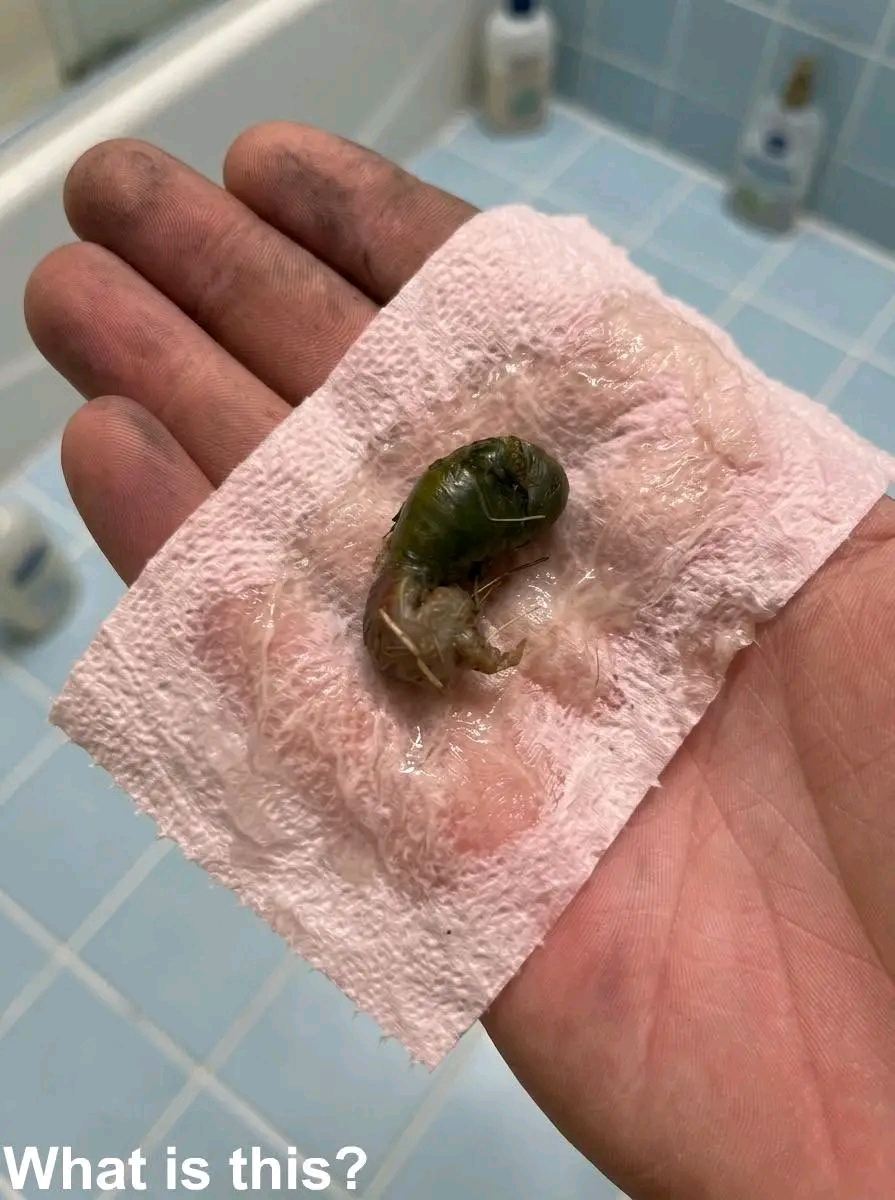
Initial Observations: What Does the Object Look Like?
The object appears to be:
Small and curved, roughly the size of a fingernail.
Greenish in color with some brownish or translucent areas.
Segmented or with a textured surface.
Attached to fibrous, root-like strands or hairs.
Moist or slimy in appearance.
These characteristics suggest it could be a biological specimen, possibly an insect pupa, a larva, a plant gall, or a piece of organic debris.
Possible Identifications
1. Insect Pupa or Larva
One of the most common explanations for such an object is that it is an insect pupa or larva. Many insects undergo metamorphosis, passing through a pupal stage where they transform from larvae to adults. Pupae often have a hardened outer shell and can be green or brown.
Examples: Butterfly or moth pupae, beetle larvae.
Characteristics: Curved shape, segmented body, sometimes with hairs or roots if attached to plant material.
2. Plant Gall or Seed Pod
Another possibility is that the object is a plant gall or a seed pod.
Plant Gall: Abnormal growths on plants caused by insects, mites, fungi, or bacteria. They can be green and have fibrous attachments.
Seed Pod: Some seeds or pods have unusual shapes and may appear similar.
3. Animal Parasite or Worm
Less commonly, it could be a parasite or worm that has been expelled or removed from an animal or human body.
Examples: Certain types of larvae or worms can appear greenish and segmented.
Note: If found on or in the body, medical advice should be sought.
4. Organic Debris or Mold
Sometimes, organic debris such as decayed plant material, mold, or fungal growths can take on unusual shapes and colors.
Biological Context: Understanding Insect Pupae
If the object is an insect pupa, here is some background information:
Metamorphosis: Insects like butterflies, moths, and beetles undergo complete metamorphosis: egg → larva → pupa → adult.
Pupal Stage: The pupa is a resting stage where the insect reorganizes its body.
Appearance: Pupae can be green, brown, or black, often camouflaged.
Duration: The pupal stage can last from days to months depending on species and environment.
What To Do If You Find Such an Object
Do Not Panic: Most such objects are harmless.
Avoid Direct Contact: Use gloves or tissue to handle.
Observe: Note where you found it and any other relevant details.
Research or Consult Experts: Use online resources or contact local entomologists or extension services.
Medical Attention: If found on or in the body, seek medical advice promptly.
Ecological Importance of Pupae and Larvae
Insects play vital roles in ecosystems:
Pollination: Many adult insects pollinate plants.
Decomposition: Larvae help break down organic matter.
Food Source: Insects are food for birds, mammals, and other animals.
Understanding these stages helps appreciate biodiversity and ecological balance.
Conclusion: Embracing Curiosity and Knowledge
The mysterious object in your hand is likely a natural biological specimen, possibly an insect pupa or larva. Such discoveries offer a glimpse into the hidden world around us and remind us of the complexity of life.
If you encounter similar objects, approach with curiosity and care, and consider consulting experts for precise identification.