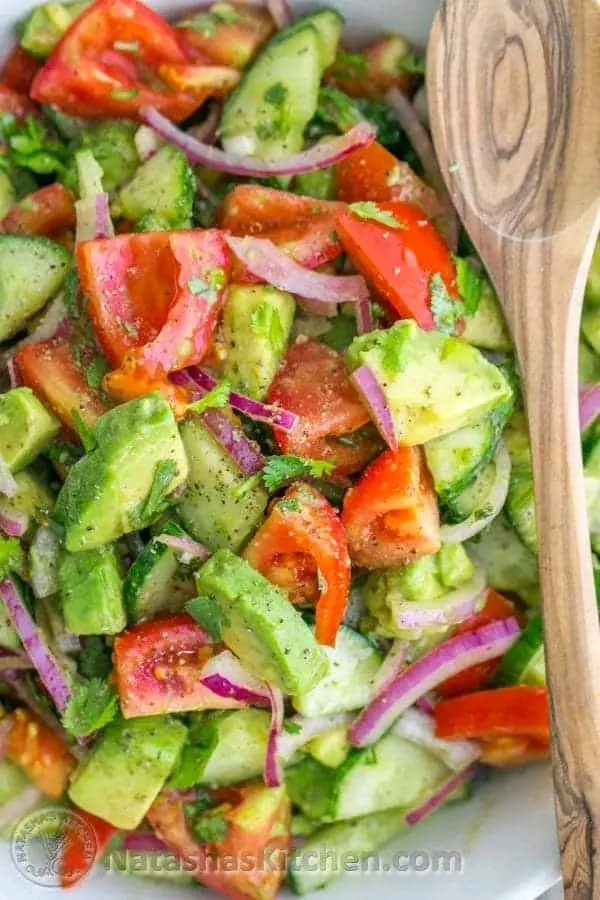
The Ultimate Cucumber, Tomato, and Avocado Salad: A Masterclass in Fresh Summer Flavors
There is a profound, undeniable beauty in culinary simplicity. In a world of overly complicated recipes, molecular gastronomy, and multi-day cooking processes, we often forget that the most extraordinary flavors come directly from the earth, entirely unadulterated. When the weather warms up, the sun shines brighter, and the local farmers’ markets overflow with vibrant colors, our palates naturally shift. We crave vibrancy, hydration, and crunch. We crave the ultimate, refreshing bite.
Today, we are diving deep into the absolute perfection of the Cucumber, Tomato, and Avocado Salad. This is not merely a side dish; it is a celebration of raw, whole ingredients. It is a harmonious symphony of textures—the crisp, watery snap of fresh cucumber, the juicy, acidic burst of ripe tomatoes, the luxurious, buttery creaminess of avocado, and the sharp, piquant bite of red onion, all tied together with a vibrant, herbaceous, citrus-kissed vinaigrette.
Whether you are hosting a massive backyard summer barbecue, looking for a light and nutrient-dense weekday lunch, or trying to find the perfect vibrant side dish to cut through the richness of grilled meats, this salad is your ultimate answer. In this comprehensive masterclass, we will explore the history of these flavor pairings, delve into the botany and culinary science of every single ingredient, master the knife skills required for perfect texture, and provide you with a foolproof recipe that will become a permanent staple in your culinary repertoire.
Chapter 1: The Philosophy of the Perfect Raw Salad
Creating a raw vegetable salad is fundamentally different from cooking a hot meal. When you apply heat to food, you rely on chemical reactions—like the Maillard reaction or caramelization—to build complex flavors. In a raw salad, you have nowhere to hide. The success of the dish relies entirely on two pillars: Ingredient Quality and Textural Contrast.
The Importance of Textural Contrast
Think about the most memorable meals you have ever eaten. They rarely consist of a single texture. Human beings crave variety in every bite. This salad is a masterclass in textural architecture.
The Crunch: Provided by the cucumber and the raw red onion. This stimulates the jaw and provides a deeply satisfying auditory and physical snap.
The Yield: Provided by the ripe tomatoes. They offer a slight resistance before bursting and flooding the palate with savory, sweet juices.
The Cream: Provided by the avocado. The high fat content coats the tongue, carrying the flavors of the vinaigrette and mellowing the sharp acidity of the tomatoes and onions.
The Flavor Matrix: Fat, Acid, Salt, and Allium
This salad perfectly balances the fundamental pillars of flavor. The avocado and olive oil provide the rich fat. The tomatoes and citrus juice provide the necessary acid to cut through that fat. The sea salt enhances every individual component, drawing out their natural waters and amplifying their inherent tastes. Finally, the red onion and fresh herbs provide the aromatic top notes—the pungent, earthy, and floral qualities that make the salad smell as incredible as it tastes.
Chapter 2: The Master Ingredient Deep-Dive
Because this recipe contains no cooking steps, your time in the kitchen will be spent entirely on selecting and preparing the produce. Understanding the nuances of these ingredients will elevate your salad from “good” to “restaurant-quality.”
1. The Tomatoes: The Heart of Umami
Tomatoes are the undisputed kings of the summer garden. Botanically a fruit, but culinarily treated as a vegetable, they are packed with glutamates—the naturally occurring compounds responsible for umami (the savory, meaty flavor profile).
Selecting the Perfect Tomato: For this salad, you want a tomato that balances juiciness with structural integrity.
Roma or Plum Tomatoes: These are excellent choices. They possess a thick, meaty flesh and fewer seeds and watery gel than standard slicing tomatoes, ensuring your salad doesn’t turn into a soup.
Cherry or Grape Tomatoes: If large tomatoes are out of season or looking pale at the grocery store, always opt for cherry or grape tomatoes. They are grown to retain their sweetness year-round. Simply halve or quarter them.
Heirloom Tomatoes: If it is peak summer, absolutely use heirloom varieties (like Cherokee Purple or Brandywine). They offer complex, sweet, and slightly smoky flavor profiles that hybrid grocery store tomatoes simply cannot match.
The Golden Rule of Tomatoes: Never, under any circumstances, store your tomatoes in the refrigerator. The cold temperature permanently permanently damages the flavor-producing enzymes and alters the cellular structure, turning the flesh mealy, grainy, and completely tasteless. Keep them on your countertop at room temperature, away from direct, scorching sunlight.
2. The Cucumbers: Hydration and Snap
Cucumbers are 95% water, making them incredibly hydrating and refreshing. However, standard slicing cucumbers (the thick, dark green ones covered in a heavy wax coating) can be problematic. The wax is unpleasant to eat, the skin is bitter, and the core is filled with massive, watery seeds that will dilute your dressing.
The Best Cucumbers for the Salad:
English (Hothouse) Cucumbers: These are the long, thin cucumbers often sold wrapped in plastic. They have paper-thin skins that do not require peeling, and their seeds are underdeveloped and nearly undetectable. They offer a pure, sweet cucumber flavor and a phenomenal crunch.
Persian Cucumbers: These are smaller, bumpier, and even crunchier than English cucumbers. They are incredibly sweet and completely seedless. If you can find them, they are the absolute best choice for this recipe.
Preparation Tip: If you only have access to standard garden cucumbers, you must peel the tough outer skin. Furthermore, slice the cucumber in half lengthwise and use a small spoon to scrape out and discard the watery, seed-filled center before chopping the firm flesh.
3. The Avocado: The Green Butter
The avocado elevates this dish from a simple side salad to a satiating, nutrient-dense powerhouse. Avocados are loaded with heart-healthy monounsaturated fats, fiber, and potassium.
Selecting and Ripening: You must use Hass avocados (the variety with the dark, bumpy, pebbly skin). They have the highest fat content, yielding the creamiest texture. Finding a perfectly ripe avocado is an art. Cradling it in the palm of your hand, give it a very gentle squeeze. It should yield slightly to the pressure but should not feel mushy or hollow. If it feels like a rock, it is underripe.
How to quick-ripen: Place rock-hard avocados in a brown paper bag with a ripe banana or apple. The other fruit releases ethylene gas, which is trapped in the bag and accelerates the avocado’s ripening process, often readying it within 24 to 48 hours.
The Anti-Browning Protocol: Avocados contain an enzyme called polyphenol oxidase. When the flesh is exposed to oxygen, this enzyme reacts and creates melanin, turning the beautiful green flesh an unappetizing brown. The acidic citrus juice in our dressing is not just for flavor; the ascorbic acid (Vitamin C) acts as a powerful antioxidant, completely halting the browning process and keeping your salad looking vibrant and fresh.
4. The Red Onion: The Essential Bite
Red onions provide the necessary sharp, sulfurous bite that wakes up the palate and cuts through the richness of the avocado. Visually, their vibrant purple-magenta rings add a stunning pop of color against the green and red backdrop.
Taming the Flame (The Ice Water Trick): Raw red onion can sometimes be overwhelmingly pungent, leaving a burning sensation on the palate and lingering on your breath for hours. To tame this astringency without losing the onion flavor or the crunch, employ this professional chef technique: Slice the red onion as thinly as humanly possible. Place the slices in a small bowl of freezing cold ice water for 10 to 15 minutes while you chop the other ingredients. The cold water crisp the onions further while drawing out the harsh sulfuric compounds. Drain them thoroughly and pat them dry with a paper towel before adding them to the salad. Alternatively, you can soak them in a splash of red wine vinegar to quickly pickle and soften them.
5. The Herbs: The Aromatic Crown
A salad without fresh herbs is a missed opportunity. Herbs act as the perfume of the dish.
Cilantro (Coriander): As pictured in the classic version of this dish, fresh cilantro provides a bright, citrusy, slightly peppery flavor that pairs miraculously with avocado and lime.
The Genetic Divide: It is a scientific fact that roughly 10% to 14% of the population possesses a specific olfactory receptor gene (OR6A2) that makes cilantro taste exactly like dish soap. If you or your guests have this gene, simply substitute the cilantro with Flat-Leaf Italian Parsley (for a clean, earthy flavor) or Fresh Dill (for a sweet, slightly anise-like flavor).
Chapter 3: The Science of the Perfect Vinaigrette
You do not need a store-bought, preservative-laden bottled dressing for this salad. Bottled dressings often contain thickeners (like xanthan gum), artificial flavors, and cheap, inflammatory seed oils. The perfect dressing for a cucumber tomato salad requires only four high-quality ingredients.
Extra Virgin Olive Oil (EVOO)
This is not the time to use vegetable oil, canola oil, or cheap cooking olive oil. You are eating the oil raw, so you will taste every nuance. Invest in a high-quality, cold-pressed Extra Virgin Olive Oil. Look for a harvest date on the bottle. A great EVOO will have a fruity, grassy, and slightly peppery finish that tickles the back of the throat. This rich oil will coat the vegetables and carry the fat-soluble flavor compounds across your palate.
The Acid: Lemon vs. Lime
Acid brightens the entire dish, making your mouth water.
Fresh Lemon Juice: Provides a classic, bright, Mediterranean flavor profile. It is clean, sharp, and highly aromatic.
Fresh Lime Juice: Provides a slightly sweeter, more tropical, and punchy acidity. Lime juice pairs exceptionally well if you are using cilantro, leaning the flavor profile towards a Mexican Pico de Gallo or Guacamole vibe.
Never use bottled citrus juice. It has been pasteurized and heavily oxidized, resulting in a flat, metallic, and completely dead flavor. Always squeeze fresh fruit.
The Seasoning
Sea Salt or Kosher Salt: Do not use iodized table salt; it has a harsh, chemical, metallic taste. Use a coarse Kosher salt or flaky sea salt. Salt draws the flavorful juices out of the tomatoes and cucumbers, mingling with the olive oil and citrus to create a self-saucing, magical elixir at the bottom of the bowl.
Freshly Cracked Black Pepper: Pre-ground pepper in a tin loses its volatile oils and aroma within weeks, tasting like spicy dust. Always use a pepper grinder. The floral, spicy notes of freshly cracked peppercorns elevate the sweet tomatoes beautifully.
The Emulsion
While you can simply pour the oil and lemon juice directly over the vegetables, whisking them together in a small bowl beforehand creates a temporary emulsion. The acid and fat suspend within each other, creating a slightly thicker dressing that clings beautifully to the smooth surfaces of the cucumbers and tomatoes, rather than instantly sliding off and pooling at the bottom of the bowl.
Chapter 4: Mastering Knife Skills and Preparation
How you cut your vegetables drastically affects how the salad tastes and feels in the mouth. Uniformity is key.
The Chef’s Knife: Ensure your standard chef’s knife is hone and razor-sharp for the cucumbers, onions, and avocado. A dull knife will crush the cellular walls of the vegetables, causing them to leak excess water and turn mushy.
The Serrated Knife: Tomatoes have a notoriously tough, smooth skin that resists a standard straight-edge blade. Unless your chef’s knife is terrifyingly sharp, use a small serrated utility knife (like a bread knife) to effortlessly saw through the tomato skin without squishing the delicate flesh underneath.
The Dice: Aim for bite-sized pieces. You want the cucumber, tomato, and avocado chunks to be roughly the same size (about 1/2 to 3/4 of an inch). This ensures that a single forkful contains a perfect, balanced ratio of all three main ingredients. The red onion should be sliced into thin half-moons or finely minced, depending on your textural preference.
The Order of Operations (Crucial Step)
Do not toss all the ingredients into a bowl and mix vigorously. Avocado is fragile. If you aggressively toss the salad with the avocado in it, the avocado will mash and dissolve into the dressing, turning the entire salad into a cloudy, green, unappetizing sludge.
Place the chopped tomatoes, cucumbers, red onions, and herbs into your large serving bowl.
Pour the prepared dressing over the top and toss gently to coat.
Add the diced avocado to the bowl last.
Using a large wooden spoon or a rubber spatula, fold the salad together incredibly gently, just 2 or 3 times, pulling from the bottom up, just to distribute the avocado without mashing it.
Chapter 5: Advanced Customizations and Variations
While the classic trinity of cucumber, tomato, and avocado is absolute perfection, this salad serves as an incredible blank canvas for culinary creativity. By adding a few strategic ingredients, you can transform this from a light side dish into a protein-packed main course, or adapt it to various global flavor profiles.
1. Adding Gourmet Proteins
To make this a complete, satiating meal, simply fold in a high-quality protein just before serving.
Grilled Lemon-Herb Chicken: Marinate chicken breasts in olive oil, lemon, oregano, and garlic, grill until charred, slice, and serve over the top of the salad.
Garlic Butter Shrimp: Plump, juicy shrimp quickly pan-seared in butter and garlic pair gorgeously with the avocado and citrus.
Plant-Based Power (Chickpeas): For a vegan main course, rinse and drain a can of chickpeas (garbanzo beans). Toss them in a little cumin and smoked paprika before folding them into the salad for a massive boost of plant protein and dietary fiber.
2. The Cheese Factor
Cheese adds a salty, creamy, and deeply savory element that contrasts beautifully with the crisp vegetables.
Feta Cheese: A classic Mediterranean addition. The briny, crumbly, sheep’s milk cheese acts as a perfect counterpoint to the sweet tomatoes.
Fresh Mozzarella (Bocconcini): Adding mini mozzarella balls (pearls) turns this into a vibrant, avocado-infused Caprese salad.
Goat Cheese (Chèvre): A softer, tangier option that adds a luxurious, velvety richness to every bite.
3. Global Flavor Profiles
By simply swapping out the herbs and tweaking the dressing, you can travel the culinary globe.
The Greek Variation: Use parsley and dill instead of cilantro. Add a teaspoon of dried oregano to the dressing. Fold in Kalamata olives, diced green bell peppers, and large chunks of Feta cheese.
The Middle Eastern Variation (Shirazi Style): Finely dice the cucumber and tomato much smaller. Use an abundance of fresh mint and parsley. Add a splash of pomegranate molasses or a dusting of Sumac to the dressing for a tart, fruity zing.
The Spicy Mexican Variation: Use fresh lime juice exclusively. Double the cilantro. Finely mince one fresh jalapeño or serrano pepper (seeds removed if you prefer less heat) and fold it into the vegetables.
Chapter 6: The Nutritional Powerhouse
Beyond its spectacular taste, this salad is a nutritional titan. It aligns perfectly with almost every modern dietary philosophy—it is naturally vegan, gluten-free, dairy-free, Paleo, Keto-friendly, and Whole30 compliant.
Heart-Healthy Fats: The Hass avocado is rich in oleic acid, a monounsaturated fat that has been scientifically shown to reduce inflammation and lower the risk of cardiovascular disease. Furthermore, these healthy fats are necessary to help your body absorb the fat-soluble vitamins (Vitamins A, D, E, and K) present in the other vegetables.
Lycopene: Tomatoes are the richest dietary source of lycopene, a powerful antioxidant linked to many health benefits, including a reduced risk of heart disease and certain types of cancer.
Hydration and Detoxification: Cucumbers provide immense cellular hydration and contain silica, a trace mineral that promotes joint health and glowing, elastic skin.
Immune Support: The raw red onions and fresh citrus juice provide a massive dose of Vitamin C and Quercetin, both of which are highly effective at boosting immune system function and combating free radicals in the body.
Chapter 7: Storage, Make-Ahead Tips, and Best Practices
One of the most frequently asked questions about this recipe revolves around preparation and storage. Because we are dealing with delicate, water-heavy vegetables and highly oxidative avocados, there are strict rules to follow.
Can I Make This Salad Ahead of Time?
The short answer is no. This is a “minute-of” salad.
If you make this salad, dress it, and leave it in the refrigerator for hours, a catastrophic culinary chain reaction occurs. The salt in the dressing will undergo osmosis, violently sucking all the water out of the cucumbers and tomatoes. The vegetables will become limp, shriveled, and rubbery. The bottom of the bowl will fill with an immense amount of watery liquid, severely diluting the dressing. Finally, despite the citrus juice, the avocado will eventually begin to brown and turn to mush.
The Make-Ahead Solution (Meal Prep Protocol): If you want to prepare this for a party or for quick lunches throughout the week, you must practice component separation.
Chop your cucumbers, tomatoes, and red onions. Store them together in an airtight glass container in the refrigerator for up to 3 days.
Whisk your dressing (olive oil, citrus, salt, pepper) in a small mason jar. Keep it on the counter or in the fridge.
Do not cut the avocado. Keep the avocado whole on the counter.
When you are ready to eat, simply scoop your pre-chopped vegetables into a bowl, dice half a fresh avocado into it, pour a splash of dressing over the top, and toss. You will have a perfect, crisp, vibrant salad in exactly 60 seconds.
Storing Leftovers
If you have dressed leftovers, you can store them in an airtight container in the fridge overnight. The next day, the vegetables will have lost their crunch, and the avocado will be very soft. It will not be visually stunning, but the flavor of the dressing will have deeply marinated into the vegetables. It is still perfectly safe and delicious to eat on day two, though it is best enjoyed folded into a warm pita bread or spooned over a bowl of quinoa where the textural degradation is less noticeable.
Chapter 8: Comprehensive Frequently Asked Questions (FAQ)
To ensure absolutely nothing stands between you and salad perfection, here are the answers to the most common troubleshooting questions from home cooks.
Q: My salad always ends up sitting in a massive pool of watery liquid. How do I prevent this? A: This happens for two reasons. First, you dressed the salad too early. Only add the salt and dressing immediately before serving. Second, you are using the wrong cucumbers or tomatoes. If using standard large slicing tomatoes, cut them open and gently squeeze out the seeds and watery gel before chopping the firm flesh. If using standard garden cucumbers, slice them in half and scrape out the seed cavity with a spoon before chopping.
Q: I hate the taste of raw olive oil. Can I use something else? A: Absolutely. While a high-quality Extra Virgin Olive Oil is traditional and provides immense health benefits, its grassy flavor isn’t for everyone. You can substitute it with Avocado Oil. Avocado oil has an incredibly neutral, mild flavor that will not overpower the vegetables, while still providing the necessary healthy fats to create the emulsion.
Q: Can I use dried herbs instead of fresh? A: In a cooked dish, dried herbs are a fantastic substitute. In a raw, fresh summer salad, they are highly discouraged. Dried cilantro, parsley, or dill lack the vibrant, bright essential oils of their fresh counterparts and often taste like dusty grass. If you absolutely cannot find fresh herbs, it is better to omit them entirely and let the flavor of the citrus and vegetables shine, rather than ruining the texture with dry flakes.
Q: How do I pick an avocado that isn’t brown inside? A: The “button” trick is the most reliable method. Locate the small, dry stem stub (the button) at the top of the avocado. Flick it off with your thumb. If it comes off easily and reveals bright, vibrant green underneath, the avocado is perfectly ripe and beautiful. If it reveals brown underneath, the avocado is overripe and rotting inside. If the button refuses to come off at all, the avocado is underripe.
Q: Is balsamic vinegar a good substitute for lemon juice? A: A high-quality, thick, aged balsamic glaze is a wonderful addition to a tomato salad, particularly if adding mozzarella. However, standard, thin balsamic vinegar is very dark and heavily flavored. If you use it as the primary acid in this specific recipe, it will turn the bright green avocado into a muddy, grey, unappetizing color, and the heavy grape-must flavor will completely overpower the delicate cucumber. Stick to clear acids: fresh lemon, lime, white wine vinegar, or apple cider vinegar.
The Ultimate Master Recipe: Cucumber, Tomato, and Avocado Salad
Here is the distilled, precise formula to create this culinary masterpiece. Read through the entire recipe before beginning to ensure your workflow is seamless.
Prep time: 15 minutes Cook time: 0 minutes Total time: 15 minutes Yields: 4 to 6 generous side servings Cuisine: Mediterranean / American Summer Dietary: Vegan, Gluten-Free, Keto, Paleo, Whole30
The Ingredient List
For the Salad Base:
1 large English (Hothouse) Cucumber, or 4 small Persian cucumbers (unpeeled, diced into 1/2-inch pieces)
4 medium Roma (Plum) tomatoes, or 1 dry pint of Cherry tomatoes (diced or halved)
2 large, perfectly ripe Hass Avocados (peeled, pitted, and diced into 3/4-inch chunks)
1/2 small Red Onion (sliced paper-thin into half-moons, or finely minced)
1/4 cup fresh Cilantro or Flat-Leaf Parsley (leaves and tender stems finely chopped)
For the Zesty Vinaigrette:
3 Tablespoons high-quality Extra Virgin Olive Oil
2 Tablespoons freshly squeezed Lemon Juice or Lime Juice (about 1 medium lemon/lime)
1/2 teaspoon fine Sea Salt (or more to taste)
1/4 teaspoon freshly cracked Black Pepper
Step-by-Step Instructions
Tame the Onion (Optional but Recommended): If you are sensitive to the sharp bite of raw onion, place your thinly sliced red onion in a small bowl of ice-cold water. Let it soak for 10 minutes. Drain it completely and pat the slices dry with a paper towel.
Prepare the Vinaigrette: In a small mason jar or a small mixing bowl, combine the extra virgin olive oil, freshly squeezed lemon (or lime) juice, sea salt, and freshly cracked black pepper. Secure the lid on the jar and shake vigorously for 10 seconds, or whisk rapidly in the bowl until the dressing is emulsified and slightly cloudy. Set aside.
Combine the Hearty Vegetables: In a large, beautiful serving bowl, combine the diced cucumbers, diced tomatoes, the prepared red onions, and the freshly chopped cilantro (or parsley).
Dress the Salad: Pour the prepared vinaigrette evenly over the vegetables in the bowl. Using a large wooden spoon, toss the vegetables vigorously until they are thoroughly coated in the dressing.
The Delicate Finish: Add the diced avocado chunks to the bowl last. Using a rubber spatula or your wooden spoon, fold the avocado into the salad with extreme care. Lift from the bottom of the bowl and gently fold over, repeating just 2 or 3 times. Do not overmix, or the avocado will mash and ruin the visual appeal.
Taste and Serve: Immediately taste a cucumber and tomato together. If the flavors do not instantly pop, add another tiny pinch of sea salt. Serve immediately to enjoy the ultimate crunchy, creamy, fresh texture.
Conclusion
The art of the perfect summer salad lies not in culinary complexity, but in an uncompromising respect for high-quality, fresh ingredients. The Cucumber, Tomato, and Avocado Salad is a testament to this philosophy. By balancing the hydrating crunch of the cucumber, the savory acidity of the tomato, the luxurious richness of the avocado, and the sharp aromatic bite of the red onion and herbs, you create a dish that is infinitely greater than the sum of its parts.
Armed with the knowledge of ingredient selection, proper knife skills, and the science of the emulsion, you are no longer just following a recipe; you are orchestrating flavor. So, head to your local farmers’ market, sharpen your chef’s knife, embrace the vibrant colors of summer, and prepare to serve a salad that will be requested at every gathering for years to come. Happy chopping, and enjoy the profound, refreshing taste of pure, unadulterated nature!