The Great Debate: Is it Shepherd’s Pie or Cottage Pie? (And How to Make the Best One Ever)
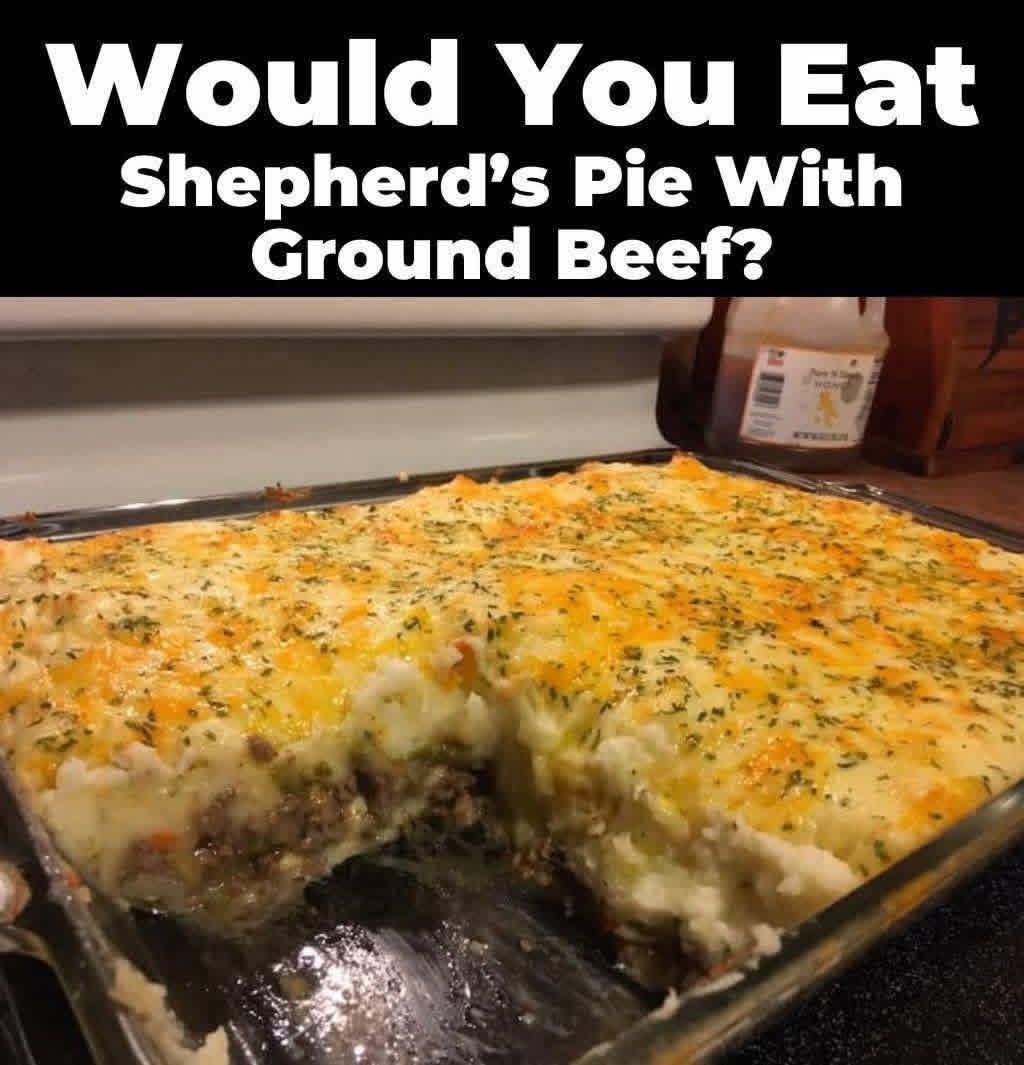
In the world of comfort food, few dishes reign as supreme as the meat-and-potato pie. It is the culinary equivalent of a warm blanket on a rainy Tuesday. But as the image above asks: “Would you eat Shepherd’s Pie with ground beef?” Before we dive into the kitchen, we have to address the “elephant in the pantry.” Technically, if you use ground beef, you are making a Cottage Pie. If you use ground lamb, you are making a Shepherd’s Pie (because shepherds herd sheep, not cows!).
However, in modern kitchens across the globe, the terms are used interchangeably. Whether you call it Cottage or Shepherd’s, the goal remains the same: a rich, savory meat base topped with a cloud of buttery, golden-brown mashed potatoes. In this 3,000-word guide, we are going to master the Ground Beef Edition—the ultimate “Cottage Pie” that will convince even the toughest food critics.
Part I: The Anatomy of the Perfect Pie
To create a pie that doesn’t turn into a soupy mess or a dry brick, you must understand the three pillars of construction:
1. The Umami Base
The meat layer shouldn’t just be “browned beef.” It needs layers of flavor. This comes from the Maillard reaction (searing the meat), a proper mirepoix (onions, carrots, and celery), and a concentrated sauce spiked with Worcestershire and tomato paste.
2. The Structural Integrity
A common mistake is a runny meat filling that causes the potato topping to sink. We solve this using a light dusting of flour to create a thick, velvety gravy that holds the peas and carrots in suspension.
3. The “Glass” Crust
The best part of this dish is the texture of the potatoes. We don’t just want mashed potatoes; we want a topping that is fluffy on the inside with a “shattered glass” crispy texture on the top.
Part II: The Ultimate Beef “Shepherd’s” Pie Recipe
The Ingredient List
For the Meat Filling:
- 2 lbs Ground Beef: Use an 80/20 or 85/15 lean-to-fat ratio. You want some fat for flavor, but too much will make the pie greasy.
- The Aromatics: 2 large yellow onions (diced), 3 medium carrots (small dice), 2 celery stalks (finely chopped), and 4 cloves of minced garlic.
- The Flavor Boosters: 2 tbsp Tomato paste, 2 tbsp Worcestershire sauce, 1 tsp dried thyme, 1 tsp dried rosemary, and 2 bay leaves.
- The Liquids: 2 cups high-quality beef stock and ½ cup dry red wine (optional, but highly recommended for depth).
- The Veggies: 1 ½ cups frozen peas (added at the very end to keep them bright).
- The Thickener: 2 tbsp All-purpose flour.
For the Potato Topping: - 3 lbs Russet or Yukon Gold Potatoes: Russets provide fluffiness; Yukons provide creaminess. A 50/50 mix is the “chef’s secret.”
- The Dairy: ½ cup unsalted butter, ¾ cup heavy cream (warmed), and ½ cup sour cream (for a slight tang).
- The Secret Weapon: 2 egg yolks (this helps the potatoes “set” and brown beautifully).
- The Cheese: 1 ½ cups Sharp Cheddar cheese, shredded (divided).
- Seasoning: Salt, white pepper, and a pinch of freshly grated nutmeg.
Part III: Step-by-Step Execution
Step 1: The Foundation (The Meat)
In a large cast-iron skillet or heavy-bottomed pot, brown the beef over medium-high heat. Do not crowd the pan; work in batches if necessary to ensure the meat sears rather than steams. Once browned, remove the meat and drain all but 2 tablespoons of the fat.
Add your onions, carrots, and celery to the fat. Cook until the onions are translucent and the carrots have softened slightly. Stir in the garlic and tomato paste, cooking for 2 minutes until the paste turns a dark brick red.
Step 2: Building the Gravy
Sprinkle the flour over the vegetables and stir for one minute. This cooks out the “raw” flour taste. Slowly pour in the red wine to deglaze the pan, scraping up all those flavorful brown bits (fond) from the bottom.
Add the beef back in, followed by the beef stock, Worcestershire sauce, and herbs. Simmer uncovered for 20 minutes. You want the liquid to reduce until it’s a thick, glossy sauce. Stir in the frozen peas at the very last second.
Step 3: The Cloud Topping
While the meat simmers, boil your peeled and quartered potatoes in salted water until fork-tender.
Pro-Tip: Dry your potatoes! After draining, put them back in the hot pot for 60 seconds to let the residual steam evaporate. This prevents “watery” mash.
Pass the potatoes through a potato ricer for a lump-free texture. Fold in the butter, warm cream, sour cream, and half of the cheese. Finally, whisk in the egg yolks.
Step 4: Assembly and The “Fork Technique”
Spread the meat mixture into a 9×13 glass baking dish. Spoon the potatoes over the top, starting from the edges to “seal” the meat in, then moving to the center.
Use a fork to create deep ridges and peaks across the surface of the potatoes. These ridges will catch the heat and turn into crispy, golden-brown shards. Sprinkle the remaining cheese and a bit of dried parsley over the top.Step 5: The Bake
Bake at 400°F (200°C) for 25–30 minutes. If the top isn’t as brown as you’d like, pop it under the broiler for the last 2 minutes.
Part IV: Customization and Variations
The Vegetarian “Shepherdess” Pie
Swap the beef for a mixture of brown lentils and finely chopped mushrooms. The mushrooms provide the “meaty” texture and hit of umami that lentils lack on their own.
The Low-Carb Alternative
Swap the mashed potatoes for a Mashed Cauliflower topping. To ensure it isn’t watery, roast the cauliflower instead of boiling it before mashing it with cream cheese and parmesan.
Part V: Why This Dish Works (The Science)
This recipe relies on stratification. By chilling the meat layer slightly before adding the potatoes, you prevent the two layers from mixing. The egg yolks in the potatoes undergo a process called denaturation, where the proteins uncoil and bond together, creating a stable structure that prevents the mash from collapsing into the gravy.
Furthermore, the addition of nutmeg to the potatoes isn’t just for flavor—it enhances the perception of “creaminess” without adding extra fat.Conclusion: The Ultimate Comfort
So, would you eat Shepherd’s Pie with ground beef? The answer is a resounding yes. While purists might insist on calling it Cottage Pie, the result is the same: a soul-warming, budget-friendly masterpiece that feeds a crowd and tastes even better the next day.
Have a secret ingredient for your mashed potato topping? Let us know in the comments! If you enjoyed this recipe, subscribe to our newsletter for weekly comfort food masterclasses.