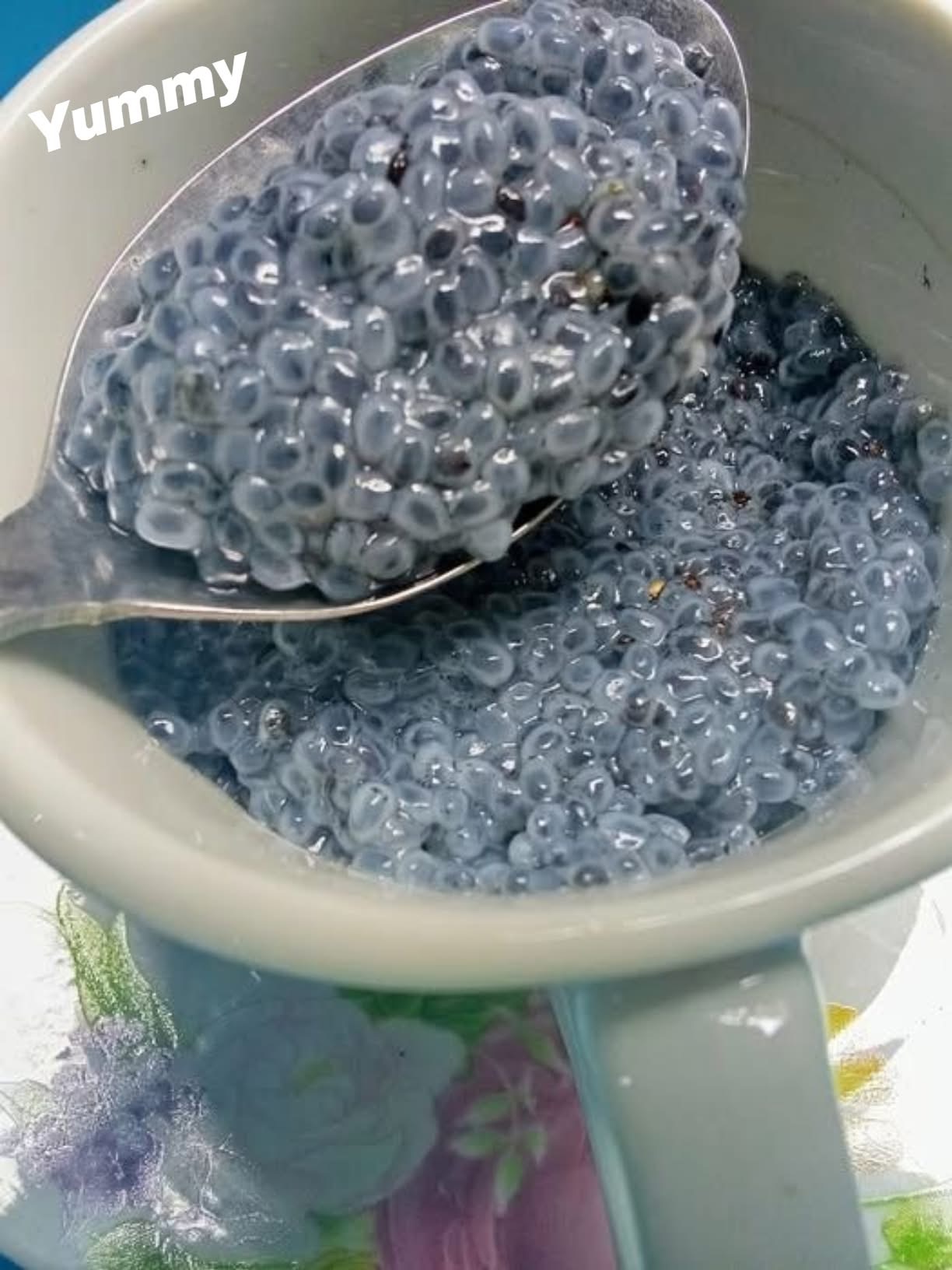
The photo you shared shows a spoon heaped with small, translucent blue spherical pearls (or balls) that look glossy, jelly-like, and appetizing—labeled “Yummmmy” for good reason! These captivating blue orbs are a trendy, visually striking ingredient popular in desserts, drinks, and snacks, especially in Asian-inspired cuisines and modern bubble tea/fusion recipes.
Most likely, these are blue tapioca pearls (boba) naturally colored using butterfly pea flower (Clitoria ternatea), a vibrant blue edible flower. This creates a stunning sapphire hue without artificial dyes, and it’s a popular hack for “color-changing” or Instagram-worthy treats. In some cases, they could be soaked basil seeds (sabja/tukmaria seeds) tinted blue (e.g., in a butterfly pea drink), but the uniform size, density, and lack of visible inner seed suggest tapioca-based pearls more strongly. Basil seeds typically show a tiny black center when swollen, while these appear solidly translucent blue.
These blue pearls burst with a chewy, bouncy texture—soft on the outside, slightly firm inside—and carry subtle sweetness if soaked in syrup. They’re often added to chilled drinks, coconut milk puddings, falooda-style desserts, or even fruit salads for that fun “pop” and mesmerizing color.
What Exactly Are Tapioca Pearls (Boba)?
Tapioca pearls come from cassava root starch (tapioca starch), a gluten-free, neutral-flavored ingredient processed into small spheres. Traditional boba is black/brown (from caramelized brown sugar), but creative versions use natural colorants like:
- Butterfly pea flower (dried or fresh petals/tea) for electric blue
- Sometimes combined with pandan, matcha, or fruit for other shades
The blue version exploded in popularity thanks to its photogenic quality and the “magic” color-shift effect (turns purple with lemon/acid addition in drinks).
Health Benefits and Nutritional Profile
Butterfly pea flower isn’t just pretty—it’s packed with antioxidants (anthocyanins), which give the blue pigment and offer anti-inflammatory, brain-boosting, and eye-health perks. Tapioca itself is mostly carbs for energy, low in fat/protein, but the pearls add fun texture without heavy calories when portioned right.
- Butterfly pea benefits — May support hair/skin health, reduce stress, aid digestion.
- Basil seeds (if that’s the case) — High in fiber, omega-3s, help hydration, cooling effect in traditional medicine (great for hot climates like Morocco).
- Overall: Low-calorie add-on (about 100–150 kcal per ½ cup cooked pearls), naturally vegan/gluten-free.
How to Make Blue Tapioca Pearls at Home (Butterfly Pea Boba Recipe)
Making your own blue boba is straightforward, rewarding, and way cheaper than buying pre-made. This recipe yields about 2–3 cups of pearls—enough for multiple servings.
Ingredients (for blue pearls):
- 1 cup tapioca starch (plus extra for dusting)
- ¾–1 cup boiling water (infused with butterfly pea flower for color)
- ¼ cup sugar (optional, for sweetness)
- 10–15 dried butterfly pea flowers (or 1–2 tbsp butterfly pea powder/tea)
- For cooking: Large pot of water
Steps:
- Infuse the color — Steep dried butterfly pea flowers in 1 cup boiling water for 10–15 minutes until deep blue. Strain out flowers. (Use powder for stronger color.)
- Make dough — In a bowl, mix tapioca starch + sugar. Slowly pour in hot blue water while stirring with chopsticks/spoon until shaggy dough forms. Knead 5–10 minutes until smooth, non-sticky (add starch if too wet).
- Shape pearls — Roll into long ropes (½ cm thick), cut into small pieces, roll into balls. Dust with starch to prevent sticking.
- Cook — Boil a large pot of water. Add pearls, stir to avoid clumping. Boil 20–30 minutes until they float and turn translucent. Simmer covered 20–30 more minutes.
- Sweeten & store — Drain, rinse in cold water. Soak in simple syrup (equal sugar + water, boiled) for 30 minutes for sweetness/chewiness.
- Use — Add to iced tea, milk, coconut drinks, or desserts. Best fresh (they harden if refrigerated long).
Tips:
- For extra chew: Use brown sugar syrup soak.
- Color intensity varies—more flowers/powder = deeper blue.
- If you want popping boba style (liquid-filled), that’s different (needs special equipment).
Popular Ways to Enjoy Blue Pearls
- Butterfly Pea Milk Tea / Boba — Brew blue tea, add milk/coconut milk, sweetener, ice, and pearls. Stir for creamy blue swirls.
- Blue Falooda — Layer with rose syrup, milk, vermicelli, basil seeds, jelly, nuts, and blue pearls for a Persian/Indian classic twist.
- Coconut Sago Pudding — Simmer blue pearls in coconut milk + sugar, chill, top with fruits.
- Lemonade Color-Change Drink — Blue pearls in butterfly pea lemonade—add lemon and watch it turn purple!
- Yogurt Parfait or Smoothie Bowl — Mix into Greek yogurt with fruits for texture and color pop.
- Açai or Smoothie Bowls — Top blue pearls for visual contrast.
Why This Viral Appeal?
Social media loves anything visually dramatic—blue is rare in natural foods! The pearls’ jewel-like shine, combined with the “yummy” chew, makes them irresistible for photos (your pic proves it). In places like Thailand, Vietnam, Indonesia, and increasingly worldwide, blue boba/falooda drinks are summer staples.
If you’re in Beni Mellal, look for butterfly pea flowers online (Amazon, specialty spice shops) or tapioca starch in supermarkets. Local Moroccan/Arab markets might carry sabja seeds (for a similar gel texture, though not blue naturally).