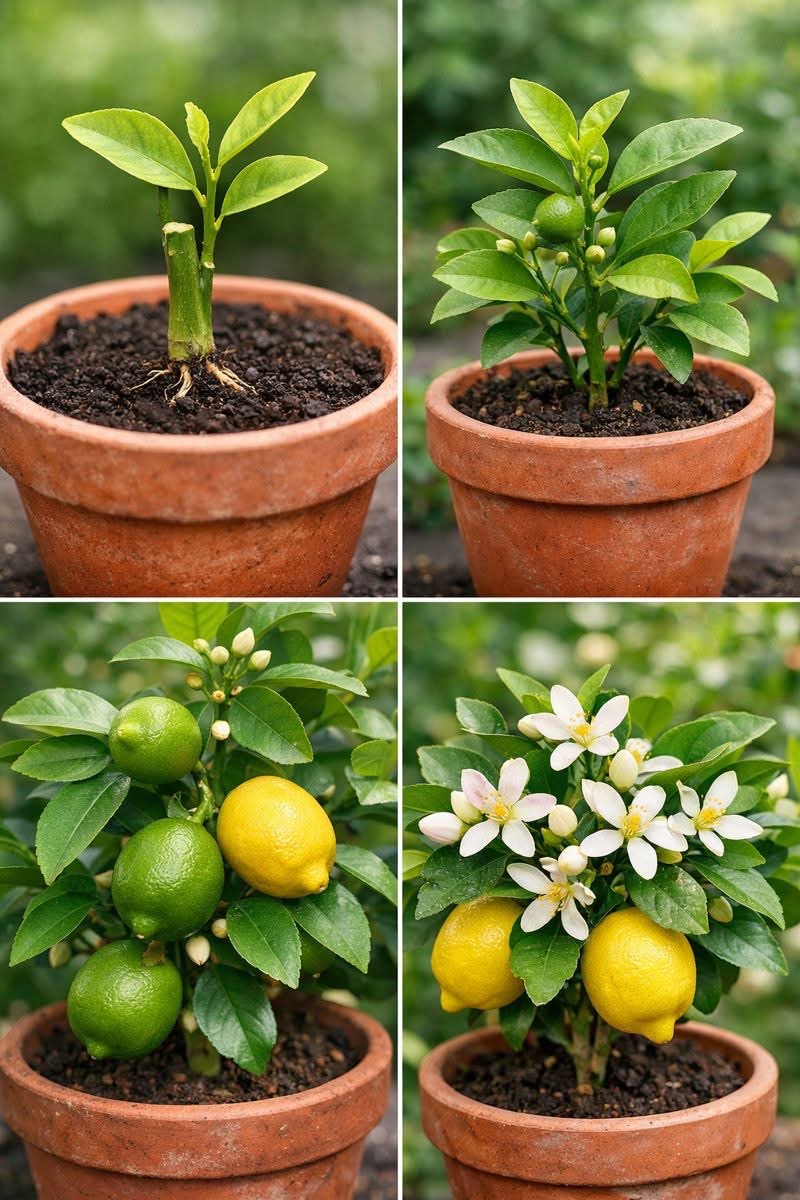
1. Choosing the Right Lemon Tree Variety for Pots
Not all lemon trees suit container growing. Standard varieties can reach 20+ feet, but dwarf or semi-dwarf types stay manageable (typically 4–10 feet max, often pruned smaller).
Top recommendations for pots:
- Improved Meyer Lemon — The most popular choice worldwide for containers. It’s a hybrid (lemon × mandarin) with sweeter, thinner-skinned fruit, fewer seeds, and excellent flavor. It fruits year-round in good conditions, is cold-hardy to about 25–30°F (-4 to -1°C), self-fertile, and thrives indoors.
- Dwarf Lisbon Lemon — Classic tart lemon taste, thorny but productive.
- Dwarf Eureka Lemon — Similar to Lisbon but often more compact.
- Other options: Bearss Lime (if you want limes), Calamondin (for small ornamental fruit), or Kaffir Lime (fragrant leaves for cooking).
Avoid starting from seed unless for fun—seedlings take 5–15 years to fruit and may not be true to type. Buy a grafted dwarf tree (1–3 years old) from a nursery for faster fruit (often 1–3 years).
2. Selecting the Perfect Pot and Location
Pot size matters hugely. Start small to avoid overwatering issues:
- Young tree (1–2 ft): 10–14 inch diameter pot.
- Mature (3–6 ft): 18–24 inch diameter, eventually up to 24–30 inches.
- Always use pots with large drainage holes (multiple ½–1 inch holes). Terracotta or unglazed ceramic is ideal—it breathes and prevents root rot (though heavy). Plastic or resin works if lightweight mobility is needed. Avoid dark-colored pots that heat up roots in sun.
Location:
- Indoors — South-facing window with 6–8+ hours direct sun daily. Supplement with full-spectrum grow lights (12–14 hours/day) if natural light is limited, especially in winter.
- Outdoors — Full sun (8+ hours). In Beni Mellal’s climate (warm days, cooler winters), move indoors if nights drop below 10°C consistently.
- Temperature: Day 18–27°C, night 13–18°C. Protect from drafts, heaters, or cold windows.
- Humidity: 40–60%. Use a pebble tray with water or humidifier indoors.
3. The Best Soil Mix for Potted Lemon Trees
Citrus hates “wet feet.” Soil must drain fast yet retain some moisture and nutrients. pH ideally 6.0–7.0 (slightly acidic).
Recommended mix (DIY or buy citrus-specific):
- 5 parts pine bark fines (or orchid bark) — for drainage and aeration.
- 1 part perlite or pumice — improves drainage.
- 1 part quality potting soil or compost — nutrients and slight moisture hold. Alternative simple mix: 50% citrus potting mix + 50% perlite, or ⅓ peat moss + ⅓ perlite + ⅓ composted pine bark.
Avoid heavy garden soil or pure peat—it compacts and causes root rot. Add a handful of worm castings or slow-release citrus fertilizer at planting.
4. Planting and Repotting Step-by-Step
- Place a layer of broken pottery or screen over drainage holes (prevents soil loss).
- Fill bottom ¼ with soil mix.
- Remove tree from nursery pot, gently tease roots if circling.
- Position so crown (where trunk meets roots) sits 1–2 inches below pot rim.
- Fill around roots, firm gently, water thoroughly until drainage flows.
- Mulch top with bark or pebbles (retains moisture, looks nice).
Repotting:
- Every 2–3 years for young trees (spring).
- When roots fill pot or growth slows.
- Upsize pot by 2–4 inches each time.
- For mature trees: Refresh top 4–6 inches soil annually instead of full repot.
5. Watering – The Most Critical Factor
Overwatering kills more potted citrus than anything else.
- Rule: Water when top 2–3 inches of soil are dry (use finger test or moisture meter).
- Frequency: Every 7–14 days indoors; more often outdoors in heat (daily in summer if small pot).
- Method: Water deeply until it runs out bottom, then empty saucer. Never let sit in water.
- Signs of issues:
- Yellow leaves + wet soil → overwatering/root rot.
- Drooping + dry soil → underwatering.
- In Beni Mellal’s semi-arid climate, pots dry faster outdoors.
Use room-temperature water (avoid cold tap shocking roots). Rainwater or filtered is best—tap water buildup can cause leaf tip burn.
6. Fertilizing for Fruit Production
Potted trees deplete nutrients fast—feed regularly during growth.
- Best fertilizer: Citrus-specific (high nitrogen first, then balanced). Examples: 2-1-1 or 3-1-1 ratio (N-P-K), or slow-release granules.
- Schedule:
- Spring–summer (active growth): Every 4–6 weeks, half-strength liquid or per label.
- Early spring: High-nitrogen for leaves.
- Summer: Balanced for flowers/fruit.
- Fall: Reduce or stop.
- Winter: Minimal or none.
- Micronutrients: Add chelated iron, magnesium, zinc if leaves yellow (common indoors).
- Organic options: Compost tea, fish emulsion, or citrus tone.
Too little fertilizer → small/pale leaves, no fruit. Too much → salt buildup (flush soil monthly).
7. Pruning and Shaping Your Tree
Pruning keeps it compact, encourages bushiness, and improves air flow/fruiting.
- Best time: Late winter/early spring (before new growth).
- Tools: Clean, sharp bypass pruners.
- Remove:
- Dead, damaged, crossing branches.
- Suckers below graft union.
- Branches touching soil or growing inward.
- Shape: Open center for light penetration. Cut back leggy growth by ⅓.
- Pinch tips on young trees to encourage branching.
- Avoid heavy pruning on flowering/fruiting branches.
8. Pollination, Flowering, and Fruiting
Meyer lemons often self-pollinate, but help indoors:
- Gently shake branches or use soft brush to transfer pollen.
- Flowers: Fragrant white, appear spring–fall.
- Fruit set: Takes 6–9 months to ripen (green → yellow).
- Thin fruit if overloaded (keep 1–2 per cluster) to avoid branch break.
Expect first fruit 1–3 years after purchase.
9. Common Problems and Solutions
Pests:
- Spider mites (webbing, stippling): Increase humidity, spray neem oil or insecticidal soap weekly.
- Scale/mealybugs (bumps, sticky honeydew): Rub with alcohol/Q-tip, then neem.
- Aphids/whiteflies: Hose off or soap spray.
- Citrus leafminer (wiggly trails in leaves): Prune affected, use systemic insecticide if severe.
Diseases:
- Root rot (Phytophthora): Yellow/wilting, mushy roots → Improve drainage, repot in fresh mix.
- Sooty mold: Black film from honeydew → Control pests.
- Leaf yellowing: Nutrient deficiency (iron), over/underwatering, pH issues.
- Fruit drop: Stress from temp swings, dry soil, or over-fertilizing.
Other issues:
- No fruit: Insufficient light, cold, or young tree.
- Leaf drop: Sudden change (move gradually).
10. Winter Care and Overwintering
In Beni Mellal (mild winters but occasional frost), keep outdoors if above 5°C. Otherwise:
- Move indoors gradually.
- Reduce water/fertilizer.
- Provide max light (grow lights essential).
- Watch for pests (indoor dry air encourages them).
11. Harvesting and Using Your Lemons
- Pick when fully yellow and slightly soft.
- Twist or cut with pruners.
- Uses: Fresh juice, zest, preserved lemons (Moroccan style!), cocktails, cleaning, etc.
- One mature tree can yield 20–50+ lemons/year.
12. Advanced Tips and Long-Term Success
- Companion planting: Basil or marigolds repel pests.
- Propagation: Air-layer or cuttings (root in spring).
- Organic approach: Neem, beneficial insects.
- Patience: Trees improve with age—year 3–5 often best production.
With consistent care—sun, proper watering, feeding, and occasional pruning—your potted lemon tree can live 20+ years and provide endless fresh lemons. The photos show exactly what’s possible!
If you’d like more details on any section (e.g., Moroccan climate adaptations, specific fertilizer brands available locally, or recipes using homegrown lemons), just ask! 🌿🍋