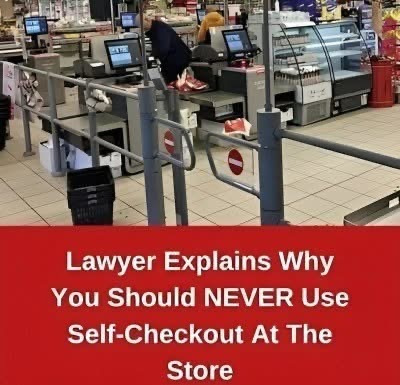
We’ve all experienced it — standing at a self-checkout station, scanning groceries, only to hear that robotic voice say:
“Place item in bagging area.”
And you’re thinking… I already did.
Self-checkout was supposed to make shopping easier: shorter lines, faster service, and more independence.
Instead, it has become a source of stress, embarrassment, and even false accusations.
In this article, we’ll uncover:
Why self-checkout machines are designed mainly to benefit stores, not shoppers
How they are being used to cut labor costs rather than improve service
Why innocent customers are sometimes accused of theft
How you can protect yourself the next time you shop
Let’s take a closer look at why these machines may be costing you more than just time.
The Rise of Self-Checkout – Convenience or Cost Cutting?
Self-checkout kiosks were introduced with a simple promise:
Scan. Pay. Go.
But behind the touchscreens and automated voices lies a strategy to reduce staffing costs — in some cases by as much as 66 percent.
Dr. Sylvain Charlebois, director of Dalhousie University’s Agri-Food Analytics Lab, explains:
“Retailers are not investing in customer convenience. They are investing in automation that improves their profit margins.”
Major chains such as Walmart, Target, and Kroger have expanded self-checkout systems while cutting back on cashier positions, pushing customers into a new and often frustrating shopping experience.
The result has been:
Longer lines
More stress and confusion
Frequent system errors
Less human help when problems occur
This shift isn’t about speed — it’s about transferring responsibility from trained employees to customers.
The Problem With Malfunctioning Machines
What companies rarely mention is that self-checkout machines frequently fail.
Common issues include:
Failure to recognize items
False error messages
Misread barcodes
Frequent need for employee overrides
Difficulty for seniors, children, and less tech-savvy users
A 2023 study found that more than 40 percent of shoppers encounter problems at self-checkout, and many abandon their purchases after repeated failures.
Yet stores continue replacing cashiers with machines that still require human intervention to function properly.
When Machines Accuse Innocent Shoppers of Theft
The most serious problem with self-checkout is not inconvenience — it is the growing number of theft accusations caused by system errors.
Reports now include:
Customers detained for simple scanning mistakes
False theft alerts triggered by faulty sensors
Employees misinterpreting honest errors as criminal behavior
Elderly and disabled shoppers being unfairly targeted
One widely shared story involved a woman accused of stealing produce because she forgot to weigh it — even though she had paid for her groceries.
Another shopper was stopped after a machine failed to register an item he had already scanned and bagged.
These cases are not isolated. They reflect a system that places the burden of perfection on customers while offering little protection when technology fails.
Who Struggles Most With Self-Checkout?
While some shoppers adapt easily, others face serious obstacles.
Groups most affected include:
Seniors, who may struggle with screens and sensors
Children, often left without assistance
Visually impaired shoppers, who face unreadable displays
People with disabilities, due to poor machine design
First-time users, who receive little guidance
What was meant to streamline shopping has instead created a digital barrier that leaves vulnerable groups behind.
What Retailers Gain — and What Customers Lose
Self-checkout benefits retailers in several ways:
Lower labor costs
Faster data collection
Detailed tracking of customer behavior
Stronger loss-prevention monitoring
For customers, however, the experience often means:
Little or no help when problems arise
Risk of being falsely accused
Slower checkout times due to machine errors
Constant interruptions and warnings
Pressure to perform perfectly
Ironically, many stores still employ security staff to watch self-checkout lanes, meaning they are not truly saving money — they are simply replacing cashiers with surveillance.
Real Stories of Unfair Treatment
Case 1: The Elderly Shopper
An older woman was stopped after the machine failed to register her items, even though she had paid. She was questioned for nearly 20 minutes and threatened with police involvement over a system malfunction.
Case 2: The Teenager
A student attempted to scan a book that the machine repeatedly rejected. After struggling for 15 minutes, he left without it — only to be stopped and accused of attempted theft.
These incidents show how easily innocent mistakes can be turned into serious accusations.
Is Self-Checkout Really Good for Business?
Despite rapid expansion, self-checkout has created long-term problems.
Evidence suggests:
Customer complaints are increasing
Shoplifting has not decreased and may be rising
Peak-hour frustration is growing
Loss-prevention teams are overwhelmed by false alerts
Most concerning is the use of unreliable technology as justification for detaining customers who committed no crime.
How to Protect Yourself at Self-Checkout
If you must use self-checkout, follow these tips:
- Scan slowly and carefully
Rushing increases the chance of errors and false alerts. - Keep your receipt
A printed or digital receipt is your proof of payment. - Stay nearby if there is a problem
Do not walk away until an employee resolves the issue. - Know your rights
Remain calm, request a manager, and do not admit guilt if you did nothing wrong. - Report false accusations
File a complaint with store management and corporate offices if you are treated unfairly.