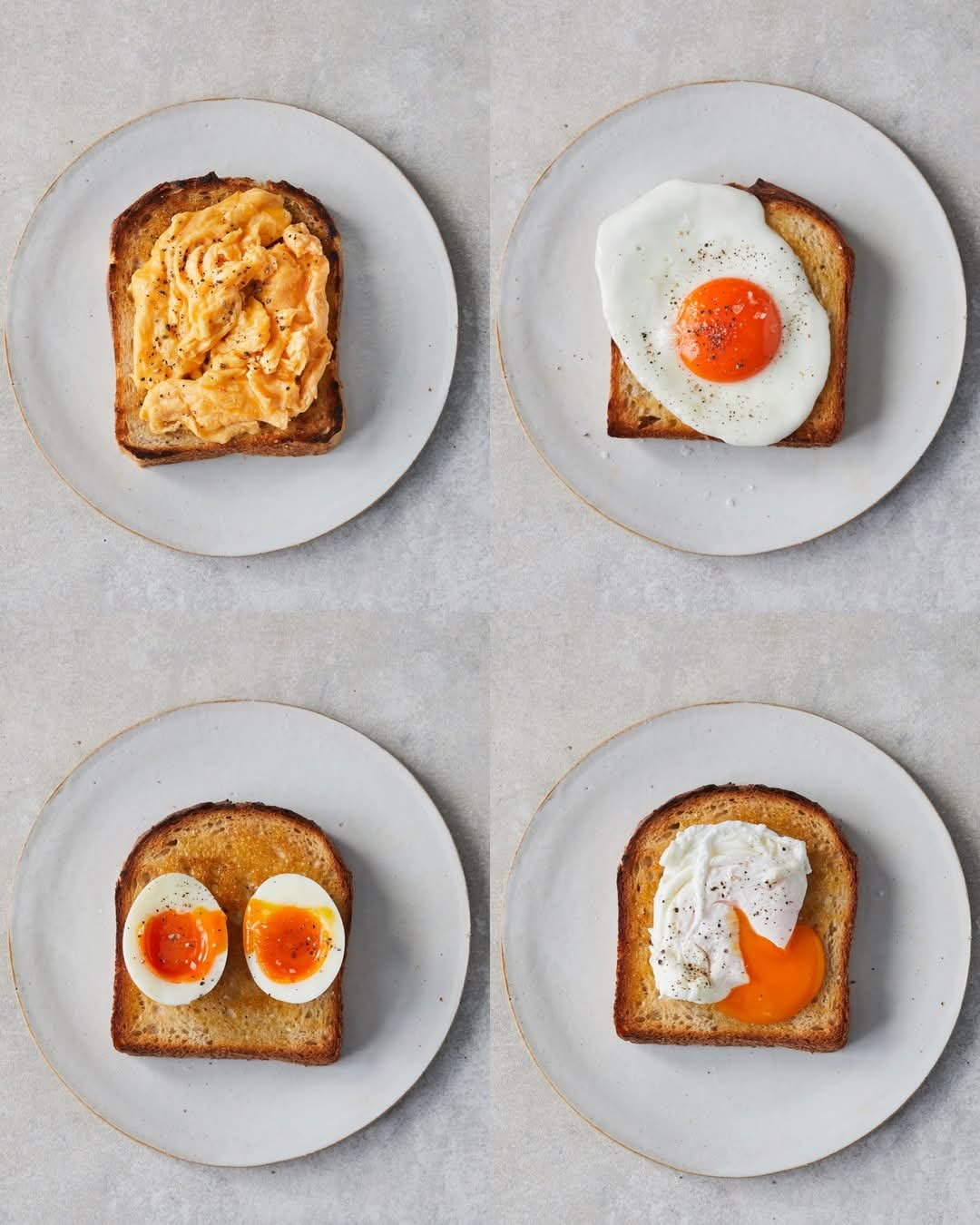
The Ultimate Guide to Eggs on Toast: Four Classic Ways to Prepare the Perfect Breakfast
Eggs on toast is one of those timeless dishes that feels both simple and profoundly satisfying. It’s a breakfast (or brunch, or late-night supper) that can be whipped up in minutes yet delivers layers of comfort, texture, and flavor. Whether you prefer your yolks runny and luxurious or your eggs fluffy and creamy, there is a preparation method that will speak directly to your mood.
In this comprehensive guide, we’ll explore four classic ways to serve eggs on toast:
- Creamy Scrambled Eggs
- Sunny-Side-Up Fried Eggs
- Soft-Boiled Eggs (halved)
- Perfectly Poached Eggs
Each method will include detailed ingredients, equipment notes, step-by-step instructions, troubleshooting tips, variations, and pairing suggestions. By the end of this post, you’ll be equipped to make restaurant-quality eggs on toast in your own kitchen—every single time.
This recipe is designed for 1–2 servings per method (easily scalable), and the total preparation time ranges from 5 to 15 minutes depending on the technique.
Why Eggs on Toast Never Gets Old
The combination of crisp, buttery toast and rich, warm eggs is universally beloved for good reason. The toast provides structure and crunch, while the eggs bring creaminess, protein, and that irresistible golden yolk. It’s a dish that spans cultures—from British “eggs on soldiers,” to French oeufs à la coque with toast fingers, to American diner-style sunny-side-up on rye.
Nutritionally, eggs are a powerhouse: one large egg delivers about 6 grams of high-quality protein, healthy fats, choline, lutein, and zeaxanthin for eye health, plus vitamins D, B12, and riboflavin. Paired with whole-grain or sourdough toast, you get complex carbohydrates and fiber for sustained energy.
The beauty of this dish lies in its versatility. You can keep it minimalist with just salt and pepper, or elevate it with herbs, cheese, hot sauce, or smoked salmon.
Essential Ingredients & Equipment (Shared Across All Methods)
Ingredients
- 2–4 large fresh eggs (preferably free-range or organic for better flavor and color)
- 2–4 thick slices of good bread (sourdough, brioche, country loaf, or whole-grain)
- Unsalted butter (for toasting and finishing)
- Fine sea salt
- Freshly ground black pepper
- Optional flavor boosters: chives, parsley, chili flakes, truffle oil, grated Parmesan, hot sauce
Equipment
- Non-stick or well-seasoned cast-iron skillet (for scrambled and fried)
- Small saucepan with lid (for soft-boiled)
- Medium saucepan (for poaching)
- Slotted spoon
- Toaster or stovetop skillet for bread
- Timer (critical for soft-boiled and poached)
Tip: Always start with room-temperature eggs for more even cooking.
Perfect Toast: The Foundation of Every Great Plate
Great eggs deserve great toast. Here’s how to get it right every time.
- Choose thick slices (about ¾–1 inch) so the toast can stand up to runny yolks without turning soggy.
- Butter both sides generously—this creates golden edges and rich flavor.
- Toaster method: Toast to medium-dark for maximum crunch.
- Stovetop method (preferred for buttery results): Heat a heavy skillet over medium heat. Add a knob of butter, let it foam, then add the bread slices. Cook 2–3 minutes per side until deep golden. Press gently with a spatula for even contact.
- Season the hot toast lightly with sea salt while it’s still warm.
Keep toast warm in a low oven (200°F/90°C) if preparing multiple portions.
Method 1: Creamy Scrambled Eggs on Toast
Scrambled eggs should be soft, billowy, and just set—never dry or rubbery.
Ingredients (1 generous serving)
- 3 large eggs
- 2 Tbsp heavy cream or whole milk
- 1 Tbsp unsalted butter
- Salt and pepper
- Chives (optional garnish)
- 2 thick slices toast
Step-by-Step Instructions
- Prep: Crack the eggs into a bowl. Add cream/milk and a pinch of salt. Whisk gently until just combined—do not overbeat (you want streaks of white and yolk for creamier curds).
- Heat the pan: Place a non-stick skillet over low-medium heat. Add the butter and let it melt slowly until it just begins to foam (do not let it brown).
- Cook slowly: Pour in the egg mixture. Wait 10–15 seconds until the edges barely start to set, then use a silicone spatula to gently push the eggs from the edges toward the center in slow, sweeping motions.
- Low and slow is key: Continue folding gently. The eggs will gradually form soft curds. Remove from heat when they are 80–90% set—they will continue cooking from residual heat. Total cooking time: 2–4 minutes.
- Season and finish: Add a final pinch of salt and plenty of black pepper. Fold in chives if using.
- Assemble: Pile the creamy eggs high on hot, buttered toast. Finish with extra pepper and a pat of butter if you’re feeling decadent.
Troubleshooting & Tips
- Eggs too dry? You cooked too long or on too high heat. Always err on the side of underdone.
- Want French-style scrambled eggs? Use even lower heat and constant stirring for tiny, velvety curds (takes 8–10 minutes).
- Variation: Add grated Gruyère or cheddar in the last 30 seconds for cheesy scrambled eggs.
Method 2: Sunny-Side-Up Fried Eggs on Toast
The classic runny yolk that spills luxuriously over crisp toast.
Ingredients (1 serving)
- 2 large eggs
- 1 Tbsp unsalted butter or neutral oil
- Salt and pepper
- 2 slices toast
Step-by-Step Instructions
- Heat the pan: Use a non-stick or well-seasoned skillet over medium-low heat. Add butter or oil and let it shimmer.
- Crack the eggs: Gently crack eggs into the pan, keeping them separate. Immediately lower heat to low.
- Baste for even cooking (optional but recommended): Tilt the pan slightly and spoon hot fat over the whites repeatedly until they are just set but the yolk remains liquid (about 3–4 minutes total).
- Alternative steam method for fully set whites without flipping: After 2 minutes, add 1 tsp water to the pan and cover with a lid for 30–60 seconds. The steam sets the top perfectly.
- Season: Sprinkle salt and pepper directly on the eggs while hot.
- Assemble: Slide the eggs carefully onto hot toast. The yolk should burst beautifully when cut.
Troubleshooting & Tips
- Broken yolk? Crack eggs into a small bowl first, then slide gently into the pan.
- Whites not setting evenly? Use fresher eggs—they hold shape better.
- Variation: Basted eggs (spoon hot butter over yolk for partial cooking) or “over-easy” by flipping briefly.
Method 3: Soft-Boiled Eggs on Toast
Perfectly runny yolks with set whites, served halved over toast for easy dipping or spreading.
Ingredients (1 serving)
- 2–3 large eggs (room temperature)
- Salt and pepper
- 2 slices toast
Step-by-Step Instructions
- Boil water: Bring a small saucepan of water to a rolling boil.
- Lower eggs: Gently lower room-temperature eggs into the boiling water using a slotted spoon.
- Time precisely:
- 6 minutes for very runny yolk
- 6½ minutes for jammy yolk
- 7 minutes for just-set but still soft yolk
- Ice bath: Immediately transfer eggs to an ice-water bath for 1 minute to stop cooking and make peeling easier.
- Peel carefully: Tap the wider end (air pocket) first, peel under cool running water.
- Assemble: Place hot toast on a plate. Halve the warm eggs directly over the toast so the yolks spill out. Season generously with salt and pepper.
Troubleshooting & Tips
- Eggs cracking? Add a pinch of salt or vinegar to the boiling water, or prick the wide end with a pin before boiling.
- Cold eggs? Add 30 seconds to cooking time.
- Classic British “dippy eggs”: Serve whole in egg cups with toast “soldiers” (strips) for dipping.
Method 4: Perfectly Poached Eggs on Toast
Silky whites enveloping a molten yolk—no vinegar swirl required if you follow this method.
Ingredients (1 serving)
- 2 large fresh eggs (freshest possible)
- Salt and pepper
- 1 tsp white vinegar (optional, helps whites coagulate)
- 2 slices toast
Step-by-Step Instructions
- Prepare water: Bring a medium saucepan of water to a gentle simmer (small bubbles on bottom, not rolling boil). Add vinegar if using.
- Strain eggs (pro tip for neat shape): Crack each egg into a fine-mesh sieve over a bowl. Let the watery white drain away, then transfer to a small ramekin.
- Create gentle vortex (optional): Stir water in a circle, then stop stirring.
- Slide eggs in: Gently tip each egg into the water. Cook undisturbed for 3 minutes (runny yolk) to 4 minutes (medium).
- Remove: Lift out with a slotted spoon. Drain briefly on a paper towel.
- Assemble: Place on hot buttered toast. Season and serve immediately.
Troubleshooting & Tips
- Wispy whites? Use the sieve trick and very fresh eggs.
- Overcooked? Practice with a timer—poaching is quick.
- Variation: Eggs Benedict (add hollandaise and ham/Canadian bacon).
Flavor Variations & Serving Suggestions
Herb & Cheese
- Chives, parsley, tarragon
- Grated Parmesan, feta crumbles, or goat cheese
Spicy
- Chili flakes, sriracha, or harissa
- Avocado slices and hot sauce
Luxury
- Truffle oil or shaved truffle
- Smoked salmon and dill
Hearty
- Sautéed spinach or mushrooms
- Crispy bacon or sausage on the side
Global Twists
- Shakshuka-style: nestle sunny-side-up eggs in spiced tomato sauce on toast
- Mexican migas: scrambled eggs with tortilla strips and salsa
Beverage Pairings
- Freshly brewed coffee or espresso
- Orange juice or mimosa
- Earl Grey tea for soft-boiled eggs
Final Thoughts
Eggs on toast is more than just a quick meal—it’s a canvas for creativity and comfort. Master these four methods and you’ll always have a delicious, protein-packed option ready in minutes. Experiment, adjust seasoning to taste, and most importantly, enjoy that first glorious bite when the yolk meets the toast.