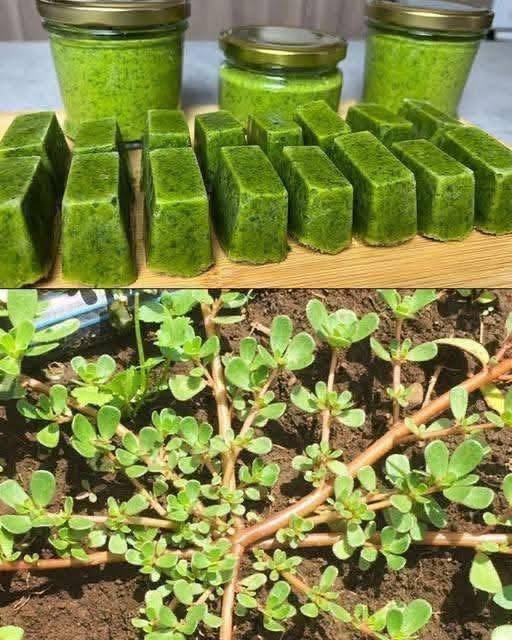
Purslane, scientifically known as Portulaca oleracea, is a humble yet extraordinary plant that has been valued for centuries across many cultures. Often dismissed as a common weed, purslane is in fact a nutritional powerhouse and a versatile culinary and medicinal herb. The image above beautifully illustrates purslane in two important stages: fresh purslane growing abundantly in soil, and preserved purslane transformed into green cubes and jars, ready for long-term use. This article explores purslane in depth, from its history and nutritional value to its uses, preservation methods, and health benefits.
Introduction to Purslane
Purslane is a succulent leafy green with small oval leaves and reddish stems. It thrives in warm climates and grows easily in gardens, fields, and even sidewalk cracks. Despite its simple appearance, purslane is one of the most nutrient-dense leafy vegetables known, earning recognition from nutritionists and traditional healers alike.
Historical and Cultural Background
Purslane has a long and rich history. It was consumed in ancient Egypt, Greece, and Rome, where it was praised for its cooling and healing properties. Hippocrates mentioned purslane as a medicinal plant, and it was commonly used in traditional Chinese medicine, Ayurveda, and Middle Eastern cuisine. In Morocco and across North Africa, purslane has been used both as food and as a natural remedy for generations.
Botanical Description and Growth
Purslane is a low-growing, spreading plant with smooth, fleshy leaves that retain moisture. It is highly resilient and drought-tolerant, making it an excellent plant for sustainable gardening. The plant grows quickly and can be harvested multiple times during the season. Every part of the plant above ground is edible, including the leaves and tender stems.
Nutritional Profile
One of the most remarkable qualities of purslane is its nutritional composition. It is one of the richest plant sources of omega-3 fatty acids, even surpassing some fish in concentration. Purslane is also rich in vitamins A, C, and E, as well as minerals such as magnesium, potassium, calcium, and iron. Additionally, it contains powerful antioxidants like betalains, flavonoids, and glutathione.
Health Benefits of Purslane
Purslane offers numerous health benefits. Its omega-3 fatty acids support heart health, reduce inflammation, and help regulate cholesterol levels. The antioxidants help protect cells from oxidative stress and slow down aging processes. Purslane is known to support digestive health, improve skin conditions, regulate blood sugar levels, and strengthen the immune system. Traditionally, it has been used to cool the body, soothe inflammation, and promote wound healing.
Culinary Uses of Fresh Purslane
In the kitchen, purslane is incredibly versatile. Fresh purslane has a slightly tangy, lemony flavor with a pleasant crunch. It can be eaten raw in salads, blended into smoothies, added to soups and stews, or sautéed with garlic and olive oil. In many Mediterranean and Middle Eastern dishes, purslane is combined with yogurt, tomatoes, onions, or eggs.
Preservation and Transformation Methods
The image shows purslane preserved in the form of green cubes and stored in jars, a modern and practical way to enjoy this plant year-round. One popular method is blending fresh purslane with a small amount of water or olive oil and freezing it in ice cube trays. Once frozen, the cubes can be stored in jars or freezer bags. This method preserves most of the nutrients and allows easy portioning for cooking.
Uses of Frozen Purslane Cubes
Frozen purslane cubes are extremely convenient. They can be added directly to soups, sauces, rice dishes, pasta, smoothies, or herbal teas. They are also used in natural remedies, where purslane is valued for its detoxifying and anti-inflammatory effects. Having purslane preserved in this way ensures that its benefits are available even when the plant is out of season.
Purslane in Natural and Traditional Medicine
In traditional medicine, purslane has been used to treat digestive issues, skin irritations, fever, and urinary problems. It is often considered a cooling herb, helpful in reducing internal heat and inflammation. Modern research continues to confirm many of these traditional uses, highlighting purslane’s antimicrobial, anti-diabetic, and neuroprotective properties.
Environmental and Economic Value
Purslane is also environmentally valuable. It requires minimal water, grows without fertilizers, and improves soil health. Because it grows abundantly and regenerates quickly, it provides an affordable and accessible source of nutrition, especially in low-resource settings.
Conclusion
Purslane is far more than a simple garden plant. It is a nutrient-rich superfood, a healing herb, and a sustainable crop that deserves greater appreciation. From fresh leaves growing in the soil to neatly preserved green cubes in jars, purslane represents a perfect harmony between nature and mindful food preservation. Incorporating purslane into daily life—whether fresh or preserved—is a simple yet powerful step toward better health and sustainable living.