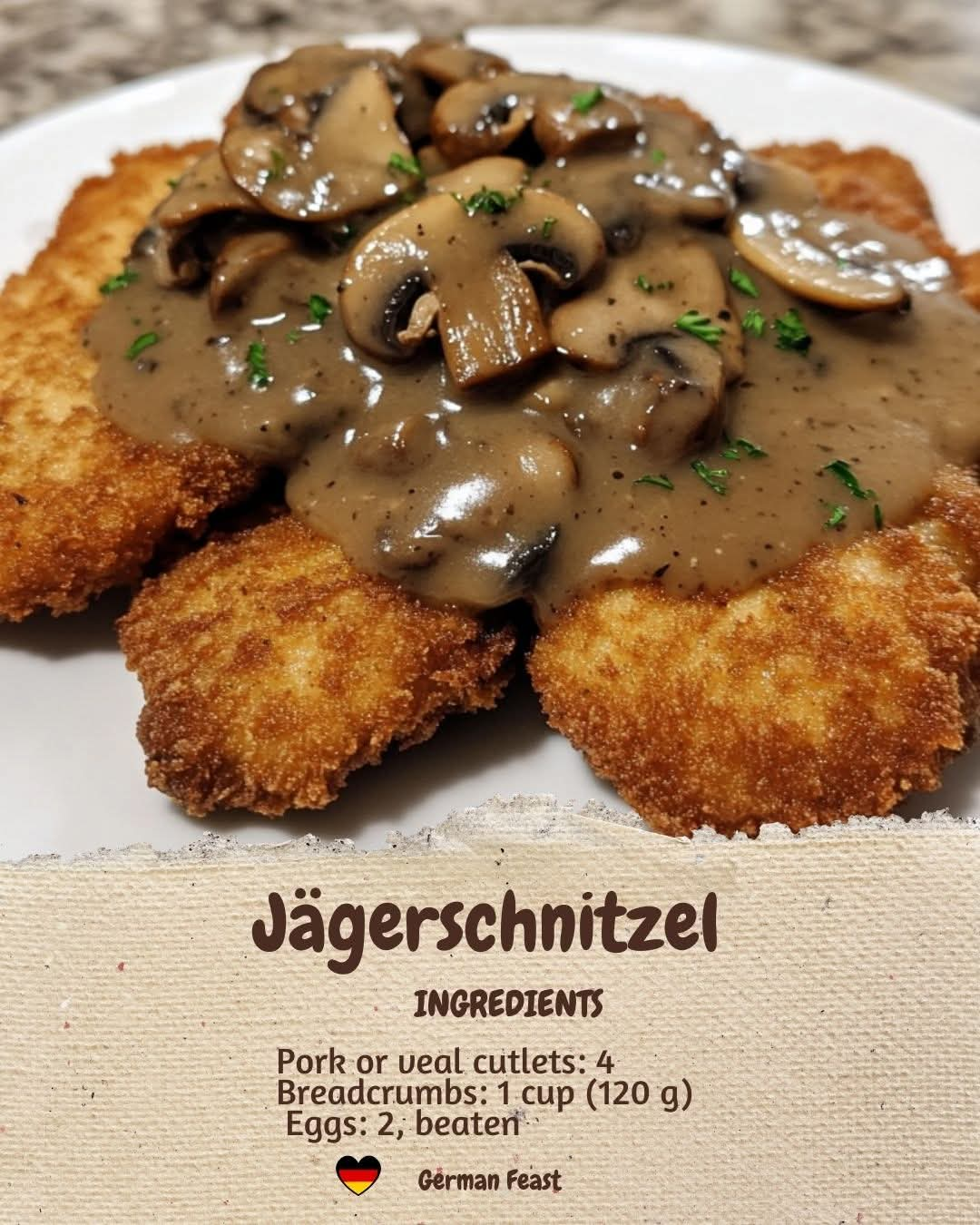
Jägerschnitzel: The Ultimate Guide to Germany’s Beloved Hunter’s Schnitzel
Jägerschnitzel (often spelled Jaegerschnitzel or Jagerschnitzel) is one of the most iconic and comforting dishes in German cuisine. Translating literally to “hunter’s cutlet,” this hearty meal features tender, crispy-fried pork (or sometimes veal) cutlets topped with a rich, savory mushroom gravy known as Jägersoße. It’s a staple in German restaurants, beer halls, and home kitchens, especially during Oktoberfest celebrations or chilly evenings when you crave something warm, satisfying, and full of flavor.
The dish evokes images of hunters returning from the forest with wild game, mushrooms foraged along the way, and a hearty sauce to bring it all together. While modern versions most often use pork, its origins tie back to rural German traditions where wild meats like venison or boar were pounded thin, fried, and smothered in earthy mushroom sauce. Today, it’s a beloved comfort food enjoyed across Germany, Austria, and beyond — even influencing dishes like American chicken-fried steak through German immigrants.
What makes Jägerschnitzel so special is the perfect contrast: the crispy golden breading giving way to juicy, tender meat inside, all crowned with a deeply flavorful mushroom gravy that’s creamy, savory, and utterly addictive. Whether you’re new to German cooking or looking to perfect your family recipe, this detailed guide will walk you through everything — from history and variations to pro tips, step-by-step instructions, and serving ideas.
A Brief History of Jägerschnitzel
The concept of schnitzel dates back centuries, with roots in Austrian Wiener Schnitzel (breaded veal cutlet). Jägerschnitzel emerged as a regional variation, likely in the 19th century, incorporating hunter-inspired elements: mushrooms (foraged in forests), onions, and sometimes bacon or wine to mimic a hearty hunter’s stew.
In traditional rural Germany, hunters would prepare simple, satisfying meals using available ingredients — wild game, forest mushrooms (like chanterelles or pfifferlinge), and basic seasonings. Over time, pork became the go-to protein due to its affordability and availability, and the dish spread nationwide. In East Germany (former GDR), a completely different version existed: breaded sausage slices with tomato sauce and noodles — but the classic West German/Austrian style with mushroom gravy is what most people know today.
Variations of Jägerschnitzel
Jägerschnitzel isn’t one-size-fits-all — regional and personal preferences create endless variations:
- Breaded vs. Unbreaded — Most common today is breaded (Wiener-style) schnitzel topped with gravy. Some purists insist on unbreaded cutlets (simply seasoned and pan-fried) because heavy sauce can make breading soggy. Both are authentic depending on the region.
- Meat Choices — Pork (Schweineschnitzel base) is standard, but veal, chicken, turkey, or even wild game (venison, boar) work beautifully. Veal offers a more delicate flavor, while pork provides richer taste.
- Sauce Styles — The gravy can be:
- Dark brown (beef broth base, often with tomato paste and paprika)
- Creamy (with heavy cream or crème fraîche)
- With bacon or pancetta for smokiness
- Enhanced with wine (white for brightness, red for depth), brandy, or sherry
- Mushroom Varieties — Button or cremini for everyday; wild mixes like chanterelles, porcini, shiitake, or oyster for gourmet depth.
- Other Schnitzel Relatives — Rahmschnitzel (cream sauce), Zigeunerschnitzel (“gypsy” sauce with peppers), or plain Schweineschnitzel with lemon.
The breaded version with creamy-brown mushroom gravy is the crowd-pleaser we’ll focus on here.
Ingredients (Serves 4 Generously)
For the Schnitzel:
- 4 boneless pork cutlets or chops (about 120–150g each; loin or tenderloin works best)
- Salt and freshly ground black pepper
- 1 cup (120g) all-purpose flour
- 2 large eggs, beaten with a splash of milk
- 1–1½ cups (120–180g) plain breadcrumbs (panko for extra crunch)
- Neutral oil (vegetable, canola, or avocado) for shallow frying — enough to let cutlets “swim”
For the Rich Mushroom Gravy (Jägersoße):
- 1 lb (450g) fresh mushrooms (cremini, button, or mixed wild), cleaned and sliced
- 1 medium onion, finely diced
- 2–3 slices bacon, diced (optional but adds incredible depth)
- 2–3 Tbsp butter or oil
- 2 Tbsp all-purpose flour
- 2 cups (480ml) beef broth (or vegetable for lighter version)
- ½–¾ cup (120–180ml) heavy cream (or crème fraîche)
- 1 Tbsp tomato paste (for color and umami)
- 1 tsp paprika (sweet or smoked)
- ½ tsp dried thyme or fresh sprigs
- Splash of white wine, brandy, or sherry (optional, ~¼ cup)
- Salt, pepper, and fresh parsley for garnish
Step-by-Step Instructions
Preparing the Schnitzel
- Pound the Cutlets — Place each cutlet between plastic wrap or parchment. Using a meat mallet (flat side), gently pound to ¼-inch (6mm) thickness. This ensures even cooking and tenderness. Pat dry with paper towels.
- Season — Sprinkle both sides generously with salt and pepper.
- Set Up Breading Station — Three shallow dishes: flour (seasoned with salt/pepper), beaten eggs, and breadcrumbs.
- Bread the Cutlets — Dredge each in flour (shake off excess), dip in egg, then coat in breadcrumbs. Press lightly but don’t smash — you want loose crumbs for crispiness. Fry immediately to avoid sogginess.
Frying the Schnitzel
- Heat the Oil — In a large skillet, heat ½-inch oil to 330–350°F (165–175°C). Use enough oil for shallow frying (cutlets should “float” slightly).
- Fry — Cook 2–3 cutlets at a time (don’t overcrowd). Fry 2–3 minutes per side until deep golden brown. Internal temp should reach 145°F (63°C) for pork.
- Drain — Transfer to paper towels. Keep warm in a low oven (200°F/95°C) if needed.
Pro Tip: Fry right before serving — schnitzel is best crispy!
Making the Mushroom Gravy
- Cook the Base — In a large pan, melt butter over medium-high. Add bacon (if using) and cook until crisp. Remove bacon, leave fat.
- Sauté Aromatics — Add onion; cook until soft and translucent (5 mins).
- Mushrooms — Add mushrooms, season with salt/pepper. Cook 8–12 minutes until browned and moisture evaporates (stir occasionally).
- Thicken — Stir in tomato paste and flour; cook 1–2 minutes to remove raw taste.
- Build the Sauce — Deglaze with wine/brandy (if using), then gradually add broth while stirring. Simmer 10–15 minutes until thickened.
- Finish — Stir in cream, thyme, paprika, and reserved bacon. Simmer 5 more minutes. Adjust seasoning. Add cornstarch slurry if too thin.
Assembly and Serving
Plate the hot schnitzel and spoon generous mushroom gravy over the top (or serve sauce on the side to preserve crispiness). Garnish with chopped fresh parsley.
Classic Sides (make it a full German feast):
- Spätzle (egg noodles)
- Bratkartoffeln (German fried potatoes)
- Kartoffelsalat (potato salad)
- Sauerkraut or red cabbage
- Fresh green salad or cucumber salad
- Crusty bread for soaking up sauce
Pair with a cold German beer (Pilsner, Hefeweizen, or Märzen) — or Riesling wine.
Pro Tips for the Best Jägerschnitzel
- Use quality pork — fresh, not frozen — for best texture.
- Don’t over-pound — thin but not torn.
- Fresh breadcrumbs > store-bought for better crunch.
- For ultra-crispy: Double-dip in egg and breadcrumbs.
- Sauce timing — make gravy first; it reheats well.
- Mushroom choice — mix varieties for deeper flavor.
- Avoid soggy breading — serve sauce separately if preferred.
- Leftovers — Store separately; re-crisp schnitzel in oven/air fryer at 400°F (200°C) for 6–8 mins.
Jägerschnitzel is more than a meal — it’s a hug on a plate, bringing together crispy perfection and earthy richness. Whether for a cozy dinner or Oktoberfest party, this dish never fails to impress. Guten Appetit! 🇩🇪🍄