Introduction
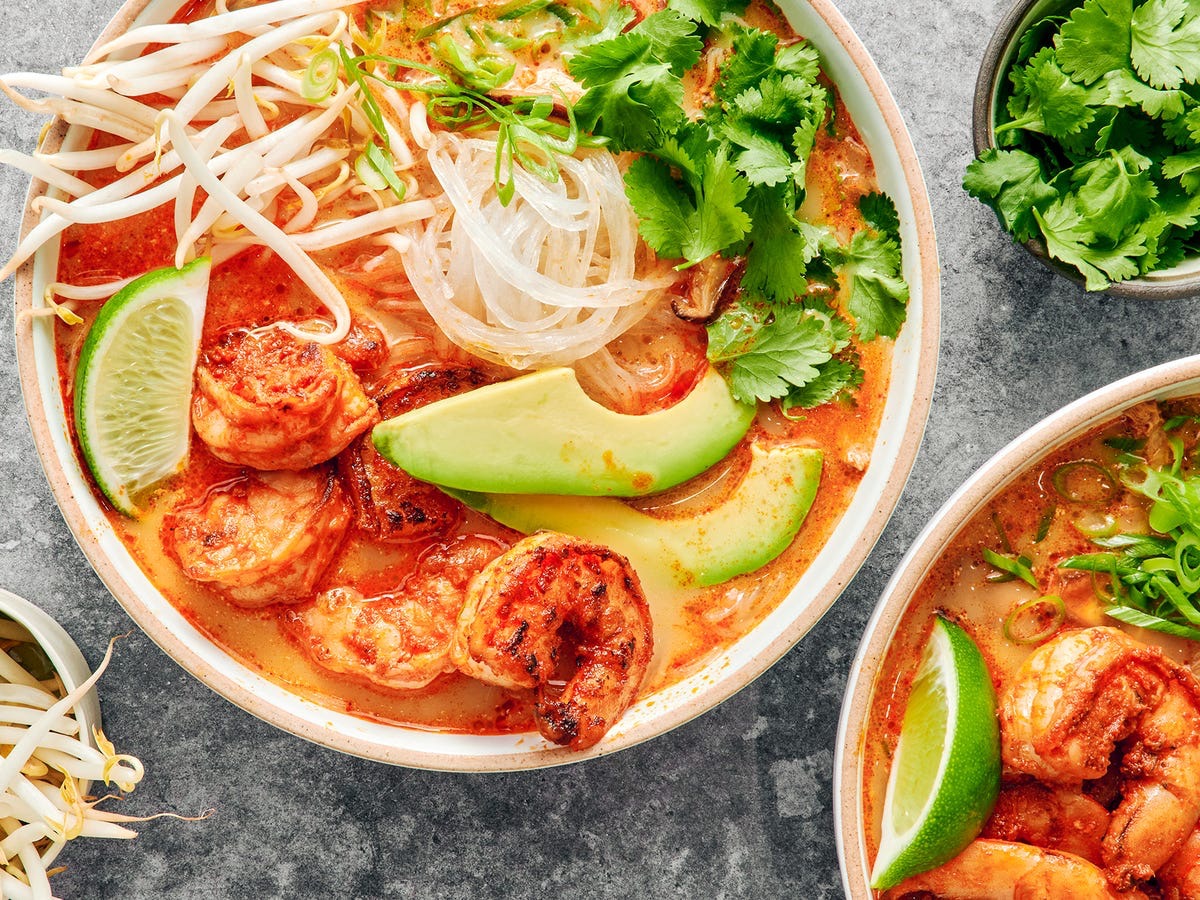
Thai Red Curry Shrimp Noodle Soup is a vibrant, aromatic dish that embodies the bold flavors of Thai cuisine. This comforting soup features succulent shrimp swimming in a creamy, spicy broth made from coconut milk and red curry paste, intertwined with tender rice noodles and fresh vegetables. It’s a perfect balance of heat, sweetness, creaminess, and tanginess, often garnished with lime and herbs for an extra zing. Originating from the heart of Thailand, this soup is ideal for a quick weeknight meal or a cozy gathering, offering a taste of Southeast Asia right in your bowl. Whether you’re craving something exotic or nutritious, this recipe delivers on both fronts.
Ingredients
For a generous 4-6 servings, you’ll need the following:
Broth Base:
- 2 tablespoons red curry paste (store-bought like Mae Ploy or Thai Kitchen, or homemade for extra freshness)
- 1 can (13.5 oz) full-fat coconut milk
- 4 cups low-sodium chicken broth or vegetable broth (for a lighter, pescatarian version)
- 2 tablespoons fish sauce (or soy sauce for a vegan twist)
- 1 tablespoon brown sugar or palm sugar
- 2 tablespoons lime juice (from about 1-2 limes)
Proteins and Noodles:
- 1 pound large shrimp, peeled and deveined (tails on or off, as preferred)
- 8 ounces rice noodles (thin or wide, soaked in hot water if dried)
Vegetables and Aromatics:
- 1 red bell pepper, thinly sliced
- 8 ounces mushrooms (shiitake or button), sliced
- 2 cups fresh spinach or baby bok choy
- 1 medium onion, thinly sliced
- 3 cloves garlic, minced
- 1 tablespoon fresh ginger, grated
- 2 stalks lemongrass, bruised and cut into 2-inch pieces (optional for authentic flavor)
- 4-5 makrut lime leaves (or substitute with lime zest)
Garnishes:
- Fresh cilantro, chopped
- Lime wedges
- Red chili flakes or sliced fresh chilies (for extra heat)
- 2 tablespoons vegetable oil or coconut oil for sautéing
This combination ensures a rich, layered flavor profile while keeping the dish accessible with common pantry staples.
Instructions
Follow these step-by-step instructions to prepare the soup:
- Prep the Ingredients: Peel and devein the shrimp if not already done. Soak the rice noodles in hot water for 10-15 minutes until softened, then drain. Slice the vegetables and mince the aromatics.
- Sauté the Base: In a large pot or Dutch oven, heat 2 tablespoons of oil over medium heat. Add the onion, garlic, ginger, and lemongrass (if using). Sauté for 2-3 minutes until fragrant and softened.
- Add Curry Paste: Stir in the red curry paste and cook for 1-2 minutes to release its flavors, being careful not to burn it.
- Build the Broth: Pour in the coconut milk, broth, fish sauce, brown sugar, and lime leaves. Bring to a gentle boil, then reduce to a simmer for 10 minutes to infuse the flavors.
- Add Vegetables and Shrimp: Toss in the bell peppers and mushrooms. Simmer for 3-4 minutes. Add the shrimp and cook for 2-3 minutes until pink and opaque.
- Incorporate Noodles and Greens: Stir in the softened rice noodles and spinach. Cook for another 1-2 minutes until the greens wilt and everything is heated through. Adjust seasoning with more lime juice or fish sauce if needed.
- Serve: Ladle into bowls, garnish with cilantro, lime wedges, and chili flakes. Enjoy hot!
Total prep and cook time: About 30-35 minutes.
Methods
This recipe employs several traditional Thai cooking methods to maximize flavor:
- Sautéing Aromatics (Tum): Starting with a hot oil base to fry garlic, ginger, onion, and curry paste creates a flavorful foundation, a technique called “tum” in Thai cooking, which blooms spices and prevents a raw taste.
- Simmering for Infusion: Gently simmering the broth with lemongrass and lime leaves allows the flavors to meld without overcooking delicate ingredients like shrimp.
- Layering Ingredients: Adding vegetables and proteins in stages ensures each component is cooked perfectly—crisp veggies, tender shrimp, and al dente noodles.
- Balancing Flavors: Thai cuisine emphasizes the harmony of sweet, salty, sour, and spicy. Adjust with sugar, fish sauce, lime, and chilies to taste, a method known as “prung rot” or flavor adjustment.
These methods keep the dish authentic while being adaptable for home cooks.
History
Thai Red Curry Shrimp Noodle Soup draws from the rich culinary heritage of Thailand, influenced by Indian, Chinese, and Malay traditions. Red curry paste, a key component, originated in central Thailand during the Ayutthaya Kingdom (14th-18th century), where spices from trade routes were pounded with local ingredients like chilies, galangal, and shrimp paste. Noodle soups like this evolved from Chinese immigrant influences in the 19th century, blending with Thai curries. Popularized in street food stalls in Bangkok, it became a staple in the 20th century with the rise of tourism. Variations like Tom Yum or Laksa show regional adaptations, but this red curry version highlights coastal seafood abundance. Today, it’s a global favorite, symbolizing Thailand’s fusion of bold flavors and fresh produce.
Benefits
This dish offers numerous health benefits:
- Nutrient-Rich: Shrimp provides high-quality protein, omega-3 fatty acids for heart health, and minerals like selenium and iodine for thyroid function.
- Antioxidant Boost: Vegetables like bell peppers, spinach, and mushrooms are packed with vitamins A, C, and K, plus antioxidants that support immune health and reduce inflammation.
- Digestive Aid: Ginger and lemongrass promote digestion and alleviate nausea, while the spicy curry can boost metabolism.
- Balanced Meal: With carbs from noodles, healthy fats from coconut milk, and low calories overall (around 400-500 per serving), it’s satisfying yet light.
- Mental Wellness: The endorphin release from spicy elements can improve mood, and the dish’s warmth is comforting for stress relief.
Overall, it’s a wholesome option for those seeking flavorful, anti-inflammatory meals.
Formation
(Assuming “formation” refers to the structure or composition of the dish.) The formation of Thai Red Curry Shrimp Noodle Soup is a layered assembly that creates texture and depth. It starts with a creamy broth base from coconut milk emulsified with curry paste, forming a velvety emulsion. Noodles provide a chewy foundation, absorbing flavors. Vegetables add crunch and color, while shrimp offers tender bites. Aromatics like garlic and ginger form the flavor backbone, and garnishes provide freshness. This structure ensures each spoonful delivers a mix of broth, solids, and bursts of acidity from lime, making it a cohesive, multi-sensory experience.
Conclusion
In summary, Thai Red Curry Shrimp Noodle Soup is more than just a meal—it’s a culinary journey through Thailand’s vibrant flavors and history. Easy to prepare yet impressively delicious, it’s perfect for experimenting with spice levels or substitutions. Whether shared with family or enjoyed solo, this soup warms the soul and tantalizes the palate.
Lovers
(Interpreting “lovers” as “flavors” based on context.) The flavors in this soup are a symphony of Thai essentials: spicy from chilies in the curry paste, creamy and nutty from coconut milk, salty-umami from fish sauce, sweet from sugar, sour from lime, and herbaceous from cilantro and lemongrass. These elements create a dynamic profile that’s addictive and customizable—mild for beginners or fiery for spice enthusiasts.
Methods
(Repeated for emphasis; see earlier section for core methods.) Additional advanced methods include:
- Homemade Curry Paste: For purists, pound chilies, shallots, garlic, galangal, lemongrass, coriander roots, cumin, and shrimp paste in a mortar and pestle for fresher taste.
- Slow-Cooker Adaptation: Sauté base, then simmer in a slow cooker on low for 2-3 hours before adding shrimp and noodles.
- Vegan Variation: Swap shrimp for tofu, fish sauce for soy, and use vegetable broth for a plant-based version.
These methods allow scalability for different skill levels and dietary needs.
Nutrition
Per serving (based on 6 servings, approximate values):
- Calories: 450 kcal
- Protein: 25g (from shrimp and noodles)
- Carbohydrates: 45g (mostly from noodles and veggies)
- Fats: 20g (healthy saturated fats from coconut milk)
- Fiber: 5g (from vegetables)
- Vitamins & Minerals: High in Vitamin C (150% DV from peppers and lime), Vitamin A (100% DV from spinach), Iron (20% DV), and Potassium (15% DV).
This makes it a balanced, macro-nutrient-rich dish. Adjust portions for calorie control, and note potential allergens like shellfish or nuts in coconut.
Conclusion
To wrap up, this Thai Red Curry Shrimp Noodle Soup recipe is a testament to simple ingredients creating extraordinary results. It’s nutritious, historically rooted, and endlessly adaptable. Dive in and savor the explosion of flavors—it’s sure to become a favorite in your kitchen repertoire.
Lovers
(Repeated; expanding on flavors.) Beyond the basics, subtle flavors include earthy mushrooms, peppery spinach, and citrusy lime zest. For flavor lovers, experiment with adding basil, Thai eggplant, or bamboo shoots to elevate the profile further. The key is balance, ensuring no single note dominates.