The Hidden Cost of Convenience: Understanding Shrinkflation Through the McCormick Black Pepper Example
Introduction: A Viral Image That Sparks a Bigger Conversation
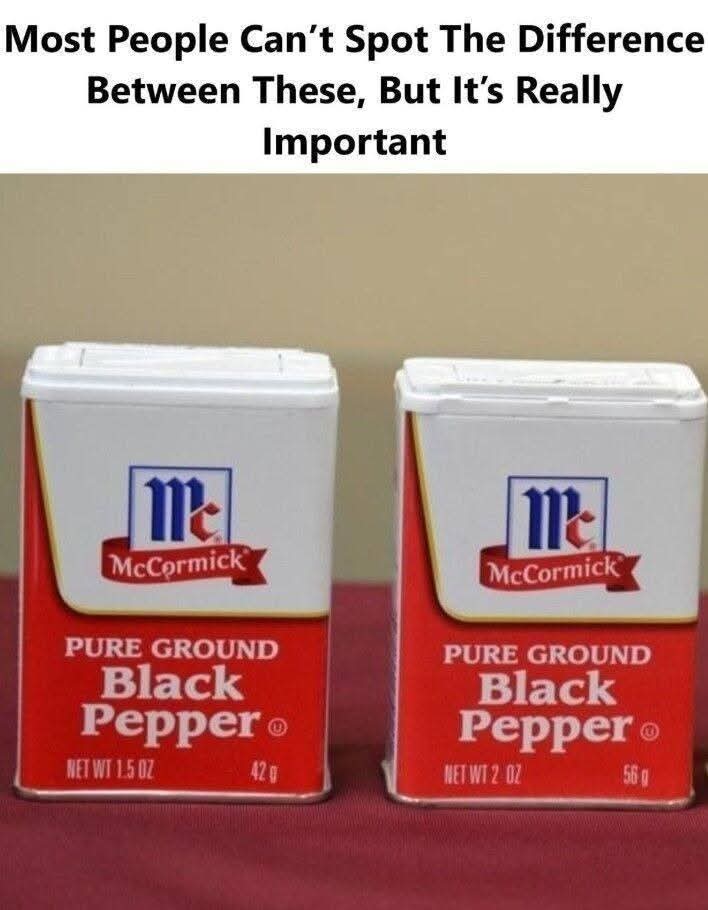
In recent years, a simple image has circulated widely on social media: two nearly identical McCormick Pure Ground Black Pepper tins placed side by side. At first glance, they look exactly the same—same iconic red and white design, same McCormick logo, same “Pure Ground Black Pepper” labeling. The caption often reads something like “Most People Can’t Spot the Difference Between These, But It’s Really Important.” Upon closer inspection, the difference becomes clear: one tin is labeled “Net Wt 1.5 oz (42 g)” and the other “Net Wt 2 oz (56 g).”
This seemingly minor discrepancy—0.5 ounces of black pepper—has become a symbol of a much larger economic phenomenon known as shrinkflation. Shrinkflation occurs when manufacturers reduce the quantity of product in a package while keeping the price the same (or even increasing it), all without significantly altering the packaging to make the change obvious. The McCormick black pepper tins exemplify this practice perfectly, highlighting how everyday consumers can be affected by subtle corporate decisions driven by rising costs, supply chain pressures, and profit margins.
In this comprehensive article, we’ll dive deep into the story behind these two tins, explore the history of McCormick’s packaging changes, examine the broader implications of shrinkflation on consumers and the economy, discuss the role of black pepper as a staple spice, and offer practical advice for savvy shoppers. By the end, you’ll understand why that half-ounce difference matters more than you might think.
The History of McCormick’s Iconic Pepper Tins
McCormick & Company, founded in 1889, has long been a dominant force in the spice industry. Their ground black pepper, packaged in distinctive metal tins, became a kitchen staple for generations. The classic rectangular tin design was instantly recognizable, evoking reliability and quality.
However, in 2015, McCormick made a controversial decision amid soaring global pepper prices. Peppercorn costs had skyrocketed due to increased demand from emerging markets like China and India, coupled with supply disruptions in major producing countries such as Vietnam and Indonesia. Rather than passing on a full price increase to consumers, McCormick opted to reduce the amount of pepper in their tins by approximately 25% across their standard sizes:
- The large tin dropped from 8 oz to 6 oz.
- The medium from 4 oz to 3 oz.
- The small from 2 oz to 1.5 oz.
Crucially, they kept the tin size and design virtually unchanged, with the new net weight printed clearly but inconspicuously on the label. This move sparked immediate backlash. Competitors like Watkins Inc. sued McCormick, alleging deceptive practices because the larger-looking tins misled consumers into thinking they were getting the traditional amount. Class-action lawsuits followed, claiming that the identical packaging violated consumer protection laws by relying on visual cues over label reading.
McCormick defended the change, stating that the weight was prominently displayed and that it was a necessary response to commodity price fluctuations. They argued no deception was intended, as savvy shoppers should check the net weight. Nonetheless, the incident damaged trust for some consumers and fueled viral memes comparing old and new tins.
By the late 2010s, McCormick transitioned away from metal tins altogether for many products, switching to plastic bottles for environmental reasons (reducing BPA exposure and improving recyclability). Today, their pure ground black pepper comes in various plastic container sizes, including 1.5 oz, 3 oz, and larger bulk options. The old 2 oz tin is largely a relic of the past, but photos of it alongside the 1.5 oz version continue to circulate as a cautionary tale.
What Is Shrinkflation, and Why Do Companies Do It?
Shrinkflation is not unique to McCormick or spices—it’s a widespread strategy across industries. From cereal boxes getting lighter to toilet paper rolls narrowing to candy bars shrinking—companies use it to maintain profitability without alienating price-sensitive customers.
Reasons Behind Shrinkflation
- Rising Input Costs: Raw materials like black peppercorns are commodities subject to volatility. Weather events, geopolitical issues, and demand surges can drive prices up dramatically. In the mid-2010s, black pepper prices rose over 300% in some periods.
- Avoiding Price Backlash: Consumers notice and resist outright price increases more than subtle quantity reductions. Psychological pricing studies show that a $4.99 item jumping to $5.99 feels like a bigger hit than the same item quietly containing less product.
- Maintaining Shelf Presence: Keeping package size consistent ensures products take up the same grocery store shelf space, preserving brand visibility and perceived value.
- Inflation Management: During periods of high inflation (like post-2020), shrinkflation allows companies to offset costs discreetly.
Critics argue it’s deceptive, especially when changes aren’t announced. Proponents say it’s transparent if labels are read, and it’s better than sharp price hikes that could reduce sales volume.
Examples Beyond Pepper
- Chip bags with more air and fewer chips.
- Ice cream cartons shrinking from 64 oz to 48 oz.
- Cleaning products with diluted formulas or smaller bottles.
According to consumer watchdogs, shrinkflation accelerated during recent economic pressures, costing households hundreds of dollars annually in reduced value.
The Economics of Black Pepper: Why This Spice Matters
Black pepper (Piper nigrum) isn’t just any spice—it’s the world’s most traded, often called “black gold.” Originating from India, it’s now primarily grown in Vietnam, Indonesia, Brazil, and India.
Production and Supply Chain
Pepper vines take years to mature, making supply inelastic. Droughts, diseases, or labor issues can cause shortages. McCormick sources premium peppercorns, hand-harvesting and sun-drying them for quality.
Health and Culinary Importance
Black pepper contains piperine, which enhances nutrient absorption and has antioxidant properties. It’s essential in cuisines worldwide, from French steak au poivre to Indian curries to American table shakers.
Reducing quantities subtly impacts home cooks who rely on it daily. That missing 0.5 oz might not seem much, but over multiple purchases, it adds up—especially for frequent users.
Consumer Impact: How Shrinkflation Affects Your Wallet
Let’s quantify the McCormick example. Assume a 2 oz tin historically cost $3. That’s $1.50 per ounce. If the 1.5 oz replacement costs the same $3, you’re now paying $2 per ounce—a 33% effective price increase.
Over a year, if a household uses 12 oz of pepper:
- Old way: 6 x 2 oz tins = $18.
- New way: 8 x 1.5 oz tins = $24.
That’s $6 extra annually for one spice. Multiply across groceries, and shrinkflation erodes purchasing power.
Psychologically, it breeds distrust. Consumers feel tricked, leading to brand switching or bulk buying alternatives.
Legal and Regulatory Responses
The 2015 McCormick lawsuits highlighted gaps in regulation. While net weight must be disclosed, there’s no requirement to highlight reductions or change packaging dramatically.
Some countries, like parts of Europe, have stricter rules against misleading packaging. In the U.S., the FTC monitors deceptive practices, but enforcement is inconsistent.
Advocacy groups push for “unit pricing” mandates (price per ounce displayed prominently) to empower comparison shopping.
How to Spot and Combat Shrinkflation
- Always Check Net Weight: Don’t rely on package size.
- Compare Unit Prices: Grocery apps or shelf labels help.
- Buy in Bulk or Alternatives: Warehouse clubs or generic brands often offer better value.
- Store Properly: Pepper lasts longer in whole form—invest in a grinder.
- Support Transparent Brands: Seek companies that announce changes openly.
Freshly ground peppercorns often taste better anyway, with more volatile oils intact.
The Future of Packaging and Consumer Awareness
McCormick has since emphasized sustainability, using recycled plastic and reducing air in bottles for freshness. But the pepper tin saga remains a lesson in corporate responsibility.
As consumers grow wiser—fueled by social media virality—companies may face more pressure to avoid stealth reductions. Technology like smart labels or apps could further transparency.
Ultimately, that viral image isn’t just about pepper; it’s about empowering informed choices in an era of economic subtlety.
Conclusion: Pay Attention to the Details
The difference between a 1.5 oz and 2 oz McCormick black pepper tin may seem trivial, but it encapsulates shrinkflation’s insidious nature. It reminds us that “small” changes can have cumulative impacts on budgets, trust, and fairness.
Next time you’re in the spice aisle, pause and read the label. Your wallet—and your meals—will thank you. In a world of distractions, spotting these differences is more important than ever.