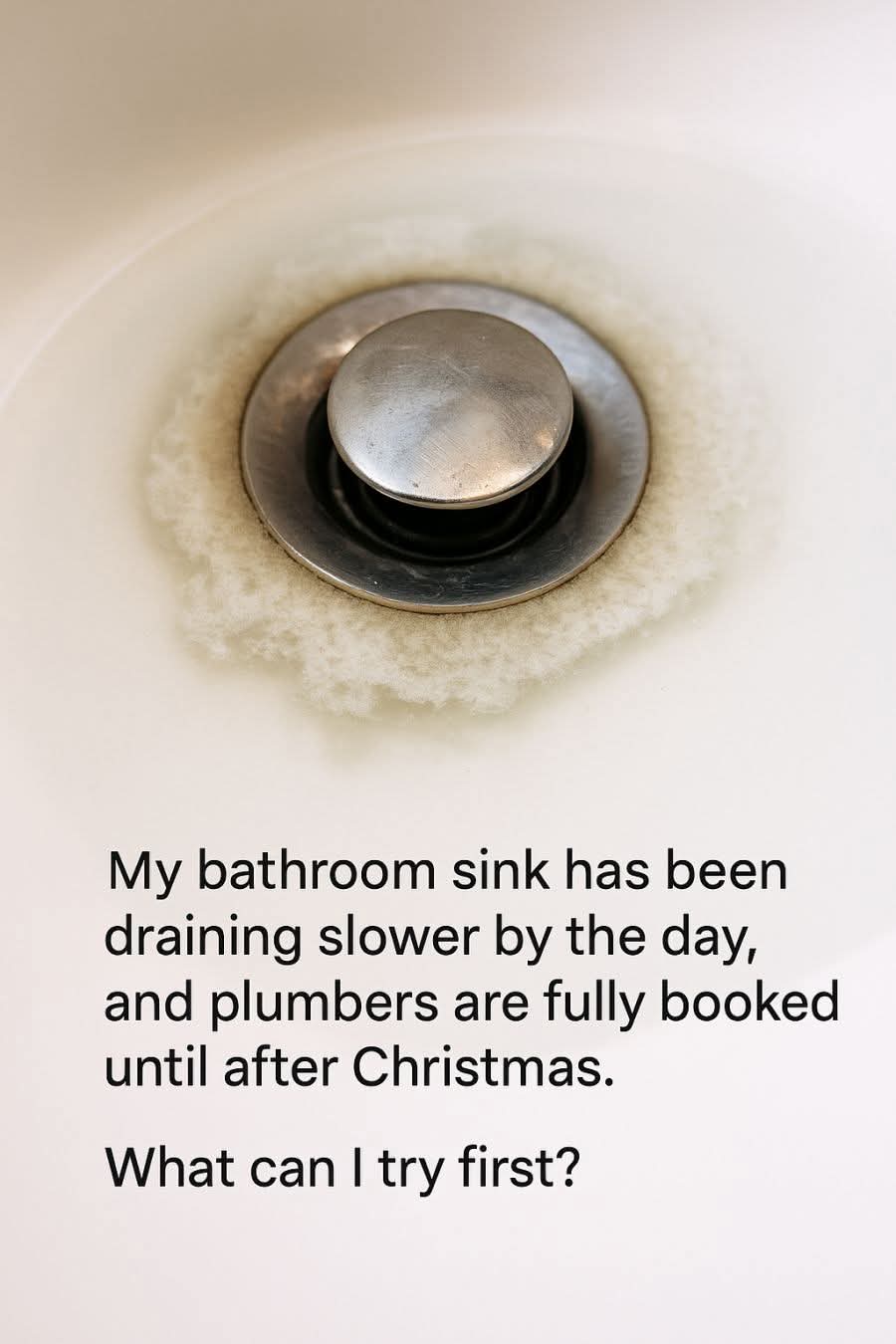
A slow-draining bathroom sink can be a frustrating problem to encounter, especially during the busy holiday season when professional help is hard to come by. With plumbers booked solid until after Christmas, many homeowners find themselves in a bind, needing to address this common household issue on their own. Fortunately, there are several do-it-yourself methods that you can try to restore your sink’s drainage without needing specialized tools or chemicals.
Before you start, it’s important to remember that tackling a slow drain requires patience and a bit of trial and error. While some clogs are simple and easy to remove, others may be deeper within the plumbing system and require more effort. In this guide, we’ll explore ten practical steps you can take to fix your slow-draining bathroom sink, using items you likely already have at home.
1. Start With The Simplest Test: Is It Just This Sink?
Before diving into the process of unclogging your sink, check if the problem is isolated to just one sink or if it’s a more widespread plumbing issue. Turn on the faucets in other sinks around your home to see if they are draining slowly as well. This can help you determine if the problem is with your sink’s individual drain or if it’s part of a larger plumbing concern.
If only one sink is draining slowly, it’s likely the problem is with that particular sink’s plumbing. However, if multiple sinks are affected, it might be worth checking your main plumbing lines or considering that there might be a blockage further down the system. This initial test can save you time and effort by ensuring you’re addressing the right issue.
2. Clear Out The Stopper: The Usual Hair And Soap Culprit
Bathroom sinks often have pop-up stoppers that catch hair and soap scum, which can quickly lead to a slow drain. To check this, remove the stopper from the sink. This may require unscrewing it or lifting it out, depending on the model. Once removed, clean off any visible hair or gunk that may have accumulated.
After cleaning the stopper, run water through the drain to see if the flow has improved. This simple step is often all it takes to restore proper drainage, as hair and soap scum are common culprits of slow drains.
3. Try The Zip Tie Or Drain Snake Hack For Early Hair Buildup
If removing the stopper didn’t solve the problem, the next step is to try using a zip tie or a small drain snake to remove any hair buildup that’s deeper in the drain. A zip tie can be transformed into a makeshift tool by cutting small notches into it, creating hooks that can snag hair clogs.
Gently insert the zip tie or drain snake into the drain, twisting and pulling up to catch and remove any debris. This method is effective for catching hair that the stopper missed and can often clear minor blockages without needing to disassemble the plumbing.
4. Flush With Boiling Water To Melt Soap Scum And Grease
Boiling water can be a surprisingly effective solution for clearing minor clogs caused by soap scum and grease buildup. Boil about a gallon of water and carefully pour it down the drain in stages, allowing each portion to work its way through the clog.
This method works best if the pipes are metal, as boiling water can damage PVC pipes or loosen their joints. Always check your plumbing material before proceeding. If effective, you should notice an improvement in the drainage speed as the hot water melts away the clogs.
5. Use A Baking Soda And Vinegar Fizz Instead Of Harsh Chemicals
A natural and eco-friendly alternative to chemical drain cleaners is the classic baking soda and vinegar combination. Start by pouring about half a cup of baking soda down the drain, followed by a cup of white vinegar. The chemical reaction between these two substances causes fizzing, which can help dislodge clogs.
Let the mixture sit for about 15-30 minutes, then flush the drain with hot water to help wash away the loosened debris. This method is effective for minor clogs and is safe for most types of plumbing.
6. Deploy A Wet/Dry Vacuum To Suck Out Hidden Clogs
If manual methods haven’t worked, try using a wet/dry vacuum to suck out the clog. First, set the vacuum to the liquid setting and create a tight seal around the drain with a wet cloth or duct tape. Turn the vacuum on to suck out the clog from the drain.
This technique can be surprisingly effective for removing stubborn clogs that are beyond the reach of a drain snake or zip tie, especially if the clog is composed of small, loose particles.
7. Plunge The Sink Properly Without Splashing Disaster
A plunger can be a powerful tool for unclogging a sink, but it’s crucial to use it correctly to avoid making a mess. First, ensure the sink has enough water to cover the plunger’s suction cup. Then, block any overflow openings with a wet cloth to create a seal.
Position the plunger over the drain and give it several firm, quick plunges. The pressure created can often dislodge stubborn clogs. Once finished, run water to check if the drainage has improved. Repeat as necessary.
8. Clean The P-Trap (The Smelly But Effective DIY Step)
If none of the above methods work, it might be time to clean out the P-trap, the curved pipe beneath the sink that can collect debris. Place a bucket underneath the trap to catch any water or gunk that spills out. Unscrew the slip nuts on either side of the trap and remove it.
Clean out any debris inside the trap using a brush or a cloth, then reassemble the plumbing. This method can be a bit messy, but it’s highly effective for clearing blockages caused by solid build-up.
9. Skip The Wrong Chemicals: What Not To Pour Down Your Drain
While it might be tempting to reach for a bottle of chemical drain cleaner, these products can be harsh on your plumbing and harmful to the environment. They can erode pipes, especially older metal ones, and cause damage over time.
Instead, opt for gentler methods like those outlined here. If you must use a chemical cleaner, ensure it’s appropriate for your plumbing and use it sparingly to avoid long-term damage.
10. Use Preventive Strainers And Weekly Rinses To Stop Re-Clogging
Once your sink is draining properly again, take steps to prevent future clogs. Install a drain strainer to catch hair and debris before they can enter the plumbing. Additionally, make a habit of flushing your drains weekly with hot water or a mild baking soda solution to keep them clear.
These preventive measures can extend the time between clogs and keep your plumbing running smoothly without constant intervention.
11. Know When To Stop DIY And Wait For The Plumber
If you’ve tried all the above methods and your sink still drains slowly, it might be time to call in a professional once they’re available. Persistent clogs can indicate a deeper issue within your plumbing that requires specialized tools and expertise.
While DIY methods can be highly effective, they are not a substitute for professional assessment and repair. Knowing when to stop can save you time, frustration, and potential damage to your plumbing system.