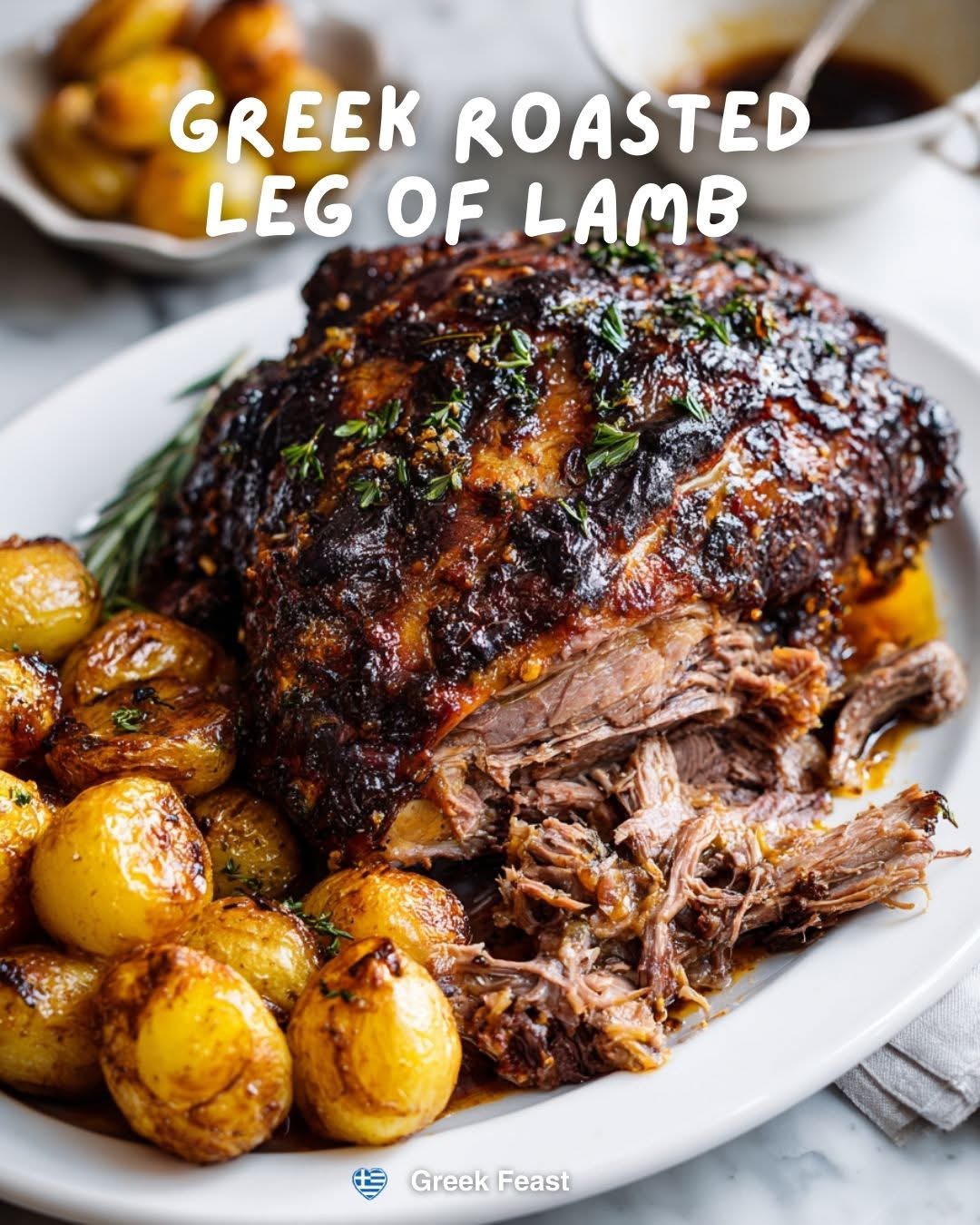
Introduction to Greek Roasted Leg of Lamb
Greek Roasted Leg of Lamb, known as Arni sto Fournou me Patates (lamb in the oven with potatoes), is a cornerstone of Greek cuisine. This iconic dish features a tender, bone-in leg of lamb slow-roasted with garlic, herbs, lemon, and olive oil, surrounded by crispy, golden potatoes that absorb the rich juices. It’s a festive centerpiece, especially for Easter (Pascha), family gatherings, and celebrations, delivering bold Mediterranean flavors: aromatic oregano, tangy lemon, and savory garlic. The lamb becomes fall-off-the-bone tender with a caramelized crust, while the potatoes turn lemony and crisp. This recipe serves 6-8 people and captures the essence of Greek home cooking—simple, flavorful, and comforting.
History of the Dish
Roasted lamb holds deep roots in Greek culture, dating back to ancient times. In Homer’s works, lamb roasting appeared as offerings to gods and communal feasts. The modern tradition ties strongly to Greek Orthodox Easter, where lamb symbolizes Jesus as the “sacrificial lamb,” commemorating renewal and sacrifice. Families traditionally roast a whole lamb on a spit (ovelias), but oven-roasted leg of lamb with potatoes became popular for home cooking.
The dish reflects Greece’s pastoral heritage—sheep thrive in rugged terrain—and Ottoman-era influences, though rebels (klephts) inspired wrapped versions like kleftiko. Today, it’s a Sunday or holiday staple, passed down through generations, embodying Greek hospitality and seasonal eating.
Ingredients (Serves 6-8)
For the Lamb:
- 1 bone-in leg of lamb (5-7 lbs / 2.5-3 kg), trimmed of excess fat
- 15-20 garlic cloves, peeled and sliced
- 4-5 sprigs fresh rosemary (or 2 tbsp dried)
- 1/4 cup olive oil
- Juice of 3-4 lemons (about 3/4 cup)
- 2 tbsp dried Greek oregano
- 2 tsp salt (plus more to taste)
- 1 tsp black pepper
- Optional: 1/2 cup dry white wine or red wine for deglazing
For the Potatoes:
- 8-10 medium potatoes (Yukon Gold or russet), peeled and quartered
- 1/2 cup olive oil
- Juice of 2 lemons
- 1 tbsp dried oregano
- Salt and pepper to taste
- 1-2 cups chicken stock or water (for the pan)
Optional Garnishes:
- Fresh herbs (parsley or thyme)
- Lemon wedges
Preparation Methods and Step-by-Step Instructions
This slow-roasting method ensures tender lamb and crispy potatoes. Total time: 4-5 hours (plus optional marinating).
- Prepare the lamb — Pat the leg dry. Make 20-25 deep slits all over with a sharp knife. Stuff each slit with a garlic slice and small rosemary piece.
- Make the marinade — In a bowl, whisk 1/4 cup olive oil, lemon juice, oregano, salt, and pepper. Rub this mixture generously over the lamb, working it into the slits. For best flavor, cover and marinate in the fridge overnight (or at least 2 hours).
- Preheat and prep potatoes — Preheat oven to 425°F (220°C). In a large roasting pan, toss potatoes with 1/2 cup olive oil, lemon juice, oregano, salt, and pepper.
- Assemble and initial roast — Place the lamb in the center of the pan, surrounded by potatoes. Pour 1 cup stock or water into the pan. Optional: Add remaining garlic cloves. Cover tightly with foil and roast for 30 minutes at 425°F to sear.
- Slow roast — Reduce heat to 325°F (160°C). Continue roasting covered for 3-4 hours, basting every hour with pan juices. Add more stock if needed. Internal temperature should reach 185-195°F (85-90°C) for fall-apart tenderness.
- Crisp the finish — Uncover, increase heat to 400°F (200°C), and roast 30-45 minutes more until the lamb crusts and potatoes turn golden and crispy. Baste frequently.
- Rest and serve — Remove from oven, tent with foil, and rest 20-30 minutes. Carve or pull the meat, serve with potatoes and pan juices spooned over.
Tips: Use a meat thermometer. For extra lemony flavor, add zest. Potatoes should be fluffy inside, crisp outside.
Health Benefits
Lamb offers nutrient density. It’s an excellent source of high-quality protein for muscle repair and growth. Rich in iron (especially heme iron, easily absorbed), it combats anemia. Provides zinc for immune support, selenium for antioxidant protection, and B vitamins (especially B12) for energy and nerve health. Conjugated linoleic acid (CLA) in grass-fed lamb may aid anti-inflammatory effects and heart health. Olive oil and lemon add healthy fats and vitamin C. Enjoyed in moderation as part of a Mediterranean diet, it supports overall wellness.
Nutritional Information (Per Serving, Approximate for 4 oz / 113g cooked lamb + potatoes)
- Calories: 450-550
- Protein: 30-35g (60%+ daily value)
- Fat: 25-30g (with healthy monounsaturated from olive oil)
- Saturated Fat: 8-10g
- Carbohydrates: 30-35g (from potatoes)
- Iron: 20-25% daily value
- Zinc: 30-40% daily value
- Vitamin B12: 80-100% daily value
(Note: Values vary by cut and preparation; leaner cuts reduce calories/fat.)
Wine Pairings and Side Suggestions (For Lovers of This Dish)
Greek roasted lamb pairs beautifully with robust red wines that cut through richness and complement herbs. Top choices:
- Greek Xinomavro or Agiorgitiko (bold, earthy, with bright acidity)
- International options: Syrah/Shiraz, Cabernet Sauvignon, or Pinot Noir (for lighter touch)
Sides that lovers adore: Greek salad (horiatiki), tzatziki, roasted vegetables, or crusty bread. It’s perfect for romantic dinners, family feasts, or gatherings—food lovers rave about its comforting, shareable nature.
Presentation and Formation
Present the lamb whole on a large platter for dramatic effect, surrounded by golden potatoes. Garnish with fresh rosemary sprigs, lemon wedges, and scattered herbs. Carve at the table or pull the meat for easy serving, drizzling with pan juices. The caramelized crust and juicy interior make it visually stunning—a true feast for the eyes.
Conclusion
Greek Roasted Leg of Lamb with Potatoes is more than a meal—it’s a celebration of tradition, flavor, and nourishment. This timeless dish brings people together with its tender meat, crispy potatoes, and vibrant Mediterranean tastes. Whether for a holiday or special occasion, it delivers unforgettable results. For food lovers everywhere, it’s a must-try recipe that embodies the heart of Greek cooking. Kali orexi (bon appétit)!