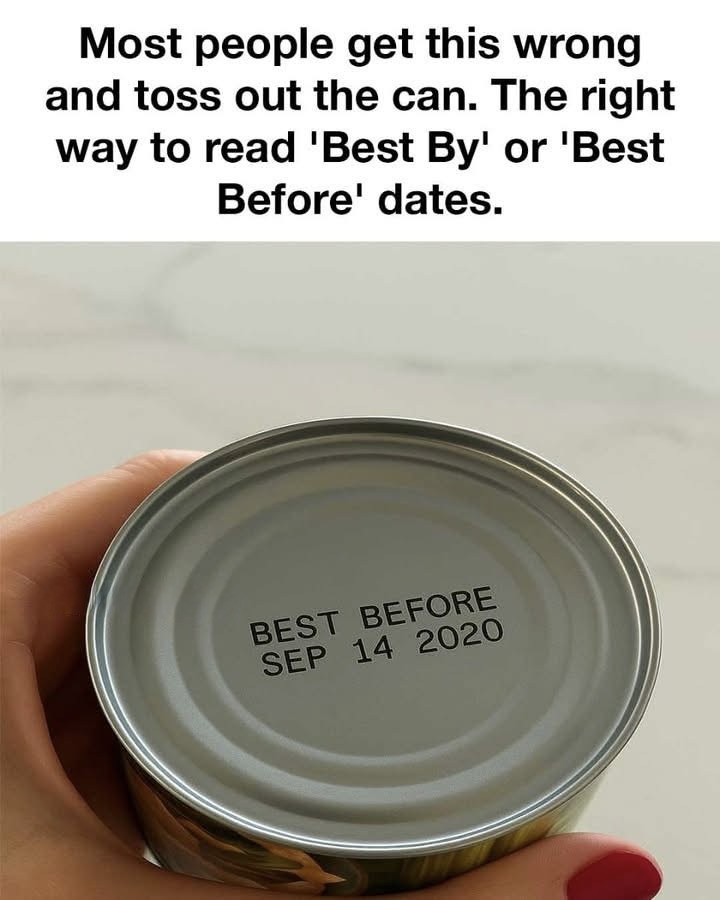
“Best Before” vs “Use By” vs “Expires On”: What the Dates on Your Food Actually Mean
- Best Before / Best By
- This is a quality guarantee, not a safety warning.
- It’s the date until which the manufacturer says the product will be at its absolute peak (flavor, texture, color, nutritional value).
- After that date, the food gradually loses quality, but it is still safe in almost every case.
- Applies to: canned goods, dry pasta, rice, most boxed foods, cereals, snacks, oils, etc.
- Legally, in most countries (including the US, Canada, UK, EU, Australia), “Best Before” has zero legal force regarding safety. It’s just the manufacturer covering their reputation.
- Use By
- This is the only date that is actually about safety.
- Found on perishable items: fresh meat, dairy, ready meals, deli items.
- After this date, the manufacturer says there’s a real risk of bacterial growth (Listeria, Salmonella, etc.).
- You should treat “Use By” seriously.
- Expiration Date
- Rare on most foods.
- Legally required only on baby formula in the US (and a few other highly regulated items).
- After this date, the product is considered unsafe or ineffective.
Why canned food lasts basically forever
Canned goods are commercially sterile: heated to 121 °C (250 °F) under pressure, killing botulism spores and everything else. As long as the seal stays intact and the can isn’t damaged:
- High-acid cans (tomatoes, fruit): 2–5 years past “Best Before,” often longer
- Low-acid cans (vegetables, soups, meats, fish): 5–10+ years past “Best Before” is common
- Studies by the U.S. Army and USDA have found 100-year-old canned food that was still perfectly safe and edible (taste was bad, but zero pathogens).
Real-world examples people have eaten with zero issues:
- 1974 sweet corn (opened 2019)
- 1968 canned ham from civil-defense stockpiles
- 1865 shipwrecked canned meat (tasted awful, but no one got sick)
When you SHOULD throw a can away (the actual red flags)
- Bulging or swollen ends → possible botulism, toss it without opening
- Deep rust that has pierced the can
- Leaking or spurting liquid when opened
- Smells like rotting garbage, alcohol, or chemicals when opened
Bottom line
That can stamped “Best Before Sep 14 2020” in December 2025?
Open it. If it looks and smells normal, eat it. You’re throwing away money and perfectly good food if you toss it just because of that date.
The meme is not exaggerating; it’s literally true for the overwhelming majority of canned goods.
Stop wasting food. “Best Before” is corporate speak for “we no longer guarantee it tastes exactly like day one.” It’s not “poison after midnight.”