Introduction
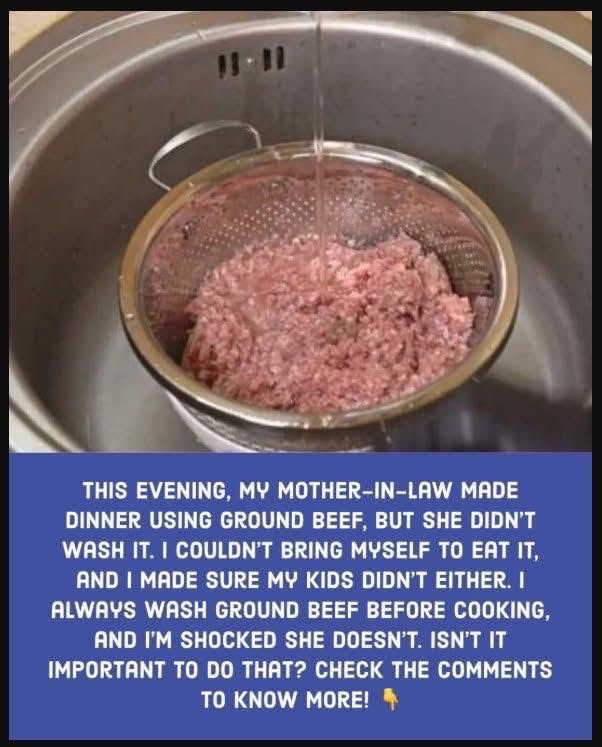
In 2023–2025, a single photograph changed dinner tables across the English-speaking internet: a colander full of raw ground beef sitting under a running faucet, pink water swirling down the drain, accompanied by a viral Facebook post declaring that the poster’s mother-in-law was “cooking dirty meat” and potentially poisoning the family by not pre-washing her mince.
The post exploded. Millions of people lost their minds in the comments. Half the internet screamed “Of course you wash ground beef! My grandma always did!” The other half — including virtually every food-safety agency on the planet — screamed back “STOP DOING THAT IMMEDIATELY, YOU ARE MAKING IT WORSE.”
This is the definitive, ridiculously long guide that settles the debate once and for all, with science, history, microbiology, culinary technique, and a touch of family-drama empathy for the mother-in-law who just wanted to make spaghetti sauce in peace.
The Recipe Everyone Is Actually Fighting About
(Yes, we will give you a killer recipe — but first we have to explain why rinsing the meat before you cook it is a terrible idea.)
Classic American Taco Meat (No-Rinse, Restaurant-Grade Version)
Serves 8–10 | Total time: 25 minutes
Ingredients
2 lb (900 g) ground beef (80/20 or 85/15 preferred)
1 large yellow onion, finely diced
4 cloves garlic, minced
2 Tbsp chili powder (American-style, like McCormick)
1 Tbsp ground cumin
2 tsp smoked paprika
1 tsp Mexican oregano (or regular oregano)
1 tsp kosher salt
½ tsp black pepper
½ tsp cayenne or chipotle powder (optional heat)
¾ cup water or low-sodium beef broth
2 Tbsp tomato paste
1 Tbsp Worcestershire sauce or soy sauce (secret umami boost)
Optional: 1 tsp masa harina or cornmeal (for silky texture)
Instructions (The Correct Way – No Washing)
- Heat a large 12-inch skillet or Dutch oven over medium-high heat. NO oil needed — the fat in the beef is enough.
- Add the ground beef in one big slab. Do not break it up yet. Let it sit undisturbed for 3–4 minutes until the bottom is deeply browned. This is the Maillard reaction — your flavor foundation.
- Flip the slab, brown the second side 2–3 minutes. Now break it into large chunks with a wooden spoon.
- Add the diced onion and garlic straight into the fat and beef crumbles. Sauté 3–4 minutes until softened.
- Sprinkle all the dry spices over the meat. Toast them for 45–60 seconds — you’ll smell it when they bloom.
- Stir in tomato paste; let it caramelize for 1 minute.
- Pour in water/broth and Worcestershire. Scrape up all the browned bits (fond).
- Simmer 8–10 minutes until most liquid evaporates and you have a thick, rich sauce clinging to the meat.
- Taste and adjust salt. If you want that taco-truck silkiness, stir in 1 tsp masa harina and cook 2 more minutes.
- Serve in tacos, burritos, over nachos, etc.
That’s it. Perfect taco meat every single time — and you never once ran raw beef under the faucet.
Why Washing Ground Beef Is a Terrible Idea (The Science)
- You’re Spreading Bacteria, Not Removing Them
Ground beef can contain E. coli, Salmonella, etc., on the surface of the original cut. Grinding smears those pathogens throughout the entire batch. Rinsing pushes bacteria-laden pink water all over your sink, faucet, counter, and anything else it splashes on. USDA, FDA, CDC, and WHO all agree: rinsing meat does NOT make it safer — cooking to 160 °F (71 °C) internal temperature does. - You’re Washing Away Flavor
That pink liquid isn’t “blood” (it’s myoglobin and water). But you are rinsing away soluble flavor compounds and fat that make beef taste beefy. - You Make the Texture Worse
Cold water tightens the proteins, making the beef tougher and more likely to clump. Restaurants never rinse — notice how their taco meat is fluffy and tender? - You Waste Water and Create Greywater Issues
Rinsing 2 lb of beef can use 5–10 gallons of water and sends fat down the drain, clogging pipes over time.
The History of the “Wash Your Meat” Tradition
The habit of washing meat comes from three very real historical problems that no longer apply to modern American/European ground beef:
Pre-1960s: Many families bought meat from local butchers or slaughtered their own animals. Meat sometimes arrived with visible dirt, feces, feathers, or blood clots. Washing made sense.
Immigrant traditions: Caribbean, African, and some Asian cultures wash chicken with vinegar or lime because historically poultry was sold live or freshly killed in open markets with questionable sanitation.
The “blood” myth: People see red liquid and think it’s blood (it’s not). They want to “clean” it.
In 2025, in regulated countries, ground beef is produced under HACCP plans, inspected by USDA, and the risk of visible contamination is essentially zero. The real risk (pathogens) is eliminated only by heat.
Health Benefits of NOT Washing Ground Beef
- Lower risk of cross-contamination → fewer foodborne illnesses
- Retains B-vitamins (B12, B6, niacin) and iron that leach out with water
- Keeps natural fats that carry fat-soluble vitamins and improve satiety
- Saves water (important in drought-prone areas)
Nutrition Facts (per 4 oz / 113 g serving of cooked 80/20 taco meat, drained)
Calories: 290
Protein: 24 g
Fat: 21 g (8 g saturated)
Carbs: 2 g
Iron: 15 % DV
Zinc: 35 % DV
Vitamin B12: 70 % DV
Niacin: 25 % DV
Formation of the Myth in the Age of Social Media
The viral “wash your ground beef” posts follow a predictable pattern:
- Someone posts a photo of raw mince in a colander looking sad and grey.
- Caption shames a relative (“My MIL is trying to kill us”).
- Boomer aunts flood the comments with “I’ve washed meat for 50 years and we’re all fine!”
- Chefs and food-safety nerds cry in the replies.
- The post gets 300k angry reactions and spreads to 47 Facebook groups.
For the Meat-Washing Lovers (How to Compromise Without Insulting Grandma)
If someone in your house absolutely insists on rinsing:
- Do it in a dedicated bowl in the sink, never loose under the faucet.
- Use hot water (not cold) to reduce protein tightening.
- Immediately sanitize the entire sink area with bleach solution.
- Accept that you’re losing flavor and texture, but family harmony sometimes matters more than perfect tacos.
Or just cook two separate batches and let science win the blind taste test.
Alternative Methods Professional Kitchens Actually Use
- The “Press & Drain” Method
Cook the beef, then press it in a fine-mesh sieve to remove excess fat without water. Healthier and tastier. - The “Double-Pan Render”
Brown in one pan, pour off fat, finish seasoning in a clean pan. Zero splashing. - Sous-vide Ground Beef (Yes, It’s a Thing)
Season raw beef, vacuum seal, cook at 150 °F for 1 hour → zero risk, perfect texture, no grey rinsed look.
Final Conclusion
Do not wash ground beef. Ever. Under any circumstances.
Your mother-in-law is not trying to poison you — she’s following a tradition that made sense when meat came wrapped in yesterday’s newspaper from a butcher who kept pigs in the backyard.
In 2025, the single most important thing you can do with ground beef is cook it to 160 °F / 71 °C internal temperature. A $10 instant-read thermometer will do more for your family’s safety than an entire sink full of running water.
Make the taco recipe above. Your spouse, your kids, and even your mother-in-law will thank you when they taste the difference.
And if someone still insists on putting raw mince in a colander… just smile, hand them a taco, and let the beef speak for itself.