Paragraph 1 – The Humble Pearl
Pearl onions, those miniature orbs no larger than a marble, are often relegated to the side of the plate or the bottom of a stew pot. Yet when pickled, they undergo a transformation that elevates them from background player to star. Their tight, concentric layers absorb brine with astonishing efficiency, delivering a crisp, bright snap followed by an intense burst of sweet-tangy flavor. Unlike their larger cousins, pearl onions retain texture for months, even years, in the jar. This ability to stay eternally crunchy while carrying complex seasoning is precisely why old European and American preserving traditions have cherished them for centuries.
Paragraph 2 – A Brief History of the Pickled Onion
Pickled onions trace their lineage to ancient Mesopotamia, where small onions were preserved in vinegar and spices as early as 2400 BCE. By the Roman era, soldiers carried amphorae of pickled alliums as portable, shelf-stable rations. In medieval England, “pickled onions” became a pub staple, though those were usually larger silverskins. The pearl onion variant exploded in popularity in 19th-century America when Dutch and German immigrants brought delicate white pearl varieties and the classic pickling-spice blend we still recognize today: mustard seed, black peppercorn, allspice, coriander, dill seed, bay leaf, and a whisper of clove.
Paragraph 3 – Choosing Your Pearls
The best pickled pearl onions begin with the freshest, firmest bulbs possible. Look for pearls between ¾ and 1¼ inches in diameter with dry, papery skins and no soft spots or sprouting. White pearls give the cleanest, most classic appearance and mildest flavor. Red pearls yield a stunning ruby brine and slightly earthier taste. Yellow or gold varieties sit between the two. Frozen peeled pearl onions are a legitimate shortcut if you value sanity over tradition, but fresh-peeled onions deliver superior texture and flavor.
Paragraph 4 – The Dreaded Peeling Ritual
Peeling pearl onions is the single greatest barrier to entry. The classic method remains the most effective: trim the root end, blanch in boiling water for 30–45 seconds, then shock in ice water. The skins slip off with minimal cursing. A second, almost magical trick is to soak trimmed onions in warm water with a generous splash of vinegar for 10 minutes; the skins loosen dramatically. Work in 1-pound batches while listening to something rage-inducing; the catharsis helps.
Paragraph 5 – The Anatomy of Classic Pickling Spice
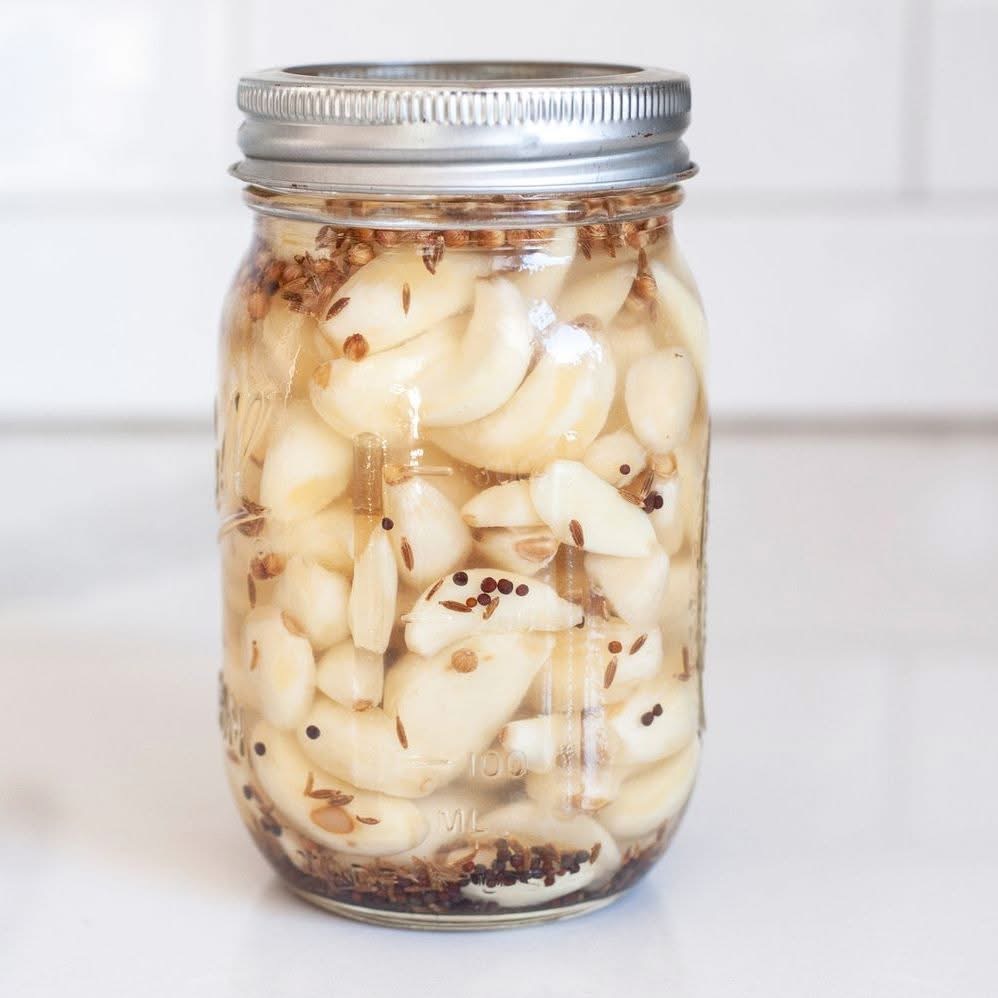
The blend floating in the photographed jar is unmistakable: yellow mustard seeds, black peppercorns, allspice berries, coriander seeds, dill seeds, tiny dried red chilies, cracked bay leaves, and the occasional clove. This combination is not random. Mustard and coriander provide sharpness and faint citrus notes. Allspice and clove contribute warmth. Peppercorns and chilies bring gentle heat. Bay and dill seeds add herbaceous depth. Together they create a flavor greater than the sum of its parts, bright yet round, spicy yet comforting.
Paragraph 6 – Brine Science: The Perfect Ratio
A foolproof quick-pickle brine for pearl onions is 1:1:1 — one cup water, one cup distilled white vinegar (5% acidity), one cup granulated sugar — plus 1 tablespoon kosher salt per quart of brine. This sweetened vinegar brine is sometimes called “bread-and-butter” style, even when applied to onions. For a more British pub-style tart version, drop the sugar to ¼ cup and increase the salt slightly. The sugar is not merely for sweetness; it balances acidity and helps the onions retain their pearly translucence.
Paragraph 7 – The Cold-Process vs. Hot-Process Debate
You have two paths. The cold-process method (pack raw peeled onions into jars, pour room-temperature brine over them, refrigerate) yields the crispest possible texture and can be eaten within 48 hours. The hot-process method (briefly blanch the onions again after peeling, pack into hot sterilized jars, cover with boiling brine, and water-bath process for 10 minutes) produces shelf-stable jars that will keep for a year or more at room temperature. The photographed jar appears to be hot-processed; note the slight translucency and the way the spices have settled.
Paragraph 8 – Layering Flavor Beyond the Basics
Once you master the classic, the playground opens. Add sliced garlic cloves or smashed fresh ginger for an Asian twist. Slip in a few thin slices of fresh turmeric for golden color and subtle earthiness. A single star anise per jar gives a haunting licorice backdrop. Fresh dill heads and a strip of lemon zest push the profile toward Scandinavian gravlax territory. For heat lovers, a halved habanero or a teaspoon of crushed red pepper flakes turns the jar into a weapon (in the best way).
Paragraph 9 – Culinary Applications: Far More Than a Gibson Garnish
Yes, pickled pearl onions are the traditional garnish for a proper Gibson cocktail, but their utility extends far beyond the bar. They are magnificent on a charcuterie board, providing the essential acid to cut through rich pâté and rillettes. Chop them coarsely and fold into tartar sauce or rémoulade. Thread them onto skewers with grilled steak for instant steakhouse vibes. Toss a handful into a martini potato salad. Serve alongside roasted beet salads with goat cheese. In the American South, they crown plates of black-eyed peas and collards. In Britain, they are non-negotiable with ploughman’s lunch. A jar in the refrigerator means you are never more than 30 seconds away from elevating a dish.
Paragraph 10 – The Emotional Payoff
There is something profoundly satisfying about opening a jar of homemade pickled pearl onions months after you sealed it. The soft pop of the lid, the rush of warm spice aroma, the way the onions have taken on a faint golden hue from the turmeric-tinted mustard seeds. You bite down: snap, then flood of flavor. Sweet, sour, salty, spicy, and umami all dance at once. In that moment you understand why humans have been fermenting and pickling for millennia. It is not merely preservation; it is alchemy. It is the transformation of the fleeting summer harvest into something that brings joy in the dead of winter. It is the quiet pride of knowing that with a few dollars’ worth of onions, vinegar, and spice you have created a condiment that rivals anything on a gourmet shelf, yet carries the unmistakable signature of your own hands. And that, more than anything, is why a simple jar of pickled pearl onions deserves 3,000 words and your undivided attention.