Earwax Buildup: Causes, Symptoms, Safe Removal, Prevention, and When to See a Doctor
Introduction
Earwax is something most people have, but many people do not realize how important it is. The yellow, brown, or sometimes dark material inside the ear is called cerumen, commonly known as earwax. Although it may look unpleasant, earwax is a natural substance produced by the ear canal and plays an important protective role. It helps trap dust and other particles, lubricates the skin of the ear canal, and helps slow the growth of certain bacteria.
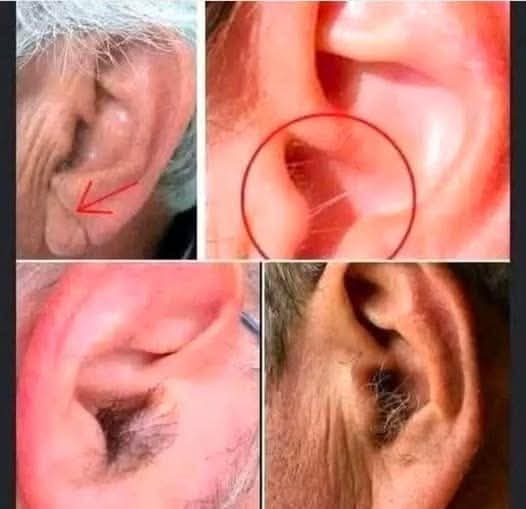
The image accompanying this article shows close-up photographs of ears with what appears to be a significant amount of material around or inside the ear canal. However, a photograph alone cannot reliably determine whether the material is ordinary earwax, an infection, dried discharge, a foreign substance, or another ear condition. A proper examination with an otoscope is needed when symptoms are present.
Earwax usually moves naturally toward the opening of the ear and eventually leaves the ear on its own. Problems can develop when too much wax accumulates, becomes hard, or is pushed deeper into the ear canal. Hearing may become muffled, the ear can feel blocked or full, and some people experience itching, ringing, discomfort, or dizziness.
This article explains what earwax is, why it sometimes becomes impacted, the signs of buildup, safe approaches to cleaning the ears, common mistakes to avoid, and when professional medical care is appropriate.
What Is Earwax?
Earwax, or cerumen, is a mixture of substances produced by glands and skin cells in the outer ear canal. It combines with naturally shed skin and small particles that enter the ear.
Rather than being something dirty that must constantly be removed, earwax is part of the ear’s normal defense system.
It can:
- Lubricate the ear canal
- Trap dust and debris
- Help protect the delicate skin of the ear canal
- Help slow the growth of certain microorganisms
- Move unwanted material toward the outside of the ear
In a healthy ear, old earwax gradually moves toward the entrance of the ear. Once it reaches the outer part, it can normally be wiped away gently with a cloth.
This natural cleaning process means that the inside of the ear usually does not need aggressive cleaning.
Understanding the Image
The photographs shown with this article appear to demonstrate material around the ear canal, including dark-colored material in some areas.
It is important not to assume that every dark substance visible in an ear is simply “dirty earwax.” Earwax can vary considerably in color and consistency. It may be yellow, orange, brown, or darker depending on how old it is and how long it has remained in the ear.
However, redness, swelling, pain, discharge, bleeding, or changes in hearing can have other causes.
For this reason, an online image should not be used as a diagnosis. If an ear looks significantly irritated or a person has symptoms, an examination by a healthcare professional is the safest way to determine what is happening.
What Causes Earwax Buildup?
Earwax buildup can happen for several reasons.
1. Naturally Narrow Ear Canals
Some people naturally have narrower or differently shaped ear canals. This can make it more difficult for wax to move outward.
2. Producing More Earwax
People differ in how much earwax their bodies produce. Some naturally produce more than others.
Producing more wax does not necessarily mean that anything is wrong. The problem occurs when the wax accumulates faster than it leaves the ear.
3. Using Cotton Swabs
One of the most common problems comes from attempting to clean the inside of the ear with cotton swabs.
Although cotton swabs can remove material from the outer ear, pushing them into the canal can push wax deeper rather than bringing it out. It can also irritate or injure the delicate skin of the canal or, in severe cases, damage the eardrum.
4. Earbuds and Hearing Devices
Devices that sit inside or near the ear canal can sometimes interfere with the normal outward movement of wax.
People who regularly use hearing aids or in-ear devices may need to pay particular attention to ear hygiene and follow advice from their healthcare professional.
5. Trying to Remove Wax Too Frequently
Cleaning the ears too aggressively can create a cycle in which the skin becomes irritated and wax is repeatedly pushed deeper.
The goal should not be to make the ear completely free of wax. Healthy ears normally contain some earwax.
Signs of Earwax Blockage
Some people have excess wax without any symptoms. Others develop noticeable problems.
Possible symptoms include:
A Feeling of Fullness
The ear may feel plugged, heavy, or blocked.
Reduced Hearing
Sounds may seem quieter or muffled, particularly in the affected ear.
Itching
Some people experience itching around the ear canal.
Ringing in the Ear
Earwax blockage can sometimes be associated with tinnitus, which is the perception of ringing or other sounds without an external source.
Ear Discomfort
A blockage can sometimes cause pressure or discomfort.
Dizziness
Dizziness can occur with some ear problems, although dizziness should not automatically be blamed on earwax.
Odor or Discharge
An unusual odor or discharge can occur, but these symptoms may also indicate infection or another condition.
This is why persistent symptoms should not simply be assumed to be caused by wax.
Earwax vs. an Ear Infection
It can be difficult for someone to determine the cause of ear symptoms without looking inside the ear properly.
Earwax can cause:
- Blocked sensation
- Muffled hearing
- Itching
- Fullness
- Occasionally ringing or discomfort
An ear infection may cause symptoms such as:
- Significant pain
- Tenderness
- Fluid or pus-like drainage
- Fever in some cases
- Swelling
- Changes in hearing
The symptoms can overlap, which is why professional assessment can be important.
The NHS advises seeking medical attention for ear pain accompanied by symptoms such as fluid coming from the ear, hearing loss or changes in hearing, swelling around the ear, or persistent symptoms.
Why You Should Not Put Objects Inside Your Ear
One of the most important ear-care rules is simple:
Do not put objects deep inside the ear canal.
People sometimes use:
- Cotton swabs
- Hairpins
- Paper clips
- Keys
- Pens
- Fingernails
- Small tools
- Other household objects
These methods can push wax deeper and potentially injure the ear canal or eardrum.
The ear canal is delicate. A small injury may cause pain and inflammation and can increase the risk of infection.
Mayo Clinic specifically advises against attempting to dig out hardened earwax with cotton swabs, paper clips, hairpins, or similar objects.
Safe Ear Cleaning Habits
For most people, routine ear cleaning can be surprisingly simple.
Clean the Outer Ear
Use a soft, damp cloth to gently clean the visible outer ear.
There is usually no need to insert the cloth deeply into the canal.
Allow Natural Cleaning
The ear has its own mechanism for moving old wax outward.
Instead of repeatedly removing everything, allow the natural process to work.
Keep Personal Devices Clean
If you use earbuds or hearing devices, follow the manufacturer’s cleaning instructions.
Dirty devices can introduce debris and microorganisms around the ear.
Avoid Scratching
Itchy ears can tempt people to use objects to scratch inside the canal. This can damage the skin.
If itching continues, it is better to find out why the ear is itchy rather than repeatedly scratching it.
What About Earwax-Softening Drops?
Earwax-softening products are sometimes used to help loosen impacted wax.
Depending on the situation, healthcare professionals may recommend products containing substances such as saline, mineral oil, glycerin, or specific wax-softening medicines. Mayo Clinic notes that some softening agents can help loosen wax so it can leave the ear more easily.
However, ear drops are not appropriate for everyone.
A person should be especially cautious if they:
- Have a known or suspected hole in the eardrum
- Have ear tubes
- Have had certain ear surgeries
- Have significant ear pain
- Have drainage from the ear
- May have an active infection
When any of these situations apply, professional medical advice should come before putting liquid into the ear.
What Is Ear Irrigation?
Ear irrigation involves introducing fluid into the ear canal to help remove softened wax.
It can be used by healthcare professionals in appropriate situations. Some people also use home irrigation systems.
However, irrigation is not suitable for everyone, and incorrectly performed irrigation can cause problems.
For this reason, people with a history of eardrum perforation, certain ear surgery, tubes, infection, significant pain, or drainage should seek professional guidance rather than attempting aggressive irrigation themselves.
Mayo Clinic notes that home irrigation and vacuum products are not equally well studied and may be ineffective or potentially dangerous when used incorrectly.
Professional Earwax Removal
When wax is firmly impacted, a healthcare professional can examine the ear and determine whether removal is necessary.
Professional removal may involve:
- A small curette
- Suction
- Irrigation in appropriate cases
- Wax-softening treatment
The exact method depends on the person’s ear, the amount and consistency of wax, symptoms, and medical history.
A clinician can also determine whether what appears to be wax is actually something else.
This distinction is important because hearing loss, pain, discharge, or ringing does not always mean that earwax is responsible.
What Is Ear Candling?
Ear candling, sometimes called ear coning, is an alternative practice in which a hollow candle-like object is placed near or in the ear and lit.
It is sometimes promoted as a way to “draw out” earwax.
However, this method is not recommended.
Mayo Clinic reports that research has found ear candling does not work for removing earwax and that it can cause burns or other ear damage.
Putting a flame close to the ear is unnecessary and potentially dangerous.
What About Garlic Oil or Essential Oils?
Natural products are often promoted online as ear-cleaning remedies.
Examples include:
- Garlic oil
- Tea tree oil
- Herbal mixtures
- Various homemade preparations
Natural does not automatically mean safe for the ear.
The skin inside the ear canal is delicate, and some substances can irritate it. There is also limited evidence supporting many popular alternative remedies for removing earwax.
Mayo Clinic specifically notes that essential oils such as tea tree oil and garlic oil are not proven treatments for earwax blockage and that their safety and effectiveness for this purpose have not been established.
When Should You See a Healthcare Professional?
It is important to seek professional evaluation when symptoms are significant, persistent, or unusual.
Consider getting medical attention if you experience:
- Significant ear pain
- Sudden hearing loss
- Persistent hearing reduction
- Fluid or blood coming from the ear
- Swelling around the ear
- Fever
- Severe dizziness
- A foreign object in the ear
- Repeated ear infections
- Symptoms that do not improve
- A history of ear surgery or eardrum perforation
Sudden hearing loss deserves particular attention because it should not automatically be attributed to wax.
The NHS recommends medical assessment for ear symptoms such as hearing loss or changes in hearing, fluid coming from the ear, swelling, or persistent earache.
Earwax and Hearing
One of the most noticeable effects of an earwax blockage can be muffled hearing.
When wax blocks part of the ear canal, sound cannot travel through the canal normally. Once the obstruction is removed, hearing may return to its previous level if wax was actually responsible.
But not every hearing problem is caused by earwax.
Hearing can also be affected by:
- Ear infections
- Eardrum problems
- Inner-ear conditions
- Noise exposure
- Age-related hearing changes
- Certain medications
- Other medical conditions
Therefore, persistent hearing changes should be assessed rather than repeatedly treating the ear for wax without confirmation.
Earwax and Tinnitus
Tinnitus describes hearing a sound such as ringing, buzzing, humming, or other noise when there is no external source.
Earwax blockage can sometimes be associated with tinnitus. However, tinnitus has many possible causes.
If tinnitus is persistent, severe, occurs suddenly, or is accompanied by hearing loss, dizziness, pain, or other symptoms, medical evaluation is appropriate.
Removing wax may help when the wax is genuinely contributing to the problem, but it should not be assumed to be the cause without examination.
How to Prevent Earwax Problems
There is no need to constantly clean the inside of your ears.
Instead, focus on simple habits.
1. Leave the Ear Canal Alone
Avoid routinely inserting objects into the ear.
2. Clean Only What You Can See
The outer ear can be gently cleaned with a cloth.
3. Do Not Overuse Cotton Swabs
If you use cotton swabs, keep them around the outer ear rather than pushing them into the canal.
4. Follow Hearing-Aid Instructions
People who wear hearing aids should clean them according to the manufacturer’s recommendations.
5. Treat Recurrent Buildup Professionally
If you repeatedly develop impacted wax, ask a healthcare professional whether a prevention plan is appropriate.
The American Academy of Otolaryngology–Head and Neck Surgery has clinical guidance specifically addressing cerumen impaction and management options.
Common Myths About Earwax
Myth 1: Earwax Is Dirty
Earwax is not simply dirt. It is a normal protective substance produced by the ear.
Myth 2: All Earwax Must Be Removed
Not true. A certain amount of earwax is normal and useful.
Myth 3: Cotton Swabs Are the Best Cleaning Method
Cotton swabs can push wax deeper into the canal and may injure delicate tissue.
Myth 4: Dark Earwax Always Means Infection
Wax can naturally become darker as it ages. Color alone cannot diagnose an infection.
Myth 5: Ear Candling Removes Wax
Evidence does not support ear candling as an effective treatment, and it can cause injury.
Myth 6: Every Blocked Ear Needs Home Treatment
A blocked feeling can have several causes. When symptoms are significant or persistent, examination is safer than guessing.
Formation of Earwax
Earwax begins with secretions from glands in the skin of the outer ear canal.
These secretions combine with:
- Shed skin cells
- Small amounts of debris
- Naturally occurring substances on the skin
The resulting material gradually moves toward the entrance of the ear.
Movement of the jaw during activities such as talking and chewing can contribute to the natural movement of material toward the outside.
Eventually, old wax reaches the opening and can be removed naturally or gently wiped away.
Problems occur when this process is disrupted.
Why Does Earwax Become Hard?
Fresh earwax can be relatively soft. As it remains in the ear, it can become drier and harder.
This is one reason older wax can appear darker.
When hardened wax becomes lodged in the ear canal, trying to remove it with a cotton swab can make the situation worse by pushing the material deeper.
Softening and professional removal may be more appropriate for stubborn blockage.
Ear Hygiene for Children
Children’s ears are also delicate.
Parents should avoid inserting cotton swabs, hairpins, or other objects into a child’s ear canal.
If a child complains of:
- Ear pain
- Hearing difficulty
- Ear discharge
- Persistent itching
- A blocked sensation
- Fever associated with ear symptoms
medical evaluation may be appropriate.
Children may have difficulty describing exactly what they feel, so persistent symptoms deserve attention.
Ear Hygiene for Older Adults
Older adults may experience changes in hearing for many reasons, and earwax can sometimes contribute.
Because hearing changes can have multiple causes, it is important not to assume that reduced hearing is simply “too much wax.”
A healthcare professional can examine the ear canal and determine whether wax is present and whether removal could help.
If hearing remains reduced after wax removal, further hearing evaluation may be necessary.
A Simple Ear-Care Routine
A practical routine can be very simple.
Step 1: Wash the outer ear normally.
Step 2: Dry the outside gently after bathing.
Step 3: Do not insert cotton swabs or other objects deeply into the ear canal.
Step 4: If you develop a blocked sensation, do not immediately start digging for wax.
Step 5: If symptoms are persistent, painful, or associated with discharge or hearing loss, arrange a professional examination.
This approach is generally safer than repeatedly attempting aggressive cleaning.
Benefits of Proper Ear Care
Good ear care can help people:
- Avoid unnecessary irritation
- Reduce the risk of injury from cleaning objects
- Recognize symptoms that need medical attention
- Maintain normal ear hygiene
- Avoid pushing wax deeper into the canal
- Protect the delicate skin and eardrum
The goal is not spotless ears. The goal is healthy ears that function normally without unnecessary interference.
Conclusion
Earwax is a normal and useful part of the body’s natural ear-defense system. Although excessive buildup can sometimes cause blockage, muffled hearing, fullness, itching, tinnitus, or discomfort, the solution is not to aggressively clean the ear.
The photographs in the accompanying image may look alarming, but an image alone cannot determine exactly what is present in an ear. Dark material may be old wax, while redness, discharge, swelling, or other changes may have different causes.
The safest general approach is to avoid putting objects deep into the ear canal. Cotton swabs, hairpins, paper clips, and similar objects can push wax deeper and potentially injure the ear.
If wax is causing a genuine blockage, healthcare professionals have several methods for examining and removing it. Depending on the situation, these may include specialized instruments, suction, irrigation, or appropriate wax-softening treatments.
Most importantly, ear pain, drainage, sudden hearing changes, significant dizziness, swelling, or persistent symptoms should not simply be blamed on earwax. These symptoms deserve appropriate medical assessment.
Healthy ears do not need to be completely free of wax. A little earwax is normal. Good ear care means respecting the ear’s natural cleaning process, avoiding unnecessary objects and treatments, and seeking professional help when something does not seem right.
Final Thoughts for Earwax Lovers
For anyone who wants to keep their ears healthy, the best approach is often the simplest one: clean the outside, leave the inside alone, and pay attention to symptoms.
Earwax is not your enemy. It is part of the ear’s natural protective system. Problems generally arise when wax becomes excessively accumulated or when people try to remove it aggressively.
If you regularly experience blocked ears or repeated wax buildup, discuss it with a healthcare professional. They can determine why it happens and help create a safe cleaning or prevention routine.
And if you notice pain, discharge, bleeding, sudden hearing loss, or other unusual symptoms, don’t rely on internet photographs or home remedies to determine the cause. An examination provides much more reliable information.
Important note: This article is for general educational purposes and is not a diagnosis or a substitute for professional medical advice. The image provided cannot establish what condition is present in the ear.