The “Forgotten Seed”: A Complete Guide to Black Cumin (Nigella sativa) — with a Traditional Remedy Recipe
Introduction
Long before modern medicine cabinets were filled with bottles and blister packs, kitchens were pharmacies. Tucked among the spice jars of countless households sits a small, unassuming seed — dark, crescent-shaped, and sharply aromatic — that civilizations have treasured for over 2,000 years. This is Nigella sativa, known as black cumin, black seed, or kalonji.
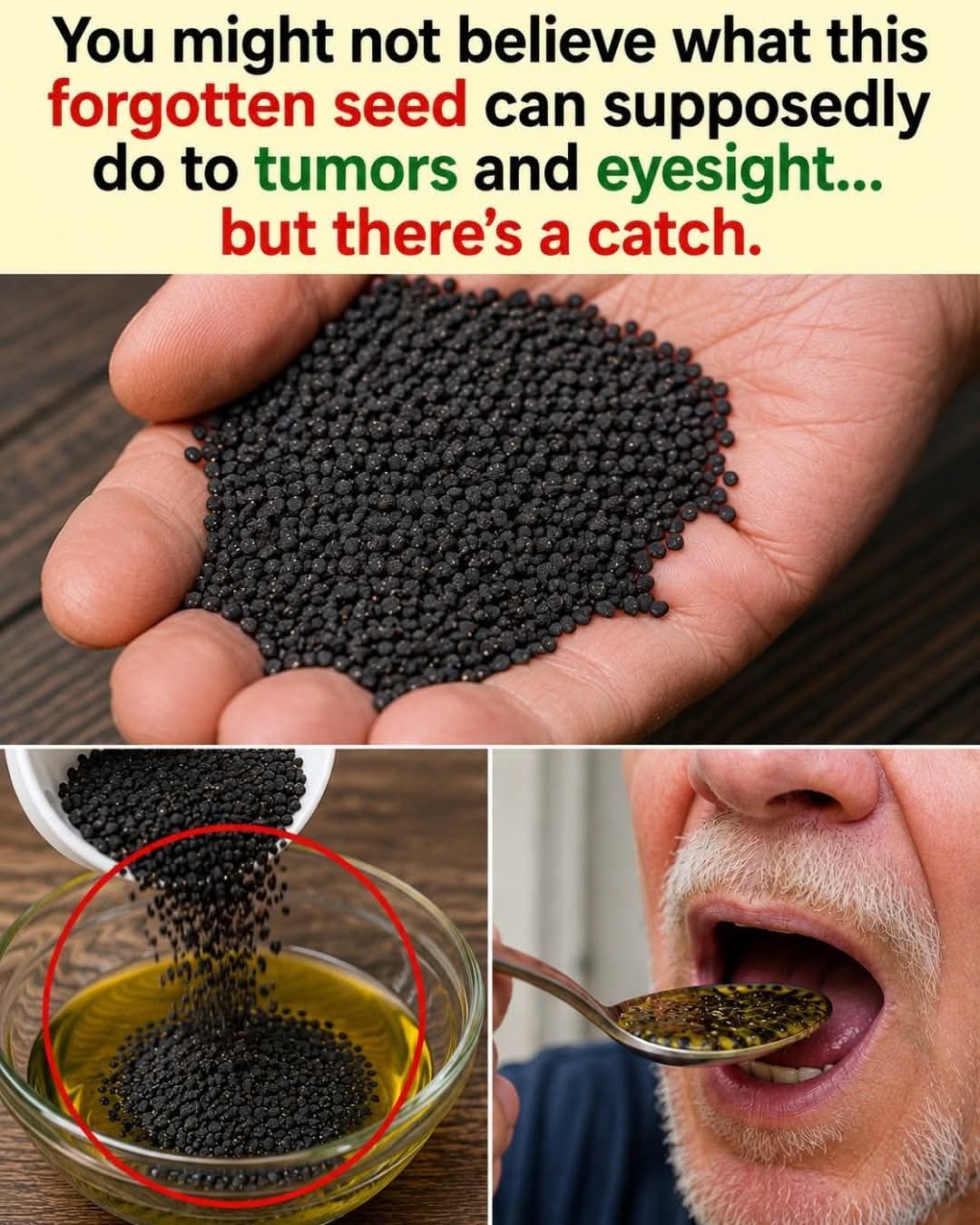
The viral image you’ve shared highlights what wellness communities call a “forgotten seed” — supposedly powerful against tumors and for eyesight, but “with a catch.” Let’s be honest about that catch upfront: no food or seed is a proven cure for cancer, and while black seed has genuine, studied benefits, it should complement — never replace — medical care. What it can offer is remarkable nutritional support, culinary magic, and a fascinating history. Below is a full deep-dive plus a delicious, traditional recipe.
The History of Black Seed
- Ancient Egypt: Black seeds were found in the tomb of Pharaoh Tutankhamun, suggesting they were treasured enough to accompany royalty into the afterlife. Queen Nefertiti reportedly used black seed oil in her beauty routine.
- Greco-Roman era: The Greek physician Dioscorides described it in De Materia Medica as a remedy for headaches, nasal congestion, and toothaches.
- Islamic tradition: The Prophet Muhammad is quoted in hadith as saying black seed is “a remedy for every disease except death” (this is a religious/traditional claim, not medical evidence).
- Ayurveda & Unani medicine: In India and the Middle East, kalonji has been used for centuries for digestion, skin health, and respiratory support.
- Modern era: Today, over 600 published studies have examined thymoquinone, black seed’s primary active compound.
What Are the Claimed Benefits? (An Honest Look)
| Benefit | Evidence Level |
|---|---|
| Antioxidant & anti-inflammatory effects | Good (lab and human studies) |
| Digestive support | Moderate |
| Blood sugar support | Moderate (small human trials) |
| Immune support | Moderate |
| “Shrinks tumors” / cures cancer | Weak — only lab/animal studies. NOT proven in humans |
| Restores eyesight | No solid evidence |
The real catch: the seed works best as part of a healthy diet, and it can interact with blood-thinning or blood-pressure medications. Consult a doctor before using it medicinally.
Nutrition Profile (per 1 teaspoon / ~2.5 g of seeds)
- Calories: 12
- Healthy fats: 0.8 g (rich in linoleic and oleic acid)
- Thymoquinone: the key bioactive antioxidant compound
- Fiber: 0.5 g
- Iron, calcium, magnesium, zinc, B vitamins
- Plant protein: 0.5 g
The Recipe: Traditional Black Seed & Honey Remedy (“Kalonji-Une blend”)
Ingredients (makes ~10 servings)
For the seed-oil infusion:
- 3 tablespoons whole Nigella sativa seeds
- 100 ml extra virgin olive oil (or black seed oil)
- 1 teaspoon raw organic honey
- Optional: a pinch of ground cinnamon
For the traditional flatbread pairing (Kalonji Naan):
- 2 cups all-purpose or whole wheat flour
- ½ cup warm water
- 1 tsp instant yeast
- 1 tsp sugar
- 2 tbsp plain yogurt
- 2 tbsp butter or ghee
- 1 tsp salt
- 2 tsp kalonji (black seeds) for topping
- Nigella-honey oil for brushing
Instructions & Method
Part 1 — The Seed Infusion (the “formation” of the remedy)
- Toast gently: Lightly dry-toast the black seeds in a pan for 1–2 minutes over low heat until fragrant. Do not burn — burnt seeds turn bitter.
- Infuse: Pour the warm (not hot) olive oil over the toasted seeds in a clean glass jar.
- Rest: Seal and let infuse 24–48 hours in a cool, dark place.
- Finish: Strain or leave seeds in; stir in 1 tsp honey. Store refrigerated up to 2 weeks.
Traditional use: 1 teaspoon daily, taken with breakfast.
Part 2 — Kalonji Naan (the delicious delivery vehicle)
- Activate: Mix warm water, sugar, and yeast. Let sit 10 minutes until foamy.
- Knead: Combine flour, salt, yogurt, butter, and the yeast mixture. Knead 8–10 minutes into a soft dough.
- Rise: Cover and let rise 1–1.5 hours until doubled.
- Shape: Divide into balls, roll into ovals, and brush the tops with water.
- Top: Sprinkle generously with kalonji seeds, pressing them lightly so they stick.
- Cook: Bake at 230°C (450°F) for 6–8 minutes until puffed and golden.
- Finish: Brush with the nigella-honey oil while hot.
Who Loves This Seed?
- South Asian cooks — kalonji is essential in naan, pickles, and curries.
- Middle Eastern kitchens — sprinkled on flatbreads and cheeses.
- Herbal wellness enthusiasts — for the honey-oil infusion.
- Bakers — its oregano-pepper aroma elevates savory breads.
- History buffs — few seeds carry 2,000+ years of documented use.
Conclusion
The “forgotten seed” is no miracle cure — but it is a genuinely remarkable little spice. Black cumin delivers antioxidants, flavor, and centuries of culinary tradition in a single teaspoon. Enjoy it toasted on warm naan, infused in honey, or folded into curries. Just remember the true catch: food nourishes and supports health, but real illness deserves real medicine. Use black seed as a delicious ally, not a replacement for your doctor.
Bon appétit — and as the old saying goes: “The kitchen is the best pharmacy.” 🌿