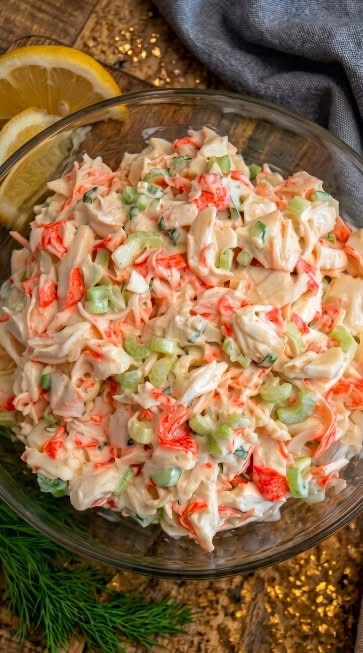
The dish in the image appears to be a creamy surimi salad, also commonly called imitation-crab or kani salad. Surimi is a processed seafood made primarily from finely minced white fish, commonly pollock, rather than actual crab. Wikipedia+1
Ingredients
Serves 4–6
- 450 g (1 lb) imitation crab sticks/surimi
- 1 cup celery, finely chopped
- ½ cup cucumber, finely diced
- ¼ cup green onions, finely chopped
- ½ cup mayonnaise
- 1–2 tablespoons fresh lemon juice
- 1 tablespoon fresh dill, chopped
- ½ teaspoon Old Bay or seafood seasoning
- ¼ teaspoon black pepper
- Salt, to taste
- Optional: 1–2 tablespoons Greek yogurt for a lighter dressing
- Lemon wedges and fresh dill, for garnish
These ingredients are consistent with common surimi salads, which frequently combine imitation crab with mayonnaise, celery, lemon, dill, and crunchy vegetables. Northwestern Sites+1
Instructions / Method
- Prepare the surimi: Thaw the imitation crab if frozen. Tear or shred it into small pieces.
- Chop the vegetables: Finely dice the celery, cucumber, and green onions.
- Make the dressing: In a bowl, combine mayonnaise, lemon juice, dill, seafood seasoning, and black pepper.
- Combine: Add the surimi and vegetables to the dressing.
- Mix gently: Toss until everything is evenly coated without crushing the surimi.
- Chill: Cover and refrigerate for at least 30 minutes so the flavors can blend.
- Serve: Garnish with fresh dill and lemon wedges. It can be served as a side dish, sandwich filling, or with crackers.
Chilling surimi salad before serving is a common preparation method and allows the flavors to develop. Northwestern Sites
Benefits
- Good source of protein: Surimi provides fish protein.
- Refreshing: Cucumber, celery, lemon, and dill add freshness and crunch.
- Convenient: It requires little or no cooking when using ready-to-eat surimi.
- Affordable: Imitation crab is generally less expensive than fresh crab meat. Kitchn
- Versatile: It works as a salad, sandwich filling, sushi accompaniment, or appetizer.
Note: Benefits depend on the specific surimi and mayonnaise used. Surimi can also contain considerable sodium and may contain wheat, egg, or other ingredients, so check the package if you have allergies or dietary restrictions.
Nutrition
Approximate nutrition per serving will vary substantially with the brands and quantities used. A typical serving may provide approximately:
| Nutrient | Approximate amount |
|---|---|
| Calories | 250–350 kcal |
| Protein | 10–15 g |
| Fat | 18–25 g |
| Carbohydrates | 10–18 g |
| Fiber | 1–2 g |
| Sodium | 500–900 mg |
Surimi itself is relatively high in water and protein and low in fat, but mayonnaise and added seasoning can significantly increase the calorie and sodium content. Wikipedia
History
Surimi has deep roots in Japanese food traditions, where minced and processed fish has been used to make products such as kamaboko. Modern imitation crab, known as kanikama, was developed commercially in Japan in the 1970s. It uses surimi shaped and colored to resemble crab meat. Wikipedia
Surimi later became popular internationally, particularly in seafood salads and sushi-related dishes. Japanese-style kani salad commonly combines imitation crab with vegetables such as cucumber and carrot and a creamy mayonnaise-based dressing. Alphafoodie
Conclusion
Creamy surimi salad is a simple, colorful, economical, and versatile seafood dish. The combination of tender imitation crab, crisp vegetables, creamy mayonnaise, lemon, and herbs gives it a pleasant balance of savory, tangy, creamy, and crunchy textures. It is especially suitable for lunches, picnics, parties, sandwiches, or as a chilled side dish.Sources