Carrot, Orange and Banana Juice: A Nutrient-Rich Drink for Eye and Brain Health
Introduction
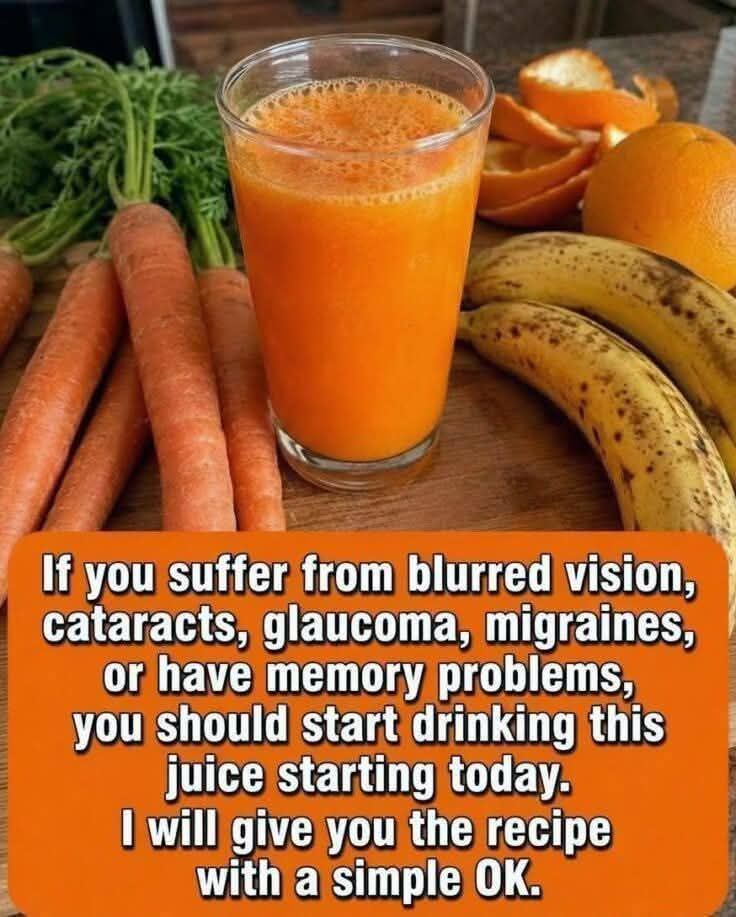
Bright, colorful foods are often associated with good nutrition, and few homemade drinks look as vibrant as a fresh carrot, orange, and banana blend. The image accompanying this article shows a refreshing orange-colored drink surrounded by carrots, oranges, and bananas, along with a message suggesting that drinking the juice can help people with blurred vision, cataracts, glaucoma, migraines, or memory problems.
That message is attractive, but it is important to separate good nutrition from medical treatment. A homemade fruit-and-vegetable drink can provide useful vitamins, minerals, carbohydrates, and plant compounds, but it should not be presented as a cure for cataracts, glaucoma, serious vision problems, migraines, or memory disorders. Those conditions can have many causes and may require professional diagnosis and treatment.
The good news is that the basic ingredients shown in the image can still make a delicious and nutritious beverage. Carrots provide beta-carotene, oranges are an excellent source of vitamin C, and bananas contribute potassium, vitamin B6, carbohydrates, and natural sweetness. When combined thoughtfully, they create a naturally sweet drink that can fit into a balanced diet.
This article explains how to prepare a carrot, orange, and banana drink, what its ingredients contribute nutritionally, how to make it taste better, and what science actually tells us about nutrition and eye and brain health.
The Recipe at a Glance
Ingredients
- 2 medium carrots
- 2 fresh oranges
- 1 ripe banana
- ½ to 1 cup cold water
- ½ cup ice, optional
- 1 teaspoon fresh lemon juice, optional
- A small piece of fresh ginger, optional
Equipment
- Blender
- Knife
- Cutting board
- Fine-mesh strainer, optional
- Serving glass
Preparation Time
Approximately 10 minutes.
Servings
Approximately 2 servings, depending on the amount of water used.
How to Make Carrot, Orange and Banana Juice
Step 1: Wash the carrots
Rinse the carrots thoroughly under running water. Scrub away any visible dirt. You can peel them if you prefer, although well-washed carrots can also be used without peeling.
Cut the carrots into small pieces so your blender can process them more easily.
Step 2: Prepare the oranges
Peel the oranges and remove as much of the white pith and seeds as practical. Divide the oranges into sections.
Using whole orange segments rather than only orange juice gives the drink more fiber.
Step 3: Prepare the banana
Peel one ripe banana and cut it into several pieces. A ripe banana is ideal because it provides natural sweetness and creates a creamy texture.
Step 4: Blend
Place the carrots, orange segments, banana, and ½ cup of cold water into a blender.
Blend until smooth.
If the mixture is too thick, gradually add more water until it reaches your preferred consistency.
Step 5: Add optional ingredients
For additional flavor, add a teaspoon of fresh lemon juice or a small piece of peeled ginger.
Blend again briefly.
Step 6: Strain if desired
If you prefer a thinner drink, pour the mixture through a fine-mesh strainer.
However, straining removes some of the pulp and fiber. For a more filling beverage, drinking it unstrained is generally preferable.
Step 7: Serve immediately
Pour into glasses and serve chilled. You can add ice if desired.
Why Carrots Are So Popular for Eye Nutrition
Carrots have a long-standing reputation for supporting healthy vision. There is some genuine nutritional reasoning behind this reputation, although popular claims sometimes exaggerate it.
Carrots are particularly rich in beta-carotene, a plant pigment that the body can convert into vitamin A.
Vitamin A plays an important role in normal vision. It contributes to the function of the retina and helps maintain normal vision, particularly in low-light conditions.
This does not mean that drinking carrot juice can reverse an existing eye disease. Instead, it means that getting adequate vitamin A from food is one component of maintaining normal body function.
The body regulates how much beta-carotene it converts into vitamin A, so consuming carrots as part of a varied diet is generally a practical way to obtain this nutrient.
Carrots also contain other plant compounds and antioxidants that contribute to their nutritional value.
Orange: A Natural Source of Vitamin C
Oranges add much more than flavor.
They are well known for their vitamin C content. Vitamin C is an essential nutrient involved in normal immune function, collagen formation, wound healing, and antioxidant protection.
Vitamin C also contributes to the body’s ability to protect cells from oxidative stress.
Oranges contain water and naturally occurring sugars, making them a refreshing ingredient for homemade drinks.
Another advantage of using whole orange segments instead of commercial orange juice is that the fruit contains some fiber.
The white inner layer of citrus fruit also contains beneficial plant compounds and some fiber, although its slightly bitter taste means many people prefer to remove most of it.
Banana Adds Creaminess and Potassium
Bananas make this recipe different from a traditional carrot-orange juice.
Because bananas contain relatively little water compared with oranges, they make the drink thicker and creamier.
Bananas also provide potassium, an essential mineral involved in normal muscle function, nerve signaling, and fluid balance.
They contain vitamin B6 as well.
The natural carbohydrates in bananas and oranges give this beverage a sweet taste without requiring added sugar.
If you use a very ripe banana, you may find that no sweetener is necessary at all.
What About Blurred Vision?
Blurred vision can have many different causes.
Temporary blurry vision may sometimes be related to fatigue, dry eyes, changes in blood glucose, medication effects, or other relatively minor factors. However, persistent or sudden blurred vision can also be associated with conditions requiring medical attention.
A healthy diet can support general health, but a carrot-orange-banana drink should not be considered a treatment for unexplained blurred vision.
If blurred vision is new, persistent, worsening, or accompanied by pain, flashes of light, a sudden increase in floaters, loss of vision, weakness, confusion, or other concerning symptoms, medical evaluation is important.
Nutrition works best as part of prevention and overall health—not as a substitute for an eye examination.
Can This Drink Cure Cataracts?
No food or homemade juice should be advertised as a cure for cataracts.
Cataracts occur when the normally clear lens of the eye becomes cloudy. They are commonly associated with aging, although other factors can contribute.
Eating a nutritious diet is valuable for overall health and may contribute to healthy aging, but drinking carrot juice does not dissolve or reverse an established cataract.
People with cataracts should discuss their symptoms and treatment options with an eye-care professional.
This distinction is especially important because delaying appropriate eye care in the hope that a particular juice will cure cataracts could allow vision problems to become more disruptive.
What About Glaucoma?
Glaucoma is another condition that should never be treated solely with food or home remedies.
Glaucoma involves damage to the optic nerve and can lead to permanent vision loss. Because vision loss from glaucoma may be irreversible, regular eye examinations and appropriate treatment are extremely important.
A nutritious diet can be part of a healthy lifestyle, but this drink cannot replace prescribed glaucoma treatment or monitoring.
If someone has been diagnosed with glaucoma, they should continue following their eye specialist’s recommendations.
Can It Prevent Migraines?
The situation with migraines is similarly complex.
Migraines are neurological conditions that can involve severe headache, sensitivity to light or sound, nausea, and other symptoms. Different people have different triggers.
Some individuals notice that dehydration, irregular meals, alcohol, lack of sleep, stress, or particular foods affect their migraine patterns.
This drink can contribute fluids and nutrients, but there is no reason to claim that carrot, orange, and banana juice is a universal migraine cure.
In fact, citrus or other foods may be triggers for some individuals, while being completely fine for others.
Anyone with recurring or severe headaches should discuss them with a qualified healthcare professional.
What About Memory?
The brain needs a steady supply of energy and nutrients to function normally.
Fruits and vegetables can contribute to a healthy eating pattern, and nutrients such as vitamin C, vitamin B6, folate, potassium, and other compounds are important to normal body function.
However, drinking one particular juice does not guarantee improved memory.
Memory changes can have many causes, including normal aging, poor sleep, stress, medications, nutritional deficiencies, neurological conditions, and other health issues.
If someone experiences significant or progressive memory problems, medical evaluation is much more appropriate than relying on a homemade drink.
The Importance of a Whole-Diet Approach
One of the biggest mistakes in nutrition is focusing on a single food or drink as though it can solve every health problem.
Health is influenced by the overall pattern of eating, physical activity, sleep, stress management, genetics, environmental factors, and access to appropriate healthcare.
Instead of thinking, “This juice will fix my eyes,” a more accurate perspective is:
“This drink can be one nutritious part of an overall healthy diet.”
That distinction makes the recipe both more realistic and more useful.
Juice Versus Whole Foods
There is an important difference between eating a whole carrot and drinking carrot juice.
When fruits and vegetables are blended, much of the original fiber remains if the drink is not strained. Juicing, however, can remove a significant portion of the pulp.
Fiber is important for digestive health and can help make meals more satisfying.
For that reason, blending the ingredients into a smoothie-like drink rather than extracting only the liquid is a good option.
The banana also naturally thickens the drink, making it possible to create a satisfying beverage without adding sugar.
How to Make the Drink Healthier
Keep the pulp
Instead of straining the drink, leave the fruit and vegetable pulp in it.
This increases the amount of fiber and makes the beverage more filling.
Avoid added sugar
The orange and banana already provide plenty of natural sweetness.
There is usually no need for table sugar, syrup, or honey.
Use fresh ingredients
Fresh carrots, ripe oranges, and bananas provide a pleasant flavor and allow you to control exactly what goes into the drink.
Drink a reasonable portion
A large glass can contain substantial amounts of natural carbohydrate because it includes several fruits and vegetables.
A moderate serving is usually more practical than consuming very large quantities.
Pair it with a balanced meal
Rather than relying on juice alone for breakfast, consider pairing it with a source of protein and healthy fat, such as plain yogurt, eggs, nuts, seeds, or another nutritious food.
Optional Ginger Variation
Fresh ginger can add a warm, slightly spicy flavor.
To make a ginger version, add a small piece of peeled fresh ginger while blending.
Start with a small amount because ginger has a strong flavor.
Ginger is also widely used in traditional cooking and beverages, but it should not be portrayed as a cure for migraines, vision disorders, or other diseases.
Optional Lemon Variation
A small amount of fresh lemon juice can brighten the flavor.
Because oranges are already acidic, only a little lemon is necessary.
One teaspoon is enough to begin with. Taste the drink and add more if desired.
A Tropical Variation
For a tropical version, replace part of the orange with pineapple.
Try:
- 2 carrots
- 1 orange
- ½ banana
- ½ cup pineapple
- ½ cup cold water
Blend until smooth.
The result will be sweeter and more tropical.
A Creamier Breakfast Version
If you want something more filling, add plain yogurt.
Combine:
- 2 carrots
- 1 orange
- 1 banana
- ½ cup plain yogurt
- ½ cup water
Blend thoroughly.
This version becomes more like a smoothie and provides additional protein compared with the basic fruit-and-vegetable drink.
When Is the Best Time to Drink It?
There is no special time of day at which this drink suddenly becomes medicinal.
You can enjoy it at breakfast, as part of a snack, or alongside a meal.
Some people prefer drinking fruit-and-vegetable smoothies in the morning because they are convenient and refreshing.
Others enjoy them after physical activity.
The most important factor is how the drink fits into your overall eating pattern.
Can Children Drink It?
For most healthy children who already eat these foods safely, a small serving can be part of a varied diet.
However, whole fruits and vegetables should remain important parts of children’s meals.
A child should not be encouraged to replace balanced meals with juice.
Parents should also consider allergies, digestive sensitivities, dental health, and individual dietary needs.
Important Considerations for People With Diabetes
Although the drink contains no added sugar, the carbohydrates from oranges and bananas still count toward total carbohydrate intake.
Blending several fruits can make it easy to consume more carbohydrate quickly than you would by eating a smaller portion of whole fruit.
People with diabetes or anyone monitoring blood glucose should consider portion size and the overall meal.
Adding a protein-rich food may also make the meal more balanced.
Individual dietary recommendations should come from a healthcare professional who understands the person’s needs.
Natural Sugar Is Still Sugar
The phrase “natural sugar” sometimes causes confusion.
The sugars naturally present in fruit are packaged together with water, nutrients, and—when the pulp remains—fiber.
That makes whole fruit nutritionally different from many sugary drinks.
Nevertheless, a large blended drink can contain a considerable amount of naturally occurring sugar.
This is another reason to enjoy the beverage in sensible portions.
Nutrition and Eye Health: The Bigger Picture
If your goal is to support long-term eye health, focusing on a variety of foods is more useful than depending on one recipe.
A balanced eating pattern can include:
- Leafy green vegetables
- Orange and yellow vegetables
- Colorful fruits
- Beans and legumes
- Whole grains
- Nuts and seeds
- Fish and other protein sources
- Adequate water
- A variety of minimally processed foods
Different foods provide different nutrients and plant compounds.
Carrots are useful, but they are only one piece of the puzzle.
Nutrition and Brain Health
The brain is also supported by overall dietary quality rather than a single “memory drink.”
A balanced diet that includes vegetables, fruits, whole grains, legumes, nuts, seeds, and appropriate sources of protein can help provide the nutrients needed for normal physiological function.
Lifestyle factors matter too.
Regular physical activity, adequate sleep, social connection, management of stress, and control of cardiovascular risk factors are all important aspects of healthy aging.
A colorful homemade drink can fit into this broader lifestyle, but it should not be marketed as a magic solution.
Common Mistakes When Making This Recipe
Adding too much water
Too much water can make the drink bland.
Start with a small amount and gradually increase it.
Using unripe bananas
An unripe banana can produce a less sweet and sometimes slightly starchy flavor.
A ripe banana creates a smoother result.
Using too many carrots
Carrots have a naturally earthy flavor. If you use too many, they can overpower the orange and banana.
Two medium carrots are a good starting point.
Straining everything
Straining makes the drink thinner, but it also removes much of the pulp.
If texture is not a problem, keep the pulp.
Adding unnecessary sweeteners
The banana and orange already provide sweetness.
Taste the drink before adding anything.
How to Store It
Fresh homemade drinks are best consumed soon after preparation.
If you need to store it, place it in a clean, sealed container and refrigerate it promptly.
The flavor and texture may change over time, particularly because banana can darken and the ingredients can separate.
Shake or stir before drinking.
For the best taste and freshness, preparing only what you plan to consume is usually preferable.
Frequently Asked Questions
Does carrot juice improve eyesight?
Carrots provide beta-carotene, which the body can use to make vitamin A, and vitamin A is important for normal vision. However, carrot juice does not automatically improve eyesight or reverse eye disease.
Can this drink remove cataracts?
No. There is no basis for presenting this homemade drink as a treatment that removes cataracts.
Can it cure glaucoma?
No. Glaucoma requires appropriate medical evaluation and management. This drink should not replace prescribed treatment.
Is it good for the brain?
It provides several nutrients that contribute to normal nutrition, but there is no evidence that one particular carrot-orange-banana drink can cure memory problems or dramatically restore memory.
Can I drink it every day?
For many healthy people, a moderate serving can fit into a balanced diet. However, variety is important, and the drink should not replace whole fruits, vegetables, protein, and other nutritious foods.
Do I have to strain it?
No. Leaving the pulp in the drink provides a thicker texture and retains more of the ingredients’ natural fiber.
Can I add ginger?
Yes. A small amount of fresh ginger can provide a pleasant spicy flavor.
Can I add milk?
You can, although milk changes the flavor and texture. Plain yogurt can also be used to create a creamier smoothie.
Safety First: When Eye Symptoms Need Medical Attention
Food is important, but some symptoms should never be ignored.
Seek prompt medical attention for sudden vision loss, sudden severe blurred vision, severe eye pain, a curtain-like shadow over the vision, sudden flashes or a large increase in floaters, significant eye redness with pain, or neurological symptoms accompanying visual changes.
These symptoms can sometimes indicate urgent conditions.
Similarly, persistent or worsening memory problems deserve professional evaluation rather than treatment with a home beverage.
A healthy recipe is an excellent addition to a lifestyle, but it should never delay necessary healthcare.
The Real Benefit of This Recipe
The greatest benefit of this drink is not that it magically cures diseases.
Its value is that it makes several nutritious foods easy to enjoy together.
Carrots contribute beta-carotene and other plant compounds. Oranges provide vitamin C and refreshing citrus flavor. Bananas contribute potassium, vitamin B6, carbohydrates, and creaminess.
Together, they make a colorful beverage that can encourage people to consume more fruits and vegetables.
That is a much more realistic and sustainable approach to nutrition.
Final Thoughts
The carrot, orange, and banana drink shown in the image is an appealing homemade recipe with a naturally bright color, refreshing flavor, and useful nutrients.
However, viral health messages often go too far when they claim that one juice can cure blurred vision, cataracts, glaucoma, migraines, or memory problems. Those claims should be treated cautiously.
Carrots can provide beta-carotene, oranges can provide vitamin C, and bananas can provide potassium and vitamin B6. These nutrients contribute to normal body functions and can form part of a healthy diet.
The best approach is to enjoy the drink as one nutritious option, not as a replacement for medical care.
For better nutrition, keep the pulp when possible, avoid unnecessary added sugar, use fresh ingredients, and pair the drink with a balanced diet containing vegetables, fruits, whole grains, protein sources, nuts, seeds, and other nutrient-rich foods.
Most importantly, if you are experiencing persistent blurred vision, suspected cataracts, glaucoma symptoms, recurrent migraines, or significant memory changes, speak with an appropriate healthcare professional. Nutrition can support health, but it cannot replace diagnosis, treatment, or regular medical care.
So prepare the drink, enjoy its naturally sweet and refreshing flavor, and let it be what it truly is: a delicious fruit-and-vegetable beverage that can complement a healthy lifestyle—not a miracle cure.
Simple Recipe Card
Carrot, Orange & Banana Drink
Ingredients:
2 carrots, 2 oranges, 1 ripe banana, ½–1 cup cold water, optional ice, lemon juice, or ginger.
Method:
Wash and chop the carrots. Peel and separate the oranges. Peel and slice the banana. Add everything to a blender with ½ cup water. Blend until smooth, adding more water as needed. Serve immediately with or without straining.
Tip: Keep the pulp for more fiber and avoid adding sugar because the orange and banana already provide natural sweetness.
Important: This drink supports a nutritious eating pattern but does not cure cataracts, glaucoma, blurred vision, migraines, or memory disorders.