Red Onion: The Everyday Food That May Support Heart Health, Digestion, and Healthy Skin
Red onions are one of those simple kitchen ingredients that can easily be overlooked. They are inexpensive, widely available, easy to prepare, and capable of adding color, flavor, and texture to almost any meal. Yet beneath their colorful outer layers is a collection of plant compounds that researchers have studied for their potential effects on cardiovascular health, metabolism, digestion, and overall well-being.
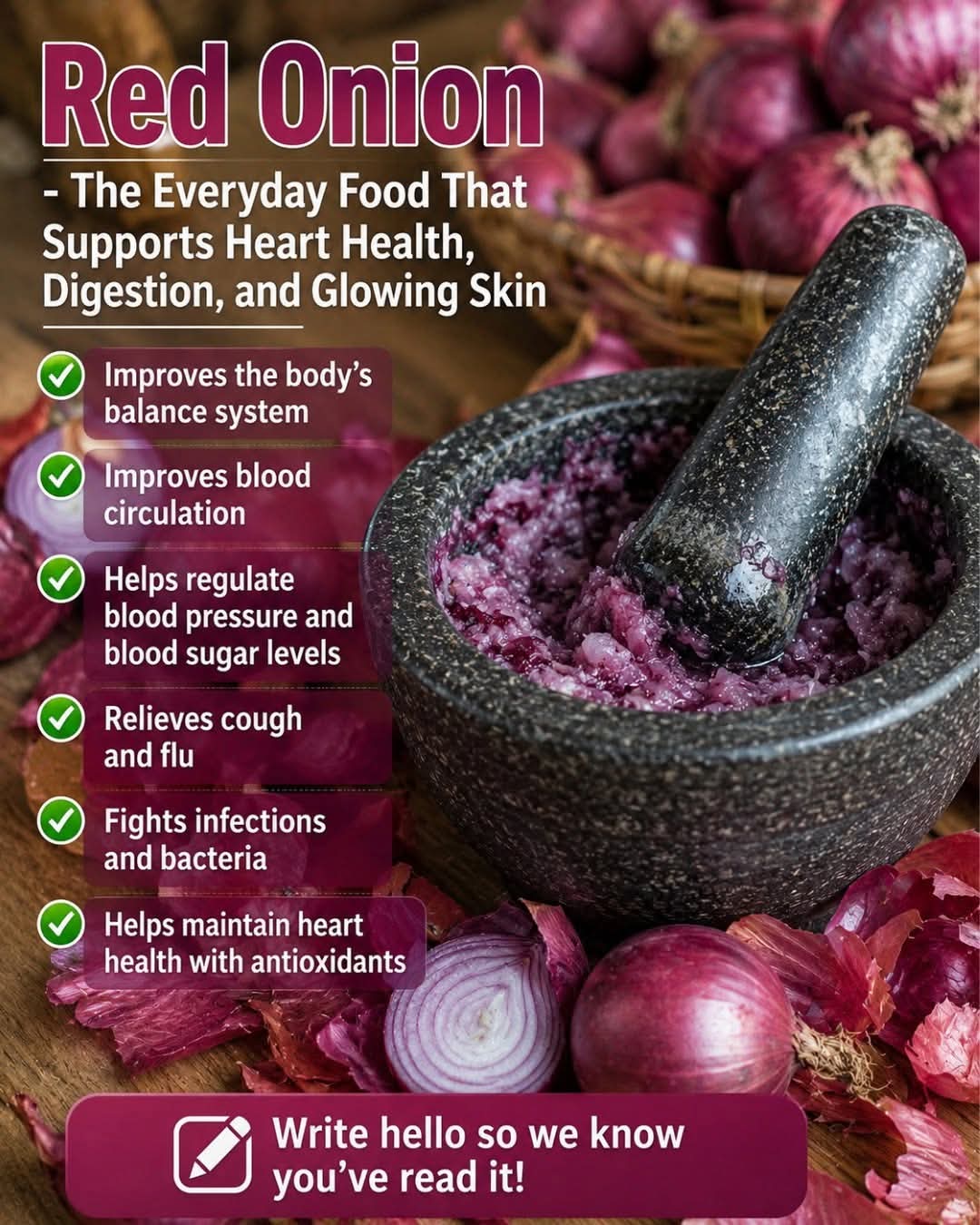
The image accompanying this article highlights several possible benefits of red onions, including support for heart health, circulation, blood pressure, blood sugar, digestion, immunity, and skin health. Some of these claims have scientific evidence behind them, while others are better described as potential or traditional uses rather than proven medical effects.
One of the most interesting compounds found in onions is quercetin, a flavonoid with antioxidant and anti-inflammatory properties. Human research on quercetin has produced promising findings, particularly concerning blood pressure, although studies have often used concentrated supplements or extracts rather than an ordinary serving of onions. A 2023 umbrella review concluded that quercetin supplementation may modestly reduce systolic blood pressure, but the certainty of evidence varied and more high-quality research is needed.
That distinction matters. Eating red onions can certainly be part of a healthy diet, but they should not be presented as a cure for hypertension, diabetes, infections, flu, or other diseases.
So, what makes red onions interesting from a nutritional perspective? How can you incorporate them into your meals? And what should you know before eating large amounts?
Let’s take a closer look.
What Makes Red Onions Special?
Red onions belong to the same botanical family as other common onions. Their deep red-purple color comes largely from plant pigments called anthocyanins, while onions also contain flavonoids such as quercetin and various sulfur-containing compounds.
The exact nutritional composition can vary according to the onion variety, growing conditions, storage, cooking method, and serving size. Nevertheless, onions generally provide relatively few calories while contributing small amounts of vitamins, minerals, fiber, and numerous bioactive plant compounds.
The outer layers of onions can contain particularly high concentrations of some flavonoids. This is one reason researchers have shown interest in onion-derived compounds.
However, it is important not to confuse the presence of a compound in a food with a guaranteed medical effect. A laboratory experiment, animal study, or concentrated supplement trial does not automatically mean that eating a normal amount of red onion will produce the same result.
The best way to think about red onions is as one useful component of a varied, plant-rich diet.
- Red Onions and Heart Health
Heart health is one of the most frequently discussed potential benefits of onions.
Red onions contain flavonoids, including quercetin, that have been investigated for their relationship with cardiovascular health. Researchers are particularly interested in their possible influence on blood pressure, vascular function, oxidative stress, and inflammation.
Several clinical studies and meta-analyses have investigated quercetin supplementation. One meta-analysis of randomized controlled trials found a modest reduction in systolic and diastolic blood pressure following quercetin supplementation.
Another meta-analysis published in 2022 found that quercetin supplementation was associated with a small reduction in systolic blood pressure and a reduction in diastolic blood pressure among people with elevated blood pressure.
However, there is an important limitation: these studies investigated quercetin supplements, not simply a plate of sliced red onion.
That means it would be inaccurate to say that eating red onions will definitely lower your blood pressure.
Instead, red onions can contribute to a heart-friendly eating pattern. They can replace more heavily processed ingredients, add flavor without requiring large amounts of salt, and contribute plant compounds to meals.
A heart-friendly combination
Try combining red onion with:
- Tomatoes
- Beans
- Lentils
- Leafy greens
- Extra-virgin olive oil
- Garlic
- Whole grains
- Fish
- Nuts and seeds
The overall dietary pattern matters much more than any single food.
- Supporting Healthy Blood Pressure
The image suggests that red onions may help regulate blood pressure. This statement should be interpreted carefully.
Blood pressure is influenced by many factors, including genetics, body weight, physical activity, sodium and potassium intake, alcohol consumption, stress, sleep, medications, kidney function, and overall dietary quality.
Research involving quercetin provides some evidence of a possible blood-pressure-lowering effect. For example, an umbrella review of randomized controlled trial meta-analyses found that quercetin supplementation reduced systolic blood pressure by a modest amount, although the certainty of evidence ranged from very low to moderate.
This does not mean that red onions are a replacement for prescribed blood-pressure treatment.
If you have hypertension, continue taking prescribed medication and monitoring your blood pressure according to your healthcare professional’s advice.
Red onion can simply be one flavorful ingredient in a dietary pattern designed to support cardiovascular health.
- Red Onions and Digestion
Another reason onions are interesting is their carbohydrate and fiber composition.
Onions contain fructans, a type of carbohydrate that can be fermented by bacteria in the large intestine. Fructans and related prebiotic carbohydrates have been studied for their influence on the gut microbiome.
In practical terms, this means that certain carbohydrates in onions can reach the colon, where intestinal microorganisms can ferment them.
This is one reason onions are sometimes described as containing prebiotic components.
A healthy gut microbiome is associated with many aspects of health, although scientists are still learning exactly how individual foods influence the complex community of microorganisms living in the digestive tract.
But onions can cause digestive discomfort
There is an important side of this story.
Because onions contain fermentable carbohydrates, some people experience:
- Gas
- Bloating
- Abdominal discomfort
- Changes in bowel habits
People who are sensitive to FODMAP-containing foods may find that large portions of onion cause more digestive symptoms.
If raw red onion bothers your stomach, try using a smaller amount, cooking it thoroughly, or combining it with other foods.
You do not need to eat a huge quantity of onions to benefit from having vegetables in your diet.
- Raw Red Onion vs. Cooked Red Onion
One of the easiest ways to eat red onion is raw.
Raw red onion has a sharp, spicy flavor and works especially well in:
- Salads
- Sandwiches
- Wraps
- Salsas
- Guacamole
- Grain bowls
- Bean salads
- Burgers
- Mediterranean-style dishes
Cooking changes the flavor and texture considerably. Sautéed red onion becomes softer and sweeter, while roasting produces caramelized flavors.
Heat can alter some plant compounds, so cooking does not necessarily produce exactly the same nutritional profile as eating the onion raw.
However, cooked vegetables are still nutritious and can make it easier to eat a greater variety of plant foods.
The best choice is therefore the one that helps you consistently enjoy vegetables.
- Red Onions and Antioxidants
The deep color of red onions is a visual reminder that they contain plant pigments.
Anthocyanins are naturally occurring pigments found in many red, purple, and blue fruits and vegetables. Red onions also contain flavonoids such as quercetin.
These compounds are studied for their antioxidant activity.
Antioxidants are often described as substances that help protect cells from oxidative stress. However, the human body has a complicated antioxidant system, and eating antioxidant-rich foods does not mean that every free radical is simply “destroyed.”
Nutrition science increasingly emphasizes the overall pattern of eating rather than promises about individual antioxidant foods.
A diet containing vegetables, fruits, legumes, whole grains, nuts, and seeds provides a broad range of naturally occurring compounds.
Red onions fit comfortably into that pattern.
- Can Red Onions Help With Blood Sugar?
The image also suggests that onions may help regulate blood sugar.
This is an area where careful wording is particularly important.
Some studies have investigated onion supplementation and metabolic markers. A 2023 systematic review and meta-analysis of randomized controlled trials reported improvements in several metabolic parameters with onion supplementation, including some measures of cholesterol and systolic blood pressure.
However, the research involved specific interventions and should not be interpreted as proof that ordinary red onions can prevent or treat diabetes.
Another meta-analysis examining quercetin supplementation found that lipid and glucose findings were less consistent than blood-pressure findings.
Therefore, people with diabetes should not use red onion as a substitute for medication, glucose monitoring, or an appropriate dietary plan.
That said, red onions can be a very useful food for a balanced meal because they add flavor with relatively little energy and can be paired with high-fiber foods such as beans, vegetables, and whole grains.
- Red Onions and Cholesterol
Researchers have also investigated onions and lipid profiles.
The 2023 systematic review of onion supplementation found significant improvements in some lipid measures, including LDL cholesterol and total cholesterol in its pooled analysis.
But again, these findings do not mean that eating red onions alone will lower cholesterol enough to treat high cholesterol.
Cholesterol management usually involves several factors:
- Eating an appropriate overall diet.
- Getting regular physical activity.
- Maintaining a healthy weight when appropriate.
- Avoiding tobacco.
- Managing blood pressure and blood sugar.
- Taking prescribed medication when recommended.
- Following up with a healthcare professional.
Red onions can contribute flavor and plant compounds to that lifestyle, but they are not a standalone treatment.
- Red Onions and Healthy Skin
The image describes red onions as supporting “glowing skin.”
There is some nutritional logic behind this idea, but the claim should not be exaggerated.
Skin health depends on many factors, including genetics, age, sun exposure, hydration, sleep, smoking, nutrition, and skincare practices.
Eating vegetables provides the body with a variety of nutrients and phytochemicals that support normal physiological functions.
Red onions contribute plant compounds to the diet, but there is not strong evidence that eating them alone will dramatically transform skin appearance.
If you want to support healthy-looking skin, think beyond one ingredient.
A balanced diet containing colorful vegetables and fruits, adequate protein, healthy fats, whole grains, and sufficient fluids is a much more sensible approach.
And perhaps most importantly, protecting the skin from excessive ultraviolet exposure is one of the most established ways to support long-term skin health.
- Does Red Onion Fight Infections?
The image claims that red onions can “fight infections and bacteria.”
This statement needs substantial qualification.
Onions contain sulfur compounds and other substances that have demonstrated antimicrobial activity in laboratory research. However, laboratory antimicrobial activity is not the same as proving that eating onions can treat an infection inside the human body.
There is currently no reason to use red onions instead of appropriate medical treatment for bacterial infections.
If someone has a diagnosed infection, especially one causing significant symptoms, medical advice should be followed.
Red onion is food—not an antibiotic.
The same principle applies to viral illnesses. Eating nutritious foods can support general nutrition while someone is sick, but red onions should not be presented as a cure for influenza, COVID-19, or other infections.
- What About Coughs and Flu?
Onions have a long history in traditional home remedies.
Different cultures have used onions in foods, teas, syrups, broths, and other preparations during periods of coughs or respiratory illness.
Warm fluids and nutritious meals may be comforting when someone is unwell, and onion-containing foods can certainly be part of such meals.
But there is not enough clinical evidence to conclude that eating red onion directly cures a cough or flu.
If a cough is severe, persistent, accompanied by breathing difficulty, chest pain, coughing blood, dehydration, or other concerning symptoms, professional medical evaluation is appropriate.
Traditional food remedies can be comforting, but they should not replace evidence-based care.
- Why Red Onions Are So Useful in Everyday Cooking
Perhaps the greatest benefit of red onions is not a dramatic medicinal effect.
It is their practicality.
A small amount can make an ordinary meal more flavorful.
They can add:
- Crunch
- Sweetness
- Mild heat
- Color
- Aroma
- Texture
This can make healthy meals more enjoyable.
For example, imagine a simple bowl containing chickpeas, tomatoes, cucumber, parsley, olive oil, lemon, and red onion.
The onion adds sharpness and complexity without requiring a heavy sauce.
Likewise, adding thinly sliced red onion to a sandwich can provide texture while allowing you to use less rich or salty dressing.
In this sense, red onion can indirectly support healthy eating by making nutritious foods more appealing.
- Easy Ways to Add More Red Onion to Your Diet
You do not need complicated recipes.
Red Onion and Tomato Salad
Slice red onion and combine it with ripe tomatoes, cucumber, parsley, lemon juice, olive oil, and a small amount of salt.
Allow it to rest for a few minutes so the flavors blend.
Avocado and Red Onion Toast
Top whole-grain toast with mashed avocado, thinly sliced red onion, tomato, and a squeeze of lemon.
Chickpea and Red Onion Bowl
Combine chickpeas, cucumber, tomatoes, parsley, red onion, olive oil, lemon juice, and herbs.
This makes a simple fiber-rich meal or side dish.
Roasted Red Onion
Cut red onions into wedges and roast them with other vegetables. The heat softens their texture and brings out their natural sweetness.
Red Onion Salsa
Combine finely chopped red onion with tomatoes, cilantro or parsley, lime or lemon juice, and a little chili.
Serve with beans, grilled vegetables, fish, chicken, or whole-grain dishes.
- A Simple Red Onion Dressing
Red onions can also become part of a homemade dressing.
Ingredients
- ½ small red onion, finely chopped
- 3 tablespoons extra-virgin olive oil
- 1 tablespoon lemon juice
- 1 teaspoon vinegar
- ½ teaspoon mustard
- Black pepper to taste
- Optional fresh herbs
Method
Combine everything in a small jar.
Close the lid tightly and shake until the ingredients are combined.
Allow the dressing to sit for approximately 10 minutes before serving.
The onion becomes slightly milder while its flavor spreads throughout the dressing.
Use it over salads, roasted vegetables, beans, or grain bowls.
- How Much Red Onion Should You Eat?
There is no universally established medicinal dose of red onion.
That is important because the image may give the impression that more onion automatically means more health benefits.
It does not.
A reasonable approach is to use red onion as one vegetable among many.
Some people may enjoy a few slices with meals, while others may use a larger portion in salads or cooking.
If onions cause digestive symptoms, reduce the portion and see whether tolerance improves.
A varied diet is preferable to relying heavily on any single ingredient.
- Who Should Be Careful With Red Onions?
For most people, onions are a normal food.
However, certain individuals may experience problems.
People sensitive to FODMAPs
Onions are high in fructans, which can trigger digestive symptoms in some people with irritable bowel syndrome or other gastrointestinal sensitivities.
People with reflux
Raw onions may worsen heartburn or reflux symptoms in some individuals.
People with food allergies
True onion allergy is uncommon but possible. Anyone who experiences swelling, difficulty breathing, hives, or other signs of a serious allergic reaction after eating onion should seek appropriate medical attention.
People taking medications
Food amounts of onion are generally normal in a balanced diet, but concentrated herbal products or supplements can behave differently from ordinary food. Anyone considering concentrated quercetin or onion extracts should discuss them with a healthcare professional, particularly when taking medications.
- Why the Whole Diet Matters More Than One Food
One of the biggest problems with viral health posts is the tendency to present one food as a miracle ingredient.
Red onion is nutritious and interesting, but it cannot compensate for an otherwise poor diet.
For cardiovascular health, a more useful approach is to build meals around:
- Vegetables
- Fruits
- Beans and lentils
- Whole grains
- Nuts and seeds
- Fish or other appropriate protein sources
- Healthy unsaturated fats
- Limited highly processed foods
- Appropriate sodium intake
Red onion can fit naturally into this pattern.
The same principle applies to digestion. Eating one onion while consuming very little fiber overall is unlikely to create a healthy digestive pattern.
Instead, aim for a broad variety of plant foods.
- Red Onion, Quercetin, and What the Research Really Says
Quercetin deserves special attention because it is often responsible for many of the health claims associated with onions.
Human clinical research suggests that concentrated quercetin may have a modest effect on blood pressure in some populations.
However, researchers have not established that eating a normal serving of red onion provides the same amount of quercetin used in supplementation studies.
One study involving an onion-skin quercetin extract found a reduction in 24-hour systolic blood pressure in a subgroup of people with hypertension, but the overall group did not experience the same significant effect.
Other research has produced less impressive or inconsistent findings. For example, a controlled trial found that a single dose of quercetin did not alter post-meal vascular or metabolic responses in overweight adults with hypertension.
This is exactly why responsible nutrition writing should use phrases such as “may support,” “has been studied for,” and “research suggests” instead of promising that a food will cure disease.
- How to Choose and Store Red Onions
Choose onions that feel firm and heavy for their size.
Avoid onions with:
- Soft spots
- Visible mold
- Excessive moisture
- Strong signs of decay
- Extensive sprouting
Store whole onions in a cool, dry, well-ventilated location.
Once cut, refrigerate the remaining onion in a suitable sealed container and use it within an appropriate period according to food-safety guidance and its condition.
Keep cut onions away from raw meat and other foods that could cause cross-contamination.
- A Few Simple Habits Can Make Red Onion More Enjoyable
If you find raw onion too strong, there are several tricks.
Soak sliced onion
Place thinly sliced red onion in cold water for several minutes, then drain thoroughly. This can reduce some of the sharpness.
Add acid
Lemon juice or vinegar can soften the flavor.
Pickle it
Quick-pickled red onions are excellent on sandwiches, salads, tacos, grain bowls, and roasted vegetables.
Cook it slowly
Slow cooking transforms the sharp onion into something sweeter and softer.
Combine it with fresh herbs
Parsley, cilantro, mint, basil, and dill can balance the strong flavor.
- Quick-Pickled Red Onion Recipe
Ingredients
- 1 medium red onion
- ½ cup vinegar
- ½ cup water
- 1 teaspoon sugar
- ½ teaspoon salt
- Optional peppercorns or herbs
Instructions
Thinly slice the red onion.
Place the slices in a clean heat-resistant jar or container.
Combine the vinegar, water, sugar, and salt.
Pour the mixture over the onion until the slices are covered.
Allow the onions to cool and refrigerate.
They can become a flavorful addition to salads, sandwiches, wraps, tacos, grain bowls, and many other meals.
- Red Onion as Part of a Healthy Lifestyle
The most realistic way to think about red onion is as a supporting player, not a miracle cure.
Eating vegetables regularly is associated with healthy dietary patterns. Red onion helps make those meals flavorful and colorful.
For heart health, pair it with other nutritious foods.
For digestion, combine it with a variety of fiber-containing foods according to your tolerance.
For metabolic health, use it in meals that emphasize vegetables, legumes, whole grains, lean proteins, and healthy fats.
For general wellness, focus on sleep, physical activity, stress management, hydration, and appropriate medical care.
No single ingredient can replace these foundations.
- Common Myths About Red Onion
Myth 1: Red onion can cure high blood pressure.
Reality: Research on quercetin suggests a possible modest blood-pressure effect, but red onion should not be considered a treatment for hypertension.
Myth 2: Eating raw onion prevents infections.
Reality: Onion compounds have interesting laboratory properties, but eating onion has not been proven to replace antibiotics or antiviral treatment.
Myth 3: Red onion cures diabetes.
Reality: Some onion and quercetin research has investigated metabolic outcomes, but onions are not a diabetes treatment.
Myth 4: More onion means more health benefits.
Reality: Excessive amounts may cause digestive discomfort, especially in sensitive individuals.
Myth 5: Cooking destroys all of the benefits.
Reality: Cooking changes the composition and flavor of foods, but cooked onions remain nutritious. The best preparation is one that helps you enjoy vegetables regularly.
- The Bottom Line
Red onions are much more than a colorful garnish.
They provide flavonoids such as quercetin, pigments such as anthocyanins, and fermentable carbohydrates that can interact with the gut microbiome. Their compounds have been studied for cardiovascular and metabolic effects, and research involving concentrated quercetin or onion preparations has produced some promising findings, particularly regarding blood pressure.
At the same time, the evidence does not justify claiming that red onions cure hypertension, diabetes, infections, flu, coughs, or other medical conditions.
The healthiest approach is simple: eat red onions as part of a diverse diet rich in vegetables, fruits, legumes, whole grains, nuts, seeds, and other minimally processed foods.
Enjoy them raw in salads, cooked in soups and stews, roasted with vegetables, or quickly pickled for a bright and crunchy topping.
A few slices of red onion may not be a miracle cure—and they do not need to be.
Their real value is that they are an affordable, flavorful plant food that can make healthy meals more enjoyable.
Frequently Asked Questions
Is red onion healthier than white onion?
Red and white onions have different amounts of plant compounds and pigments, but both can be nutritious choices. Red onions are particularly interesting because of their colorful flavonoid pigments.
Is it better to eat red onion raw?
Raw onion preserves a different profile of heat-sensitive compounds and has a stronger flavor. Cooked onion is also nutritious. Choose the preparation you enjoy and tolerate best.
Can I eat red onion every day?
For most people, onion can be included regularly as part of a balanced diet. The appropriate amount depends on personal preference and digestive tolerance.
Can red onion lower blood pressure?
Research on quercetin supplementation suggests a modest blood-pressure-lowering effect in some studies, but this does not establish that ordinary servings of red onion will lower blood pressure enough to treat hypertension.
Can red onion improve digestion?
Onions contain fructans that can be fermented by intestinal bacteria and may have prebiotic effects. However, these same carbohydrates can cause gas or bloating in sensitive individuals.
Can red onion cure a cold or flu?
No. Red onion can be part of a nutritious diet while you are sick, but it should not be considered a cure for viral infections.
Is red onion good for the heart?
It can be part of a heart-friendly dietary pattern. Its flavonoids, including quercetin, have been investigated in cardiovascular research, but the health effect of eating onions should not be exaggerated.
Final Thoughts
Sometimes the most useful foods are the ones already sitting in the kitchen.
Red onion is inexpensive, versatile, colorful, and packed with naturally occurring plant compounds. It can brighten a salad, deepen the flavor of a soup, add crunch to a sandwich, or become the star of a simple pickle.
Its potential cardiovascular and metabolic benefits are interesting enough to deserve scientific attention, but responsible nutrition means separating promising research from proven medical treatment.
Rather than searching for one magical food that solves every health problem, build meals around a wide variety of nutritious ingredients.
Use red onions generously when you enjoy them. Combine them with vegetables, legumes, whole grains, herbs, healthy fats, and quality protein. Pay attention to your body’s tolerance, especially if raw onions cause digestive discomfort.
And remember: healthy eating is not about finding one miracle ingredient. It is about making many good choices consistently.
Red onion can be one of those choices—a simple everyday food that brings flavor, color, and potentially valuable plant compounds to the table.
Health note: This article is for general educational purposes and does not diagnose, treat, or prevent disease. People with hypertension, diabetes, persistent digestive symptoms, or other medical conditions should follow individualized advice from a qualified healthcare professional. Do not stop or change prescribed medication because of claims about foods or supplements.