Avocado Seed Tea: What You Should Know About the Trend, Potential Benefits, Safety, and How to Prepare It
Avocado seed tea has become a popular natural-health trend, especially on social media. The idea is simple: instead of throwing away the large seed inside an avocado, some people dry it, grate or chop it, simmer it in water, and drink the resulting tea.
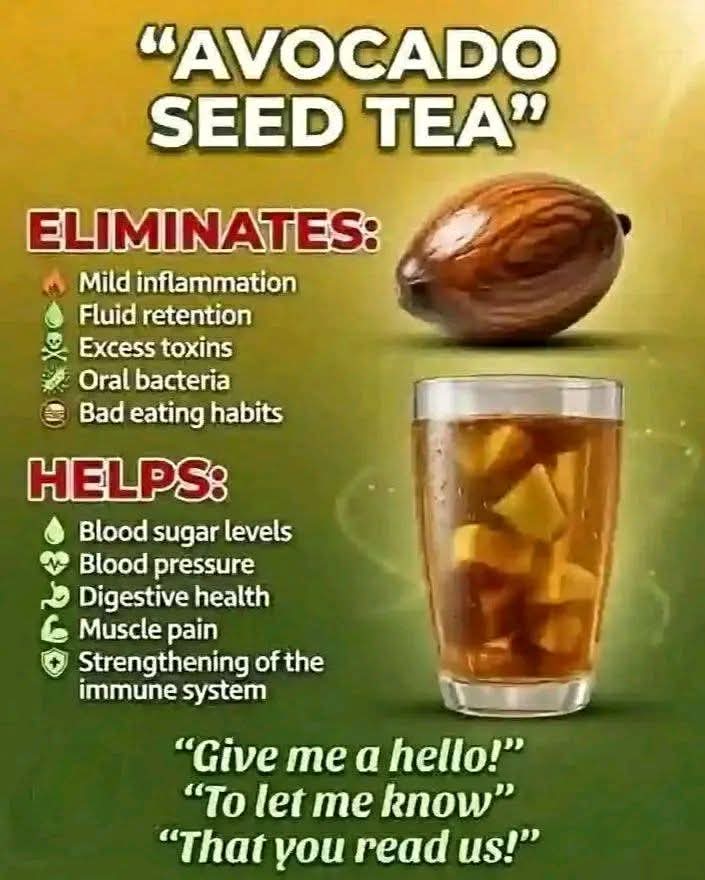
Posts promoting avocado seed tea often claim that it can “eliminate toxins,” reduce inflammation, remove fluid retention, improve blood sugar and blood pressure, support digestion, relieve muscle pain, fight oral bacteria, and strengthen the immune system.
But how much of this is actually supported by science?
The answer is more complicated—and more interesting—than a viral health graphic suggests.
Avocado seeds do contain numerous plant compounds, including phenolic compounds and other phytochemicals that have demonstrated antioxidant or biological activity in laboratory research. However, research on avocado seeds is still developing, and there is not enough high-quality human evidence to conclude that drinking avocado seed tea treats diseases, removes toxins, lowers blood pressure, controls diabetes, or strengthens immunity. Reviews of the scientific literature specifically emphasize that more clinical testing is needed.
That distinction is important.
A natural ingredient can contain interesting compounds without automatically becoming a proven medicine.
So, if you have seen claims about avocado seed tea and wondered whether this unusual drink deserves a place in your kitchen, this comprehensive guide explores the science, possible benefits, preparation traditions, limitations, and safety considerations.
What Is Avocado Seed Tea?
Avocado seed tea is a homemade infusion or decoction prepared from the seed, or pit, of an avocado.
The seed is normally discarded after the fruit is eaten. It is large, firm, and covered by a thin outer layer. Because the seed contains starch, fiber-related components, phenolic compounds, and other phytochemicals, researchers have become increasingly interested in finding ways to use this otherwise discarded part of the fruit.
A typical traditional preparation involves:
- Washing the avocado seed.
- Removing the outer skin.
- Drying the seed.
- Cutting, grating, or shredding it.
- Simmering a small amount in water.
- Straining the liquid.
- Drinking the resulting infusion.
However, there is currently no universally established medicinal dose, preparation method, or standardized recipe for avocado seed tea.
This is one of the biggest differences between a traditional beverage and a clinically studied medicine.
Why Are People Interested in the Avocado Seed?
Most people think of the avocado as a nutritious fruit, while the seed is simply waste.
Scientific researchers see things differently.
Avocado seeds contain a variety of chemical compounds that may have biological activity. Reviews have identified phenolic compounds, procyanidins, catechins, starches, lipids, proteins, and other phytochemicals.
Some laboratory experiments have found antioxidant and antimicrobial activity in avocado-seed extracts. Other experimental studies have investigated possible effects related to inflammation, blood glucose, cholesterol, and cardiovascular processes.
But there is an important scientific principle to remember:
Activity in a test tube does not automatically mean the same effect occurs in a human body after drinking tea.
The dose, absorption, metabolism, preparation method, and safety profile can all be different.
Does Avocado Seed Tea “Detox” the Body?
One of the most common claims is that avocado seed tea removes toxins.
This is an attractive idea, but the word “detox” is often used far too loosely.
Your body already has highly sophisticated systems for processing and eliminating unwanted substances. The liver, kidneys, digestive tract, lungs, and skin all participate in maintaining internal balance.
There is no strong clinical evidence showing that homemade avocado seed tea “flushes toxins” from the body.
That does not mean avocado seeds contain no interesting compounds. They do.
It simply means that antioxidant activity or phytochemical content should not be confused with a proven detoxification treatment.
If someone wants to support normal detoxification processes, the most evidence-based approach is much less dramatic:
- Drink adequate fluids.
- Eat a varied diet.
- Consume sufficient fiber.
- Limit excessive alcohol.
- Avoid smoking.
- Exercise regularly.
- Get adequate sleep.
- Maintain healthy body weight.
- Follow medical advice for existing conditions.
These habits support the body’s normal physiological functions far more reliably than a “detox tea.”
Avocado Seed Tea and Inflammation
The image associated with this trend claims that avocado seed tea can eliminate mild inflammation.
There is a scientific reason people are interested in this possibility.
Avocado seeds contain phenolic compounds and other substances with antioxidant activity. Laboratory studies have found biological activity in avocado-seed extracts, including antioxidant and anti-inflammatory potential.
However, laboratory findings should be interpreted cautiously.
An extract placed directly into a laboratory system is not equivalent to drinking a cup of homemade tea.
Researchers still need to determine:
- Which compounds are absorbed?
- How much reaches the bloodstream?
- What dose is required?
- How are the compounds metabolized?
- What preparation method works best?
- Are the compounds safe at repeated doses?
- Do measurable laboratory effects translate into meaningful health outcomes?
Until those questions are answered, avocado seed tea should not be promoted as a treatment for inflammatory diseases.
A healthier interpretation is that avocado seeds contain compounds worthy of scientific investigation.
Can Avocado Seed Tea Reduce Fluid Retention?
Another popular claim is that avocado seed tea acts as a natural diuretic and reduces water retention.
There is currently insufficient human evidence to recommend avocado seed tea for treating fluid retention.
Fluid retention can have many causes.
It may be associated with:
- High sodium intake
- Certain medications
- Hormonal changes
- Kidney problems
- Heart conditions
- Liver conditions
- Venous circulation problems
- Prolonged sitting or standing
- Other medical conditions
Persistent swelling should therefore not simply be treated with a homemade tea.
If swelling is sudden, severe, painful, occurs mainly on one side, or is accompanied by shortness of breath or chest symptoms, medical evaluation is especially important.
Trying to “flush out water” without knowing the cause can sometimes delay appropriate treatment.
Avocado Seed Tea and Blood Sugar
This is one of the claims that deserves particularly careful discussion.
Experimental research has investigated avocado-seed extracts for possible antihyperglycemic activity. Reviews describe promising findings from laboratory and preclinical research.
But promising experimental results are not the same as a proven diabetes treatment.
There is currently no established evidence that drinking avocado seed tea can safely and reliably control diabetes in humans.
People taking medication for diabetes should be particularly cautious about experimenting with concentrated herbal preparations.
Blood glucose can become too high or too low, depending on the individual’s treatment and circumstances.
If you have diabetes, avocado fruit itself can be incorporated into many healthy eating patterns, but avocado seed tea should not replace prescribed medication, monitoring, or dietary guidance.
What About Blood Pressure?
The image also claims avocado seed tea can help blood pressure.
Again, there is scientific interest in avocado-seed compounds, and experimental research has explored potential cardiovascular and blood-pressure-related effects.
But this evidence is not sufficient to tell people that homemade avocado seed tea lowers blood pressure.
Blood pressure is influenced by many factors, including:
- Sodium intake
- Potassium intake
- Body weight
- Physical activity
- Alcohol consumption
- Stress
- Sleep
- Genetics
- Kidney health
- Medications
- Other medical conditions
If your blood pressure is elevated, regular measurement and appropriate medical care are much more dependable than relying on a homemade herbal drink.
Digestive Health: Is There a Benefit?
Avocado seeds contain carbohydrates, starch, fiber-related components, and phytochemicals. Researchers have investigated the seed as a possible functional food ingredient.
This has led to interest in avocado-seed powders, extracts, food ingredients, and other products.
However, that does not mean that avocado seed tea has been proven to improve digestion.
Some people may tolerate a particular herbal drink without difficulty, while others could experience stomach discomfort.
If your goal is better digestive health, established strategies include eating adequate dietary fiber from foods such as:
- Vegetables
- Fruits
- Beans
- Lentils
- Whole grains
- Nuts and seeds
Adequate hydration and regular physical activity are also important.
Can It Help Muscle Pain?
There is currently no strong clinical evidence that avocado seed tea is a reliable treatment for muscle pain.
The claim may partly come from the anti-inflammatory activity observed in experimental studies of avocado-seed compounds.
But pain can have many causes.
Muscle soreness after exercise is very different from persistent muscle pain caused by an injury, medication, nerve problem, infection, or another medical condition.
If pain persists, worsens, or is associated with weakness, swelling, fever, injury, or other concerning symptoms, it is better to identify the underlying cause rather than relying on tea.
Does Avocado Seed Tea Strengthen the Immune System?
“Boosting the immune system” is another phrase frequently used in natural-health advertising.
The immune system is extremely complex. It is not a simple switch that can be turned “up.”
Avocado seeds contain antioxidant and antimicrobial compounds in laboratory studies, but that does not prove that drinking seed tea strengthens human immunity.
For immune health, the basics remain far more important:
- Adequate protein
- Fruits and vegetables
- Whole grains and legumes
- Healthy fats
- Essential vitamins and minerals
- Regular exercise
- Sufficient sleep
- Good hygiene
- Appropriate vaccinations
- Avoiding tobacco
No single tea can substitute for these fundamentals.
What Does Research Actually Say About Avocado Seeds?
This is where the subject becomes especially interesting.
A 2013 review of avocado seeds concluded that research into their phytochemistry and biological effects was still in its early stages. It described evidence suggesting potential antioxidant, antimicrobial, anti-inflammatory, blood-pressure-related, cholesterol-related, and glucose-related activity, while emphasizing the need for further investigation.
A more recent review published in Food Chemistry: X described avocado seeds as containing numerous potentially valuable compounds and discussed their possible use in functional foods and nutraceutical products. However, the authors explicitly noted that more clinical testing and product-development research are required to establish effectiveness.
Another review described avocado seeds as an emerging resource for food and cosmetic applications, while also noting that safety, bioavailability, and regulatory questions remain important considerations.
This is a much more accurate description of the evidence than saying that avocado seed tea is a cure-all.
Antioxidants in Avocado Seeds
Avocado seeds have attracted attention because of their phenolic compounds.
Phenolic compounds are a broad family of plant chemicals that can demonstrate antioxidant activity.
Laboratory testing of avocado-seed extracts has shown antioxidant activity, and researchers have identified numerous phenolic compounds.
But there is a common misunderstanding about antioxidants.
A food showing high antioxidant activity in a laboratory test does not necessarily produce the same antioxidant effect in a human being.
The body digests, transforms, absorbs, distributes, and eliminates food compounds.
Therefore, antioxidant test results are useful for research but should not automatically be converted into medical promises.
Avocado Seed and Oral Bacteria
The viral graphic specifically mentions oral bacteria.
There is some scientific basis for researching this claim.
Avocado-seed extracts have demonstrated antimicrobial activity in laboratory studies against certain microorganisms. One study examined avocado-seed extracts against bacteria including Staphylococcus aureus and Salmonella Typhimurium.
Other research has also examined antimicrobial properties of avocado-seed compounds.
However, laboratory antimicrobial activity does not mean drinking the tea will disinfect the mouth or prevent dental disease.
Oral health still depends on:
- Brushing twice daily with fluoride toothpaste
- Cleaning between teeth
- Regular dental checkups
- Limiting frequent sugary foods and drinks
- Avoiding tobacco
Avocado seed tea should never be considered a replacement for dental care.
The Most Important Question: Is Avocado Seed Tea Safe?
This is the part that viral posts often leave out.
The scientific literature on avocado seeds is promising but incomplete.
Researchers have identified numerous potentially useful compounds, but questions remain regarding safe doses, preparation methods, long-term consumption, bioavailability, and toxicity.
One animal study investigated the acute toxicity and genotoxic activity of an avocado-seed extract. The study found dose-dependent toxicity at higher experimental doses in animals. Animal studies cannot directly predict what happens from drinking a homemade tea, but they demonstrate why “natural” does not automatically mean “risk-free.”
Another study investigating processed avocado-seed snack material measured compounds of concern and found concentrations that the researchers described as non-toxic in the particular processed product they tested. However, this was a specific processing method—not homemade tea—and therefore should not be interpreted as proof that every preparation of avocado seed is safe.
This is why caution is appropriate.
Why Homemade Avocado Seed Tea Is Difficult to Standardize
Imagine two people preparing avocado seed tea.
Person A uses a small piece of seed and lightly simmers it.
Person B uses an entire seed, grates it finely, and boils it for a long time.
The resulting drinks may contain very different concentrations of plant compounds.
The situation becomes even more complicated because avocado varieties can differ, and preparation methods can affect chemical composition.
A standardized pharmaceutical product contains a defined amount of an active ingredient.
Homemade seed tea does not.
That makes claims about exact health effects or “daily doses” difficult to support scientifically.
How People Traditionally Prepare Avocado Seed Tea
If someone is interested in the cultural or culinary tradition rather than using the tea as a medical treatment, a simple preparation is often described online.
A cautious approach would be:
Ingredients
- 1 avocado seed
- 3–4 cups of water
Method
Wash the seed thoroughly.
Remove any remaining avocado flesh.
Some traditional recipes recommend removing the thin outer skin and allowing the seed to dry before cutting it.
Because the seed is extremely hard, attempting to slice it with a kitchen knife can be dangerous. It is safer not to force a knife through a hard whole seed.
If using avocado seed at all, use a preparation method and product specifically intended for culinary use rather than assuming that any raw seed is automatically suitable for consumption.
Place the prepared material in water and simmer according to the recipe or product instructions.
Strain thoroughly before serving.
Do not treat this preparation as a medicine or consume large quantities in an attempt to achieve stronger effects.
Should You Drink Avocado Seed Tea Every Day?
There is no scientifically established daily amount of avocado seed tea that can be recommended for disease prevention or treatment.
This is an important point.
Many internet recipes say to drink one cup every morning or before bed, but these recommendations are generally not based on established human clinical trials.
Until more research is available, frequent medicinal use should be approached cautiously.
If you are considering regular consumption, particularly if you take medication or have a chronic condition, discuss it with a qualified healthcare professional.
Who Should Be Especially Careful?
People should be particularly cautious about experimenting with concentrated avocado-seed preparations if they:
- Are pregnant or breastfeeding
- Give herbal products to children
- Have kidney or liver disease
- Take prescription medications
- Take medication for diabetes
- Take medication for blood pressure
- Take anticoagulants or antiplatelet drugs
- Have a history of significant food allergies
- Have a complex medical condition
- Are preparing highly concentrated extracts
The problem is not that avocado seed has been proven to be dangerous for everyone.
The problem is that the evidence is not strong enough to establish broad safety for medicinal use.
Avocado Fruit vs. Avocado Seed
This distinction is essential.
There is substantially more human research on eating avocado fruit than on drinking avocado seed tea.
Clinical and observational research on avocado consumption has investigated cardiovascular health, lipid profiles, body weight, cognitive outcomes, and gut-related outcomes.
Avocado fruit provides:
- Monounsaturated fat
- Fiber
- Potassium
- Folate
- Vitamin E
- Carotenoids
- Other micronutrients and plant compounds
The fruit is therefore a much better-established nutritional choice.
The seed, on the other hand, remains an area of emerging research.
So if you enjoy avocados, you do not need to consume the seed to obtain the well-established nutritional advantages of the fruit.
Why the Seed Is Being Studied as a Functional Ingredient
There is another fascinating reason researchers are interested in avocado seeds: sustainability.
The avocado-processing industry produces large quantities of seeds and peels as by-products.
Instead of treating these materials solely as waste, scientists are investigating whether valuable compounds can be recovered and used in:
- Functional foods
- Food ingredients
- Antioxidant formulations
- Natural colorants
- Cosmetics
- Packaging materials
- Nutraceutical research
Reviews have highlighted the potential of avocado-seed starches, phenolic compounds, lipids, and other components for industrial applications.
This is potentially exciting from an environmental perspective.
The future may involve carefully processed avocado-seed ingredients rather than homemade medicinal teas.
Common Myths About Avocado Seed Tea
Myth 1: “It removes all toxins.”
There is no strong clinical evidence supporting this claim.
Myth 2: “It cures diabetes.”
Avocado-seed research is preliminary. It should not replace diabetes treatment.
Myth 3: “It lowers blood pressure naturally.”
Experimental evidence is not enough to establish this as a reliable treatment.
Myth 4: “It melts inflammation.”
Avocado-seed extracts have shown interesting laboratory activity, but this is not proof of a therapeutic effect in humans.
Myth 5: “Because it is natural, you can drink unlimited amounts.”
Absolutely not.
Natural substances can contain biologically active compounds and can have risks.
Myth 6: “More concentrated tea is more effective.”
There is no scientific basis for assuming that increasing the concentration makes the beverage safer or more beneficial.
A Better Way to Think About Avocado Seed Tea
Instead of asking:
“Does avocado seed tea cure everything?”
A better question is:
“What does the research actually show, and what remains unknown?”
The answer is encouraging but cautious.
Avocado seeds contain interesting phytochemicals.
Laboratory studies demonstrate antioxidant and antimicrobial activity.
Preclinical research has explored possible effects involving inflammation, glucose metabolism, blood pressure, and cholesterol.
Researchers are also interested in using avocado seeds as sustainable sources of functional ingredients.
But clinical evidence in humans remains limited.
That means avocado seed research is promising—not proven.
How to Support the Same Health Goals More Reliably
If your goal is better blood sugar, blood pressure, digestion, immunity, or general health, focus on habits with stronger evidence.
For healthy blood pressure
Eat plenty of vegetables and fruits, choose minimally processed foods, moderate sodium intake, stay physically active, and follow medical advice.
For healthy blood sugar
Prioritize fiber-rich foods, regular physical activity, balanced meals, healthy body weight, and appropriate medical care.
For digestive health
Eat a variety of plant foods and gradually increase fiber while drinking enough fluids.
For cardiovascular health
A diet rich in vegetables, fruits, legumes, whole grains, nuts, seeds, and healthy fats is a much more established strategy.
For immune health
Adequate nutrition, sleep, exercise, vaccinations when appropriate, and avoidance of smoking are much more reliable than any single herbal tea.
What We Can Learn From the Avocado Seed Trend
The avocado seed tea trend actually teaches an important lesson about nutrition science.
Plants contain thousands of compounds.
Some may eventually become valuable ingredients for medicines, supplements, functional foods, cosmetics, or other products.
But discovering a compound is only the beginning.
Scientists need to establish:
- What the compound does.
- How much is required.
- Whether humans absorb it.
- How the body processes it.
- Whether it is effective.
- Whether it is safe.
- Whether it interacts with medications.
- Whether long-term use creates problems.
- Whether benefits outweigh risks.
Only after those questions are answered can a health claim become truly convincing.
Frequently Asked Questions
Can I drink avocado seed tea?
Avocado seed tea is a traditional and social-media-promoted preparation, but its safety and effectiveness as a medicinal beverage have not been adequately established. Exercise caution, especially with frequent or concentrated use.
Does avocado seed tea lower blood pressure?
There is experimental interest in avocado-seed compounds, but insufficient human evidence exists to recommend homemade avocado seed tea as a blood-pressure treatment.
Does it lower blood sugar?
Some preclinical studies suggest possible activity, but this has not established avocado seed tea as a diabetes treatment.
Is avocado seed a detox ingredient?
There is no good evidence that it performs a special “detox” function in humans.
Does avocado seed contain antioxidants?
Yes. Research has identified phenolic compounds and antioxidant activity in avocado-seed extracts.
Can avocado seed kill bacteria?
Some avocado-seed extracts demonstrate antimicrobial activity in laboratory studies. That does not mean drinking the tea treats bacterial infections.
Is eating the avocado seed better than drinking tea made from it?
There is no established recommendation that people should routinely eat avocado seeds. Research into safe food applications is still developing.
Is avocado fruit healthier than the seed?
The avocado fruit has a much stronger human evidence base as a nutritious food. Research into seed health effects remains comparatively limited.
Final Thoughts
Avocado seed tea is an intriguing example of how traditional practices, sustainability, and modern scientific research can intersect.
The seed that most people throw away contains a variety of interesting compounds. Researchers have identified phenolics and other phytochemicals, and laboratory studies have reported antioxidant and antimicrobial activities. Reviews have also discussed possible metabolic and cardiovascular applications.
But this is where responsible health information must draw a line.
Promising research is not the same as proven treatment.
The popular claims that avocado seed tea eliminates toxins, removes fluid retention, cures inflammation, controls diabetes, lowers blood pressure, eliminates oral bacteria, relieves muscle pain, or dramatically strengthens immunity go beyond what current human evidence can support.
The best-supported use of avocado remains the fruit itself, which can be part of a balanced eating pattern. Research into avocado seeds may eventually produce useful food ingredients, extracts, or other applications, but scientists still need more information about safety, dosage, absorption, and effectiveness.
So, rather than thinking of avocado seed tea as a miracle drink, think of it as an interesting but insufficiently studied traditional preparation.
And remember one of the most important rules of natural health:
Natural does not automatically mean harmless, and promising does not automatically mean proven.
If you have a medical condition or take medication, speak with a healthcare professional before regularly consuming concentrated herbal preparations.
For everyday wellness, the most powerful “natural remedies” remain surprisingly simple: a varied diet, plenty of plant foods, regular movement, good sleep, adequate hydration, healthy relationships, stress management, and appropriate medical care.
The humble avocado seed may have an interesting scientific future—but we do not need to turn it into a miracle cure before the evidence is ready.
References and scientific background: Research reviews and studies on avocado seeds and their phytochemicals are available through PubMed, including reviews published in 2013, 2022, 2023–2025 and experimental safety and biological-activity studies.
Disclaimer: This article is for educational purposes and does not diagnose, treat, cure, or prevent any disease. Health claims circulating online about avocado seed tea should not be used as a substitute for professional medical advice.